Classical

Imagine a school concert hosted by Bela Lugosi: Budapest Festival Orchestra and Ivan Fischer, at the Proms, reviewed

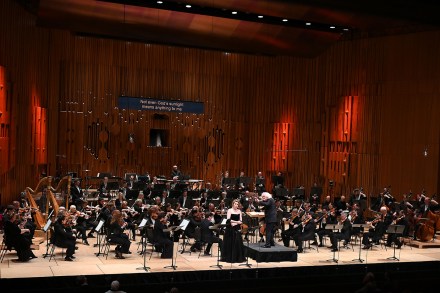
‘Audience Choice’ was the promise at the Budapest Festival Orchestra’s Sunday matinee Prom, and come on – who could resist the chance to treat one of the world’s great orchestras like a colossal jukebox? Actually, this wasn’t the latest wheeze of some clueless BBC head of music: it’s a favourite party trick of the BFO and its conductor Ivan Fischer. The audience has a ‘menu’ of some 275 individual works and symphonic movements; they vote for six of them and the BFO plays their selection, unrehearsed, on the spot. Orchestral musicians never do anything unrehearsed. They hate it. But the BFO does it anyway, because they’re the best, and they know they are.

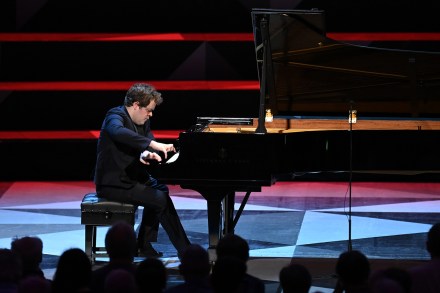
Why is this genius playing to a half-empty Royal Albert Hall? Benjamin Grosvenor Prom reviewed

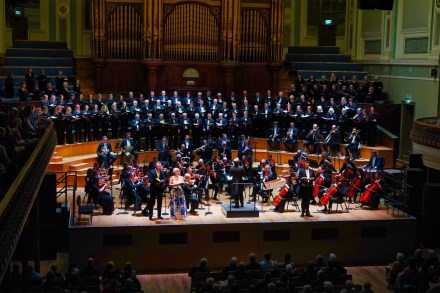
There were times during last Friday’s First Night of the Proms when it felt as if we’d been transported back to Ohio during the Eisenhower administration. We could have been in Severance Hall, Cleveland, listening to its orchestra under George Szell – and there’s no higher compliment I can pay the BBC Symphony Orchestra, because the irascible maestro drilled his musicians to parade-ground perfection. You could tell the BBC orchestra was at the top of its game from the first snarls of the brass in Sibelius’s Finlandia – a more interesting piece of programming than it sounds. This was the choral version, in which the choir sings of Finland’s refusal to bend under Russian oppression.

The greatest female composer you’ve never heard of

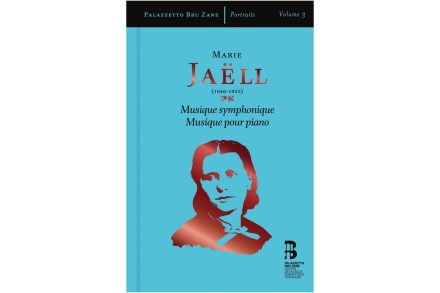
One of the most intriguing piano concertos of the late 19th century is unknown to the public – and no wonder: so far as I can work out, it has only been recorded once, on a speciality label devoted to neglected French repertoire. As I write this, there are only 11 copies available from Amazon and I recommend that you grab one quickly, because the Second Piano Concerto of Marie Jaëll (1846-1925) demands repeated listening. If you want proof women of the era could move beyond well-carpentered clichés, listen to Marie Jaëll The concerto’s harmonic language is superficially conventional: sweeping tunes decorated by arm-swinging arpeggios.

Florid flummery: ETO’s Il viaggio a Reims reviewed

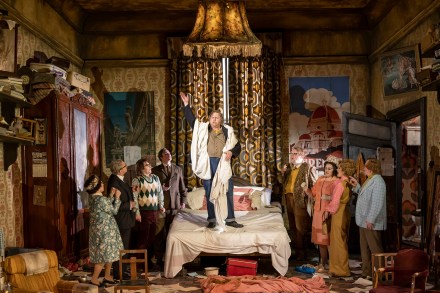
Lightning sometimes strikes twice. English Touring Opera hit topical gold last spring when, wholly by coincidence, they found themselves touring with Rimsky-Korsakov’s Russian anti-war satire The Golden Cockerel. Now the company’s general director Robin Norton-Hale insists that their current tour of Rossini’s Il viaggio a Reims – written in 1825 to celebrate the coronation of King Charles X of France – was fixed long before this month’s events at Westminster Abbey were even a glint in the Earl Marshal’s eye. Really? In truth, opera planning cycles generally operate in years rather than months. On the other hand, Il viaggio a Reims is an extravagant heap of dramatic (if not musical) flummery.

The coronation music was – mostly – a triumph

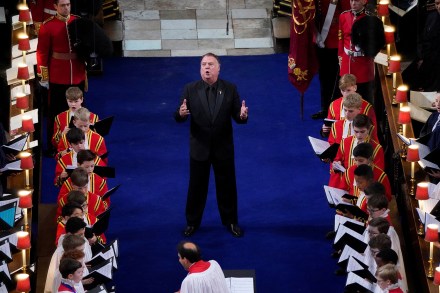
Sir Hubert Parry was upgraded from knight bachelor to baronet by King Edward VII in 1902, and my goodness he earned it. His anthem for Edward’s coronation, I was Glad when they Said Unto Me, begins with a thrilling brass fanfare – or it has done since George V’s coronation in 1911: Parry’s original introit wasn’t sufficiently attention-grabbing, so he beefed it up. But the most spine-tingling moment has been there from the beginning. ‘I was…’ sings the choir on the tonic chord of B flat major – and then the word ‘glad’ bursts out where we aren’t expecting it, in G major.

Emperor Bokassa might have been a cannibal but his coronation music is worth a listen

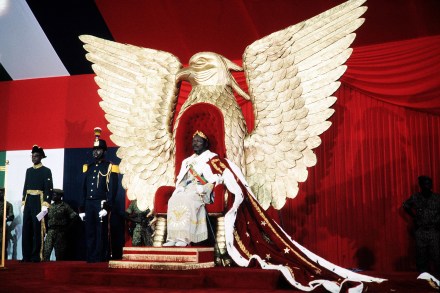
If being asked to write music for the coronation of a king is an honour, then doing it for an emperor is even more so, you might think. That was certainly the view of Jean-François Le Sueur (1760-1837), an opera composer who was made director of music at Notre-Dame by Napoleon. At the self-coronation of the ‘Emperor of the French’ in 1804, two choirs and orchestras performed pieces by Le Sueur, who dined out on it for the rest of his life. Fortunately for him, the French authorities, perhaps keen to forget the vulgar spectacle, never got round to clarifying who wrote what.

The last unashamedly happy masterpiece: Haydn’s The Creation, at Ulster Hall, reviewed

Haydn’s The Creation is Paradise Lost without the Lost. True, the words aren’t exactly up there: translated into German by Haydn’s pal Baron van Swieten and subsequently retro-translated into some of the clumsiest, most endearingly rococo English ever set to music. But you get the idea. Near the start some demons get consigned (very efficiently) to the outer darkness, and at the end the angel Uriel gives Adam and Eve the briefest of warnings – despatched in a brisk recitative before the chorus of angels floods the heavens, once more, with sunlight and praise. Basically, though, it’s optimism. It’s freshness. It’s a universe founded on faith, and with it, joy.

An old production that’s aged better than most: Royal Opera’s Turandot reviewed

Since its première in 1984, Andrei Serban’s production of Puccini’s Turandot has been revived 15 times at Covent Garden, not counting excursions to Wembley Arena. The current revival has been running (by all accounts, to capacity houses) since 10  March. The compelling reason for reviewing such a well-worn revival mid-run is that this performance featured the Royal Opera debut of the Nottingham-born Wagnerian soprano Catherine Foster – which by any reckoning was well overdue. Foster is hugely esteemed in the German-speaking world. In itself, that doesn’t prove anything – I mean, they rate Franz Welser-Möst too.

If you’re anywhere near Edinburgh, get a ticket: Scottish Opera’s Il trittico reviewed

It does no harm, once in a while, to assume that the creators of an opera actually know what they’re doing. Puccini was clear that he wanted the three one-act operas of Il trittico to be performed together and in a particular order. Promoters and directors have had other ideas, and between the wars it was apparently common to perform the triptych’s comic final opera, Gianni Schicchi, in a double bill with Strauss’s Salome, which must have been an interesting night out. Come for the necrophilia, stay for the lulz. But Scottish Opera’s new production presents Il trittico in the form the composer intended, and what d’you know? It works.

Why does everyone hate Max Reger?

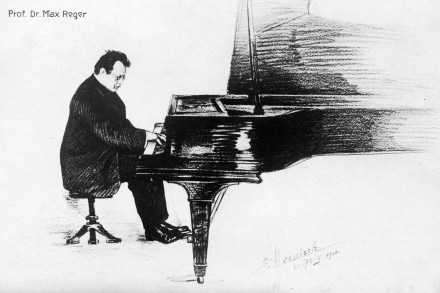
The German composer Max Reger, born 150 years ago next week, is mostly remembered today for countless elephantine fugues and one piece of lavatory humour. When he was savaged by the Munich critic Rudolf Louis, he wrote back to him: ‘Sir, I am sitting in the smallest room of my house. I have your review before me. In a moment it will be behind me.’ The quip was probably borrowed from Voltaire, but since no one can find it in his writings the credit has gone to Reger. Max Reger was probably the most technically accomplished writer of large-scale fugues since Bach But let’s not dwell on the image of the morbidly obese composer taking his revenge. What’s interesting is that Reger was hated by so many critics.

Dated and wasteful: Rusalka, at the Royal Opera House, reviewed

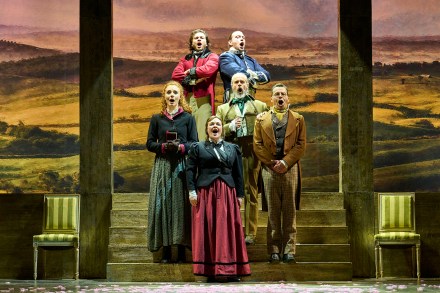
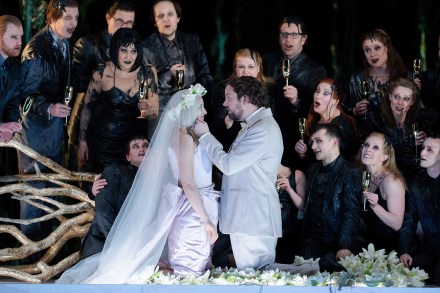
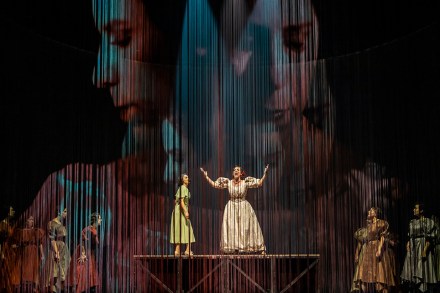
Careful what you wish for. There can be no definitive way to stage an opera, and it’s the critic’s duty to keep an open mind. Still, we’ve all occasionally gazed at a white cube that represents an Alpine meadow, or watched a chivalric hero slouch across the stage in tracksuit bottoms, and felt our hearts slump. Then you pitch up at the Royal Opera House’s new production of Dvorak’s Rusalka and it’s as if some mischievous sprite has magicked you straight back to 1960. The directors are also credited as ‘creators’ (back in your box, composer and librettist!) At first, you don’t suspect much. It’s actually rather enchanting: deep forest darkness and an aerial dancer in rippling, shimmering robes, drifting into the light in an exquisitely realised swimming effect.

The unknown German composer championed by Mahler

I was sceptical when the lady on the bus to Reading town centre told me that her father knew Liszt. Who wouldn’t be? This was a long time ago, mind: probably 1980, and I was on my way into school. I think our conversation started because I was reading a book about music. She was old and tiny, wearing a luxuriant wig. She introduced herself as Mrs Ball but her accent was unmistakably German. Even so, Liszt had been dead for nearly a century. Could it be true? ‘Oh, my father knew everyone,’ she said. ‘Richard Strauss was a great friend. And dear Bruno Walter. He lived in our house, you know. They were wonderful days – we were surrounded by the finest music.

Still ugly but worth catching for the chorus and orchestra: Royal Opera’s Tannhäuser reviewed

A classical concert programme is like a set menu, and for this palate the most tempting orchestral offering in the UK this January came from the Slaithwaite Philharmonic under its conductor Benjamin Ellin. They opened with a suite from Bernard Herrmann’s Vertigo, and the inclusion of Hollywood film music in a ‘straight’ classical programme was interesting in itself. Film music has been around for more than a century now. Many scores are fully as effective in concert as (say) Schubert’s Rosamunde or Beethoven’s Egmont, and yet this almost never happens. Film scores (unless by a big beast of the classical world) are generally hived off into ‘pops’ nights. Snobbery is the most adaptable of vices.

Stirring and sophisticated: RLPO, Chooi, Hindoyan, at the Philharmonic Hall, reviewed

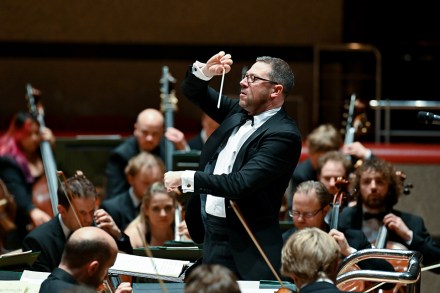
Daniel Barenboim was supposed to perform with the Royal Liverpool Philharmonic Orchestra earlier this month. His recent health concerns made that impossible, but it was a reminder that for the first time since the appointment of the late Libor Pesek in 1987, the RLPO is under the direction of a conductor soaked in the German tradition. Domingo Hindoyan, the orchestra’s chief conductor since autumn 2021, was born in Venezuela and has a soft spot for French music, but Barenboim is his mentor and there’s a gravity – an intellectual centre – to his conducting that made me eager to hear him get to grips with the sacred monsters of German romanticism. It’s something of an RLPO tradition, after all.

What makes a Christmas song Christmassy?

Temperature records for Los Angeles in the summer of 1945 are patchy, but 90 in the shade seems to have been the norm. It was during one such scorcher, presumably, that the songwriters Jule Styne and Sammy Cahn pulled up at a red light on the corner of Hollywood and Vine. Cahn suggested going to the beach. Styne had a better idea: ‘Let’s go write a winter song.’ Driving over to the offices of their publisher Edwin H. Morris, Cahn commandeered a typewriter, glanced out the window and typed the exact opposite of what he saw: ‘The weather outside is frightful.’ The Great American Songbook had acquired another Christmas classic. And ‘Let it Snow!’ is no less classic – and all the more American – for omitting any mention of Christmas.

If Ravel’s Boléro makes you yawn, you’re not really listening

Only boring people are bored by Ravel’s Boléro. True, the composer – the slyest of wits – left his share of booby traps for the uncomprehending; take his comment, in a letter to Paul Dukas, that ‘I have written only one masterpiece, Boléro. Unfortunately there is no music in it.’ Yet Ravel was a sublime colourist; a master of the instrumental palette who makes Stravinsky’s orchestration sound coarse by comparison, and Boléro is one long twist of a fabulous kaleidoscope. Even its notorious repetitions are a red herring. Take the full score as a whole and you’ll struggle to find two bars that are identical (there are a couple at the start and a couple near the very end, but that’s basically it).

Hugely entertaining: Royal Opera’s Alcina reviewed

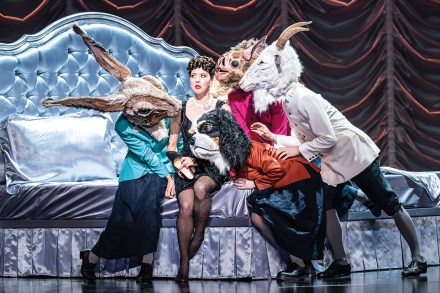
A hotel bellboy, the story goes, discovered George Best in a luxury suite surrounded by scantily clad lovelies and empty champagne bottles. ‘George, George’, he sighed. ‘Where did it all go wrong?’. It’s the same deal, essentially, with Ruggiero, hero of Handel’s Alcina. As the curtain rises he’s in the boudoir of Alcina, a smokin’ hot love-witch who lives on a paradise island with her minxy little sister, Morgana, and whose only serious failing – and who are we, really, to judge? – is a fondness for transforming her enemies into animals. This being an epic tale of chivalry, and this being 1735, it’s universally understood that having this much fun simply isn’t on.

A total (and often gripping) theatrical experience: Scottish Opera’s Ainadamar reviewed

Do you remember Osvaldo Golijov? Two decades ago he was classical music’s Next Big Thing: a credible postmodernist with a lush and listenable tonal flair, and an Argentinian with an interestingly complex European heritage in a millennium where everyone agreed – for a while, anyway – that the future was Latin American. Major labels recorded his music as soon as it was premièred; he was popular. Too popular for some – I remember a contemporary music promoter lamenting, with the demeanour of a housemaster who’s just found the head boy smoking behind the bins, that Golijov ‘hadn’t developed as we’d hoped’. Anyhow, Golijov was big, and then something stalled. Commissions failed to materialise, there were rumours of creative block, and the parade moved on.

A miniature rite of a very English spring: a Vaughan Williams rediscovery in Liverpool

Imagine a folk dance without music. Actually, you don’t have to: poke about on YouTube and you’ll find footage from 1912 (there’s music dubbed on, but it’s a silent film) of Vaughan Williams’s friend George Butterworth in full Morris fig, going through the moves with Cecil Sharp and a pair of pinafore-wearing gals. Note the precision of his movements, that big Kitchener moustache: how seriously Butterworth is taking it, four years before he stopped a bullet on the Somme. And they really were sincere, those folk song pioneers.

Grey, grey and more grey: Aida, at the Royal Opera House, reviewed

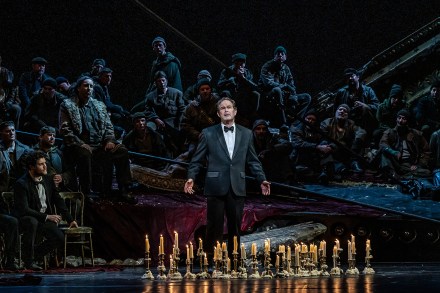
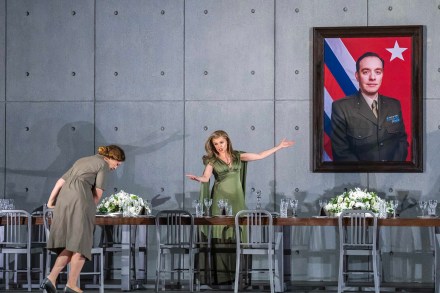
Grey. More grey. So very, very grey. That’s the main visual impression left by Robert Carsen’s new production of Verdi’s Aida. Possibly a few older operagoers still think of Aida as a fabulous spectacle: horses, temples, caparisoned elephants and all the gilded splendour of the Pharaohs. But if you cut your opera-going teeth more recently than 1990 – and unless you’re going to one of the more lavish Ellen Kent efforts – you’ll know by now to expect nothing of the sort. Carsen places the drama within the towering walls of a government bunker in some unspecified modern military dictatorship, with the cast (even Aida and Amneris) dressed almost entirely in shades of khaki.