Cinema

No peace, no pussy

The bizarro concept of a ‘President-elect Trump’ came to pass despite the wishes, clearly stated on the stump, of the entertainment-industrial complex. They all came out for Hillary — Queen Bey, the Boss, Jay-Z, J-Lo, SJP, Kimye, Madge, Meryl, Gaga, Lena D, old uncle Team Clooney and all. How the alt-right cackled when this star-spangled nobility got in-yer-faced by a basket of deplorables from the West Virginia coalfield. In the circumstances, now is maybe not a propitious moment for Spike Lee (who felt the Bern) to unleash a finger-wagging homily about America and guns. Chi-Raq, you wouldn’t be alone in not knowing, takes its title from the alternate name lately given to Chicago in the state of ‘Killinois’.

You’ve lost that loving feeling

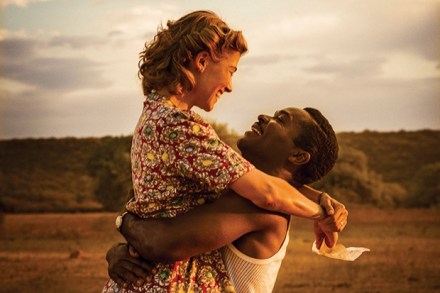
A United Kingdom is based on the greatest love story you probably didn’t have a clue about. I know I didn’t. It’s based on the true story of Seretse Khama, heir to the African kingdom of Bechuanaland (now Botswana), and Ruth Williams, a typist, who fell in love in 1940s London and married despite everyone and everything trying to separate them, including a vicious colonial British government. But this, sadly, is not the greatest film about the greatest love story you didn’t have a clue about. It’s OK. It does the job. It’s serviceable. It won’t be the biggest disappointment in your life. The story’s too good for it to get away completely.

About a boy | 17 November 2016

Indignation is an adaptation of Philip Roth’s 2008 novel and amazingly, for an adaptation of a Philip Roth novel — see the recent dog’s dinner that was American Pastoral, for example — it may even be worth two hours of your time. (Depending on what you would otherwise be doing with that time; I wouldn’t wish for you to cancel that hip operation or similar.) It stars Logan Lerman as Marcus Messner, a 19-year-old Jewish boy from Newark who, in 1951, escapes the Korean war and the over-anxious clutches of his parents by winning a scholarship to a college in Ohio. Marcus, at the outset, is a good Jewish boy — an exemplary Jewish boy. Marcus is the Jewish boy you would want if you happened to be in the market for a Jewish boy.

Tongue twister

Arrival is a big budget sci-fi film with a smaller, more pensive, cleverer film trying to get out, which has to be an improvement on a dumb film with an even dumber film trying to get out, as in the manner of Interstellar, say. So we have that to be thankful for, at least. The film stars Amy Adams, who appears to be everywhere these days. (Check your sock drawer and under the bed; you never know.) She plays Dr Louise Banks, a university linguist who lives in a beautiful, modernist lakeside house, as any academic in any American film always does. (Do such houses come with tenure?) As we see right at the start, she is mourning the death of her daughter.

Heaven knows they’re miserable now

The Light Between Oceans is one of those films that comes issued with a handy how-to-use manual. Shudder as hero arrives on remote Australian island to man lighthouse. Cheer when in swift dash to mainland he secures hot bride to join him. Grimace when her womb proves incapable of holding anything in for a whole nine months. Bring heart to mouth as baby is somewhat implausibly washed ashore in rowing boat. For rest of film, carry on weeping. The source material is the 2012 novel by M.L. Stedman, which has sold millions in loads of languages. It features a Hardy-esque plot of flatpack sadism in which punishment is administered even-handedly to a trio of protagonists.

Net effect

As a documentary-maker, Werner Herzog is a master of tone. His widely parodied voiceovers — breathy, raspy, ominous — are cunningly ambivalent. The interviews he conducts are seldom less than strange, often shocking, and the pacing and tenor of his films are subtly modulated. Never more so than here. Lo and Behold is divided into chapters. The first is a fairly conventional documentary about the beginnings of the internet. Herzog talks to the people in California who made the first computer-to-computer connection in 1969, asking them reasonable questions and generally making them seem like comfortable, all-round good guys. This is then subverted by the appearance of Ted Nelson, a cyber-pioneer who believes it has all gone horribly wrong.

Loach at his most Loach

I, Daniel Blake is a Ken Loach film about a Newcastle joiner who can’t work but faces a welfare bureaucracy that won’t listen, humiliates him, grinds him down, so it’s fun, fun, fun all the way. Yes, it is that Ken Loach film, but as that Ken Loach film is more powerful than most other films — and this is fearsomely moving (I cried), and fearsomely tender (I cried again) — you’re just going to have to suck it up.

Going nowhere fast – and loud

As a general rule, I would not wish to spend nearly three hours in a mini-van with young people who turn up the music real loud. As a general rule, being the age I am, I would go to any lengths to avoid such an experience. But American Honey is a film by Andrea Arnold and even though it does require you to spend nearly three hours in a min-van with young people who turn up the music real loud, you will not, in fact, regret it. Or at least not regret it entirely. A bit, perhaps, but you’ll get a good two hours regret-free. This is the first American film by Arnold, the British director who made Wasp and Red Road and Fish Tank — three brilliant films in the social-realist tradition, one of which happens to be among my favourite films of all time. (Clue: Red Road.

Wrong side of the tracks

You will surely have seen the posters for The Girl on the Train with Emily Blunt staring from a train window beneath the question: ‘What did she see?’ I don’t know ...buddleia? Bindweed? The occasional abandoned supermarket trolley? That is all most of us see from trains and while it’s true that buddleia, bindweed and the occasional abandoned supermarket trolley would make for a very dull film, it could scarcely be any duller than this. And that is the truth. This is an adaptation of the thriller by Paula Hawkins; a thriller that, I would venture, attained bestseller status largely because it was touted as ‘the next Gone Girl’ and ‘the British Gone Girl’ and we all fell for it.

White Knight

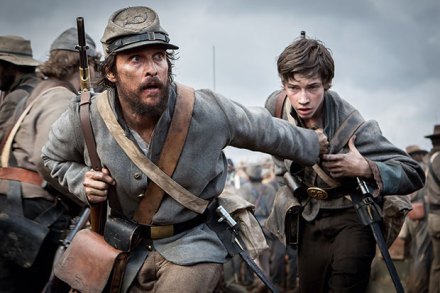
Free State of Jones is an American Civil War drama ‘inspired’ by the life of Newton Knight, who led an armed rebellion against the Confederacy in Jones County, Mississippi, and one rather wishes that that was all it was about. Directed by Gary Ross (Seabiscuit, The Hunger Games), and starring a whiskery, leathery Matthew McConaughey, it tells that story, then thinks: while you’re here, might we tell another story? And another one? So you are fully educated in all matters? In the end, such is the weight of all these stories that you won’t lose the will to live exactly, but you will find it has been significantly weakened. The film opens in 1862 and opens as you might expect. That is, bloodily and viscerally on a battlefield mid-combat as body parts fly.

No fear

I can’t say I care for zombies particularly or even understand them — OK, they’re the living dead, but what do they have against the living living? Why do they always want to bite their faces off? — and I can’t say I cared for The Girl With All the Gifts either. This is an adaptation of the dystopian horror novel of the same name by Mike Carey, who also wrote the screenplay. I have not read the book, I confess, as I don’t do much that’s dystopian if it doesn’t involve Margaret Atwood, but I know it was critically well received as well as hailed as ‘an original and compelling new take on the zombie genre’, which may well be the case, but there is little evidence of that here.

A Bridge too far?

Bridget Jones’s Baby is the third outing for our heroine as played by Renée Zellweger, whose cosmetic work to face has received more media attention than the film itself, but we will try to counteract that here. So, on this occasion, Bridget finds herself pregnant but does not know if the father is our old friend, uptight lawyer Mark Darcy (Colin Firth, who is not as young and dewy as he was at, say, 32, perhaps because he’s now 56), or the American dating magnate Jack Qwant (Patrick Dempsey, 50, who may have let himself go a bit, but then he has had three children, so fair’s fair). And now a note to self: stop going on about how Hollywood women are damned if they do and damned if they won’t (get older, that is) and just tell us if this is worth seeing.

Blair witch project

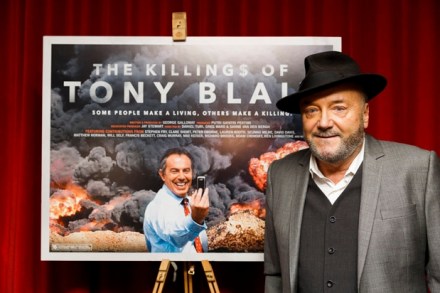
I had been wondering where Gorgeous George Galloway might pop up next. Defenestrated from his seat in Bradford West, humiliated in the London mayoral elections — where he received 1.4 per cent of the vote — and no longer apparently an attractive proposition to the reality TV producers, his public life seemed sadly to be drawing to a close. But nope, here he is with a film about the person all left-wing people hate more than any other, Tony Blair. It’s a good film, too, in the main. The Killing$ of Tony Blair was partly crowdfunded and it may well be that the only people who watch it will be those who forked out to have it made.

The Allen way

Woody Allen has made a film nearly every year in the four decades since the release of the award-winning Annie Hall. Every one is hailed as a potential return to form, and of course some definitely are. Blue Jasmine, say. Possibly Midnight in Paris. How do the late-era Allens compare with the earlier ones? It’s an increasingly tricky question to answer the more prolific the writer/director is. However, perhaps a more useful question than ‘how good is it?’ is ‘will you actually enjoy Café Society?’, his latest. And the answer, most probably, is ‘Yes’.

Red hot

Everything about Julieta feels totally Almodóvarian. It’s a family saga that smoothly blends tragedy and levity, with exquisite performances from a company of passionate actresses. It looks carefully ravishing. Many of the director’s abiding themes are here: terminal illness, sudden death, a mother’s love for her child, men hanging about the fringes. And yet it is based on a most un-Hispanic source. The Julieta of the title was originally Juliet, who features in three interlinked short stories from Runaway, the 2004 collection by Alice Munro. Munro won the Nobel Prize for Literature three years ago after a lifetime writing quiet stories that conceal hammer blows.

Business as usual | 18 August 2016

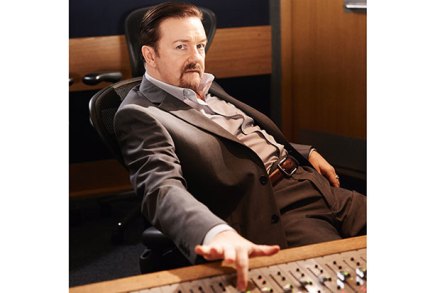
I should probably nail my colours to the mast and state that The Office is possibly my favourite TV sitcom of all time (bar My Family, which surely goes without saying), but some comedies that have ended should simply stay ended, as no one has ever said, but should have. (Or maybe John Cleese has said it?) There are a few decent jokes here. Some of the bad songs are really good bad songs. But it’s a repetitive rehash rather than a worthwhile continuation of the character, and the comedy and pathos is in exactly the same place as it always was. That is, in the gap between the winner David Brent (Ricky Gervais) thinks he is, and the loser we know him to be. Fifteen years ago, that was revolutionary, and genius, and funny, and affecting, but now? Not so much. Quite tiresome, in fact.

Oven-ready

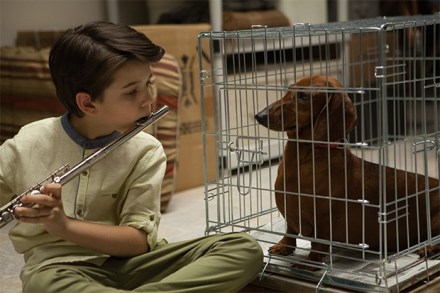
Todd Solondz’s Wiener-Dog is billed as a ‘dark comedy’ although it is far more dark than comic. If pressed to put a number on it, I’d say that, despite the film’s poster, which shows a cute dachshund’s butt, and leads you into thinking cute dachshund thoughts, this is 98 per cent dark, and the sort of film that actually makes you want to come home, draw the curtains, and stick your head in the oven. Life’s a bitch and then you die, it says, literally. There’s every chance you’ll hate it. I’m not convinced I don’t. But this is a film that, once seen, you’ll always know you’ve seen and, in the most disquieting way, it feels as if it has somehow seen you too.

Corn again

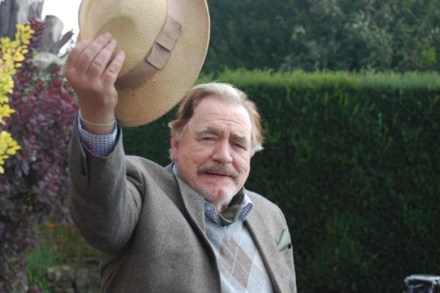
The Carer is a Hungarian-British co-production about a cantankerous old thesp (Brian Cox) and the young Hungarian woman (Coco König) who is dispatched to look after him, much against his wishes, and whom he’ll eventually throw out on her ear. I’m joshing you. She wins him over, naturally, and mutual respect develops, naturally, and a friendship blossoms, naturally, although I wish he’d thrown her out on her ear as that way this wouldn’t have felt like something we’ve seen a hundred times before. There are affecting, powerful films to be made about old age, loss, mortality and dependence, but this, alas, has all the emotional grit of a Driving Miss Daisy.

The lying game | 28 July 2016

JT LeRoy was a teenage hustler who emerged from a childhood of abuse, drug addiction and homelessness to write about his harrowing experiences and become a literary sensation as taken up by Madonna, Bono, Winona Ryder, Carrie Fisher, Courtney Love, Lou Reed and Gus Van Sant, among many others. His back story was shocking — raped at five; pimped out by his prostitute mother at truck stops; HIV-positive; heroin-addicted ...sit on that, Angela’s Ashes! — but the biggest shock, when it arrived? He did not exist. JT, it turned out, had been confected by Laura Albert, a 35-year-old woman from Brooklyn.

Dahl by Spielberg

Nobody who witnessed it can have forgotten Mark Rylance summoning giants to his aid in Jerusalem. As Johnny ‘Rooster’ Byron, drug-dealing roustabout threatened with expulsion from his little patch of Eden, Rylance roared and drummed until the theatre shuddered with the sound of gigantic stomps approaching. That colossal performance brought him to international — as in American — attention. The biggest giant to answer his call was Steven Spielberg. The world’s most successful living fabulist now won’t get out of bed for any other leading man. We’ve already had Bridge of Spies, for which Rylance won an Oscar. There are two further Spielberg/Rylance collaborations on the runway.