Cinema

Back to the future | 5 October 2017

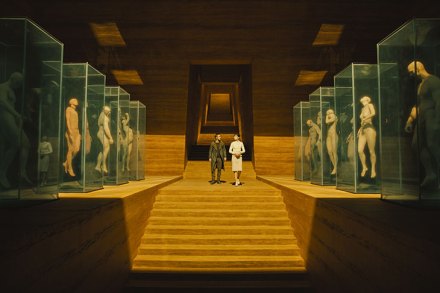
Ridley Scott’s original Blade Runner first came out in cinemas 35 years ago, which I was going to say probably makes it older than some readers, although this being The Spectator, perhaps not. It wasn’t successful in its day, but has since become a beloved classic (rightly), whereas this sequel, Blade Runner 2049, will likely do great box office today, but no one will give a fig tomorrow, once all the silly hype has died away. This is Blade Runner as a dull mainstream blockbuster populated by men who are the epitome of masculine cool and women who are needlessly sexualised fembots.
Unhappy days

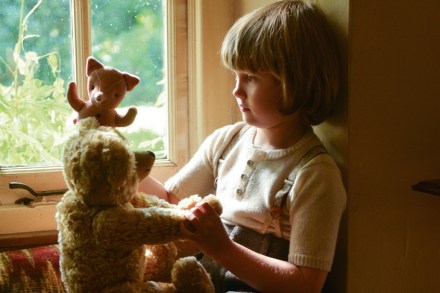
Scriptwriters love to feast on the lives of children’s authors. The themes tend not to vary: they may have brought happiness to millions of children but their stories — sob — were fertilised by unhappiness. Saving Mr Banks: Mary Poppins author was a bossy shrew because her alcoholic father died young. Miss Potter: Peter Rabbit creator never found love. Finding Neverland: Peter Pan playwright cheered up grieving family. Enid (made for BBC Four): Miss Blyton was a monster traumatised by her upbringing. And so it will presumably go on.

No balls

Borg vs McEnroe is a dramatised account of one of the greatest tennis rivalries of all time — between Bjorn Borg and John McEnroe (the clue was always in the title) — that doesn’t hit nearly as hard as it should. It does the job. It gets us from A to B. But it doesn’t dazzle. It doesn’t have the dramatic smarts to lend either surprising tension or excitement to otherwise familiar events, or shed any new light on them. It’s more the pt-pt-pt-pt of a stolid baseline rally and now, you will be thankful to hear, that’s it with the tennis puns. (I only had two anyhow.) The film stars Sverrir Gudnason as Borg and Shia LaBeouf as McEnroe and it all plays out in the lead-up to their most famous showdown.

Nut job

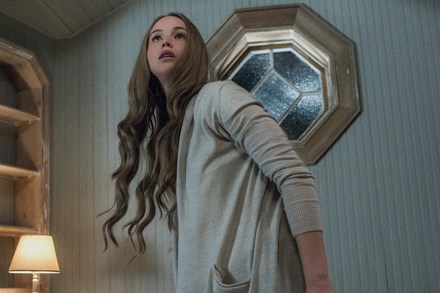
The film-maker Darren Aronofsky says he wrote Mother! in five days as if in a ‘fever dream’ and, as a general rule, what happens in a fever dream should stay in the fever dream, as the content will be plainly nuts. This is plainly nuts. This is even plainly nuts with an exclamation mark. Plainly nuts! However, it’s never plainly dull, so it does have that going for it. I think. Described as a psychological horror thriller, the set-up has a poet and his younger wife living in a magnificent, isolated house in the countryside that she is doing up. She is Mother (Jennifer Lawrence) and he is Him (Javier Bardem). She is in thrall to Him, and exists only to serve Him, while he is suffering from writer’s block and is distant.

Male order | 7 September 2017

The starting point for Taylor Sheridan’s crime-thriller Wind River is explicitly stated at the end when the following words come up on screen: ‘While missing person statistics are compiled for every other demographic [in the US], none exist for Native American women.’ A shocking fact that has to be worthy of a film, although whether this film is worthy of that fact, and isn’t just another genre melodrama featuring an American White Man coming to the rescue, has to be up for question. Also, it contains a brutal rape scene, just so you know. (I didn’t know. But wish I had, as I’d have likely steered clear.

Moral maze

Una is a psychological drama about a woman who was abused by a man when she was 12, and who confronts him 15 years later, and it’s a hoot. I’m toying with you. Of course it isn’t. It’s disquieting. It’s disturbing. It’s difficult. It’s 90 minutes of uncomfortably shifting in your chair and wishing you were at the latest heist caper that doesn’t make sense. But it is also compelling, up to a point, and your responses will be so complicated that you won’t know where to start unpicking them. Or how. The film is based on the play Blackbird by the Scottish playwright David Harrower, which has won multiple awards and starred Jeff Daniels and Michelle Williams on Broadway.

Losing the plot | 24 August 2017

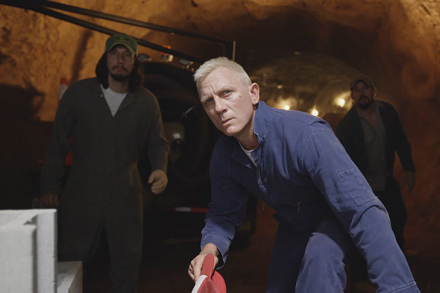
Steven Soderbergh’s Logan Lucky is a heist caper that, to be fair, does what it says on the can. There is a heist. It is a caper. It also features an all-star cast and is said to be ‘the perfect summer entertainment’, which may or may not wash, depending on whether you believe the enjoyment of films is seasonally variable, or an average film is an average film, whatever the weather. It’s USP is that it’s ‘a red-necked Oceans’ or ‘a hillbilly Oceans’ so, in other words, it’s a riff on Oceans. Soderbergh directed the Ocean’s franchise, so it is hardly a stretch for him. Or us, for that matter.

An inconvenient truth | 3 August 2017

Maudie is a biopic of the folk artist Maud Lewis (1903–70) who is, apparently, beloved in Canada, and while Sally Hawkins is superb in the title role, and she will win you over (eventually), you do have to buy it as ‘a beautiful love story’. I bought it, hook, line and sinker — such a beautiful love story! — but then I read up on Maud (damn the internet) and had to significantly unbuy it. Does it matter that it may not be ‘the truth’? Or that a woman who was, in fact, severely disabled is presented mostly as someone with a slight hobble? I don’t know, frankly. But I am certainly putting it out there.

Tricky, and slightly sicky

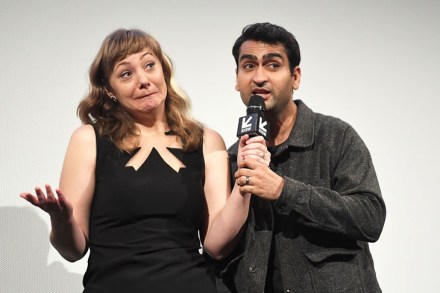
The Big Sick is a rom-com that’s smarter than most rom-coms, which isn’t saying much, admittedly. It stars a Muslim man from a Pakistani background as the romantic lead, which has to be all to the good, and one character does pinpoint exactly what’s wrong with the internet: ‘You go online and they hate Forrest Gump… best fucking movie ever!’ (So true.) But at two hours it is overlong — Christopher Nolan had evacuated Dunkirk in that time, let’s remember — and it does leave a bad taste in the mouth. (Big sick, bad taste. Although, in fact, it’s not that kind of sick. This film may have the worst title of all time.

Visual, visceral, confusing

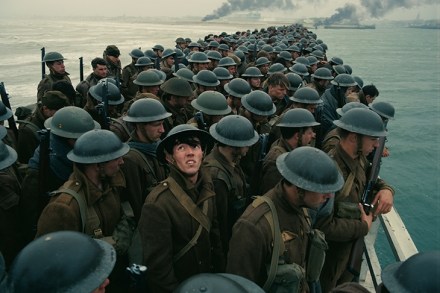
Christopher Nolan’s Dunkirk has already been described as ‘a masterpiece’ and ‘a glorious, breathtakingly vivid triumph’, but we need to be cautious. Look at all the fuss about Baby Driver and what an average film that turned out to be. This certainly isn’t your regular war film — no one, for example, says ‘it’s quiet’ and is then told: ‘yes, too damned quiet…’ — but in wanting to deliver a visceral, visual experience, without the hindrance of exposition or back stories, the narrative is often confusing and doesn’t add up to much emotionally.

This charming man | 13 July 2017

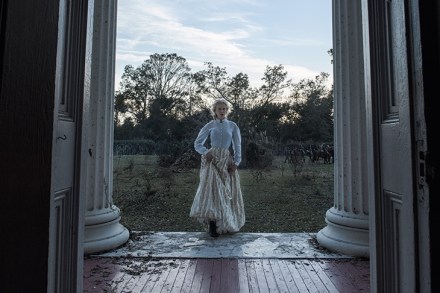
Sofia Coppola’s The Beguiled is set during the American Civil War and is about a wounded Union solider, Corporal John McBurney, who seeks refuge in a girls’ school in Virginia and basically sets a sexual bomb under the place. It’s based on a 1966 novel by Thomas Cullinan, which was first filmed by Don Siegel in 1971 starring Clint Eastwood, whose McBurney forces himself on a 12-year-old girl in the opening scene. ‘Not too young for kisses,’ he says, before moving in for a long, deep snog. WTF! Thus far, I have not heard it said that Coppola’s remake does not capture the original, probably because it’s a blessed mercy.

Do not be afraid

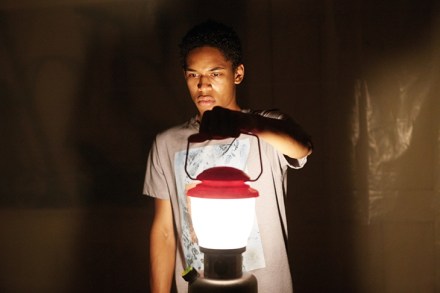
It Comes at Night is a horror film and I can’t say horror is my favourite genre. In fact, as far as I can see, I haven’t reviewed a horror film since 2009 (Paranormal Activity; scared the bejeezus out of me). But I’d read that this was clever, engrossing and original, so why not? My bejeezus can take it once every eight years, surely. So we were braced, my bejeezus and I, but rather unnecessarily, as it turned out. This is not especially scary (thankfully, but even so) and, what is more, the storytelling is so spare that I never understood what ‘it’ was and whether it did come at night or at any other time. Mid-afternoon, say. The film is written and directed by Trey Edward Shults, whose 2016 breakthrough film, Krisha, was terrific (look it up).

Car trouble

Edgar Wright’s Baby Driver is an action, heist, car-chase film that is said to reinvent the action, heist, car-chase film. But as you can’t have an action, heist, car-chase film without action, heists and car chases, you may wish to ask yourself: how much do I like action, heist, car-chase films in the first instance? And that’s the bottom line, I suppose. This action, heist, car-chase film is also about the soundtrack, as the story is told through the… ears? of Baby (Ansel Elgort), a getaway driver who doesn’t just enjoy music, but needs it. He rarely takes his earbuds out. He can’t perform unless he’s listening to Blur, Beck, the Beach Boys, T. Rex, the Commodores.

Non-magnetic north

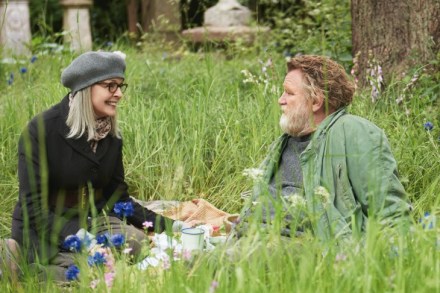
Oh, Hampstead, what did you do to deserve Hampstead? Bet you wish the film-makers had pressed on down Fitzjohn’s Avenue and made Swiss Cottage, say. On the other hand, maybe you did have it coming, especially as I once overheard one mother say to another in the Coffee Cup: ‘James? He had so much homework we had to send him to boarding school.’ That always makes me feel better, given I’ll never be able to afford to live there. This plainly wants to do for Hampstead what Notting Hill did for Notting Hill and Manhattan did for Manhattan and Munich… nope, we’ll stop there. But it’s the sort of ‘love letter’ that should have been scrunched up, thrown in the bin and never mentioned again.

1944 and all that

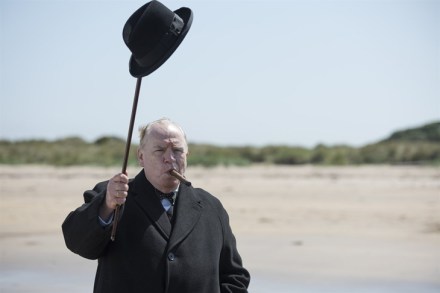
The star of this film is the music, composed by Lorne Balfe. I really liked it, which was just as well, because it plays for about half the 98 minutes, while a superannuated Churchill, played by Brian Cox, moons about on beaches, deeply penitent for his catastrophic authorisation of the Gallipoli disaster in which a quarter of a million Allied troops lost their lives on the beaches of Turkey. It is the summer of 1944, and an apparently almost pacifist Churchill is timidly begging Eisenhower and Montgomery not to go ahead with the Normandy landings. He dreads the loss of life, you see. Not being a Churchill scholar, indeed being, I must admit, Churchill-allergic, I have no idea if this is true or false.

Static electricity

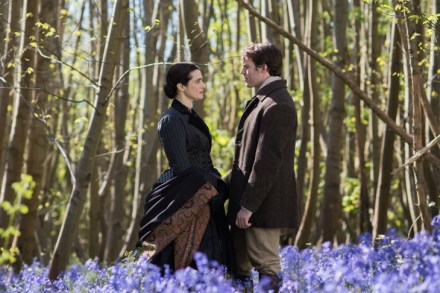
My Cousin Rachel is an adaptation of Daphne du Maurier’s mystery-romance and, even though it stars the forever wonderful Rachel Weisz, it’s more sedate than suspenseful, more tasteful than dangerous. This should be a creepy, gripping tale of paranoia, deception, lust, and suspicions that are founded, unfounded, founded, then unfounded again. (There is a great deal of founding and unfounding on the suspicion front.) But the high-end, glossy period trappings — the frocks; the stately mansions; the teal drawing rooms; the horses galloping along scenic cliff paths; that wisteria — don’t play into a dark, gothic atmosphere. It is highly watchable, I have to say, but it won’t have you biting your nails to the quick, as it should.

When will I ever learn?

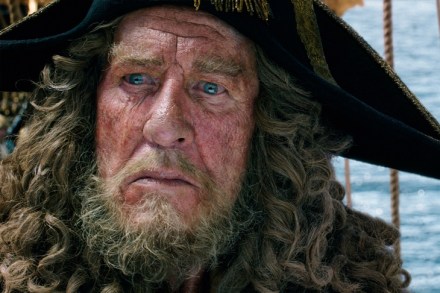
Oh, Pirates of the Caribbean, I have given you every chance down the years. Every chance. I am always hopeful. This may be the one that has a proper story I can follow, I have told myself. This may be the one in which Johnny Depp even bothers to act, I have told myself. This may be the one that doesn’t make me wish I’d stayed home where I could be doing something more interesting and fulfilling, like sorting laundry or cleaning out the fridge. When will I ever learn? When? Pirates, you’re on film five now, and I don’t understand. Well, I do and I don’t. You’re one of those blockbuster franchises that certain audiences will wish to see regardless, as perplexing as that is. But does this mean you don’t even have to try to make it any good?

No laughing matter | 18 May 2017

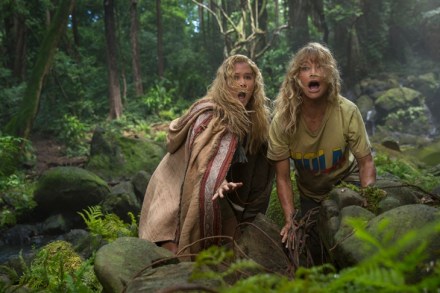
We love Amy Schumer. Fact. And we love Goldie Hawn. Fact. But can we love Snatched? Not so much, if at all. Perhaps the addition of ‘if at all’ is unnecessary, and rather mean. But it’s done now. There are a couple of decent jokes, it’s true, but they are 1) all in the trailer and 2) happen within the first ten minutes, after which there is every chance you will 1) lose the will to live and 2) wish you’d opted for Guy Ritchie’s King Arthur. But, as we are so often warned, do be careful what you wish for. From what I’ve heard, King Arthur may not only make you lose the will to live but may also make you regret ever having lived. (Too much again? Done now.

Farming today

There are bigger entities landing at your local multiplex this week. An ancient indestructible franchise is re-re-(re-)booted in Alien: Covenant. In Jawbone, it’s seconds out for yet another boxing movie. Miss Sloane is that non-staple of the repertoire, a glossy feminist thriller about public relations. Something there for almost everyone. But there’s also a low-budget British film called The Levelling, which has a very Brexit-y theme — the travails of the farming industry — so let’s pull on our wellies and have a gander. The title alludes to the Somerset Levels, in the news in 2014 when rivers rose to drown the nether parts of southern England. ‘Save our village, dredge the river,’ says a forlorn sign in an inert wintry landscape.

Thatcher’s Britain with her knickers down

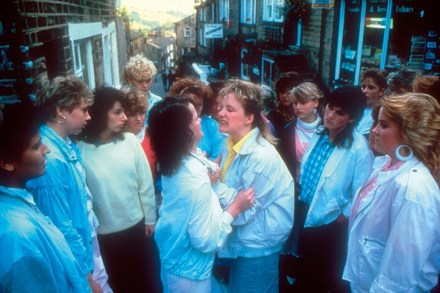
Two 16-year-old schoolgirls from a sink estate in Bradford find fun and happiness by shacking up with a middle-aged married man — if you’ve never seen it, it sounds like the worst movie ever made. Yet Rita, Sue and Bob Too was a delight, one of the best British films of the 1980s, and this month it’s being rereleased in a new restoration by the BFI. I saw it when it first came out, in 1987, and fell head over heels in love with it. At last, here was a film about working-class life that wasn’t glum. Watching it again, 30 years on, it still feels just as fresh and funny, but the landscape it describes has changed.