Cinema

Ticket to ride

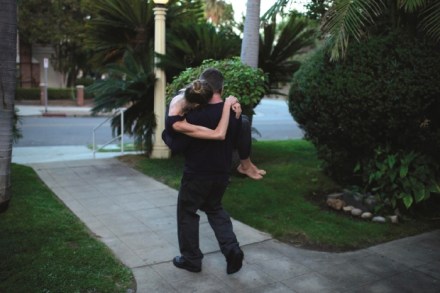
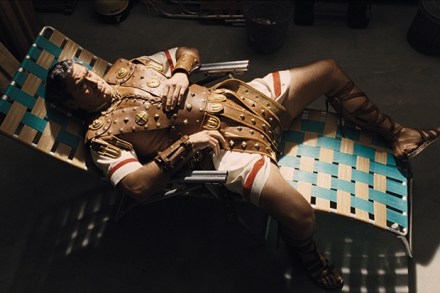
The latest film from the Coen brothers is a comedy set during the ‘golden age’ of Hollywood and in some respects it is utterly delicious. George Clooney wears what is effectively a leather miniskirt throughout, which may not be ‘age-appropriate’, as they say, but is wholly pleasing. (I was personally delighted, I must confess.) And Ralph Fiennes finally nails it comedically, which is a relief, as it’s been just so painful watching him try down the years. But the film is also troublesome, just as so many of the Coen films are troublesome. Why? Why this film, and what do they want us to take from it? Is it as inessential as it seems? The Coens always take you on a ride, you’re just never sure if you’re also being taken for a ride.
Bottom Gere

The Benefactor is both a bad film and a thoroughly inexplicable one. It’s one of those what-were-they-thinking projects that wastes decent talents — Richard Gere and Dakota Fanning, most notably — for no discernible purpose and has you thinking throughout that whatever they were paid it wasn’t enough, and even if they’d been offered more, that wouldn’t have been enough, and so on, until all the money that currently exists in the world had been offered. And it still wouldn’t have been enough. The film is written and directed by Andrew Renzi and stars Gere as Francis Watts, aka Franny, a multi-billionaire philanthropist whose wealth is never explained and who builds hospitals for children. (Therefore we have to fundamentally like him?

Touching the void | 18 February 2016

Scholarly filmgoers may recall a movement that sprouted from Danish soil called Dogme 95. It worked to a Spartan set of rules and regs. In Dogme titles there could be no lighting and no soundtrack, no locations pretending to be other locations. Hell, there were probably no Portaloos on set and actors fixed their own herring smørrebrød. The director, in an ultimate gesture of klaxonning self-effacement, took no credit. Except that everyone knew Thomas Vinterburg shot Festen and Lars von Trier made The Idiots. The spirit of cinema’s Mennonites lives on in Chronic, a pitiless, hatchet-faced film set somewhere sunlit in the grassy American suburbs. It is written and shot by Mexican director Michel Franco.

Fashion faux pas

‘I’m pretty sure there’s a lot more to life than being really, really, ridiculously good-looking,’ said a pouty Derek Zoolander back in 2001. Well, apparently not. Because Zoolander 2, the long-awaited sequel to Ben Stiller’s cult hit undercutting the male-model industry, is a good-looking bore, a fashion faux pas where hot celebrities such as Kate Moss, Penélope Cruz and Kim Kardashian are parachuted in to make a relentlessly dreary script look good. Except they don’t. They can’t. What on earth was Stiller thinking? Or Owen Wilson, back here as the loveable frenemy Hansel. Or, for that matter, the endless parade of fashion and rock-star cameos? Anna Wintour, Justin Bieber, Sting.

It’s doomed!

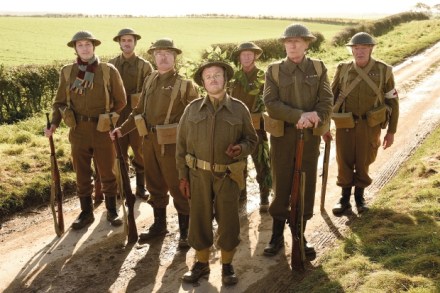
The TV sitcom Dad’s Army ran on the BBC from 1968 to 1977 (nine series, 80 episodes) with repeats still running to this day (Saturday, BBC2, 8.25 p.m.) and I sometimes watch these repeats with my dad (92) and we laugh like idiots and I sometimes watch with my son (23) and we laugh like idiots and sometimes the three of us watch together (combined age 169, should that be of interest) and we all laugh like idiots but I was not minded to laugh like an idiot during this film, possibly because I was not minded to laugh at all.

Doing the wrong thing

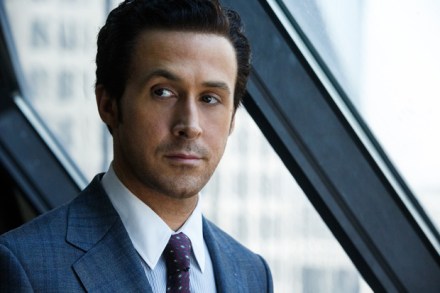
Like The Revenant and The Big Short, Spotlight is yet another Oscar contender ‘based on true events’ — although it has now been suggested that The Revenant was 99.7 per cent made up. (Does this matter? Only, I suppose, in the sense that you should know what you’re watching.) But we’re on firm ground with Spotlight, where the events — the Boston Globe’s uncovering of systemic child abuse by Catholic priests in Massachusetts — are a matter of record, although how you make a film about something so awful, I don’t know. Personally, I wanted the film to give it to the Church with both barrels, and let rip with fury, but it’s too restrained for that.

On the money

The Big Short is a drama about the American financial collapse of 2008. It talks you through sub-prime mortgages, tranches, credit-default swaps, mortgage-backed securities, collateralized debt obligations ...and, yes, I just bored myself to tears typing that list. I had to prop my eyes open with matchsticks typing that list. I would even propose that I was more bored typing that list than I’ve ever been in my whole life, which is saying something, as I saw Monuments Men. And, previously, I would have proposed that there is no way you could ever make any of the above fascinating or compelling or sexy, let alone scathingly funny. But The Big Short is fascinating, sexy, compelling and scathingly funny. It’s a miracle.

Endurance test

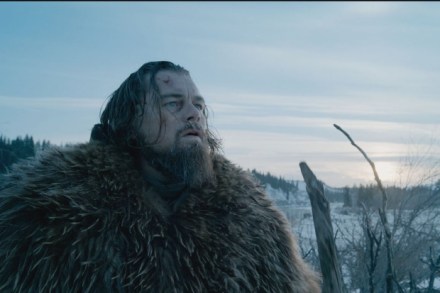
The Revenant is a survival-against-the-odds film that so puts Leonardo DiCaprio through it I bet he was thinking, ‘I wish I was back on that boat that went down.’ He is mauled by a bear. Viciously. He is buried alive. He eats still-throbbing, blood-dripping raw liver, and quite forgets his manners. (Wipe your chin, man; there’s never any excuse.) He cauterises his own wounds, falls off cliffs, spins down rapids, slits open a dead horse and sleeps within for warmth. The film recently triumphed at the Golden Globes — best film, best director (Alejandro G. Iñárritu), best actor (DiCaprio) — but all I was thinking was, ‘Oh God, please let this be over soon.’ Faint hope.

Mad about the boy | 7 January 2016

This is the week of The Hateful Eight, the latest Quentin Tarantino film, but Tarantino being Tarantino, there were no screenings for reviewers, so I’ve yet to see it. There also seems to have been some falling out with the Cineworld, Picturehouse and Curzon chains such that their cinemas won’t be showing the film at all. Tarantino, such a pain, and if we were to meet, which I admit is unlikely —we move in very different circles — I would have no hesitation in telling him so. What’s he going to do? Slice off one of my ears, nail me to the wall with the other, stroll off to lunch, then come back and pump my chest full of bullets? On the other hand, I could just keep quiet, I suppose.

Bad manners | 31 December 2015

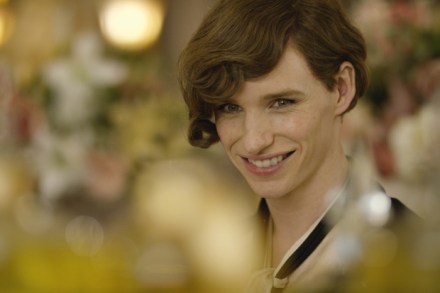
The Danish Girl is based on the true (if heavily revised and simplified) story of Lili Elbe, one of the first people ever to undergo sex reassignment surgery, but while the timing of this is right — transgender issues are surely the next equality frontier — the film itself somehow isn’t. It’s OK. It’s probably passable, if you’ve got two hours to kill. But it’s repetitive, excessively polite and also, given the subject matter, surprisingly dull. It opens when Lili is still Einar, married to Gerda, and if the two ever came round for dinner you’d be mouthing over their heads: ‘Who invited them?’ And: ‘Oh boy, do you think they are ever going to leave?

Grandma: a feminist comedy that punches magnificently above its weight

Apologies if you were expecting a review of Star Wars here, but Disney is not allowing critics access prior to the film’s opening on the 17th, and anyway, we’ve got Grandma, which was made for $600,000 in 19 days and has a running time of 79 minutes and stars a 76-year-old, so there is that. It’s also a feminist comedy with a plot driven by the need for an abortion, and if that doesn’t win you over, I’m not sure what else to say. It’s terrific? It’s small-scale, but punches magnificently above its weight? I laughed, and also cried? I could say that and have just said that, because it’s all true. Grandma stars Lily Tomlin and there is every sense this wouldn’t be a film unless it starred Lily Tomlin because she is the film, basically.

Darth Vader is dirty and it’s not just me that thinks so

Malcolm Tucker delivered the best description of Star Wars, in The Thick of It: ‘The one about the fucking hairdresser, the space hairdresser, and the cowboy. The guy, he’s got a tinfoil pal and a pedal bin. His father’s a robot and he’s fucking fucked his sister. Lego, they’re all made of fucking Lego.’ He didn’t mention that Star Wars is really about Henry Kissinger. It was written by George Lucas, grossed $33 billion over six films, with merchandise, founded a new and stupid religion called Jedi, which, in the 2001 census 0.8 per cent of the population of England and Wales said they identified with, and invented the Star Wars convention where you can, as I did, meet the man who operated Jabba the Hutt’s left arm.

The still point

Lewis Grassic Gibbon’s Sunset Song is the best-remembered title of a short career. Born in 1901, he was dead by 1935. The novel hymned the rhythms of rural life in north-east Scotland in prose that to modern ears sounds as if it comes from a museum of Grampian folklore. At its heart is Chris Guthrie, a spirited young woman whose dream of bettering herself as a teacher is thwarted by tragedy. The world of Sunset Song is a bull’s-eye for Terence Davies, the British director who has always been nostalgically drawn to the travails of unlucky women. Leadings actresses form an orderly queue to emote in his gorgeously lit interiors. Gillian Anderson was up for an Oscar for The House of Mirth and there was a Golden Globe nom for Rachel Weisz in The Deep Blue Sea.

I wanted to beat it with a stick and cry, ‘Get on with it!’: Carol reviewed

Carol is an easy film to admire — so beautiful to look at; entirely exquisite — but such a hard film to feel anything for. Based on Patricia Highsmith’s 1952 lesbian novel The Price of Salt, this is a love story that, here, doesn’t venture below the waist, literally, emotionally or metaphorically. It glides across its own glittering surfaces, never investigating what may lie beneath, and playing restraint to the point of inertia. Its director, Todd Haynes, has spoken about how hard it was to make a Hollywood film about two women, starring two women, so I feel bad delivering the news, but deliver it I must: what was taboo in ’52 may not be that exciting today.

Sins of the fathers | 19 November 2015

This is a documentary in which three men travel across Europe together, but they’re not pleasurably interrailing, even though there are often times they probably wished they were. For two of them, Niklas and Horst, the journey is about confronting their fathers, who were high-ranking Nazi officials responsible for the deaths of millions of Jews, while for the third, the eminent British human-rights lawyer Philippe Sands, it means visiting the place where his grandfather’s family was exterminated. This place, Galicia, which straddles the modern-day border between Poland and Ukraine, is the exact place my own grandmother’s family were murdered. Her father lost every one of his seven siblings. She lost every aunt, uncle and cousin.

Was Steve Jobs really a genius?

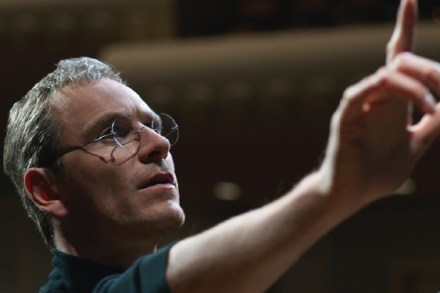
Steve Jobs is a film about a man in whom I have little interest, but for 120 minutes I was at least quite interested, which is a result. But this doesn’t make it a great film, and in many ways it isn’t. It never quite pins Jobs down. It never quite works out what it wishes to say about him. That he was such a ‘genius’ it didn’t matter if he was also a bit of a dick? Or that it did matter, totally? Plus, the ending is calamitous. But it is well made, and the performances are ace, as is the dialogue, and I was kept interested, so the journey may well be worthwhile, even if the destination is not.

Lush, lyrical, exquisite

Brooklyn is a wee slip of a thing compared to the Bond film, Spectre, and cost $12 million, as opposed to $300 million, but what it lacks in length, budget, pre-title stunt sequences, theme songs, sports cars, exotic locales, babes in stages of undress, villains with master plans, Omega watches, rooftops chases, speedboats and exploding buildings, it more than makes up for with real storytelling and real feeling, which you just can’t create from post-production CGI, don’t you know.

Shaken, not stirred

Spectre is the 24th film in the Bond franchise, the fourth starring Daniel Craig, the second directed by Sam Mendes, and the first at not much of anything. Nothing new to report, in other words. It probably delivers what the die-hard fans want, but it is not like Casino Royale or Skyfall (no one talks about Quantum of Solace, by the way, because it’s assumed everyone involved was drunk) as it doesn’t deliver to those of us who never liked Bond, but then discovered that we did. Where has Bond’s interior landscape gone? Where is his woundedness? Where is the emotional heft? Who might we actually care about here? At least we open quietly, with Bond lying back in a meadow, simply watching the clouds float by... I’m kidding, of course.

Self-pitying, despairing, often delusional: the real Marlon Brando

Listen to Me Marlon is a documentary portrait of Marlon Brando that has him burbling into your ear for 102 minutes, but if you have to have someone burbling in your ear for 102 minutes — and there is no law saying it’s obligatory — you could do a lot worse. This isn’t one of your regular documentaries. There are no talking heads, and it’s not blah-blah-blah and then he did this and then he did that and then his BMI got ridiculous, and so on. Instead, it is based on the hundreds of hours of personal audio tapes Brando made in his lifetime, which haven’t been heard until now, and which were uncovered by film-maker Stevan Riley, who wrote, directed and edited.

The Program could do with a good dose of performance-enhancing drugs

The Program, as directed by Stephen Frears, is a biopic of Lance Armstrong, the American cyclist and ‘sporting hero’ who came back from cancer to win the Tour de France seven times before he was exposed as a drugs cheat. It is a thrilling fall-from-grace story, the sort that brings you out in goosebumps just thinking about it — to know you have cheated, to know you are about to be found out, to live with having been found out; how might any of this feel? This should have served Armstrong up on a plate, but it somehow doesn’t. It covers the ground, but it’s underpowered dramatically. It’s like watching a perfunctory documentary, acted out. It doesn’t give us the man. I wanted to see him unravel.