Cinema

Heavy-going

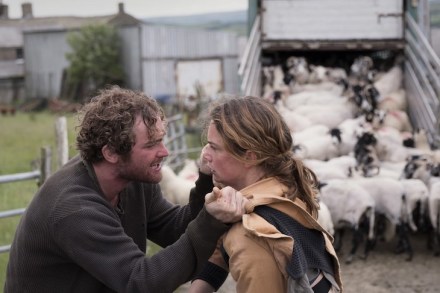
Dark River is the much-anticipated third feature from British writer/director Clio Barnard and it is one of those bleak, rural- England dramas featuring cement-coloured skies, wind, rain, mud, rusted old farm machinery and dead animals — do people who move out from the city know what they are letting themselves in for? — as well as the aftermath of childhood sexual abuse. (Should we pull them aside and have a word?) Apologies for sounding glib about such a heavy subject but this is, ultimately, so heavy-handed about that heavy subject it left me cold. I should point out, however, that other critics are available, and some are saying it is ‘powerful’ and ‘affecting’. So you pays your money and takes your pick.
Relative values

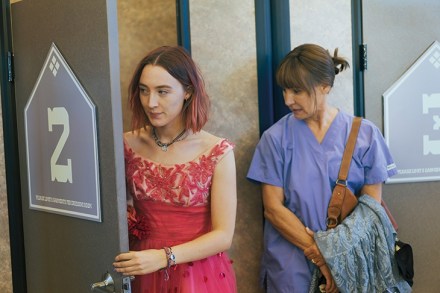
Lady Bird is a semi-autobiographical film written and directed by Greta Gerwig with a plot synopsis that need not detain us as it is basically only this: girl has a mum. (Or: girl has a mum, and sometimes they row and sometimes they don’t.) But thus far it has won near universal critical praise, two Golden Globes and five Oscar nominations, thereby proving there is mileage in girls and their mums, and box office in girls and their mums, and that girls and their mums can be more than mere afterthoughts. In this respect, Lady Bird may, in fact, be quite the rare bird. It’s set in Sacramento, California, in 2002, and follows a year in the life of 17-year-old Christine McPherson, who calls herself ‘Lady Bird’ because she is, you know, At That Age.

From Russia with no love

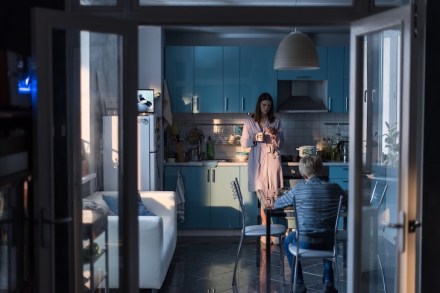
Andrey Zvyagintsev’s Loveless is, indeed, devastatingly loveless, as well as devastatingly pitiless, which does not sound hopeful. Yet it is also devastatingly haunting, absorbing and transfixing. It’s a domestic drama about a missing boy that’s been widely taken as a state-of-the-nation drama about Russia today — a From Russia With No Love Whatsoever, if you like. But it may well be about the state of us all, which is the most devastating of all the devastatings. Generally, it’s just so much nicer to point the finger at others than at ourselves. (I have always found it to be much less devastating this way.) Set in the environs of Moscow, the film opens with a shot of a school and the children pouring out at the end of the day.

Power dressing

Paul Thomas Anderson’s Phantom Thread is a lush psychosexual drama starring Daniel Day-Lewis as a pampered, tyrannical, pernickety 1950s couturier whose life is disrupted when he falls for a waitress who, in the most unexpected way, proves his match. It is a wonderfully fixating film in every respect, and wholly non-formulaic. And it miraculously transforms an addition to a breakfast order — ‘…and sausages’ — into one of the sexiest things ever said. Ultimately, its meaning will be open to interpretation. I saw it as the rather timely story of a man who is finally forced to cut out his misogynist heart and see women as real people, but your interpretation may differ, which is fine, even though I’m bound to be right.

Small talk | 25 January 2018

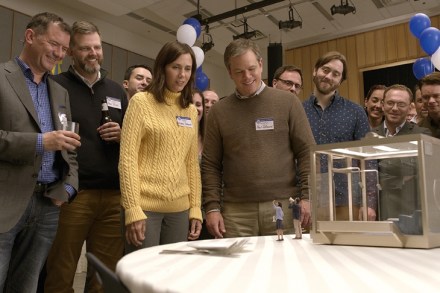
Downsizing is a film with the most brilliant premise. What if, to save the planet, we were all made tiny? What if we only took up a tiny amount of space and flew in tiny planes and produced tiny amounts of rubbish? And what if we could live in the sort of mansions that would cost millions if they were regular-sized? What if, what if, what if, what if… but most crucially: what if this film had run with the premise rather than throwing it away? Could it have avoided becoming just another dumb ‘white saviour’ movie? And this, alas, is the ‘what if’ that must preoccupy us today. This is a film by Alexander Payne, otherwise known for Sideways and Nebraska and About Schmidt, so there may just be no explaining it.

A woman of substance | 18 January 2018

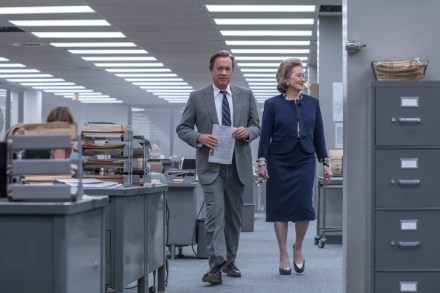
Steven Spielberg’s The Post, which dramatizes the Washington Post’s publication of the Pentagon Papers in 1971, doesn’t exactly push at the frontiers of storytelling. It’s told straight and in a familiar way. Here are the journalists furtively working through top-secret government papers in a smoke-choked room for the public good. (There were no empty pizza boxes in this instance, but there could have been, if you get my drift.) Here’s the government trying to stop them. Here’s the newspaper rolling off the press, and everyone clapping. And so on. But it does star Tom Hanks and Meryl Streep, engaged in a kind of dance as the paper’s editor and proprietor, and you just can’t argue against Tom Hanks and Meryl Streep.

All the rage | 11 January 2018

Three Billboards Outside Ebbing, Missouri does, indeed, feature three billboards outside Ebbing, Missouri. They have been placed at the roadside on the outskirts of town by Mildred Hayes (Frances McDormand), a middle-aged woman whose teenage daughter had been raped and murdered seven months earlier. The billboards read: ‘Raped While Dying’; ‘And Still No Arrests’; ‘How Come, Chief Willoughby?’ Mildred is grieving, in pain and a ball of fury. But not your regular, everyday ball of fury. She is a ball of fury of the most magnificent, unstoppable kind. If only she could go after every rapist from now on. I’d certainly sleep better in my bed.

Stiller instinct

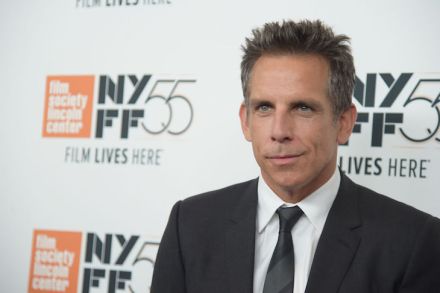
Brad’s Status is a midlife crisis film starring Ben Stiller as a nearly 50-year-old man whose status anxiety is through the roof, poor thing. My heart bleeds and all that. I’ll tell you what Brad’s status should be: face well and truly slapped. The film is written and directed by Mike White (Beatriz at Dinner; Enlightened) and in some quarters it has been renamed Mike’s White Privilege, which is fair — no one else gets a look in — but as it’s intended as a satire of white male privilege you can’t exactly blame it for being white, male and privileged. However, while some moments will resonate (who hasn’t ever felt envy, or does not hope for shitty lives behind the shiny Facebook updates?

Bad feminist

Molly’s Game marks the directorial debut of Hollywood’s most celebrated screenwriter, Aaron Sorkin, and is based on his adaptation of the memoir by Molly Bloom. Nope, me neither, but she’s the one-time Olympic skier who, at the age of 26, started a high-stakes poker game for ‘the richest, the most powerful men in the world’ and ended up with the FBI in her face. Poor Molly, we’re meant to think, when the FBI ends up in her face, but I was delighted. Bang her up! This has been posited as the antidote to all those male-driven, big money Wall Street films, with Sorkin even declaring Ms Bloom a ‘feminist icon’. Well (she says, haughtily), we will see about that.

How’s your father

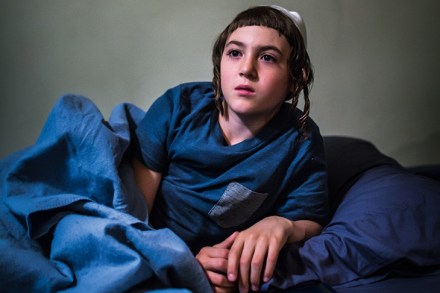
Menashe is a drama set amid Brooklyn’s ultra-orthodox Hasidic community. It is performed entirely in the Yiddish language. It is peopled exclusively by Hasidic non-actors. (Real-life grocer Menashe Lustig plays the title character.) It is small and specific, admittedly, but it also tells a universal story about a father’s struggle to hold on to the son he loves, and it tells this story tenderly, thoughtfully, beautifully. It may even be my favourite frum film of the year. Thus far. (Still a few weeks to go.) This marks the feature debut of director Joshua Z Weinstein (no relation), who made documentaries previously, and who wrote this with Alex Lipschultz and Musa Syeed.

When things fall apart

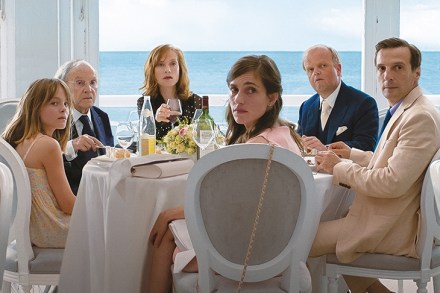
The films of Michael Haneke wear a long face. Psychological terror, domestic horror, sick sex, genital self-harm — these are the joyless tags of his considerable oeuvre. Such an auteur is not the obvious sort for sequels: The Piano Teacher 2 or Hidden — Again! aren’t destined for your nearest multiplex. And yet his new film is an intriguing knight’s move away from his last. Amour (2012) was a hot-button portrait of dementia in which an elderly husband watched his wife’s mind drift away as if on an ice floe. Eventually, he smothered her with a pillow. In Happy End, the widower is back, and this time he’s out to kill himself (although the strapline on the poster is not so jaunty). Haneke has widened the canvas to include the whole family.

Ladies first

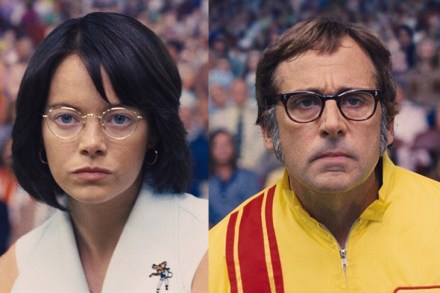
Battle of the Sexes recreates the famed, culture-changing 1973 tennis match between 55-year-old Bobby Riggs, a self-proclaimed chauvinist, and 29-year-old Billie Jean King, the world’s top female player who was out to liberate women and herself. (She was just discovering her true sexuality at that time.) Unless you happen to identify with Bobby — ‘Don’t get me wrong. I love women in the bedroom and in the kitchen, but these days they want to be everywhere!’ — this is certainly a great comeuppance film of the kind that will amply satisfy all your comeuppance needs. No complaints, comeuppance-wise.

Golden oldie

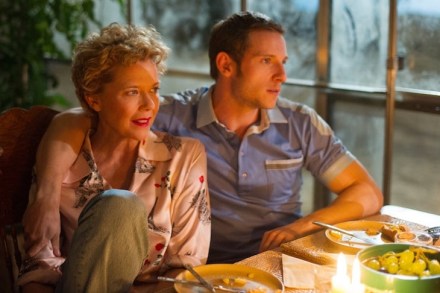
Film Stars Don’t Die in Liverpool is plainly wonderful, and stars Annette Bening, who is plainly wonderful, as Gloria Grahame, a one-time Hollywood movie star who in later life hits on hard times — ‘a big name in black and white. Not doing too well in colour,’ comments her landlady at one point — and embarks on a romance with a young English actor who is 30 years her junior. It is based on a true memoir. It is a love story, told tenderly, bravely, smartly, movingly. And believably. Older women, it seems, can be interesting, complicated, vital, attractive and sexual. Who knew? (But don’t spread the word, or they’ll all want to be like that, and won’t take the shitty bit-parts any more.

Child’s play

The Florida Project is a drama set in one of those cheap American motels occupied by poor people who would otherwise be homeless. It’s sad but not depressing, bleak but also joyful, and features one of the best and truest child performances you will ever likely see. Also, it is captivating without ever being condescending — I think. It is always so hard to know, but if you get too hung up on that, cinema will never be allowed to say that poverty exists, or deal with stories that don’t regularly get told, and that’s the end of my lecture for this week, you will be delighted to hear. The movie is written and directed by Sean Baker, whose previous film, Tangerine, about a transgender sex worker, was shot on an adapted iPhone 5 and won many awards.

The gloves will come off

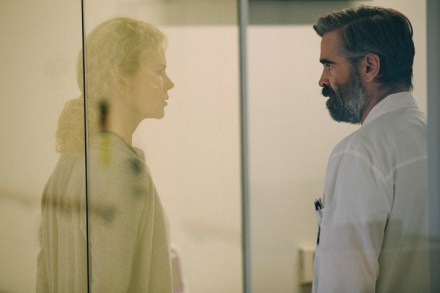
You know where you aren’t with director Yorgos Lanthimos. The Greek allegorist creates parallel worlds which superficially resemble our own. In Dogtooth an overweening patriarch incarcerates his three adult children in a state of infantilised innocence. The Lobster punishes those unable to find a mate by transfiguring them into animals. His acerbic commentaries on flawed modernity feel like lurid horror stories the ancients forgot to write down. The Killing of a Sacred Deer invokes pagan sacrifice in its title. Iphigenia is even mentioned in dispatches — the subject of a schoolgirl essay that doubles as a mythological flare. The film opens on a close-up of open-heart surgery in which a sickly pink organ throbs garishly.

Amazing Grace

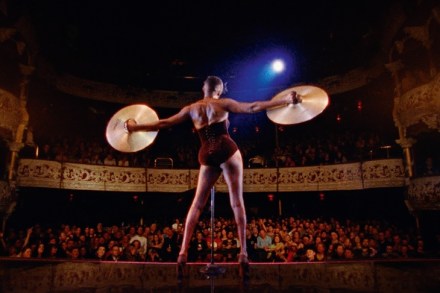
In the first scene of this distinctly odd documentary, Grace Jones meets a group of fans, who squeal with delight at the sight of her and nearly pass out with excitement when they hear her speak. And that, I suspect, is the effect which the film confidently expects to have on the rest of us. OK, it seems to be saying, so you’re not going to learn how Jones got from the Jamaican childhood we see her revisiting to the globetrotting life we see her living now. OK, so there’s no structure, sometimes no clue as to where scenes are taking place or who the other people in them might be — and for quite a lot of the time she’s just pottering around not doing very much. But look! It’s Grace Jones!

Comedy of terrors

Armando Iannucci’s The Death of Stalin is nearly two hours of men in bad suits bickering, but if you have to sit through nearly two hours of men in bad suits bickering you would want it to be written (and directed) by Iannucci. So there’s that, but it’s still not up there with his previous film, In the Loop. It’s funny but not as funny, misfires in places, and by the end you are rather thinking: come on, one of you seize power, so we can all just get out of here. On this outing, Iannucci has substituted Whitehall and White House backbiting (The Thick of It, Veep) for Russia in 1953, the sudden death of Stalin, and the fierce scramble to succeed him.

Gathering storm

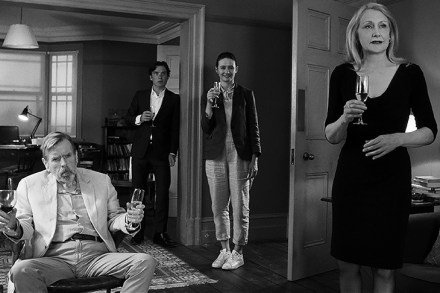
Sally Potter’s The Party, which unfolds in real time during a politician’s soirée to celebrate her promotion, is just 71 minutes long, but it certainly packs a punch. Actually, make that two. Two punches (at least). And there’s a gun, cocaine, a smashed window, throwing up, toxic revelations (of course) and a tray of incinerated vol-au-vents. It is less than half the length of, say, Blade Runner 2049, but three times as dramatic, and maybe 676 times as entertaining, plus it features a stellar cast who put the work in and don’t discover stuff by simply staring at it really, really hard.

Back to the future | 5 October 2017

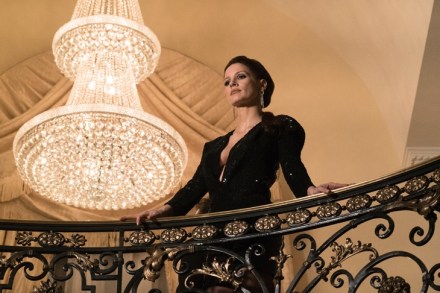
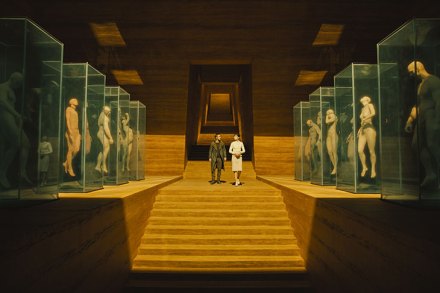
Ridley Scott’s original Blade Runner first came out in cinemas 35 years ago, which I was going to say probably makes it older than some readers, although this being The Spectator, perhaps not. It wasn’t successful in its day, but has since become a beloved classic (rightly), whereas this sequel, Blade Runner 2049, will likely do great box office today, but no one will give a fig tomorrow, once all the silly hype has died away. This is Blade Runner as a dull mainstream blockbuster populated by men who are the epitome of masculine cool and women who are needlessly sexualised fembots.

Unhappy days

Scriptwriters love to feast on the lives of children’s authors. The themes tend not to vary: they may have brought happiness to millions of children but their stories — sob — were fertilised by unhappiness. Saving Mr Banks: Mary Poppins author was a bossy shrew because her alcoholic father died young. Miss Potter: Peter Rabbit creator never found love. Finding Neverland: Peter Pan playwright cheered up grieving family. Enid (made for BBC Four): Miss Blyton was a monster traumatised by her upbringing. And so it will presumably go on.