Chess

Great Alexander

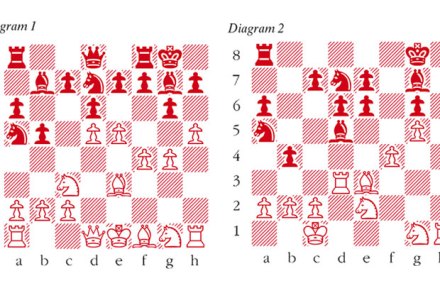
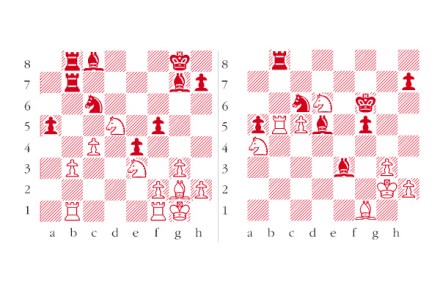
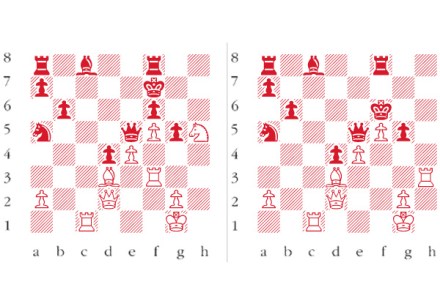
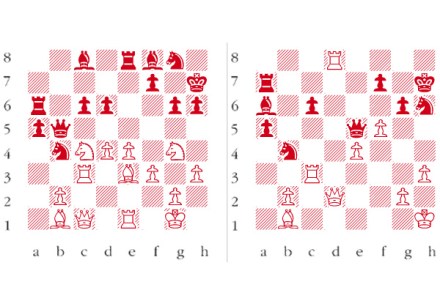
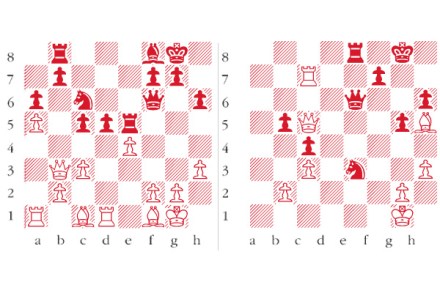
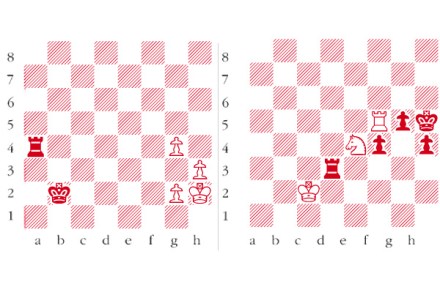
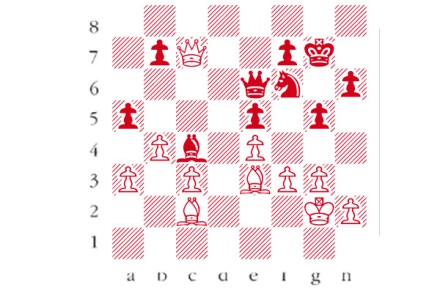
As I write, the prestigious Alekhine Memorial tournament is drawing to a close. Brainchild of sponsor Andrei Filatov, this high-powered event is taking place partly in the Louvre in Paris and partly in the Mikhailovsky Palace of the State Russian Museum in St Petersburg, combining Mr Filatov’s twin passions for chess and art. The event celebrates the brilliant Russian world champion Alexander Alekhine and this week I give samples of his ingeniously creative mind. Next week I shall report on final results and best games.   Alekhine-Rubinstein; Carlsbad 1923; Queen’s Gambit Declined   1 d4 d5 2 c4 e6 3 Nf3 Nf6 4 Nc3 Be7 5 Bg5 Nbd7 6 e3 0-0 7 Rc1 c6 8 Qc2 a6 9 a4 Re8 10 Bd3 dxc4 11 Bxc4 Nd5 12 Bf4 (see diagram 1) White agrees to give up his bishop at f4 for the knight.

Poisson d’Avril

Trust the French to have cuisine in mind when coining their phrase for April Fool. On the front page of the Daily Telegraph of 3 April, I spotted a statistical prediction by my old rival for the British chess championship, Bill Hartston, that Seabass (a horse, not a marine delicacy) would win the Grand National. Bill’s theory, which seemed a sure thing at the time, was that according to past results, stretching back 174 years, winners would have a name of one word consisting of between seven and 11 letters and beginning with S, R, M or C. The winning horse would also be aged nine or ten.

Adrian Hollis

Adrian, who died earlier this year, was both an Oxford classicist from Keble College and a Correspondence Chess Grandmaster. One of the outstanding personalities of British chess, he won the UK Correspondence Chess Championship three times, either outright or shared. But his superlative achievement was to win a world title. From 1982 to 1987 he represented Great Britain in the 9th Correspondence Olympiad, winning the World Championship ahead of the USSR, Germany, Hungary and Yugoslavia.   Chess is usually played over the board, whereas correspondence players deliberate at leisure over their moves, then transmit them by post to the opponent. Such slow-motion games can last years or more, and in some cases chess by mail has resulted in spectacular misunderstandings.

Magnus force

Magnus Carlsen has qualified from the London Candidates tournament to earn a title match against the incumbent world champion Vishy Anand of India. Final scores were as follows: Carlsen and Kramnik 8½; Svidler and Aronian 8; Grischuk and Gelfand 6½; Ivanchuk 6 and Radjabov 4. Kramnik tied for first and in my opinion played better chess but all the tie-breaks were in Carlsen’s favour. I would like to have seen a play-off between Kramnik and Carlsen. However, the 600 million worldwide who follow chess (the figure from the latest YouGov poll), will doubtless enjoy 22-year-old Magnus challenging Anand, who is twice his age. Here is one of Kramnik’s best wins from London followed by a Carlsen puzzle.

Passed pawns

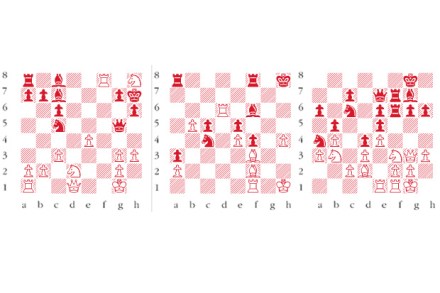
This week, further fascinating positions from the world championship qualifier Candidates tournament recently concluded in London. Although there were the regulation number of draws, for such an elite event, the general tenor was one of superb fighting chess, with little quarter asked or given. The theme of many of the games from the second cycle was the advance of massed passed pawns. I start with a position which heralded the comeback of last year’s title challenger Boris Gelfand. Gelfand-Aronian; London Candidates 2013 White can now seize a key pawn. 27 Bxf5 Bc4 This was the resource upon which Aronian had been relying. 28 e6 Black had overlooked the strength of the advance. The threat of e7 now proves exceedingly dangerous. 28 ...

In mate

In the history of suppression of press freedom in the UK, now once again a fierce topic of debate, an honourable role was played by the chessplayer, writer, editor and irrepressible optimist James Mortimer. An officer in the US diplomatic corps, Mortimer was posted to Paris from 1855 to 1860, during which time he was one of the privileged few to witness the celebrated 1858 match between Adolf Anderssen and Paul Morphy. This was a de facto contest for the world championship. The cachet attached to being a friend of Morphy, as well as a first-hand observer of this stellar match, resulted in many subsequent invitations for Mortimer to important chess competitions.

Candidates

The Candidates tournament to decide the challenger to world champion Anand is the strongest tournament ever to have graced the capital. As I write, three rounds of fighting chess have produced the following scores: Aronian 2½, Carlsen and Svidler 2, Kramnik Grischuk and Radjabov 1½, Gelfand and Ivanchuk ½. The tournament continues at the IET building, No. 2 Savoy Place, London until early next month (www.worldchess.com/candidates). This week, some dramatic positions from the early rounds. Ivanchuk-Aronian: Fidé Candidates London 2013 (see diagram 1) In this position Black finds an extraordinary move to keep his chances alive. Ivanchuk was in awful time trouble, racing against the clock to complete 40 moves. 31 ...

Ponziani scheme

The world championship qualifier, known as the Candidates’ tournament, should now be underway in London. (For details see the website worldchess.com/candidates.) The favourite is Magnus Carlsen, who has identified Lev Aronian of Armenia as his most dangerous rival according to an interview in the Guardian with Stephen Moss. If Magnus fails to rise to the occasion, I favour Vladimir Kramnik, who usually plays well in London, where he was crowned world champion in 2000 when he defeated Kasparov.   One of Carlsen’s great strengths is his ability to adopt seemingly harmless openings and then manoeuvre endlessly until the opponent cracks. A case in point was his victory with the antediluvian Ponziani Opening, which he used to great effect at Wijk aan Zee earlier this year.

Witschcraft | 7 March 2013

There are two new books about Aron Nimzowitsch, chess strategist and author of My System. Aron Nimzowitsch on the Road to Chess Mastery 1886-1924 by Per Skjoldager and Jorn Erik Nielsen is published by McFarland, while Aron Nimzowitsch 1928-1935 by Rudolf Reinhardt (on which the notes to today’s game are based) is shortly to be published. This week, a game and puzzle by the crown prince of chess, as he was sometimes known. Nimzowitsch-Asztalos: Bled 1931; English Opening 1 c4 Nf6 2 Nc3 c5 3 g3 Nc6 4 Bg2 e6 5 Nh3 Nimzowitsch tries something unusual instead of the normal 5 Nf3. 5 ... Be7 6 d3 d6 7 0-0 0-0 8 Nf4 a6 9 b3 Qc7 10 e3 Rb8 11 a4 b6 12 d4 White has expanded in the centre whilst preventing the black freeing moves ... b5 and ... d5. 12 ...

Sacrificial rite

Rudolph Spielmann, a contemporary of Rubinstein, Reti, Alekhine and Capablanca, can be seen as the Romantic equivalent to a further great master of the 1920s, Aron Nimzowitsch. Whereas Nimzowitsch made his literary reputation with his book of chess strategy, My System, Spielmann entrusted his thoughts on the right way to play chess in his parallel tome, The Art of Sacrifice. The ideal in Spielmann’s eyes was to play the opening like a book, the middlegame like a magician, and the endgame like a machine. Spielmann believed that the power of sacrifice lay not necessarily in its soundness, but in its ability to daze and confuse the opponent.

Duchamp/Cage

The Bride and the Bachelors is an impressive exhibition of the work of Marcel Duchamp, John Cage and related artists which is on at London’s Barbican Centre until 9 June. Cage learnt chess in order to communicate with Duchamp without asking crass questions. Other artists, notably Max Ernst, Picabia, Calder and Man Ray also took up chess, impressed by Duchamp’s abilities. Duchamp was a master player at chess whereas the others were mere dabblers in comparison. Marcel Duchamp was arguably the most influential artist of the 20th century, more so than Dalí, Picasso or Matisse. In 1923 he began to concentrate on chess rather than art and he came close to achieving master status. He competed in the French Championships and also in the Olympiads from 1928-1933.

Francophilia

Any book by the erudite Steve Giddins is an event and he has now produced a valuable guide to the popular Winawer Variation of the French Defence, championed by the eponymous Simon Winawer, as well as  Nimzowitsch, Botvinnik, Petrosian and Korchnoi. The Winawer gives up the bishop pair early on in most lines, seeking to exploit the doubled white c-file pawns which frequently arise. It is a line for those who prefer the counter attack rather than equalising defence. Interestingly, the computer has proved a great friend to the Winawer, since Black’s strategy often hangs by a complex tactical thread, which computer analysis can justify. This theme comes across strongly in the book, Move by Move: The French Winawer (Everyman Chess).

Rock solid | 7 February 2013

The Gibraltar Masters, where I was last week, has been won by a quartet consisting of Vitiugov, Short, Sandipan and Vachier Lagrave. In the final knockout to determine who would receive the £20,000 first prize, Nigel Short lost out narrowly to Vitiugov. In my opinion, the British grandmaster’s display of fighting spirit after an early loss would have justified his winning top honours for a fourth time. Here is a sample of his uncompromising play.   Short-Nieto: Gibraltar Masters, Caleta 2013; Ruy Lopez   1 e4 e5 2 Nf3 Nc6 3 Bb5 Nd4 Named after the 19th-century English master Henry Bird, this knight sortie is strategically suspect but rich in tactical tricks.

Opposite bishops

No, not the Church of England and its troubles with the question of whether women should be allowed to be bishops, but chess endgames, with rival bishops moving respectively on black and white squares. Traditionally, the fact that the bishops can play, as it were, past each other increases the possibility of a draw, as indeed do the enhanced possibilities of mutual blockades.   Nevertheless, great masters such as Nimzowitsch, Capablanca, Botvinnik, Smyslov and Karpov have been able to demonstrate that skilful handling of such situations may in fact lead to one side having, in effect, an extra piece if the enemy opposite bishop can be sidelined.

Anand’s Immortal

There is a scene in Monty Python and the Holy Grail where Sir Lancelot’s servant, Patsy, is shot in the back by an arrow and seems to expire. As Lancelot ( John Cleese) brusquely proceeds on his mission, Patsy (Eric Idle) protests that contrary to appearances he is not dead yet. The world champion Vishy Anand has put me in mind of this. He defended his title last year, but his performance was fairly lacklustre, and he has generally seemed uninspired in his tournament games. His loss to the up-and-coming star Magnus Carlsen towards the end of last year more or less confirmed Anand as a write-off, a roi fainéant, keeping the throne warm for his next challenger.

Gran Fiesta

Just before the London Classic, Magnus Carlsen and Judith Polgar contested a four-game match under speed and blindfold conditions as part of the Gran Fiesta of chess at UNAM (Universidad Nacional Autonoma de Mexico) in Mexico City. Supported by the enterprising Mexican Chess Federation, the festival’s highlight was this clash between the top-ranked player and the highest-rated female player of all time. This week, a game and puzzle from the encounter. Polgar-Carlsen: Second Gran Fiesta, Mexico City (blindfold game) 2012; Pirc Defence 1 e4 d6 2 d4 Nf6 3 Nc3 g6 4 f4 Bg7 5 Bd3  White chooses an unusual move order which Carlsen swiftly seeks to exploit. 5 ...

London Classic | 10 January 2013

The fourth London Classic at Olympia, organised by the indefatigable Malcolm Pein, was the strongest of the series including, as it did, the reigning world champion, a former world champion and the current world ranked no. 1. In addition, the contest was graced by the strongest ever female player, Judith Polgar. Final scores, based on three points for a win, one for a draw and nothing for a loss, were as follows: Carlsen 18, Kramnik 16, Nakamura and Adams 13, Anand 9, Aronian 8, Polgar 6, McShane 5 and Jones 3. Carlsen’s success was rewarded by his breaking of Kasparov’s all-time rating record of 2851.

Special Ks

London has seen three World Championship matches in the post-war period, Kasparov-Karpov 1986, Kasparov-Short 1993 and Kasparov-Kramnik 2000. The game I have chosen to start the new year is Kasparov’s most convincing win from his 1986 title defence at the Park Lane Hotel, a match opened by the then Prime Minister, Margaret Thatcher, and closed by her predecessor, former Prime Minister James Callaghan. The position is taken from the historic encounter 14 years later, when Kasparov lost his title to the up-and-coming Vladimir Kramnik. Next week I shall focus on games, results and critical positions from the 4th London Classic, which concluded last month.

London calling

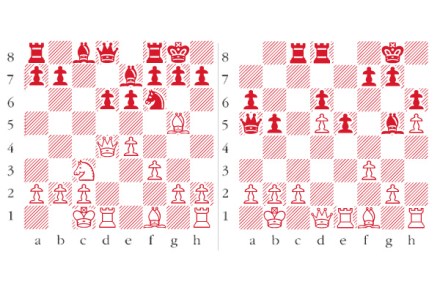
In my series of homages to great masters in London, this week an outstanding win by Anatoly Karpov, who took first prize in the major international tournaments in London 1982 and London 1984. The position is by Alexander Alekhine who came second to Capablanca in London 1922, won in London 1932 and would have defended his world title in London against Botvinnik in 1946, had he lived. Timman-Karpov: London 1984; Scotch Game 1 e4 e5 2 Nf3 Nc6 3 d4 exd4 4 Nxd4 Nf6 5 Nxc6 bxc6 6 e5 Qe7 7 Qe2 Nd5 8 c4 Ba6 9 Qe4 Timman tries something unusual but it is hardly to be recommended since after 9 ... Nf6 White has nothing better than repeating with 10 Qe2. However, Karpov quickly perceives that there is something even more promising in the position. 9 ...

London greats

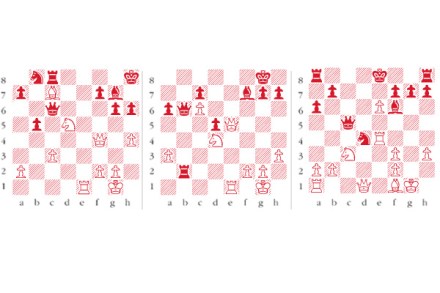
This Christmas and New Year I am publishing a series of tributes to players in great London games. This week, examples of play by Capablanca, who won the great tournament at London in 1922, and Lasker, who stormed to victory in London 1899. The Capablanca game in particular is a mighty struggle which still causes controversy to the current day, in view of his bold attempt to exclude Black’s queen’s bishop from active operations.   Capablanca-Bogoljubow: London 1922; Ruy Lopez   1 e4 e5 2 Nf3 Nc6 3 Bb5 a6 4 Ba4 Nf6 5 0–0 Be7 6 Re1 b5 7 Bb3 d6 8 c3 0-0 9 d4 exd4 10 cxd4 Bg4 11 Be3 Na5 12 Bc2 Nc4 13 Bc1 c5 14 b3 Na5 15 Bb2 Much stronger is Fischer’s plan 15 d5! Nd7 16 Nbd2 Bf6 17 Rb1.