Chess

Georgics

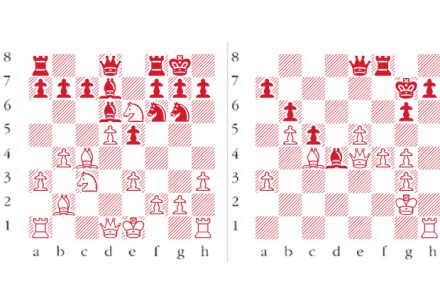
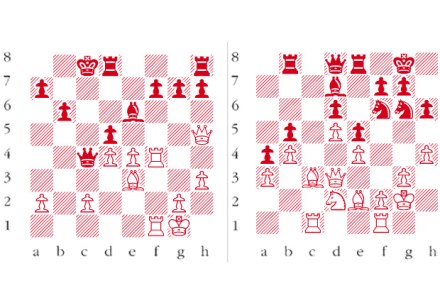
George Osborne is a supporter of chess. During the award ceremony at 11 Downing St for last year’s London Candidates’ tournament, he told me that as a teenager he attended the Kasparov v. Karpov world championship at London’s Park Lane Hotel in 1986, which I assisted in organising. Appropriately, the Tory party chairman Sir Jeremy Hanley had persuaded Margaret Thatcher to open the championship. ‘Why on earth should I want to open a chess match?’ she asked. ‘Because,’ Sir Jeremy replied, ‘they are crazy about chess in the USSR and you will be on the front pages of all their papers the day after.’ ‘So how can I resist?’ came the prime ministerial reply.   Magnus Carlsen, Viswanathan Anand and others v.

Lions’ den

Daniel Johnson, the distinguished editor of Standpoint magazine, can be bracketed with Tim Congdon and Dominic Lawson, as having had the potential to become a chess master. All three chose other courses in economics, journalism and politics. Daniel, in particular, has faced world-class opposition in simultaneous displays, having drawn with Garry Kasparov and defeated the Czech grandmaster Ludek Pachman.   The game I have chosen to illustrate his chessboard skill was played in a curious match between Academics and Philistines, where Daniel demolished Steve Davis, the six-time winner of the snooker world championship.

Gates’ exit

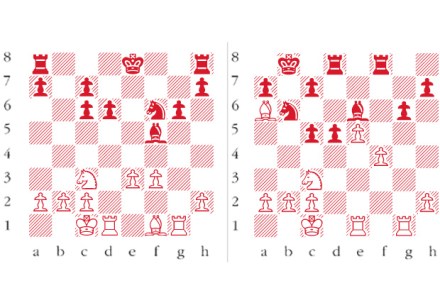
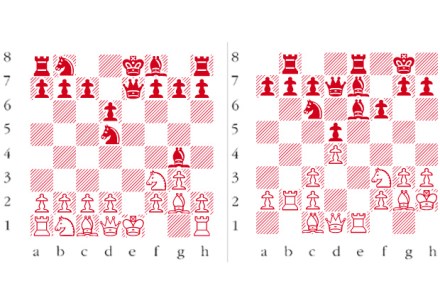
In Virgil’s Aeneid the hero Aeneas escapes from Hades via one of two gates, one made of ivory and the other of horn. It is widely believed that he selected the wrong gate. As Homer had already established, the gate of ivory, which Aeneas chose, portends false visions, while the gate of horn heralds true prognostications. Last week Bill Gates flew into London to contest a game against the new world champion Magnus Carlsen. Although the game only lasted nine moves, Bill certainly chose the wrong gate to exit the game.   Gates-Carlsen: London 2014; Nimzowitsch Defence   1 e4 Nc6 2 Nf3 Nf6 3 Bd3 d5 4 exd5 Qxd5 5 Nc3 Qh5 6 0-0 Bg4 7 h3 Ne5 This sacrifice is not sound. Instead 7 ... Bxf3 8 Qxf3 Qxf3 9 gxf3 0-0-0 gives Black a great advantage in pawn structure.

Nimzo style

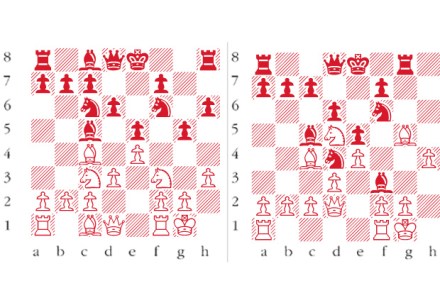
As promised, this week a victory by chess aficionado Dominic Lawson, former editor of The Spectator. Dominic’s distinguished opponent was Peter Lee, who has been British champion in both chess and bridge — a unique achievement I believe. The following is a fine Nimzowitschian game, not least in the amazing versatility of the Black knights. Notes based on those supplied by the winner.   Lee-Lawson: Hamilton-Russell Cup, London 2010; Modern Defence   1 e4 d6 2 d4 g6 3 Nc3 Bg7 4 Be3 a6 5 Qd2 Nd7 6 0-0-0 b5 7 h4 h5 8 Nh3 Bb7 9 Ng5 Rc8 10 f3 c5 11 dxc5 Nxc5 12 Bd4 Nf6 13 Qe3 Qc7 14 e5 Against this, Black has prepared an ambush. 14 ... dxe5 15 Bxe5?   15 ... Ng4! 16 Bxc7 16 fxg4 Bxe5 much better for Black. 16 ... Nxe3 17 Re1 Nxf1 18 Bd6 0-0 19 Rxe7 Bf6 20 Rxb7?

Warhorses

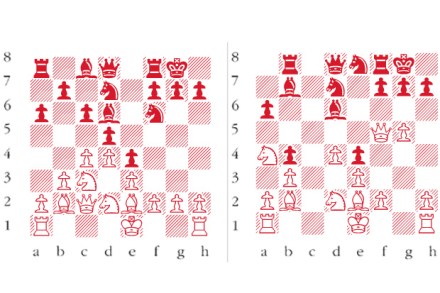
Towards the end of last year, those two old warhorses Anatoly Karpov and Jan Timman added to their total of over 100 competitive games against each other by contesting a four-game match in Groningen, Holland. Both aged 62, the players displayed resilience and ingenuity which contribute to the annals of age-related achievements in serious international competitive chess. After draws in the first three games, Karpov broke through to take game four and overall match victory by 2½–1½.   Karpov-Timman: Groningen Match 2013; Queen’s Indian Defence   1 d4 Nf6 2 c4 e6 3 Nf3 b6 4 g3 Ba6 5 b3 This variation was popular in the World Championship matches between Karpov and Kasparov.

Different paths

Daniel Johnson, Dominic Lawson and Tim Congdon all had the potential to become chess masters. However, all three chose alternative routes, establishing their reputations in the fields of journalism, politics and economics. Daniel once held Kasparov to a draw in a simultaneous display and was instrumental in staging Nigel Short’s challenge to Kasparov in 1993. Dominic was a key player in rescuing Kasparov’s appearance in the 1983 world championship cycle and continues to compete in league and county chess. Meanwhile, Professor Tim Congdon is active in internet chess and can include a victory in the southern counties junior championship among his laurels. This week, some extracts by Tim while in future columns I hope to show Daniel and Dominic in action too.

Vale Vishy

Viswanathan Anand, the 15th world champion, suffered a complete meltdown in his title defence against Magnus Carlsen towards the end of last year. Anand was an impressive match player, defending the title successfully against challenges from Kramnik, Topalov and Gelfand. He was also world champion for around six years. In his latter period as champion, though, his tournament results were largely unconvincing. How does Anand figure in the pantheon of champions?   I would say that as champion he is more or less on a par with Capablanca, Petrosian and Kramnik. His record as champion was superior to that of Euwe, Tal, Smyslov and Spassky and way ahead of Bobby Fischer, who played no games at all as champion and even defaulted in what was meant to be his first title defence.

London classics II

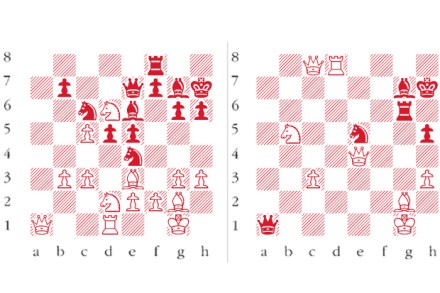
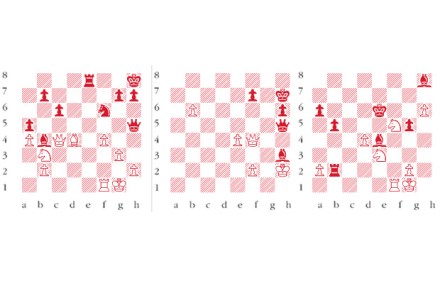
This year’s London Classic tournament is still in progress and features Vladimir Kramnik, Viswanathan Anand, reigning British champion Gawain Jones, Nigel Short and Michael Adams. As a continuing tribute to classic positions, played in London events, I give this week a number of spectacular conclusions to games played in the capital. After many years of a Soviet boycott against the defector Viktor Korchnoi, the reigning world champion Anatoly Karpov finally faced him at the Phillips and Drew/GLC tournament in London 1984. With Korchnoi in his habitual time trouble, Karpov finished with a flourish.

London classics

This year’s London Classic tournament, organised by the indefatigable Malcolm Pein, who also heads up the charity Chess in Schools and Communities, is composed of several sections. The main group is graced by the presence of numerous elite international and British grandmasters, notably Viswanathan Anand, fresh from his title defence against Magnus Carlsen. All the action can be followed on www.londonchessclassic.com.   This week I pay tribute to historical chess events in the capital, starting with a victory from the London tournament of 1851, the first ever major international chess tournament, by the celebrated historian Henry Buckle.

Song of Norway

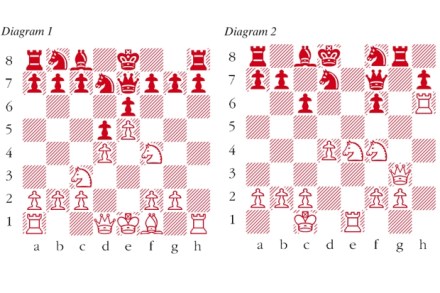
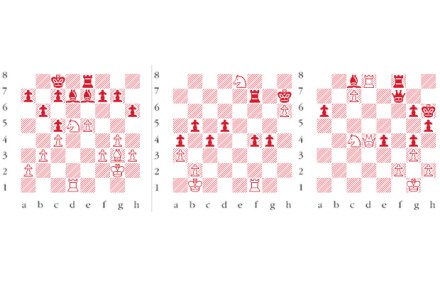
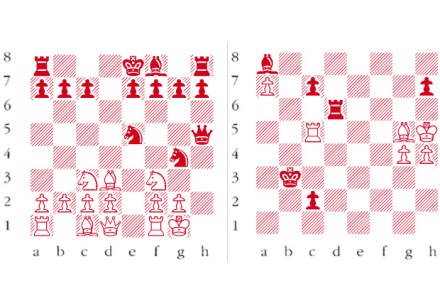
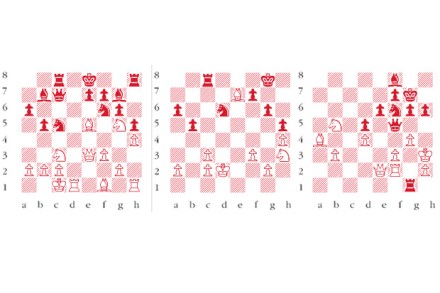
Magnus Carlsen has become the 16th world chess champion, taking the title with three wins, seven draws and no losses, the most convincing win in a title match since Capablanca defeated Lasker in 1921. Norway’s Prime Minister, Erna Solberg, congratulated the new champion on live TV, Scandinavian Airlines decorated a plane in chessboard livery in Carlsen’s honour, while Norway in general erupted in wild jubilation. I left the match last week before games seven and eight, which resulted in steady draws, then in game 9, on the precipice of defeat, Anand went for the jugular.   Anand-Carlsen; Chennai (Game 9) 2013   (diagram 1) In the above position, with chances on a knife edge, Anand risked all with 27 Rf4. After 27 ...

Bifurcation

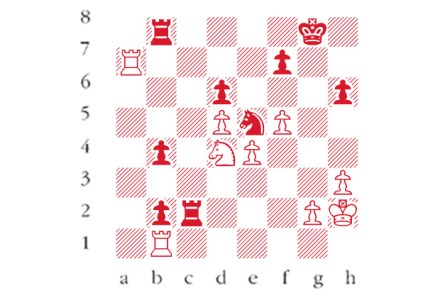
As predicted last week, the samurai standoff between Anand and Carlsen was swiftly shattered. After quiet draws in games one and two, Anand missed a golden opportunity in game three, while Carlsen returned the compliment in game four. Then Carlsen struck, cutting Anand down in two consecutive endgames which the young Norwegian handled with awesome clinical precision.   Carlsen-Anand: World Championship (Game 3), Chennai 2013   Here Anand continued 29 ... Bd4 30 Re2 c4 31 Nxe6+ fxe6 32 Be4 cxd3 33 Rd2 Qb4 34 Rad1 Bxb2 35 Qf3 Bf6 36 Rxd3 Rxd3 37 Rxd3 and the game was soon drawn. If Anand wanted to play to win he had to try 29 ... Bxb2 30 Rae1 Rb6 31 Bd5 and now 31 ... Bd4 when it is not clear how White can continue in order to justify the pawn deficit.

Sanjuro

In Kurosawa’s samurai warrior classic Sanjuro, the hero, a wandering Ronin played by Toshiro Mifune, ends the film in a face-off with his mortal enemy Hanbei Muroto. For a long moment the two martial swordsmen face each other in total immobility. Then, in a flash, a movement known by Samurai as Debana-Waza, Mifune slices his opponent in two, creating a violent fountain of blood.   There is an analogy to be made with the world chess championship, currently in progress in Chennai. After two quiet draws, the players are in a Debana-Waza state of immobile preparation, while awaiting the sudden stroke that will break the deadlock and propel one of the two into the lead.

Next generation

Magnus Carlsen’s world title challenge to Vishy Anand commences on Saturday 9 November and continues to the end of this month. The age gap between the young challenger and the veteran champion is 21 years; such an age disparity has not been seen since the 1981 clash between Karpov and Korchnoi (a 20-year age gap) and Tal v. Botvinnik in 1961 (a 25-year gap). Curiously, reversing the customary narrative of the rising fresh talent, in both of those instances the older man was the challenger.   This week, the game which clinched the title for 50-year-old challenger Mikhail Botvinnik in 1961, and a puzzle showing 50-year-old Korchnoi succumbing to 30-year-old Karpov.

Tendonitis

Magnus Carlsen has risen to achieve the highest ever chess rating. He ascended to 2872 on the rankings, which compares with 2851 for Kasparov, 2785 for Bobby Fischer and 2817 for Viswanathan Anand, the reigning champion. Carlsen commences his multi-million-dollar challenge for the world chess title against Anand in Chennai on 9 November. Carlsen is the firm favourite, with the betting odds clearly in his favour — he is being offered at 1/3 with Anand at 2/1. But for all the impressive statistics, he does have one Achilles heel, namely a certain vulnerability when facing White’s most aggressive first move, 1 e4.

The 16th?

Magnus Carlsen is seeking to become the 16th world chess champion in a line that includes such giants as Bobby Fischer, Boris Spassky and Garry Kasparov. The $5 million World Chess Championship will be a clash between the reigning Indian world champion Viswanathan Anand (defending champion from the World Chess Championship 2012 and twice winner of the coveted Sportsman of the Year title in India) and the young Norwegian challenger. It will be held under the auspices of Fidé, the World Chess Federation, from 9 to 28 November in Chennai. There will be 12 games — one per day, with days off for rest — plus a 13th and final shoot-out day on 28 November if the championship is tied after 12 games.

Maecenas

Andrew Paulson, an American who lives in London, has been responsible for a remarkable chess revolution over the past year. He commissioned a YouGov study which showed that more than 600 million people worldwide regularly play chess. Paulson proceeded to raise sponsorship funds to stage two of the best chess tournaments ever held in London — and all within a matter of months. These were the London Grand Prix and the Candidates qualifier, to determine the challenger for the world title match which starts in a few weeks. Almost every grandmaster from the current elite — Carlsen, Kramnik, Svidler, Ivanchuk, Gelfand — was present in one or both of these two extraordinary competitions.

Time for change

Former world champion Garry Kasparov has announced that he will stand for president of Fidé, the World Chess Federation, next year. He is challenging the incumbent, the colourful Kirsan Ilumzinov, former president of Kalmykia. The adjective ‘colourful’ is very much an understatement. An openly declared friend of Saddam Hussein and Colonel Gaddafi, it looked like the death knell for President Assad, when Kirsan popped up in Damascus to discuss the future of schools chess in Syria. So far, though, Assad has escaped the curse of Kirsan. The incumbent also makes no secret of the fact that he is an alien abductee, who could have graced an episode of The X Files.

Through glasses darkly

Grandmasters Pal Benko and Viktor Korchnoi have worn dark glasses to counter perceived hypnotic influence during games. In the recent Sinquefield tournament in St Louis, Hikaru Nakamura resorted to the same measure against Magnus Carlsen. In the past Naka has fared badly against Carlsen, but this time he held the draw. Maybe there is something in it... St Louis, by the way, is Carlsen’s last public preparation before his world title challenge to Anand next month.   Carlsen-Nakamura: Sinquefield Cup, St Louis 2013   Although Black has a slight material advantage, chances are balanced and neither side can make progress.

Max Fuller

I am sorry to hear that the Australian master Max Fuller has died in Sydney at the age of 68. For about a decade Max was a fixture on the British chess scene and the high point of his career came when he was within just one move of tying for first prize in the British Championship, instead of sharing second. I was instrumental in the final outcome, since I was playing Black against Max in the last round. Had Max won, and my notes will reveal how this would have been possible, he would have shared first prize with fellow Antipodean, Bob Wade OBE. As it was, Wade won the championship outright. In 1975 Max also shared second place; he represented Australia many times in the Chess Olympiads, shared first prize in the Australian Championship and was appointed captain of their team in 1986.

World Cup

The recently concluded Fide (World Chess Federation) World Cup held at Tromso in Norway resulted in a triumph for Vladimir Kramnik. The ex-world champion’s form has been variable this year, including shared first place in the London Candidates’ tournament, with Carlsen, but a disastrous last place finish in the Tal Memorial in Moscow. Kramnik missed out on the qualifying slot in London, when he crashed to defeat against the ever mercurial Ivanchuck in a tense final round. However, Kramnik gained his revenge in a crucial game against the same opponent in Tromso.