Chess

London pride | 6 December 2012

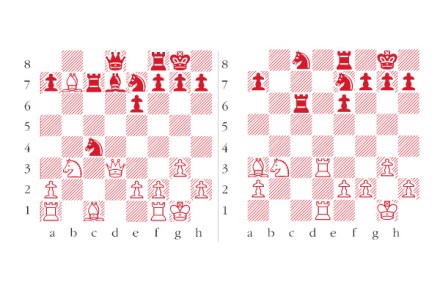
This week I continue my homage, during the London Classic which finishes this coming week, to great players who have achieved outstanding things in London. In 1866 Wilhelm Steinitz defeated Adolf Anderssen in what was, to all intents and purposes, a World Championship clash. Steinitz marked it as the beginning of his World Championship tenure, which lasted until 1894.   Anderssen-Steinitz: London (Game 13) 1866; Ruy Lopez   1 e4 e5 2 Nf3 Nc6 3 Bb5 Nf6 4 d3 d6 5 Bxc6+ bxc6 6 h3 g6 ‘Preparation for an assault by a mass of pawns as taught by Philidor. For this purpose it is essential to maintain many obstructions in the centre. The bishop which aides the centre from g7 is there well placed.

London Classic

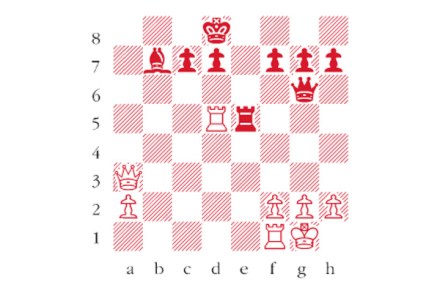
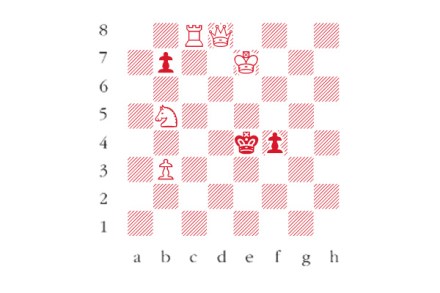
To celebrate the London Classic, which starts at Olympia this Saturday, I shall be paying a series of homages to illuminati of the game who have achieved great things in London. I kick off with Howard Staunton, who won the equivalent of World Championship matches against the German masters Harrwitz and Horwitz in London and who also founded the first ever international tournament in the capital in 1851. The winner of that inaugural event was another German, Adolf Anderssen, who won probably the most celebrated game of all time, for which see this week’s puzzle. For information on the London Classic see londonchessclassic.com.

Armenian gold

Armenia won the gold medals in the Istanbul Chess Olympiad for the third time in four years — an astonishing feat for a small nation. Part of the secret of their success is the fact that chess is now taught as a curriculum subject in Armenian schools; the Armenian hero Tigran Petrosian created a chess boom by winning and retaining the world championship from 1963-1969. The top board player for Armenia in their Istanbul triumph was Levon Aronian, who will also be seen in action in the London Classic starting at London’s Olympia in early December. Final scores were: Armenia and Russia 19; Ukraine 18; China and USA 17. England finished in 17th position on 15. The following game was a key victory for the current world no.

Witschcraft

Last week, in the context of the discovery of the chessboard of Sir John Tenniel, the Times related a famous, possibly apocryphal story in which Aron Nimzowitsch mounted a table after yielding to a lesser player, shouting ‘why must I lose to this idiot?’ Nimzo is also in the news after the recent publication of a detailed monograph on his wilderness years in the Baltic and Scandinavia between the start of the first world war and his re-emergence into tournament play in the mid-1920s. The monograph (Aron Nimzowitsch on the Road to Chess Mastery 1886-1924) by Per Skjoldager and Jorn Erik Nielsen, is fascinating on Nimzo’s notorious disputes with Dr Tarrasch (Freud to Nimzo’s Jung) and gives many previously missing games against Scandinavian amateurs.

Cut of their jib

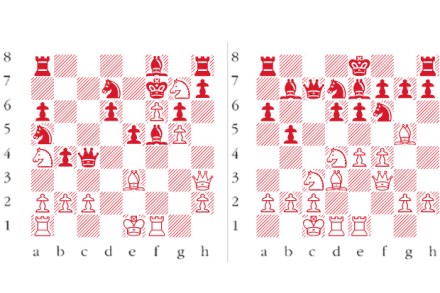
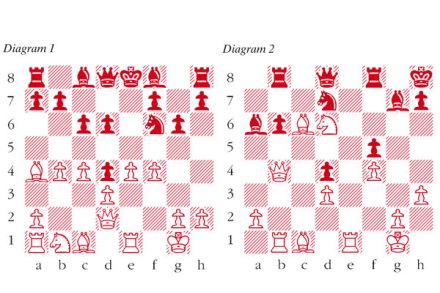
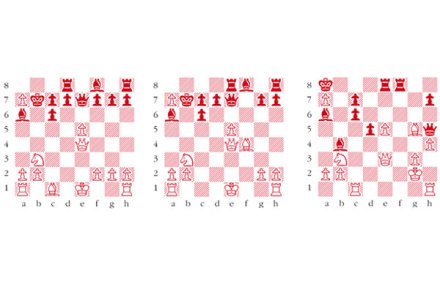
Entries are now being invited to what I believe to be the world’s finest open tournament held at the Caleta Hotel in Gibraltar over January and February next year. I attend as often as I can and the atmosphere and general camaraderie exceed anything I have experienced elsewhere. Brian Callaghan, the spiritus rector of the tournament, thoroughly deserves his recent OBE for services to chess and tourism on The Rock. Here is a fine win from a previous event. The tournament website for further information is www.gibraltarchesscongress.com Adams–Vallejo Pons; Gibtelecom Masters, Playoff Caleta 2010; French Defence 1 e4 e6 2 d4 d5 3 Nd2 c5 4 Ngf3 Nf6 5 e5 Nfd7 6 c3 Nc6 7 Bd3 Qb6 8 0-0 a5 Black could also play 8 ...

Basman forever

Michael Basman is in many ways the most important person in British chess. As a player, he is an International Master, who tied for the British Championship in 1973, losing out in the tie-break. Since then he has turned his hand to organising a mass annual schools championship, attended by 70,000 entrants every year. Sponsored by Delancey, this is the prime breeding ground in British chess for future champions who have gone on to win the British championship, or compete in last month’s London Grand Prix at Simpson’s in the Strand, or will compete in the London Classic at Olympia this December.

According to Akiba

In contemporary high-class tournament play both adjournments and early draws have been banned. This is partly due to the accessibility of computer analysis and partly to the realisation that well-remunerated grandmasters have an obligation to entertain. As a result, more and more games are being decided in seemingly level endgames which in former times might have been abandoned as draws. Carlsen is a particular exponent of this attritional warfare. If it pays to study the endgame, then Akiba Rubinstein is your man, possibly the greatest endgame artist of all time. Rubinstein was active from around 1907 to 1930, during which period all of the great names succumbed at one time or another to his endgame prowess.

Magnificat

Magnus Carlsen has won the elite tournament split between Sao Paulo, Brazil and Bilbao, Spain ahead of a squad of top grandmasters, including the world champion Viswanathan Anand. Using the 3 for a win, 1 for a draw and nothing for a loss system, the final scores were as follows: Carlsen and Caruana 17, Aronian 11, Karjakin 10, Anand 9 and Vallejo Pons 6. The tie-break between Magnus and rising star Fabiano Caruana was broken by two rapidplay games, both of which ended in Carlsen’s favour. Worthy of note was the feeble performance by world champion Anand, who failed to win a single game and finished near the bottom of the table. Even more significant was the fact that Carlsen overran Anand in the one decisive game from their individual encounters.

Grand finale

The London Grand Prix at Simpson’s in the Strand finished in a triple tie between the three grandmasters Topalov, Gelfand and Mamedyarov, who ended in that order after a tie break. Britain’s Mickey Adams performed creditably after being granted just one day’s notice that he was playing, while the top-ranked US Grandmaster, Hikaru Nakamura, experienced probably the worst result of his life, losing five games. Meanwhile, the British chess fraternity must express its gratitude to Andrew Paulson of Agon for bringing to London one of the strongest tournaments ever held here, suitably staged in the traditional home of English chess. Sadly the event planned for 14 October at the Royal Geographical Society, also featuring Dominic Lawson and Malcolm Pein, has been cancelled.

Grand prix 2

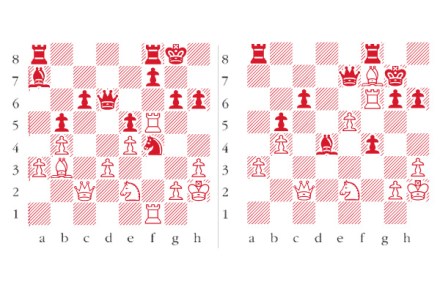
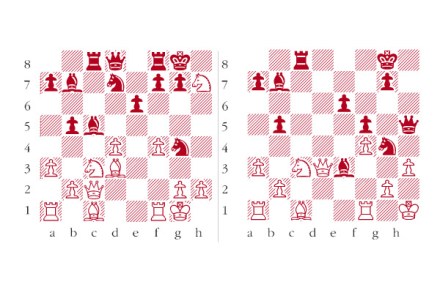
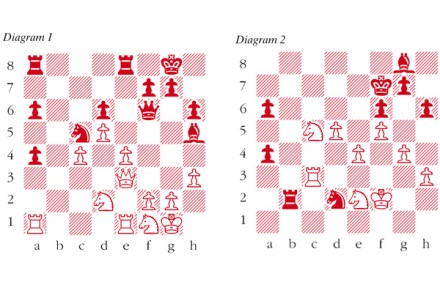
Boris Gelfand, the challenger for this year’s World Championship in Moscow, continues, as I write, to lead the Agon/Fidé Grand Prix at Simpson’s-in-the-Strand. He is being pursued by a pack of great players which includes Shakhriyar Mamedyarov from Azerbaijan and Vesselin Topalov from Bulgaria. The surprise of the event has been the complete collapse of Hikaru Nakamura who, rated at 2783, was the highest ranked player and pre-tournament favourite to win. Gelfand-Wang Hao: Fidé Grand Prix, London 2012 49 ... f5+ Allowing the white king in is very risky. Black should simply pass with 49 ... Ke8. 50 Ke5 Rxe3+ 51 Kf6 Now the constant mate threats make life very difficult for Black. 51 ... Kg8 52 Rg7+ This is the wrong idea.

Grand prix

When this article appears, the AGON Grand Prix at Simpson’s-in-the-Strand, brought to London by Andrew Paulson, will be reaching its midway stage. The players who have shone in the early stages of this stellar event are Boris Gelfand of Israel, the World Championship challenger earlier this year, Shakhriyar Mamedyarov of Azerbaijan, and Peter Leko from Hungary, a World Championship challenger in 2004. Here are some extracts from play. Nakamura-Gelfand: Fidé Grand Prix, London 2012 Opposite bishops often indicate a draw but here Black exploits his control of the dark squares to infiltrate White’s position. 41 ...

Phoenix arise

Every year I give many so-called simultaneous displays, usually for charity, where I take on 20 opponents at one and the same time. The only game I have lost this year in such events was a complicated battle during the Phoenix Legacy weekend in Dorset, organised by Rosie Barfoot, to raise awareness of the need for mental activity as one ages. Apart from the lecturers, Tony Buzan of Mind Mapping fame and Dominic O’Brien, the eight-times world memory champion, there was also an address by Leontxo Garcia of Spain’s leading newspaper El Pais, Madrid, who is an expert on the role of chess in combating Alzheimer’s. Notes based on the winner’s.

Schools challenge

The indefatigable Michael Basman continues to identify future chess superstars with his annual Delancey UK Schools Chess Challenge for schoolchildren. Eight-year-old Alex Golding won an astounding £1,000 prize in the most recent edition of the challenge, which attracts a world record entry of 60,000 every year. Brandon Clarke emerged as the overall winner of the event. In this game young Alex found himself on the losing side for once. Clarke-Golding: Delancey UK Schools Chess Challenge; Bird’s Opening 1 e3 d5 2 f4 Nf6 3 Nf3 c5 4 Be2 Nc6 5 0-0 e6 White is playing the Bird’s opening, but it is more a reverse Dutch.

Total recall

Memory is vital in chess, not least because modern opening theory has expanded in such a daunting way. I was, therefore, interested to observe the results of the UK Memory Championship which took place last month at the London Science Museum and resulted in victory for Katie Kermode. In the course of the championship Katie bested second-placed Dominic O’Brien, the eight-times World Memory Champion. It was a sensational performance. Events included the memorisation of names and faces, recall of 620 numbers and, in the final showdown which clinched her victory, the accurate memorisation of a shuffled deck of cards in two minutes and 0.93 seconds. Katie is 34 years old, from Cheshire, married, and expecting her second child in December.

Grand prix

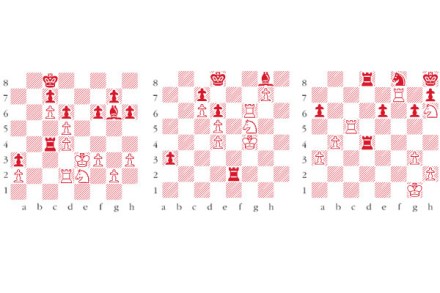
London’s newest and most flamboyant chess entrepreneur, Andy Paulson of Agon, which has acquired all World Championship rights from Fidé, is set to stage a spectacular Grand Prix tournament at Simpson’s-in-the-Strand starting on 20 September. The superb line-up includes Peter Svidler, Hikaru Nakamura, Alexander Grischuk, Wang Hao (the victor of the recent tournament in Biel, ahead of Magnus Carlsen), former world title challengers Vesselin Topalov, Boris Gelfand and Peter Leko and rising star Anish Giri. In addition to this tantalising feast of chess Andy is also bringing the World Championship qualifying tournament to London next March. This week a game and a puzzle by two of the illustrious competitors in the Grand Prix to be held at Simpson’s.

Duchamp

Marcel Duchamp was the strongest chessplaying artist the world has seen. He defeated a number of master players, including Koltanowski, the Knight’s Tour expert and exponent of blindfold play, and represented France in the Chess Olympiad. Chess permeates his work; there is even a chessboard pattern concealed beneath his work Étant donnés in the Philadelphia Museum of Art. Duchamp’s obsession with the game influenced other artists of the Dada and Surrealist schools such as Max Ernst, Alexander Calder, Francis Picabia and Man Ray, to incorporate chess themes in their work. René Clair’s 1924 film Entr’acte, which has been described as an absolute Dadaist movie, starts with a chess game on the rooftops of Paris.

Sir Gawain

Grandmaster Gawain Jones triumphed in the 99th British championship. However, his path to success was not exactly problem free. Far from storming to victory, Gawain tied for first prize with grandmaster Stephen Gordon, thus necessitating a play-off to break the tie, an echo of last year’s championship, when Michael Adams defeated Nigel Short after a neck and neck performance in the main event. Having reached the play-off, Gawain proceeded to lose his queen for patently insufficient compensation. Resisting what must have been an overwhelming temptation to resign on the spot, Gawain struggled blithely on, and pulled off a miraculous win, rather like a conjuror extracting a very large rabbit from a very small hat. Here is a more conventional victory by the new champion.

Midway

The 99th British Championship in North Shields is reaching its midway point. The favourites are grandmasters Gawain Jones (my personal tip for the top), David Howell, Keith Arkell, Stuart Conquest and Stephen Gordon. This week a game by three-times British champion Harry Golombek in his favourite English Opening. Golombek-Wood: British Championship 1947; English Opening 1 c4 e5 2 Nc3 Nf6 3 g3 d5 4 cxd5 Nxd5 5 Bg2 Nb6 6 d3 This game features the white development with Nh3 – a plan pioneered by Golombek. Another example of the move Nh3 is the following: 6 Nh3 Nc6 7 d3 Be7 8 0-0 0-0 9 f4 Bxh3?! 10 Bxh3 Bc5+ 11 Kh1 Nd5 12 Nxd5 Qxd5+ 13 Bg2 Qe6? 14 f5 Qd7 15 Qa4 which was good for White in H.Golombek-Scholtens, Leeuwarden 1947. 6 ...

Sceptred Isle

This week I continue with extracts of play from the new book on the English Opening by Steve Giddins. The timing is solicitous in that the British Championship commences next week in North Shields with grandmasters Gawain Jones, David Howell, Stephen Gordon, Keith Arkell and Simon Williams. Timman-Ernst: Wijk aan Zee 2012; English Opening 1 c4 c6 2 Nf3 d5 Black angles for a Slav Defence. 3 g3 The text is the main attempt to dodge regular Slav lines and preserve a recognisably ‘English’ structure. 3 ... Nf6 4 Bg2 dxc4 5 0-0 Nbd7 This is probably Black’s best, and initiates a plan of defending the c4-pawn with pieces. 5 ... Be6 is another version of the same idea, of holding c4 with pieces. Play then continues 6 Ng5 Bd5 7 e4 h6 8 exd5 hxg5 9 dxc6 Nxc6.

Puzzle no. 226

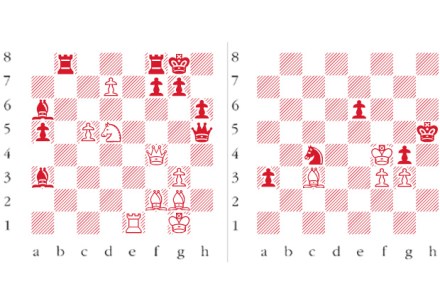
White to play. This position is from Kasparov-Ivanchuk, Moscow 1988. White’s next caused Black’s instant resignation. What did he play? Answers to me at The Spectator by Tuesday 17 July or via email to victoria@spectator.co.uk or by fax on 020 7681 3773. The winner will be the first correct answer out of a hat, and each week I shall be offering a prize of £20. Please include a postal address and allow six weeks for prize delivery.