Chess

So there

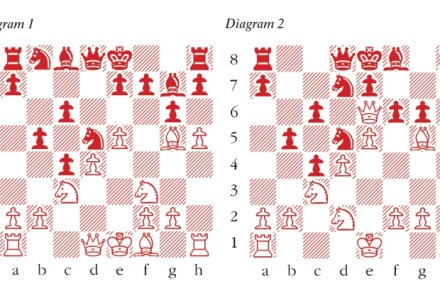
Hikaru Nakamura has won the US Championship in convincing style with 8/11, ahead of Ray Robson and Wesley So. Things might have turned out differently had So not been disqualified after just six moves of his game against Akobian. These moves were: 1 d4 e6 2 c4 d5 3 Nc3 c5 4 cxd5 exd5 5 Nf3 Nc6 6 dxc5. Apparently, Akobian complained to the arbiters that Wesley So, the most promising grandmaster ever to emerge from the Philippines and currently ranked no. 8 in the world, had been scribbling notes to himself during the opening phase of the game. Since the opening is well known these notes could have had nothing to do with the position. But it is illegal to write notes during the game and So had been warned about this during an earlier encounter.

Hit for six

The Hamilton Russell trophy for London clubs has been dominated in the past by the RAC. This year, though, they were knocked for six in the final decisive match by the MCC. The full scores (out of a possible 14) were as follows: 1st Marylebone Cricket Club, 14; Joint 2nd Oxford & Cambridge Club and Royal Automobile Club, 11; 4th Athenaeum Club, 7; Joint 5th Hurlingham Club and Oriental & East India Clubs, 4; 7th Chelsea Arts Club, 3; 8th Reform Club, 2. The crucial game which helped the MCC to take the cup was the following clash between an international master and a former Spectator editor. Dominic Lawson has supplied the following notes himself.

Polymath

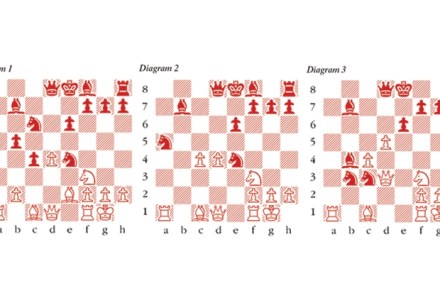
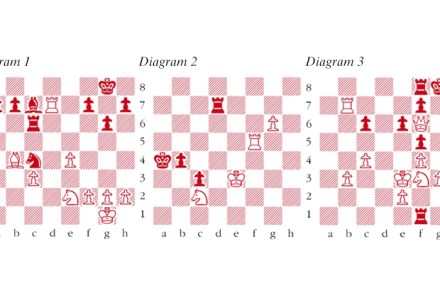
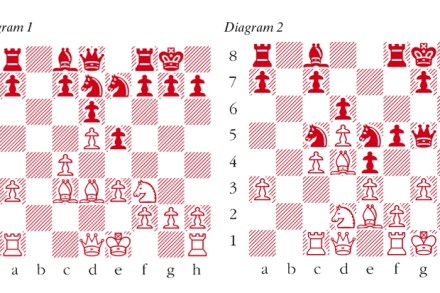
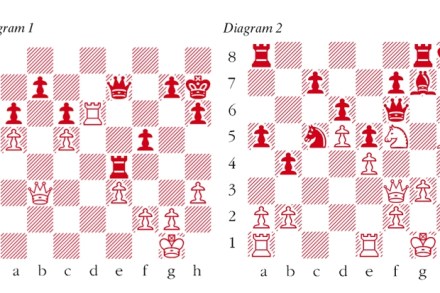
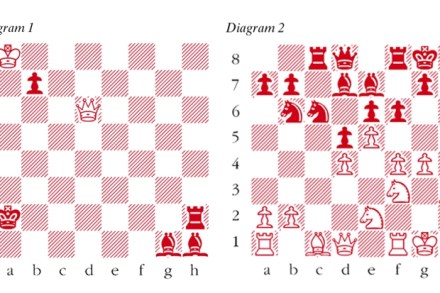
I learn from The Problemist, the organ of the British Chess Problem Society, that the polymath Dr Jacob Bronowski also composed chess problems. According to the article I read, Bronowski was born in Lodz, Poland, in 1908, grew up in Germany and then became an undergraduate at Jesus College, Cambridge. He was a mathematician, biologist, historian of science, theatrical author, poet and inventor, and of course is most celebrated as the author and presenter of the 1973 BBC TV series The Ascent of Man. The puzzle in Diagram 1 composed by Bronowski. This puzzle is a reflex mate which is a variant of the self-mate theme. In a self-mate White must force Black to checkmate him. The same applies in a reflex mate, with the extra rule that if either side can give checkmate, then they must.

From Russia with love | 2 April 2015

In the James Bond film From Russia with Love there is an evil mastermind named Kronsteen. The character is in some ways based on the Russian chess genius David Bronstein, and the chess game ‘from the Venice International Tournament’ that forms the backdrop to the opening sequence is taken from a game between Bronstein and Boris Spassky. A new book by Steve Giddins, Bronstein Move by Move (Everyman Chess), gives a superb insight into the creative processes of the chessboard colossus through a series of deeply annotated games. This week’s game and notes are based on those in this highly rewarding and entertaining book.

Caro can

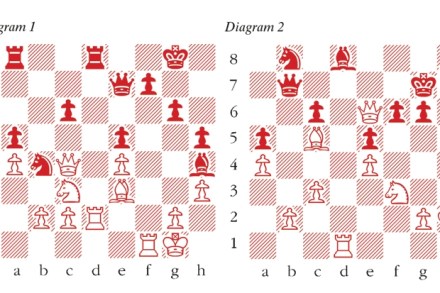
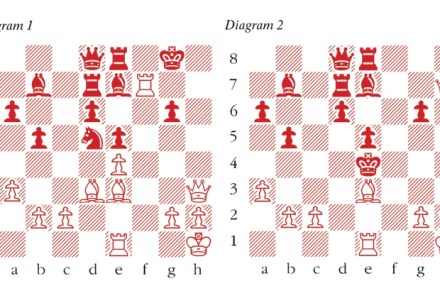
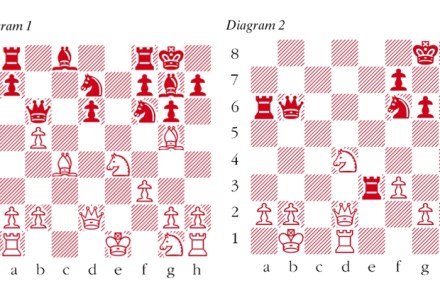
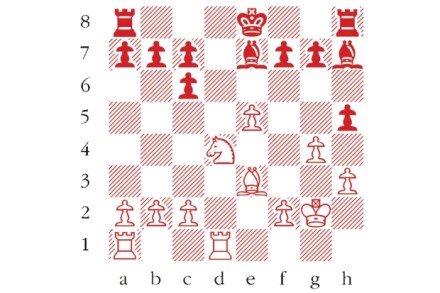
The Caro-Kann Defence, 1 e4 c6, has always appealed to me. It has the advantage of staking a claim in the centre by means of ... d5, without the disadvantages of the Centre Counter (1 e4 d5) which brings out Black’s queen prematurely, or the French Defence (1 e4 e6 2 d4 d5), which locks in the black queen’s bishop. A new book by Jovanka Houska, Opening Repertoire: The Caro-Kann (Everyman), details Black’s strategies against the dangerous Advance Variation, while in the main line she recommends the early development of Black’s queen’s bishop, as in the following game.   Tal-Keene; Simultaneous Exhibition 1964; Caro-Kann Defence   1 e4 c6 2 d4 d5 3 Nc3 dxe4 4 Nxe4 Bf5 5 Ng3 Bg6 6 N1e2 e6 7 h4 h6 8 Nf4 Bh7 9 Bc4 Nf6 10 0-0 (diagram 1) 10 ...

Just So

Last week in a perceptive piece for the Times, Will Pavia animadverted upon the fact that the USA appears to be actively recruiting top chess grandmasters. Pavia focused on attempts to persuade world-ranked no. 2 Fabiano Caruana to defect from representing Italy, and switch allegiance to the USA. Even more indicative has been the effort made to entice the former Philippine grandmaster Wesley So to adopt the stars and stripes. As far as I can see, this enterprise has been successful, and it is not hard to detect the hand of the eminence grise of American chess Rex Sinquefield, behind a prima facie attempt to reconquer the Olympiad gold medal (which they have won five times overall) and the individual world title (last held for American chess by Bobby Fischer).

Bright blues

The boat race for the brain, as it has become known, took place at the Royal Automobile Club, Pall Mall, London last Saturday. The 133rd Oxford v Cambridge Varsity chess match was generously hosted by Henry Mutkin, the life president of the club, and the club itself, represented by their new chess circle chairman, Stephen Meyler. Among the chess experts present were grandmasters Luke McShane, Michael Stean, Jon Speelman and Julian Hodgson, while the wider world of chess enthusiasts included Tony Buzan of mind-mapping fame, Daniel Johnson, editor of Standpoint magazine, and Barry Martin, former vice president and captain of the Chelsea Arts Club chess team.

Varsity

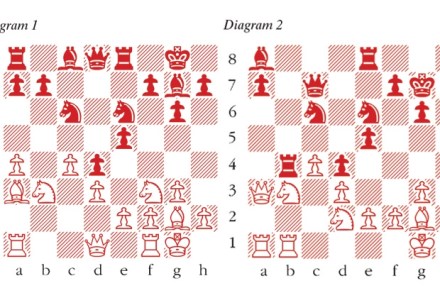
On Saturday 7 March the annual Varsity Match between the teams of Oxford and Cambridge takes place. The contest is at the Royal Automobile Club starting at noon, and spectators are welcome, though anyone wishing to attend should bear in mind the dress code of jacket and tie with no trainers or jeans. As usual, the match is supported by both the RAC and the doyen of RAC chess, Henry Mutkin, himself a former Oxford player in this match. The notes to the game this week are based on those in the book Cambridge Chess by Richard Eales, published by Hardinge Simpole. The puzzle is a win by a top board player for Oxford.   James-Sugden; Cambridge 1972; Sicilian   1 e4 c5 2 Nf3 e6 3 d3 Nc6 4 g3 g6 5 Bg2 Bg7 6 0-0 Nge7 7 c3 e5 7 ... d5 is simple and good.

Gnomic

The elite tournament at Zurich, which finished last week, has adopted a system for determining the ultimate trophy winner which seems to me virtually impenetrable. Zurich consisted of three separate events, a blitz, a rapidplay and a classical tournament, all of them involving the elite group of Nakamura, Anand, Kramnik, Aronian, Karjakin and Caruana. For the general public, victory in the classical tournament would be the chief honour. But Zurich’s complex system ignores the blitz results, includes the classical section, adds on points scored in the rapidplay, and ends with an armageddon game in the event that two leaders have tied for first place. As it was, Aronian won the blitz and Anand won the classical, while Kramnik triumphed in the rapidplay.

Carlsen’s special brew

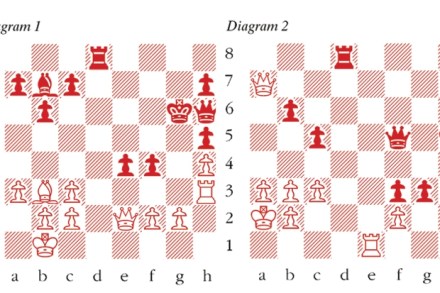
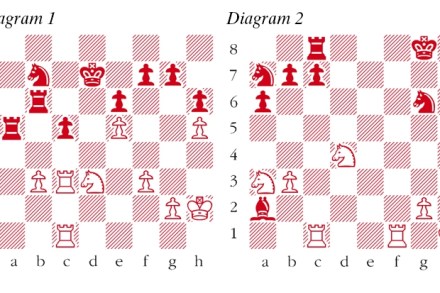
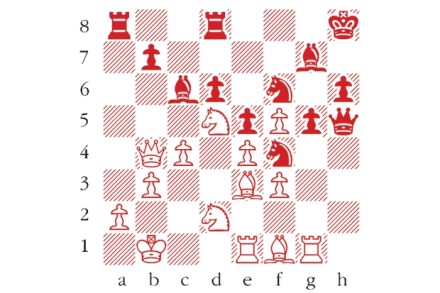
Magnus Carlsen has added another trophy to his cabinet by taking the honours at the Grenke tournament in Baden Baden, Germany. As at Wijk aan Zee, the world champion had to surmount an early loss with Black, on this occasion against his chief rival for glory, the German grandmaster Arkadij Naiditsch. But Carlsen clawed his way back to a share of the lead and finally emerged triumphant after a closely fought tie-break playoff.   A key moment of Carlsen’s fightback came in this tense position against former champion Anand. Here Anand appears to have a powerful attack, but Carlsen broke the back of his offensive with a stunning counter-coup.   Anand-Carlsen: Grenke Chess Classic, Baden Baden 2015 (see diagram 1)   33 ...

Tradewise

The Tradewise Masters in Gibraltar has been won by the American grandmaster Hikaru Nakamura, with the British co-champion David Howell in clear second place. This is possibly a career best for Howell, whose forte turned out to be remarkable resilience in difficult endgames. Last week the puzzle showed Nakamura defeating the pre-tournament favourite and highest ranked competitor, Veselin Topalov. This week’s game from Gibraltar is a fine win by a grandmaster who was trained in the classical Soviet tradition.

Sixes and sevens

The veteran world championship contender, Victor Korchnoi, has accused the reigning world champion Magnus Carlsen of hypnotising his opponents. Plainly unimpressed by the overall quality of Carlsen’s play, the ever-controversial Korchnoi ascribes Carlsen’s successes to mental influence rather than superlative moves. In the past, similar accusations were levelled against Alekhine, when he beat Bogolyubov in 1934, and against Tal, when he won the Candidates tournament in 1959. Winning streaks often come in sixes and sevens. Fischer defeated Taimanov and Larsen by six to zero in each case, in his celebrated run in 1971.

Magnificent Magnus

Magnus Carlsen has won first prize in the elite Tata Steel tournament at Wijk aan Zee, Holland. Leading scores out of 13 were Carlsen 9, then Giri, So, Ding Liren and Vachier-Lagrave all in hot pursuit half a point behind. This week’s puzzle shows a crucial variation from one of Carlsen’s best wins. The player who made the greatest mark, apart from the world champion, was 20-year-old Anish Giri, who is maturing into a truly dangerous prospect, notching up himself a four-game winning streak. I kick off this week with a Giri victory from London against a former world champion.   Giri-Kramnik: London Classic Rapidplay 2014   In this last example from the Rapidplay, the former world champion Vladimir Kramnik takes opportunism a bridge too far.

London Blitz

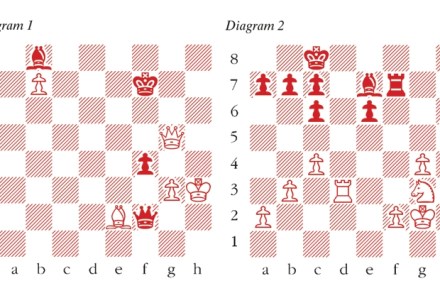
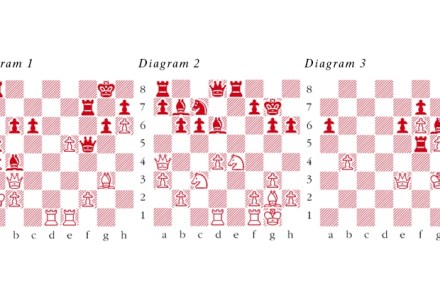
Britain’s leading grandmaster, Michael Adams, started well in the London Classic, with a beautiful win against the rising star Fabiano Caruana. After that, Adams ran out of steam, finishing in next to last place. Fortunately he made up for this with an excellent performance in the Blitz section, where he tied for first place and won the trophy on tie-break. Scores out of ten were: Adams, Nakamura and Kramnik 6; Giri 5; Anand 3½; Caruana 3.   Adams-Nakamura: London Classic Blitz 2014 (see diagram 1)   As the great teacher and world champion Wilhelm Steinitz taught in the 19th century, it often pays to delay castling.

London Rapid

The exciting American grandmaster Hikaru Nakamura compensated for his somewhat lacklustre performance in the London Classic section, held at Olympia just before Christmas, with an overwhelming victory in the Rapidplay arena. The top final scores were Nakamura 9½ and Giri 8½, while those on 8 included Kramnik, Caruana, Anand and Short. By its very nature, Rapidplay chess tends to be exhilarating rather than accurate and favours those who have a buccaneering spirit and a talent for opportunism.   Nakamura-Anand: London Classic Rapidplay 2014 (see diagram 1)   First off we see Nakamura outmanoeuvring former world champion Viswanathan Anand. It is axiomatic that a bishop in the endgame, unless heavily restricted by its own pawns, will tend to outgun a knight.

London Classic | 8 January 2015

The key feature of the London Classic, which finished shortly before Christmas, was the resurgence of Viswanathan Anand, the former world champion. One might have expected him to be demoralised after his second drubbing at the hands of Magnus Carlsen, but he played steadily and his single victory, without loss, sufficed to share first prize and win the trophy on tie-break. The tie-break method centred on rewarding victory with the black pieces. The wins by Giri and Kramnik were both with White, while Anand defeated Adams with Black. The final scores (on the 3-1-0 system) were: Anand, Kramnik and Giri 7; Nakamura 6; Adams and Caruana 4. Also notable was the continuing poor form of Fabiano Caruana, whom I eulogised in last week’s column.

Ave et vale

2014 was the year in which Magnus Carlsen confirmed his position as world champion, and also the year in which the dynamic new star, Fabiano Caruana, rose to the rank of world no. 2. For my game of the year I am choosing the crucial encounter from the Carlsen-Anand world championship match where Anand failed to spot a winning opportunity and went on to lose. This was a massive turning point, ensuring that a contest which had seemed within Anand’s grasp was decided in favour of the reigning champion. Traditionally, my game of the year is a brilliant example of the creative heights to which chess can aspire. In this instance, the sporting importance of the game outweighs its aesthetic defects, making it the defining moment in global chess from last year.

London greats | 11 December 2014

The London Chess Classic, graced by two former world champions Viswanathan Anand and Vladimir Kramnik, as well as the world number two, Fabiano Caruana, is nearing its close. Full details can be found on www.londonchessclassic.com and there is still time for chess fans to visit the event at Olympia, since it runs to 14 December. The London Classic continues the great tradition of outstanding events and superlatively creative games which have been played in the capital. London has been the home to such outstanding champions of the game as Andre Philidor, Wilhelm Steinitz and Emanuel Lasker while Steinitz himself claimed that two of the supreme creative masterpieces of his time were played in London. Those two examples cited by Steinitz are given this week as the main game and the puzzle.

Classic

London chess fans are about to enjoy a great treat. The London Chess Classic will run from the 10-14 December with a tremendous line-up: Viswanathan Anand, fresh from his title challenge against Magnus Carlsen in Sochi; former world champion Vladimir Kramnik; world no. 2 Fabiano Caruana; as well as grandmasters Anish Giri, Hikaru Nakamura and Britain’s no. 1, Michael Adams. The venue, as usual, is London’s Olympia (www.londonchessclassic.com). London has been the scene of outstanding chess ever since the celebrated André Danican Philidor moved here during the late 18th century and dazzled London audiences with his displays of blindfold chess.

Extinct tigers

The Tiger of Madras has gone the way of the sabre-toothed tiger. Viswanathan Anand, world champion from 2007 to 2013, has now suffered his second consecutive match defeat at the hands of precocious Magnus Carlsen from Norway. On Sunday night Carlsen scored his third win, which clinched the World Championship title in his favour by the overall score of 6½-4½. Anand performed better than in their clash last year but kept failing to seize his opportunities as they arose. Symptomatic was the key moment of game six, which I published in last week’s column, where Anand missed a coup with his knight which would have shaken White’s position to its foundations. A victory there for Anand would almost certainly have reversed the overall result.