Chess

Cream of the Candidates

The Candidates tournament is underway in Madrid, where eight of the world’s best players vie for the right to challenge Magnus Carlsen in the World Championship. As the event began, Carlsen gave his judgment on each player’s prospects, dividing them into three tiers. Tier 1: Fabiano Caruana and Ding Liren are ‘the best and most consistent’. Tier 2: The ‘dark horses’ are Ian Nepomniachtchi, winner of the previous Candidates event, and Alireza Firouzja, whose meteoric rise last year took him to no. 2 in the world rankings (though since overtaken by Ding). Tier 3: The rest – Richard Rapport, Jan-Krzysztof Duda, Hikaru Nakamura and Teimour Radjabov. Of course, none of the latter players is an easy mark.

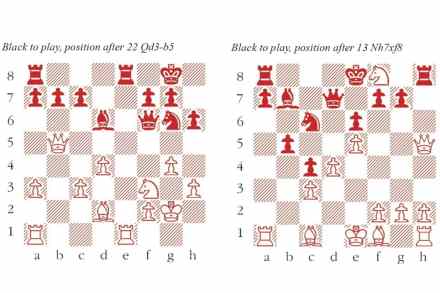
Have they spotted it?

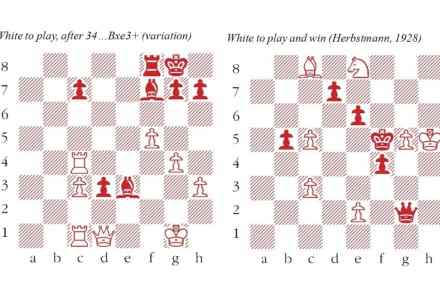
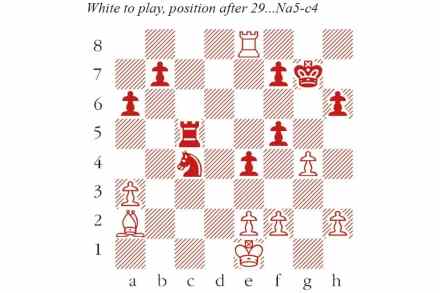
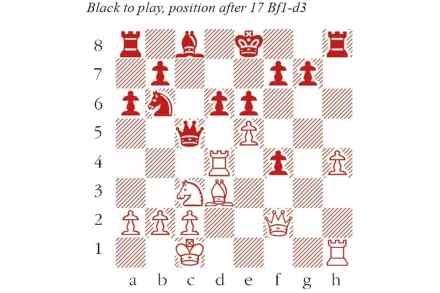
Returning to the board, Mamedyarov looks at Anand’s outstretched hand with bemusement. It can’t be a draw offer – that would be a rude way to do it, and besides, the tournament rules prohibit an early peace treaty. No, Anand is resigning! He looks crestfallen, like a child whose ice cream has fallen to the ground. Mamedyarov pauses before taking his hand, and now Anand looks puzzled by his opponent’s hesitation. Here is the position: Vishy Anand-Shakhriyar Mamedyarov Norway Chess, June 2022 (See left diagram) Anand had just played 22 Qd3-b5, which pressures e8 and b7. No sooner had he played it than he spotted the flaw – Black can win on the spot with the brilliant 22…Qxf3+!, since 23 Kxf3 Nh4 is mate.

El Ajedrecista

Gilberto Rodriguez Orejuela, ‘El Ajedrecista’, died in prison in the United States on 31 May. The Colombian drug lord, a leader of the Cali cartel in the 1990s, acquired his splendid nickname, which translates as ‘the Chess Player’, on account of his ability to stay a step ahead of his rivals and pursuers. Curiosity sent me hunting for more information, and in doing so I stumbled into an unexpected rabbit hole. For it turns out that ‘El Ajedrecista’ was also the name given to a primitive chess-playing automaton, designed by a Spanish engineer, Leonardo Torres y Quevedo, and unveiled at the University of Paris in 1914.

A rising star

Ding Liren took first place at last month’s Chessable Masters, the fourth event in the 2022 Meltwater Champions Tour. But it was his defeated opponent in the final, 16-year-old Rameshbabu Praggnanandhaa from India, who stole the show. The teenager’s reputation is already well established, and he made headlines in the (non-chess) media in February when he beat Magnus Carlsen in a rapid game at the Airthings Masters, the first event in the tour. Remarkably, at the Chessable Masters, he added a second victory over Carlsen, who blundered in an almost even position in their game from the preliminary stage. Even more impressive were the scalps he took in the knockout stages. In the quarter finals he scored a 2.5-1.

Tiger bites man

Viswanathan Anand left the spectators in awe at the Superbet Rapid earlier this month. The ‘Tiger of Madras’, as he is sometimes known, was awarded a wildcard spot to the second leg of the Grand Chess Tour in Warsaw, which began just a couple of days after the first leg ended in Bucharest. At 52, the former world champion was the oldest player by some margin, and at least on paper could not be counted as one of the favourites. And yet Anand devoured the field in the rapid section, winning his first five games in a row, and secured clear first place with 7/9. It was a joy to watch. But only those with short memories will be truly surprised by his display of ageless ability.

Rock, paper, scissors

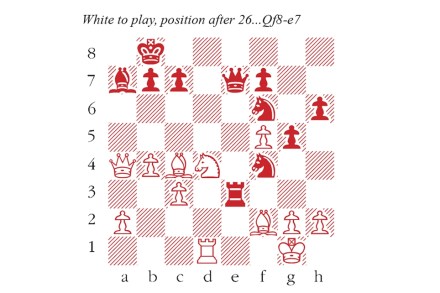
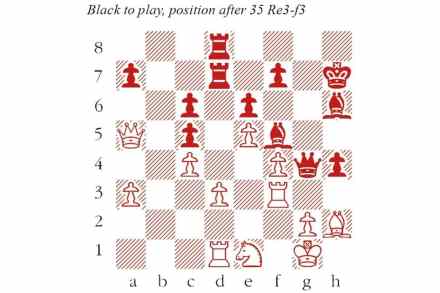
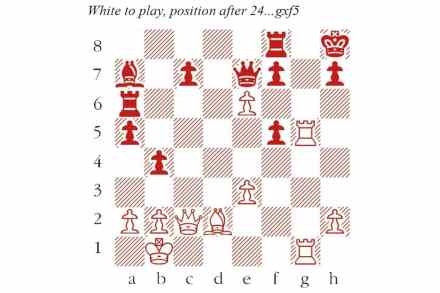
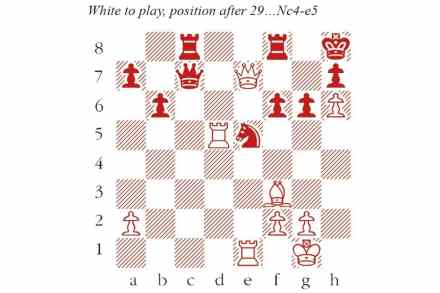
The Superbet Chess Classic in Bucharest concluded last weekend in a dramatic tiebreak between Wesley So, Maxime Vachier-Lagrave and Levon Aronian, who all took wildly different paths to finish the main event on 5.5/9. Wesley So was the tournament rock. He won two controlled games against Nepomniachtchi and Mamedyarov and otherwise never looked in danger. The other two certainly weren’t rocks, but they couldn’t decide whether to be paper or scissors. Vachier-Lagrave won two sharp battles, against Caruana and Firouzja. But when he met Aronian in round 6, it was Vachier-Lagrave who volunteered for a shredding. Maxime Vachier-Lagrave-Levon Aronian Superbet Chess Classic, Bucharest, May 2022 The previous move, 25 Kc3-d4, placed the king on the worst possible square.

Remembering Averbakh

Yuri Averbakh had a wry explanation for why he was made chairman of the USSR Chess Federation in 1972. There was a feeling that Boris Spassky, the Soviet world champion, would lose his title to Bobby Fischer in Reykjavik that year. Nobody else wanted to deal with the fallout, so Averbakh got the job. Whatever the truth of that, Averbakh had been deputy chairman for ten years already, and throughout his life showed a tireless appetite for almost every role that chess has to offer. He left his mark on the game as a player, politician, writer, analyst, editor, researcher, historian and arbiter. Yuri Lvovich Averbakh died in Moscow on 7 May, just a few months after celebrating his 100th birthday. He was born in Kaluga, a small city 100 miles from Moscow.

Gorilla tactics

There is a video in which a small group of students amble about passing a basketball back and forth. The instruction at the start is to count how many times the players pass the basketball. Then comes the punchline – did you see the gorilla? Halfway through, a figure in a gorilla suit walks through the middle of the scene, beats its chest and walks off. It was designed as a psychological experiment, with the startling outcome that about half the viewers missed the gorilla altogether. One explanation is obvious – they were focused on the basketball. But how can you miss a gorilla? Blunders at the chessboard can be just as perplexing. True, some are easily ascribed to nervousness or carelessness. Those are often the ones where you kick yourself right after making the move.

Ordination

In the dying seconds of an online blitz game, I promoted a pawn and instantly regretted it. There was nothing wrong with the move, but the extra second spent on choosing and clicking the queen was more than I could spare. A few flailing moves later, my time ran out. Of course, I had forgotten to switch on ‘Always Queen’, a handy setting offered by all decent chess websites. Some 99 per cent of the time, a queen is what you want. But just occasionally, a knight, rook or bishop is superior. A knight may land with check, where a queen does not. To see a rook or bishop trump a queen is rarer still, as neither piece has any obvious point in its favour. But it can happen in scenarios where a queen would stalemate the opponent, but a lesser piece would not.

What is possible

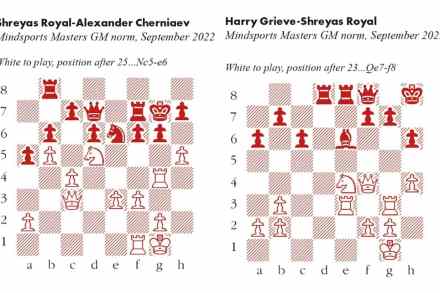
There are lessons in chess that cannot be learned from a book. One lands, from time to time, in a position which amounts to a trial by fire – a test of conviction as much as skill. The experience of such a game can stay with you for ever, radically altering your sense of what is possible at the chessboard. At least, I suspect that is what 13-year-old Shreyas Royal went through last month, when he faced the Georgian grandmaster Baadur Jobava in the first round of the European Individual Championship in Slovenia. Jobava’s peak rating placed him in the world’s top 20, so this was a David and Goliath pairing where at the outset the youngster had nothing to lose.

Nakamura’s place

Wesley So won the final Fide Grand Prix, which was held in Berlin earlier this month. But it was Hikaru Nakamura, his defeated opponent in the final, who had the most to celebrate. Since he won the opening leg in February, in reaching the semi-final Nakamura secured a coveted spot in the Fide Candidates tournament, whose winner will become Magnus Carlsen’s next challenger. The second qualifying spot went to Richard Rapport, who won the second Grand Prix leg in March. The Candidates event will begin in Madrid in June, when the two will be joined by previous qualifiers Ian Nepomniachtchi, Alireza Firouzja, Fabiano Caruana, Jan-Krzysztof Duda and Teimour Radjabov. The final place looks likely to go to Ding Liren, in light of Sergey Karjakin’s disqualification.

Career moves

Sergey Karjakin won’t be playing much chess for a while. Last month, the Russian grandmaster’s Twittering jingoism in support of the invasion of Ukraine drew such universal scorn that his international invitations were bound to run dry. Karjakin challenged Magnus Carlsen for the World Championship in 2016, and had earned a spot in Fide’s forthcoming Candidates tournament, which will begin in Madrid in mid-June 2022. Perhaps he assumed that was one invitation which could not get lost in the post. But then Karjakin’s conduct was brought before the Fide Ethics Commission, which bared its teeth and resolved to ban him from competitive play for six months – long enough to make him forfeit his chance in the biggest tournament of the year.

Varsity battle

The 140th edition of the Varsity Match took place last month at the Royal Automobile Club in London’s Pall Mall. This one was as tense as they come: Cambridge grabbed an early point, but Oxford built a significant lead by winning the next three. On the four boards which remained, Oxford’s situation looked precarious, so Cambridge could still entertain hopes of victory. In the end, Cambridge pulled back a single win, but the remaining games fizzled into draws. That made for a 4.5-3.5 win in Oxford’s favour. The overall series now stands at 60-58 to Cambridge, with 22 matches drawn. The RAC Chess Circle which organises the event has a generous custom of awarding both a best game prize and a brilliancy prize.

England-Sweden Challenge

Three summers ago, I was invited to the Swedish city of Eskilstuna, for a brief but exciting match against their top player, the affable Nils Grandelius. Earlier this month, Grandelius visited London, this time to play a match against my England team-mate David Howell. The England-Sweden Challenge match was staged as part of the 30th anniversary celebrations of the founding of the London Chess Centre and the relaunch of Chess magazine. It was held in refined surroundings at the residence of Sweden’s ambassador to the United Kingdom, Mikaela Kumlin Granit. Seeing the photos, one yearns to play more chess in rooms with library ladders. The ten-game match saw a striking contrast between Grandelius’s active approach and Howell’s supremely patient brand of chess.

Establishing Rapport

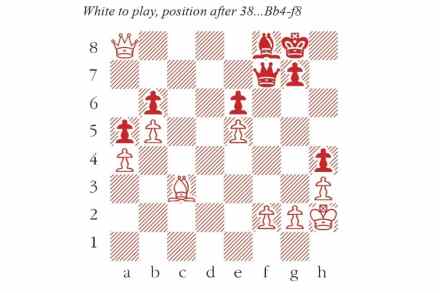
Richard Rapport took first place at the Fide Grand Prix in Belgrade last weekend. The Hungarian grandmaster is now almost assured of a place in the Candidates tournament in Madrid later this year, which will determine a challenger for the World Championship. Only a very unlikely outcome at the final Grand Prix event (which begins in Berlin next week) would see him knocked out of the cycle. Rapport is popular with fans for his rich imagination and penchant for offbeat openings. In the past, that sometimes made for erratic results, but a newfound consistency has propelled him into the world’s top ten. The diagram position shows the critical moment from the final match. Rapport could repeat moves with 30 Qe3, leading to a draw by repetition in light of the previous moves.

Taking risks | 12 March 2022

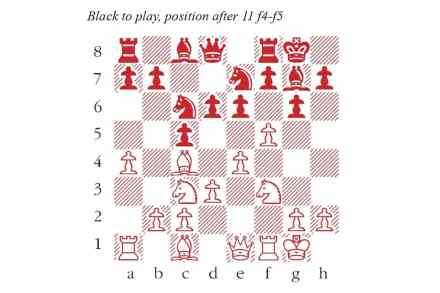
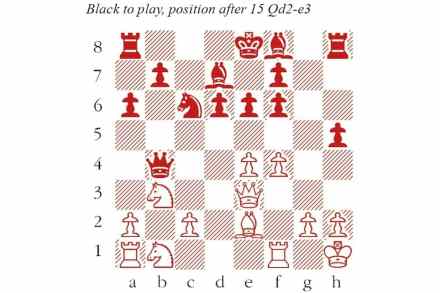
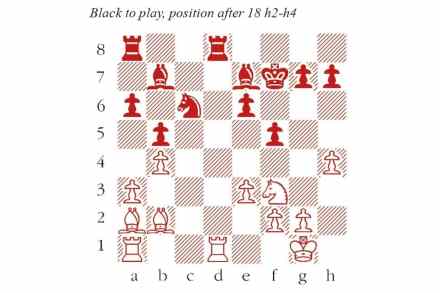
I do not, as a rule, go looking for a fight on a Sunday morning. Chess, if it must be played at all, should be approached with due caution. My game plan tends to be pretty simple: deploy the pieces onto sensible squares and hope that the coffee kicks in before anything interesting happens. Usually the opponent observes similar norms. Vincent Keymer, 17, is one of Germany’s brightest talents, and he took me by surprise when we met last weekend in the Bundesliga. The opening moves were familiar, so I was looking forward to some stodgy manoeuvring while digesting my breakfast. But his pawn sacrifice with 14…Nf6 forced me to think. Taking it would grant him a mobile pawn centre and strong pair of bishops, but even on a Sunday morning, declining looked a bit too supine.

Russia in check

The Champions League final has been moved from St Petersburg to Paris and the Russian Grand Prix in Sochi cancelled. It was obvious that the Chess Olympiad, to take place in Moscow in July and August, could not continue as planned. Last week, this was confirmed by Fide, the international federation, and it is reported that the Indian federation has put forward a bid worth $10 million to host the event. Russia’s invasion of Ukraine has repercussions for chess that go well beyond the Olympiad. Fide Council released a significant statement at the weekend expressing condemnation of Russian military action and resolving to terminate sponsorship agreements with ‘any Belarusian and Russian sanctioned and/or state-controlled companies’.

Nakamura the wildcard

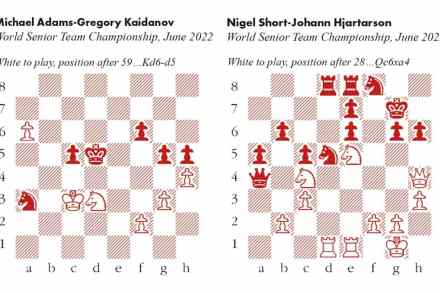
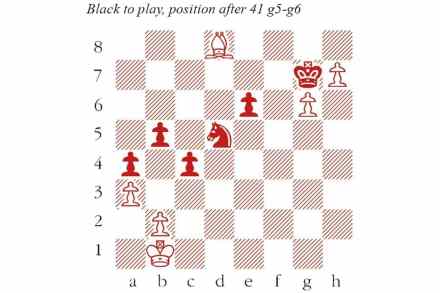
Hikaru Nakamura justified his wildcard invitation by taking first place at the Fide Grand Prix in Berlin this month. The American grandmaster has become the world’s most popular chess streamer, and had not played a slow game in more than two years. But he looked fresh and relaxed, and evidently the steady practice of elite online speed events have kept his skills sharp. Facing a rising Russian star, I suspect Nakamura’s eye was quickly drawn to 29 Qb4, hoping to deflect Black’s queen or win the Bb5. But after 29…Qxb4 30 Rxd8+ Qf8! 31 Rxf8+ Kxf8 the endgame is likely to end in a draw. So you keep the idea, shake things up a bit, and see what drops out: Hikaru Nakamura-Andrey EsipenkoFide Grand Prix, Berlin 2022 (See left diagram) 29 Bxf6!

Contemplating loss

Contemplating a lost position is a bit like having sauce down your shirt. It is annoying in itself, but worse, it often comes with a sting of embarrassment. We chess players are a proud lot, and losing is an affront to our dignity. And what do your dining companions make of it? You might jokily draw attention to the stain, to pre-empt the suspicion that you hadn’t noticed or didn’t care. It is one thing to be clumsy, but quite another to be thought dopey as well. The chess player wrestles with a similar urge. A true poker-face is a rarity, and I suspect that is because most of us don’t even try. A vigorous shaking of the head, besides expressing genuine despair, is also an oblique way of saving face. It says ‘Touché! Yes, I am undone, but I know it now!

The battle of the sexes

One tradition at the annual Gibraltar Masters is a high-spirited skittles match played in the evening between teams of men and women, dubbed the ‘Battle of the Sexes’. In 2020, to much amusement, the women won a playful miniature after the flamboyant 3…f5 quickly backfired: 1 e4 e5 2 Nf3 Nc6 3 Bc4 f5 4 d3 fxe4 5 dxe4 Nf6 6 Ng5 Qe7 7 Bf7+ Kd8 8 Ne6+ Black resigns. This year, Gibraltar hosted a real ‘Battle of the Sexes’ event with a £100,000 prize fund. It featured the unusual Scheveningen format where players in teams (ten women and ten men respectively) faced each member of the opposing team over ten days. The teams (with one reserve on each side) were carefully selected to ensure a balanced match.