Arts feature

Our thirst for torching old buildings

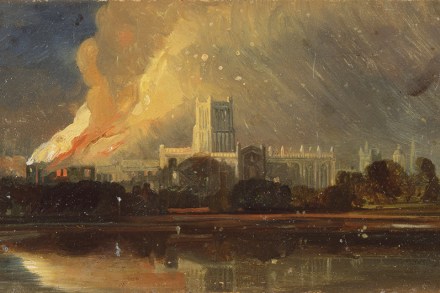
Regard the protestors. See how happy they are. Can you hear them whoop and whistle? The burning clock tower of the town hall has fallen inside the old building. Houp-là. How they whistle and whoop! The baying of such mobs in public places is as old as the history of towns and cities, the burning of buildings equally antique. Order and chaos, civilization and barbarity, the call of the primeval. Limoges has long been famed for its “arts of fire,” of the elements and crafts involved in the making of enamelware that reached its artistic zenith between the 12th and 14th centuries with a host of exquisite crucifixes, crosiers and tomb effigies, a hosanna of book covers and reliquary caskets.

‘I think the best revenge is indifference’: Salman Rushdie interviewed

“I probably got one or two seconds look at him before he delivered the first blow,” recalls Sir Salman Rushdie. For the next 27 seconds, on August 12, 2022, the man whom Rushdie will refer to only as A. (“for asinine,” he explains) tried to kill the writer on the stage of the Chautauqua Institution in upstate New York. A. slashed through the tendons of Rushdie’s right hand, cut his thigh, stomach and chest, incised a gaping wound in his neck and finally stabbed him in the right eye.

The wonder of the Bayeux Tapestry

How the Froggies must be laughing. Such a gracious loan. So kind. Like England lending Henry V’s longbows to the Louvre – or sailing HMS Victory up the Seine. Well, let them titter. The Tapestry is home. Nothing else matters. Likely sewed in Canterbury in the 1070s, before being sent across the Channel, it has only ever left Bayeux twice before. In 1803, when Boney was contemplating a pop at the White Cliffs, he displayed it in Paris. (After Trafalgar, it was quietly returned to Normandy.) Then, as the Nazis were retreating from Operation Overlord, it was taken for safe-keeping to the cellars of the Louvre and, in late 1944, only weeks after Paris’s liberation, placed on public view. Today’s minibreak from Bayeux comes in rather happier times.

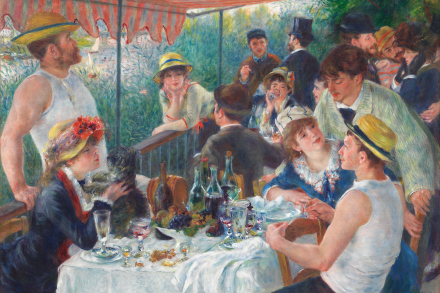
Renoir was a master – let no one tell you otherwise

It was summer 1874 at Claude Monet’s house in Argenteuil on the Seine just outside Paris. Édouard Manet arrived from his house at Gennevilliers, on the opposite bank, and began painting Monet’s wife and young son in the garden. Auguste Renoir turned up and started to paint the same scene alongside Manet. The little masterpiece he created is in the forthcoming exhibition Renoir and Love at the National Gallery. In 1924, Monet recalled that day half a century earlier: Manet, seduced by the color and the light, decided to paint a picture en plein air of people under the trees… Renoir arrived… He asked me for my palette, a brush and a canvas, and there he was, painting away beside Manet.

The man who – inadvertently – invented the 1970s

Style, self-evidently among those who pursue an interest in such affairs, is, according to the Comte de Buffon, the man himself – the essence, the heart, the bowel, the Bovril. While, among the much greater majority who pursue an ignorance in such affairs, it is an assumed gamut of off-the-peg tics, props, accent – style is something bolted on to a being’s chassis and core in the hope that it will hold. We can be certain which of these two nugatory classifications better suits the late Christopher Gibbs (1938-2018) who in the course of his long, more or less antiquarian life encountered Everyone, absolutely Everyone.

What’s the point of UNESCO?

The FIM-92 Stinger missile is not a subtle weapon. An antiaircraft rocket, capable of launching a high-explosive “fire and forget” laser-guided warhead at targets up to five kilometers away, it can be carried and operated by a single man. During the 1980s Soviet invasion of Afghanistan, the CIA provided hundreds of Stingers to the Mujahideen, and they proved terrifyingly lethal, downing scores of helicopter gunships and killing thousands of Soviet troops. But at times they’ve been as effective against other, more unusual targets. In 2001, during the first Taliban administration of Afghanistan, the group’s leader, Mullah Muhammad Omar, ordered the destruction of the monumental Buddha statues in the Bamiyan valley, a historic Silk Road site deep within the Hindu Kush.

unesco

Three cheers for Britain’s most unabashedly elitist school

As we ponder the ups and downs of the UK’s sporting record this summer, it might be worth noting their unquestioned prowess when it comes to the demands of classically based dancing. The Royal Ballet is consistently more than a match for any comparable company in the world, and its chief feeder, the Royal Ballet School, currently celebrating its centenary, is similarly and solidly rated as one of the two or three best of its kind anywhere. Both these institutions are deeply beholden to tradition, and the RBS might well be the most unabashedly elitist educational establishment in the country. It receives globally more than 2,500 applications a year. All these will lead to an audition, the number finally whittled down to 30-odd offers of a full-time place.

ballet

The problem with ‘queer art’

In 1911, Duncan Grant’s “Bathing” went on display as part of a design scheme for the dining room of the Borough Polytechnic in Southwark. This large painting depicts a group of strongly muscled male bathers diving, swimming and hauling themselves into a boat. Only one of them is wearing a bathing slip, and while this kind of spectacle might have been familiar to anyone educated at a public school at this period, the art critic of the Times complained that it could well have “a degenerative influence on the children of the working class.” The picture now hangs in Tate Britain, and is used on the gallery’s website to direct people to an account of “Queer Life and Art.

art

The art of resurrecting forgotten artists

A retired priest in North Wales once told me that after the war he had been asked by Billy Butlin to buy 19th-century paintings for the holiday-camp chapels, because they were going cheap. One he bought, for 49 guineas in 1947, was William Dyce’s 1835 “Lamentation of the Dead Christ.” In 1983, after the Butlin’s chapels had closed, it made a handy £125,000 at auction, when it was bought by Aberdeen Art Gallery. As late as 1962, Lord Leighton’s great “Flaming June” (1895) was sold for £50. Today? Millions. Talk about “the bubble reputation.” The pattern of artistic fame followed by subsequent obscurity has been repeated through the centuries.

How the office has come to haunt us

Should we hop on a call? Let’s touch base. Let’s take this offline. Let’s circle back to your last slide deck. Let’s get those action items actioned by close of play. We need stakeholder buy-in. We need deliverables. We need to make sure you’re aligned with company culture. We’re concerned you’re not leveraging your core competencies. After careful consideration, management has made the difficult decision to terminate your contract. We’re committed to helping you with this transition. Corporate jargon is zombified language. These euphemisms and elisions are the soulless husks of words, meant to blunt the sharp edges of human emotion (sorry – "maintain professionalism"). And they often leave you feeling a sneaking sense of dread.

Derek Jacobi on playing Lucian Freud

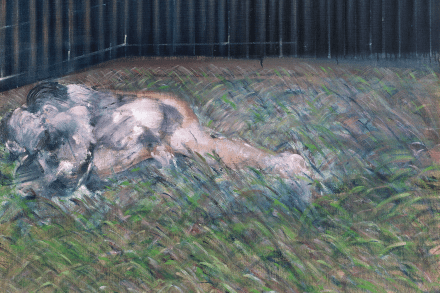
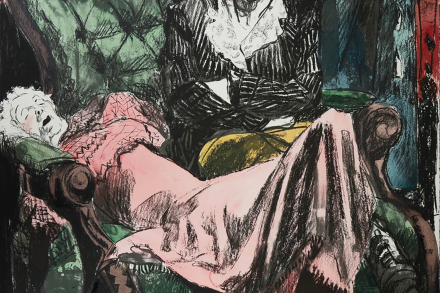
Lucian Freud almost had a second career in the cinema. He acted as an extra in a couple of films during the early 1940s; the only one in which he made the final cut was a farce starring the ukulele-playing comedian George Formby in which his 19-year-old face can be seen peering out of the background in one scene. Years later, Lucian claimed, John Huston asked him if he’d like to play the part of his grandfather Sigmund in a biographical screen drama from 1962 entitled Freud: The Secret Passion (which had, at one point, a script by Jean-Paul Sartre). Eventually Montgomery Clift was cast instead, which was just as well because Freud was definitely an observer rather than a performer.

The art of flowers

Multisensory exhibitions are old hat, but in the case of In Bloom – How Plants Changed Our World at Oxford’s Ashmolean Museum, it feels just right to sit in a space given over to flowers with the sound of gurgling water in the background, mingled with the cries and chirrups of birds. At intervals there are scent stations where you can smell damask rose or green and black tea from flower-shaped chalices. From the ceiling hang swaths of green muslin. I could have stayed here all afternoon. Right in front of me were also two delicious studies of tulips to illustrate the Dutch craze of the 1630s. Frankly, if it came to a choice of two-tone tulips or bitcoin as a way of squandering money, I know which I’d prefer. There is a print of a sultan’s seraglio in this tulip section.

flowers

The genius of Zurbarán – and why he vanished

A pious Caravaggio JASPREET SINGH BOPARAI The Spanish painter Francisco de Zurbarán is sometimes thought of as a pious equivalent to Caravaggio – a Caravaggio without the bad temper, brutal vices or criminal record. But it seems difficult to argue that Caravaggio had any direct influence on his work. After all, he died when Zurbarán was 11 years old. Since Zurbarán never left Spain, he could not have seen any of Caravaggio’s paintings with his own eyes. Indeed, he might never even have heard the artist’s name. Still, there are unavoidable similarities between the two men’s work. Zurbarán shared Caravaggio’s sense of drama and his love of shadows broken up by patches of strong light.

zurbaran

The art of Schiaparelli

It’s a great shame that Elsa Schiaparelli is less widely known than her rival Chanel. Perhaps that’s down to how difficult her name is to pronounce. Is it “shap,” “skap” or “skyap”? Tristram Hunt, director of the V&A, answers with a quip from Schiaparelli herself: “No one knows how to say it, but everyone knows what it means.” The V&A’s new exhibition Schiaparelli: Fashion Becomes Art traces the web of influences around one of the great couture houses of the 20th century. Like Coco Chanel (I hate to compare them), Elsa Schiaparelli created clothes for the modern, independent woman – it is now conventional to say so, but they “pushed boundaries.

schiaparelli

Ovid puts today’s radicals to shame

It’s a crisp afternoon, and in a darkened room in central Amsterdam a woman is being smothered in snakes. Projected on to three walls is a massive video close-up of her face. She is young and beautiful and remarkably composed: just a nose twitch here, an eyelid flutter there, as a python wriggles across her mouth or languidly caresses her cheekbone with its tail. In the room behind me, another woman stares fiercely back. Her shoulders are bunched with muscle, arms stiff at her sides, like a nightclub brawler about to nut someone. But it’s the bull’s horns sprouting from her forehead, and the mane of matted fur marching down her back, that make it hard to meet her gaze.

The art of aging

More than 30 contemporary artists have contributed to the Wellcome Collection’s latest exhibition, which asks what it’s like to age at a time of unparalleled longevity. But as so often happens at the Wellcome’s exhibitions, it’s the ephemera that draw the eye first. “These 2 men are the same age,” says a leaflet advertising Kellogg’s All-Bran breakfast cereal. “One has driving power – energy – the will to succeed. The other is listless – tired all the time – it is an effort for him to plod through each day’s work.” The point being that aging is, to a not inconsiderable degree, something we do to ourselves, and something we do to each other. It is a process, not an event.

aging

‘I didn’t expect to love Wagner’

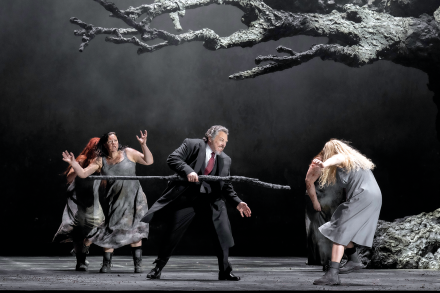
By the end of Siegfried, the third opera in Wagner’s Der Ring des Nibelungen, the king of the gods is in freefall. In the first opera, Das Rheingold, Wotan is a confident protagonist; a world-builder. In Die Walküre, we’ve seen him discover the limits of power, and felt his heart break. Now, in Siegfried, he’s a haunted figure; the solitary Wanderer, searching the world for answers that his all-powerful wisdom can no longer supply. He confronts the young hero Siegfried, and his law-giving spear shatters on the sword of a reckless, clueless boy. "All he can say is, 'Go, then. I can’t hold you any more,'" says Christopher Maltman, who has sung the role of Wotan throughout the Royal Opera’s current Ring cycle, and brings it to completion when Siegfried opens later this month.

Ann Lee deserves better than her biopic

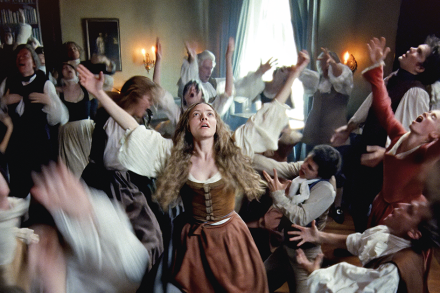
Ann Lee was a sharp-tongued woman from the back streets of 18th-­century Manchester who joined a maverick Protestant sect that became known as the Shakers, or “Shaking Quakers.” In fact their shaking was the least of it: they howled, gurned and gibbered while flirting with the notion that God would return to Earth in the form of a woman. All sexual activity, even between man and wife, was forbidden. Ann then had a series of visions that, according to subsequent Shaker accounts, identified her as the “woman clothed with the sun” whose appearance in the Book of Revelation heralds the end of the world. In 1774, “Mother Ann” and a small band of faithful emigrated to America.

ann lee shakers