Any other business

Will GSK show us what ‘purpose before profit’ really means?

Keep your eye on GlaxoSmithKline. The UK-based multinational drug-maker represents the future, both as a mass-producer of the vaccines that we pray will finally defeat Covid-19 and as a beacon of the way shareholder capitalism will re-position itself in the post-pandemic era. GSK last week announced a collaboration with its French rival Sanofi to create a Covid-19 vaccine that it aims to manufacture at the rate of ‘hundreds of millions of doses annually’ by the end of next year. That’s 20 months before we might begin to feel safe again but still ‘a significantly faster timeline than for normal vaccine development’.
A lesson in survival from pre-21st century Marks & Spencer

When I wrote last week about business-to-business pain-sharing for survival, I was naturally thinking first about UK companies. I say ‘naturally’ because in every aspect of this crisis, ­national interest has, as it were, trumped trans­national co-operation. That’s particularly the case where medical supplies are concerned — as in the US President’s attempt to stop the Minnesota-based manufacturer 3M exporting respirator masks to Canada. But wider questions about global supply chains have been brought into focus by one vivid case: the wipe-out of fashion orders from factories in Bangladesh, Cambodia and Vietnam, whose operatives — low-paid but lifted by their jobs out of greater poverty — are the flagbearers of globalisation en masse.

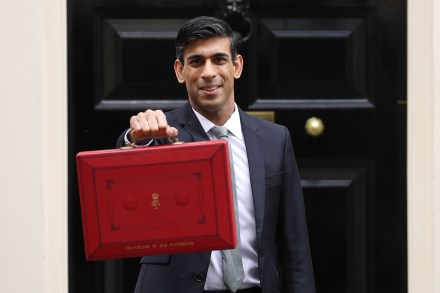
At least some of the Chancellor’s promises are actually working

The phrase ‘sharing economy’ was coined a decade or so ago to describe collaborative new business models made possible by the internet, from Airbnb and Uber to crowdfunding, peer-to-peer lending and skill bartering sites. It was about ways of monetising assets, circulating capital and earning casual livings that boosted economic activity after the ‘great recession’ and it will be a hive of creativity in the next recovery — even though its partner is the ‘gig economy’ whose insecurity has left so many people in hardship now.

Spare a thought for the poor estate agents

The suspension of the residential property market is disheartening for those who were hoping to buy a first flat or new-build house this spring. But spare a thought also for estate agents, who are usually well back in the queue for public sympathy but are nevertheless a familiar part of our high-street fabric, their windows and websites feeding the national aspiration to home ownership that also fills so many hours of Kirstie-and-Phil television. With government urging completions to be deferred, mortgage lenders tightening their terms, viewings and removals impossible and shares in the bellwether London agency Foxtons down by half, the whole sector is now in what Niraj Shah of Bloomberg Economics calls ‘an induced coma’.

Have you been invited to a Zoom cocktail party yet?

The CBI’s guidelines on ‘best practice for business’ during the pandemic tell the 1,500 larger companies that make up the lobby group’s core membership to prioritise employee welfare while also asking ‘how can we help’ government and society to manage the crisis. So far so good. But the notes don’t say ‘Consider a temporary cut in senior executive salaries’. And that is what I think they should all be doing, sooner rather than later, both as a gesture of immediate solidarity and as a move to avert a longer-term backlash against wealth, privilege and the pillars of capitalism. The trend has already begun in the all-but-grounded airline sector.

Airlines are no special case when we all need a bailout

The world needs airlines — and, barring Armageddon, will still have some when this crisis is over. It will also still have aircraft, pilots and airports. The aviation industry, accustomed to volatility as it is, should be well capable of restructuring and regrowing in response to renewed demand, even if bankruptcies are left behind. I know that sounds glib, but airlines on both sides of the Atlantic have been loud in calling for state aid as traffic has collapsed — and in the cruel process of deciding how governments can equitably relieve the virus’s financial impact on every business and family, all such claims demand scrutiny.

The antidote to virus panic is in the hands of entrepreneurs

‘It’s a ghost town,’ said the officer manning the body scanner at Manchester airport — Manchester, New Hampshire, that is, a city of some 112,000 citizens. I don’t know how many of them would normally be passing through its departure hall on a Sunday morning, but today there are no more than 50, plus me and a bottle of hand sanitiser to remind us why it’s so quiet. A spokesman for the global airline industry says carriers collectively foresee worst-case revenue shortfalls of $113 billion as a result of virus fears and travel restrictions, similar to what hit them after the 2008 financial crash.

Britain’s economic fate doesn’t depend on Heathrow

Hit-and-miss, heavy-handed, but a necessary use of justice to deter repetition. That was my summing-up, last year, of the Serious Fraud Office’s probe into the Libor and Euribor scandal, in which just nine low-ranking traders from four banks were convicted, despite evidence that rate-fixing malpractice had been endemic throughout the money markets for years. In the case of the SFO’s inquiry into the controversial capital--raising that enabled Barclays to escape a taxpayer bailout in 2008, the summary has to be ‘miss-and-miss, heavier-handed than ever’. But still I ask: was it worthwhile as a warning to others?

Coronavirus is a chance to buy cheaper – but it comes with a health warning

If anything, stock markets have been slow to respond to the spreading coronavirus outbreak. Stories of Chinese supply interruptions, from JCB digger components to plastic toys, have been circulating since mid-February, while hedge funds have been hard at work short-selling cruise-operator shares: Royal Caribbean and Carnival are both down 30 per cent. Now airlines have taken a pasting too, with easyJet and Ryanair among the big fallers in Monday’s sell-off of European stocks, following news of a cluster of virus cases in northern Italy. Meanwhile, a turning point may or may not have been reached in the rate of -reported cases in Wuhan, where the outbreak began.

Time for new leadership at Barclays and HSBC – and a new name at RBS

After a dull interlude, the big banks in their annual results season look a bit more interesting again. First to report was Barclays, where pre-tax profits were up 25 per cent to £4.4 billion but attention focused, yet again, on Chief Executive Jes Staley, whose name rarely appears in print without ‘accident-prone’ attached to it. The trouble this time is his link to the late billionaire sex offender Jeffrey Epstein, who was Staley’s client at JP Morgan in his earlier career: under investigation is whether Staley was sufficiently ‘transparent’ with his board and regulators in declaring that relationship.

Never mind the numbers – the boardroom gender battle has barely begun

It’s the way the world’s going, but still it looks quite impressive that the number of women directors of FTSE100 companies has risen from 135 in 2011 (when Vince Cable, as Business Secretary, began agitating on the subject) to 349 today — representing a third of all blue-chip boardroom seats. It’s not long since that proportion was below 10 per cent. But is the corporate patriarchy truly in retreat, or is this still a matter of reluctant window-dressing by the old boys’ network who have prime responsibility for populating boards?

Is it worse to be an environmental polluter or a moral one?

So farewell Bernie Ebbers, former chief executive of WorldCom, the long--distance phone operator that became America’s biggest-ever bankruptcy case in 2002. Ebbers has died aged 78, having been released on health grounds in December from a 25-year jail sentence for his part in an accounting fraud that concealed the perilous state of WorldCom’s finances, misleading investors after a series of high-risk acquisitions by the bejewelled ‘telecom cowboy’ Ebbers during the dotcom boom. By repute, US justice aims to make examples of high-profile corporate miscreants, starting with the humiliating ‘perp walk’ into court and concluding with harsh sentences and scant hope of parole.

The most sinister thing about Huawei may be how clean it is

I first wrote about the risks and rumours around Huawei — and made bad jokes about its name — in September 2012. That was seven years after BT started ordering cheap equipment from the Chinese telecoms giant without, apparently, delving into stories about its military-connected origins. But 2012 was the year when Huawei was reported to be working with GCHQ via a ‘Cyber-Security Evaluation Centre’ in Banbury to prove its kit was not open to hackers and did not contain ‘backdoor’ listening devices. Since then, no direct evidence of espionage has been reported, only potential vulnerabilities; but the Trump regime has become strident in denouncing Huawei as a conduit for Chinese spying and data theft, and demanding that allies toe the US line.

HS2’s completion is as likely as King Harry’s coronation

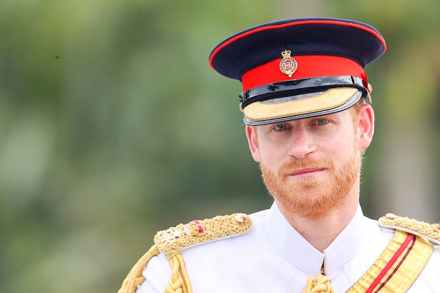
Seven years ago, when HS2 was still officially costed at £33 billion, I wrote that I was looking forward to using my pensioner’s rail pass on it ‘early in the reign of hugely popular, three-times-married King Harry, in whose favour his elder brother will abdicate after his 50th birthday’. Now HS2’s upper cost estimate has reached £106 billionand the northern spur of the track may not reach Leeds until 2040, when my pass and I will surely have expired. There’s still a possibility all this will happen — high-speed rail and Harry’s coronation, that is — but both look less likely by the day. And after a decade of defending HS2 against all-comers, I fear I must review my position.

Never mind the royals – the real national crisis is at John Lewis

Asked to name British institutions they’d rather not see shaken to the foundations, many consumers would list the John Lewis Partnership and its Waitrose supermarket subsidiary just behind the House of Windsor. Indeed some might rank the employee-owned retail group ahead, on the grounds that Her Majesty’s family doesn’t sell Egyptian cotton sheets and organic celery juice. A fall into losses, a management bloodbath and a threat to John Lewis’s distinctive business model really is, in its way, a national crisis. As you flick from one online retailer to the next, pondering how to spend the saving you just made on a load of Lidl groceries, you may ask why John Lewis still matters.

All forecasts are off if Iran shuts the Strait of Hormuz

Just when you thought it was safe to go back in the water… Late last year, a range of forecasts suggested that the likelihood of recession in the US, with knock-on effects for the rest of the developed world, had significantly diminished. Last summer, many economists were putting the chance of a substantial downturn at 50 per cent but by November, Goldman Sachs had marked it down to 24 per cent and Morgan Stanley to ‘around 20 per cent’. Underlying this shift were strong corporate earnings and consumer spending, plus rising hopes of a settlement of US-China trade tensions. Last month saw a sell-off of safety-first government bonds reflecting the mood, and the FT’s end-of-year forecasts included a confident ‘No’ to ‘Will the US go into recession?

Neil Woodford could do the washing-up at my fantasy Christmas lunch

It’s the season for kindness and conviviality. In that spirit — and recognising that business, like personal life, rarely follows an easy or predictable path — here’s a list of corporate heroes and anti-heroes who deserve your sympathy and a place at my fantasy Christmas table. First, those who are moving on. Bob Dudley put BP back on its feet after the Gulf of Mexico disaster; if many shareholders thought he was paid too much for doing so, he can make amends by bringing the wine. Ross McEwan didn’t solve all the problems of RBS, but dragged the crippled bank a long way back towards normality. Mario Draghi gave new clout to the European Central Bank.

Take note, Peloton: sweaty blokes make safer marketing

You’ll have had enough of politics and punditry, so let me introduce a non-political City debate (even if rather a technical one) around the M&G Property Portfolio. Founded in 1931, M&G is a trusted brand in collective investment products for middle-class savers but appears to have done what we might nowadays call ‘a bit of a Woodford’: namely, it has temporarily closed its £2.5 billion property fund for investor redemptions, having reaped rich fees in recent years despite what the FT calls ‘substandard performance’. The fund in question owns a wide spread of UK commercial properties, 40 per cent of them in the struggling retail sector.

The RMT strike is a demonstration of what to expect in a Corbyn-McDonnell regime

It’s unusual for a Governor of the Bank of England to announce his next job before Downing Street has named his successor. In Mark Carney’s case, the new role turns out to be an unpaid, part-time one as the UN’s special envoy for climate action and finance, so no protocol has been breached — though the announcement will serve as a reminder to Chancellor Sajid Javid or whoever succeeds him to let the long--suffering Canadian escape his Threadneedle Street prison as swiftly as dignity allows after election day. What’s significant is the confirmation this news offers that ‘climate risk’ has moved into the mainstream of financial and corporate life.

There’s no need to mourn the loss of Uber’s London licence

Early experiences of Uber in London did not encourage me to become a regular user. My first driver thought I wanted to go to Birmingham when the ride had been booked from Clapham to Mayfair. The next was a furious driver who would have seen off Lewis Hamilton at Hyde Park Corner. Call me old-fashioned, but I still prefer the pottering black cab with its opinionated Essex-dweller at the wheel and the possibility of paying in cash. So my own modus operandi is unaffected by Transport for London’s decision not to renew Uber’s licence in the capital and I’m not in the least upset about it. OK, life today is all about apps, cashless convenience and the individual’s right to make choices and take risks.