Books & Arts

Books and Arts

Understanding museum theft with best-selling author Kirk Wallace Johnson

The recent events at the British Museum in London will probably prove to be the museum scandal of the year, if not the decade. It was revealed over the summer that hundreds, perhaps thousands, of items had gone missing from its collections in storage, with suspicion directed toward a now-former member of staff. We still don’t know exactly what was stolen, and no one has been formally charged — authorities are still investigating. Nevertheless, the British Museum’s director has stepped down and the press has had a field day generating outrage, albeit with coverage based largely upon speculation and opinion. Amid all the finger-pointing, however, no one seems to be asking why someone would even consider taking property from a museum in the first place.

museum
waters

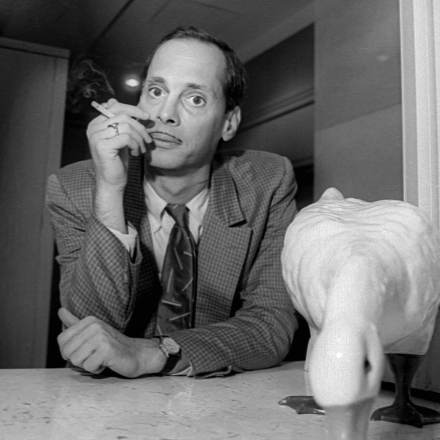
John Waters, the pope of cliché

A decade or so ago, I was on the phone with the filmmaker John Waters, discussing Juggalos, Jesus and Justin Bieber, when I called someone “white trash.” The once-cult-now-mainstream director cut me off. I don’t remember exactly what he said — the transcript is long since deleted — but Waters berated me, called me racist, and rehashed some version of his 1994 statement that “talking trash about ‘white trash’ is ‘the last racist thing you can say and get away with.

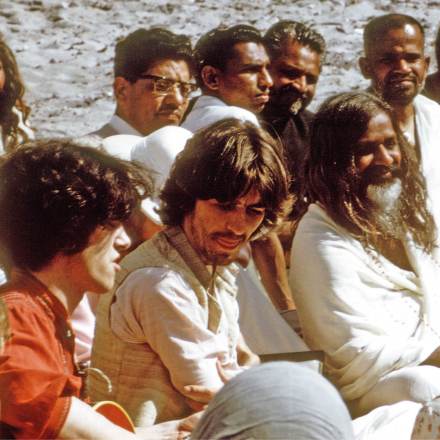
George Harrison at eighty

All I got to do is to, to love youAll I got to be is, be happyAll it’s got to take is some warmth to make it blow away That’s the chorus of George Harrison’s bubbly 1979 single “Blow Away,” an update of sorts to his Beatles hit “Here Comes the Sun.” At the close of the 1970s, the respite from the “long, cold, lonely winter” had become less assured. There is a pleading tone in Harrison’s voice as he sings “be happy” that infuses “Blow Away” with pathos. That, plus his cavernous stare in the otherwise goofy video, indicates that summiting Mount Everest might have been easier than the chorus’s stated goal.

Harrison
musicians

Age is catching up with our much-beloved musicians

On the Who’s 1965 single “My Generation,” the band’s twenty-one-year-old lead singer Roger Daltrey half-sang, half-sneered, “Hope I die before I get old.” The song, written by the then-twenty-year-old Peter Townshend, has remained a classic for nearly sixty years, boasting both a fantastic tune and unforgettable lyrics. Yet even as the Who continue to tour the world — often in the company of that invaluable accessory for any self-regarding rock band, a full orchestra — it is now with self-aware amusement that the seventy-nine-year-old Daltrey and seventy-eight-year-old Townshend perform it.

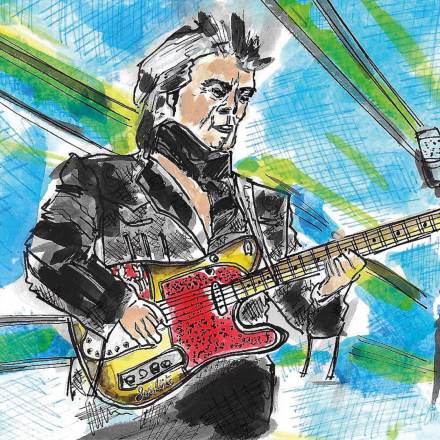
The great Marty Stuart, possessor of one of popular music’s legendary guitars

He stands five-foot-seven in his stocking feet — five-nine in boots — but with Clarence White’s Telecaster slung around his neck and a thick head of gray hair roostered up, he looks ten feet tall. John Marty Stuart has plucked the strings of every major figure in country music. Growing up in Philadelphia, Mississippi, his heroes were bluegrass legend Lester Flatt and American prophet Johnny Cash. Before going out on his own, Stuart only had two jobs: he joined Flatt’s band in 1972 as a fourteen-year-old mandolin virtuoso, and after Flatt retired in 1978, he joined Cash’s band as a guitarist.

stuart
iliad

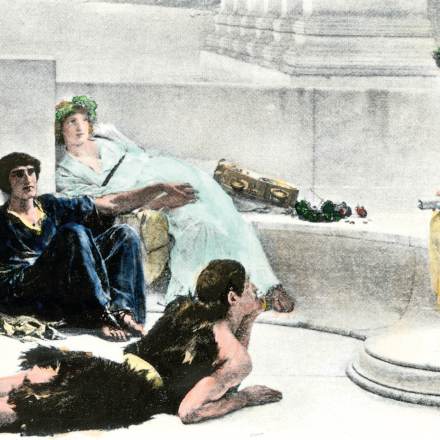
Two excellent books that offer new insight into The Iliad

The Iliad, Homer’s extraordinary epic poem, begins with Apollo, the god of light, zooming down from heaven “like night,” bringing plague to the Greek camp before Troy. Many days later, after the Trojan Hector’s funeral rites, the poem ends, at dawn. The light god brings darkness; dawn brings the doom of Troy. Such are the ironies that underpin the epic, revealing it as a work of supreme artistry, probably composed by one hand alone. For decades, I have lived in the light and shadow of The Iliad, reading it at first piecemeal in Greek, then in various translations, then all the way through in Greek (an experience both taxing and exhilarating). My Loeb edition, its prim English translation opposite the raw Greek, is never far from my side.

The gap between technotopia and dystopia are never far apart

Broken Arrow isn’t just the title of a mediocre 1996 film, but the term for a serious accident involving a nuclear weapon. Over the last seventy years, the United States has officially experienced thirty-two Broken Arrows, where a nuclear weapon has been in a crash or fire, accidentally been dropped — or just disappeared. Incredibly, six have been lost and never recovered. Artificial intelligence (AI) pioneer Mustafa Suleyman tells one such story in his new book, The Coming Wave: Technology, Power and the 21st Century’s Greatest Dilemma. In 1961, a B-52 bomber carrying two live hydrogen bombs broke up in the skies above Goldsboro, North Carolina. One bomb disintegrated when it plunged into a muddy field.

Suleyman
congo

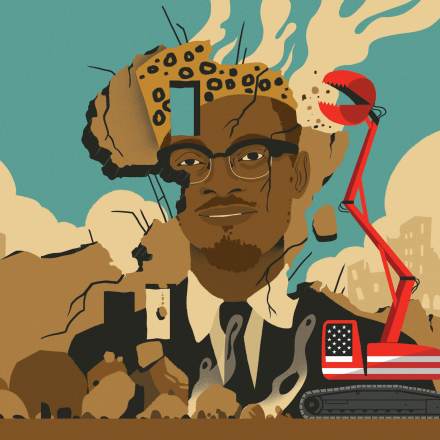
How the CIA interfered in the Congo

As everybody knows, as soon as you start to talk to any historian of postwar life in any Latin American or African or Southeast Asian country, the discussion quickly turns to the role of the CIA in subverting democracy. From the Truman-era coups in Syria and Egypt, through regime change in Guatemala, assassination in the Dominican Republic, the fomenting of industrial unrest in Guyana, and both the military and covert US involvement in Vietnam, it seems overseas intrigue was the rule and long periods of benign neglect the exception.

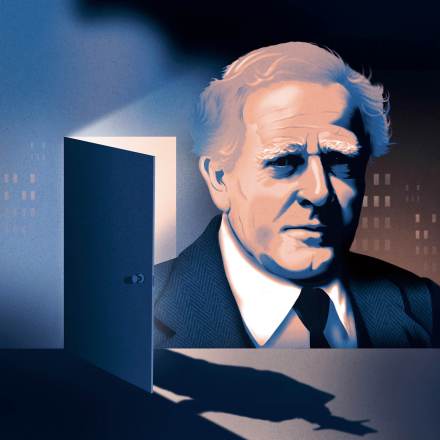
Adam Sisman’s new John le Carré biography entertains and disappoints

The fellow biographer for whom I always felt the most sympathy was James Atlas. Mr. Atlas, who has left an extensive account of his tribulations in The Shadow in the Garden: A Biographer’s Tale (2017), made the fatal mistake of writing a life of Saul Bellow while its subject was still alive. Bellow, you may not be surprised to learn, revealed himself to be a devious, shifty and manipulating old cuss. He interfered, blew hot and cold, disparaged his encomiast’s prose style, intelligence and research techniques and finally remarked, “I like you Atlas, but cut the crap.

le carré
lewis

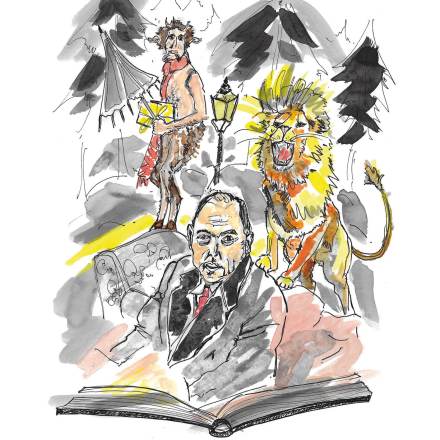
America’s professor: the afterlife of C.S. Lewis

In the summer of 1955, an unusual meeting took place. Billy Graham visited the writer and academic C.S. Lewis in Lewis’s rooms at Magdalene College, Cambridge. It was unusual because leading British academics typically avoided Southern Baptist revivalists. But rather than encountering a fussy, prim don, Graham found a kind, intelligent scholar who was very happy to spend the afternoon with him. Later, Graham admitted he was intimidated by Lewis, but the English professor quickly dispelled any anxiety, probably by offering Graham a cup of tea. Graham’s impact on American religious culture, for good or ill, is unquestioned, but it is difficult to imagine what that same culture would look like without the works of C.S. Lewis.