Aaron Gwyn

Aaron Gwyn is a short story author, novelist and an associate professor of English at University of North Carolina Charlotte.

Dune: Part Two and Paul’s struggle

At a moment when words like “jihad” and “genocide” fall perpetually from the lips of pundits, professional activists, and policy makers, Denis Villeneuve’s Dune: Part Two seems a rather subversive spice to sprinkle into our combustible culture. While both parts of Dune comprise a complex film that defies simplistic one-to-one allegory, at times Villeneuve’s richly imagined epic places a finger on the familiar, the historical, just as it points its others toward a fiction set amongst the stars.  In the second half of this adaptation of Frank Herbert’s 1965 novel, Paul and his mother, Jessica, have escaped the initial assault on House Atreides to shelter with Fremen insurgents, but Harkonnen death squads pursue them.

dune paul

Killers of the Flower Moon captures the singular sensation of outside-ness

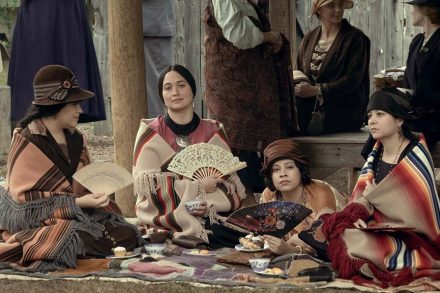
In the summers my grandmother would drive us south of town to where the black oaks thinned out and the world opened into pasture land and sky: prairie grass as far as you could see. Here, on their tribal land, the Seminole People would hold an annual powwow. Folks congregated to visit and eat frybread tacos, and I would skateboard with my Muskogee friends, Mike and Bobby Harjo on the cement basketball court, or along sections of sidewalk outside the aluminum-sided lodge. Around sundown, when the whippoorwills began to call from the sparse stands of blackjack and the fireflies winked on and off, the sound of drums started to pound the earth. You could feel them coming up through the soles of your shoes.

killers of the flower moon

The great Marty Stuart, possessor of one of popular music’s legendary guitars

He stands five-foot-seven in his stocking feet — five-nine in boots — but with Clarence White’s Telecaster slung around his neck and a thick head of gray hair roostered up, he looks ten feet tall. John Marty Stuart has plucked the strings of every major figure in country music. Growing up in Philadelphia, Mississippi, his heroes were bluegrass legend Lester Flatt and American prophet Johnny Cash. Before going out on his own, Stuart only had two jobs: he joined Flatt’s band in 1972 as a fourteen-year-old mandolin virtuoso, and after Flatt retired in 1978, he joined Cash’s band as a guitarist.

stuart

The new Elon Musk biography lacks a clear vision

In the prologue to his biography of Elon Musk, Walter Isaacson evokes the Hero’s Journey in its most pop-culture incarnation: It’s one of the most resonant tropes in mythology. To what extent does the epic quest of the Star Wars hero require exorcising demons bequeathed by Darth Vader and wrestling with the dark side of the Force? Isaacson’s assumption is that Luke Skywalker is the hero of the original film A New Hope. His preamble is titled “Muse of Fire,” a reference to the most famous prologue in literature, the opening lines of Henry V. In Shakespeare’s play, the poet, recognizing the gargantuan feat before him, asks the Muse for help: O, for a muse of fire that would ascendThe brightest heaven of invention!

elon musk

Oppenheimer’s passenger

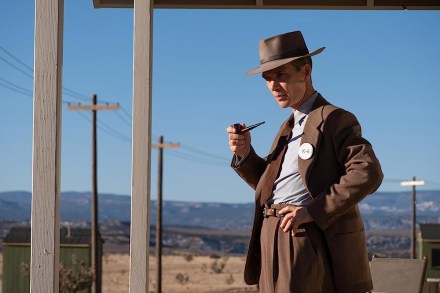
Ripples appear in courtyard puddle outside the Cavendish Laboratory at the University of Cambridge; a tornadic funnel erupts from the black atmosphere toward Earth. Between these images — the small one of intimate life and the colossal one of planetary death — a haunted young man looks on in curiosity and horror.  The man is Robert Oppenheimer, played to perfection by Cillian Murphy, a theoretical physicist “troubled by visions of a hidden universe.” This visionary, capable of conjuring apocalypse from the particles stowed inside atoms, spends the first fifteen minutes of the film looking bewildered — a gaunt, gray sliver of a man wandering through his life like a ghost.

oppenheimer

Blood Meridian is Cormac McCarthy’s masterpiece

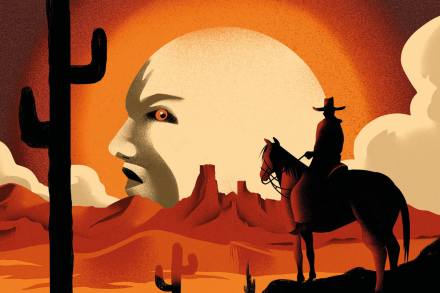
In June, Cormac McCarthy — our greatest living writer — slipped from this world to the next and joined his forebears Melville, Twain, Faulkner and Flannery O’Connor in the American literary pantheon. By noon the following day, Blood Meridian, or The Evening Redness in the West, his magnum opus, had reached number eight on Amazon’s Top 100 Books, assuring that, for the first time, it would hit the New York Times Paperback Bestseller List; a curious development for a novel that, when it was first published in 1985, failed to sell its initial print run of 1,500 and was quickly remaindered.

blood meridian

Cormac McCarthy is gone – but his works remain brilliantly alive

From our UK edition

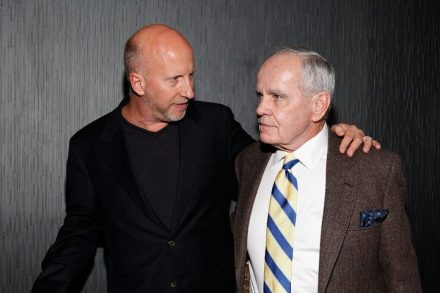
Until yesterday afternoon, Charles Joseph McCarthy Jr. (better known to readers as Cormac) was the greatest living American writer – many would say the greatest living writer, full stop.  The heir to Melville, Twain, Flannery O’Connor and Faulkner, McCarthy published his first novel, The Orchard Keeper, in 1965 at the age of thirty-two. Set in rural Tennessee, this Southern Gothic fable established the palette he would use to compose his next three novels, each darker than his debut and likewise set in the Volunteer State.