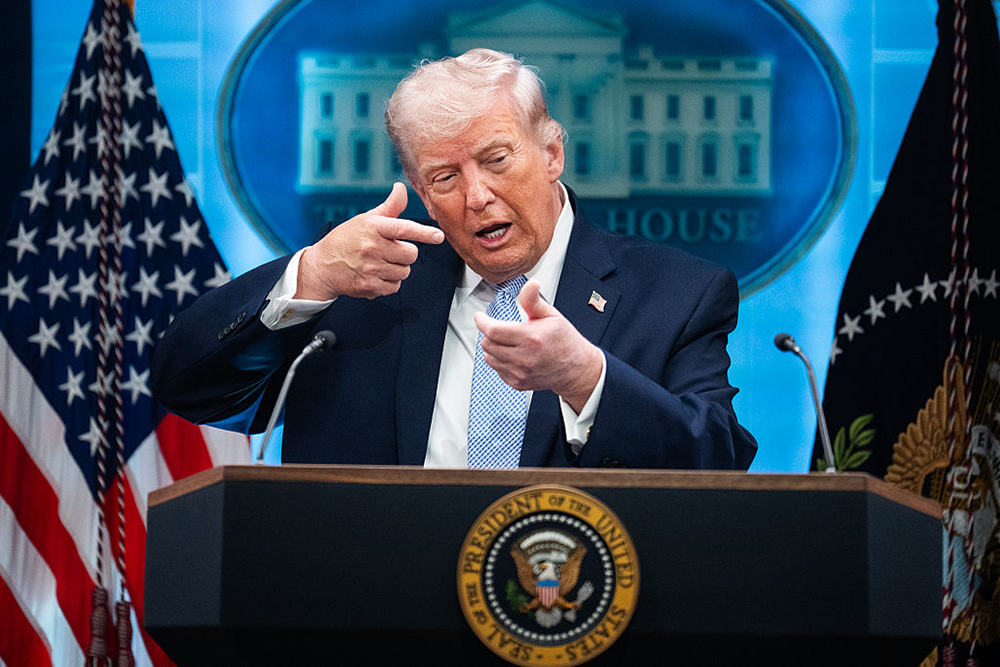
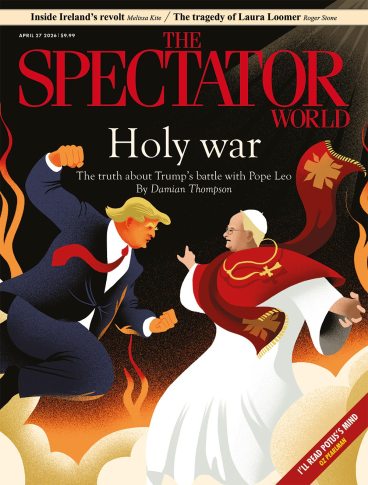
“A number of observers of the political, moral and spiritual life in recent years have taken up the famous theme of the decline of the West,” the French journalist Luc Ferry wrote in Le Figaro at the end of January. “They recall that civilizations are mortal, like human beings, and that our own, far gone in decadence, is dying. Nevertheless, I fail to see how one can include the United States in this pessimistic reading of history. Not only does it remain the most powerful economic and military power in the world… politically speaking, whatever one thinks of [Donald] Trump, of his antics and his perverse narcissism, it is difficult to deny that he has given new life to the idea that politics can change the world, that action taken by a leader can have an impact on the real world.”
M. Ferry is especially approving of the American President’s removal from office in Venezuela of the “bloody clown” Nicolás Maduro and of Trump’s first bombing raid last June against Iran; he regrets only that the President did not press his military campaign to remove the mullahs from power for good. “The comparison with France,” he notes, “is a cruel one: faced with his energetic action on all fronts – immigration, wars, AI, the economy – the ‘at the same time’ of [an Emmanuel] Macron embedded in an absurd dissolution of power is pitiful to behold.”
The Biden administration’s success in steering the country leftward made a sharp and rapid correction imperative
Given Trump’s severe chastisement of western Europe in the year since his return to office, it is hardly surprising that few European politicians – and equally few journalists in the Old World, including those working for conservative publications – have had a good word to say about his actions at home and abroad, while seeming actually to wish him ill in his various bold undertakings, his war against the Iranian regime especially.
Similarly, disillusion on the part of the MAGA movement that reelected him to office last year might appear reasonable, given what are widely considered to be the “isolationist” sentiments and tendencies of his supporters going back a full decade to his first run for the presidency. Nevertheless, Tucker Carlson, Nick Fuentes and other dissenters to the contrary, the polls show rather that Trump’s interventionist policies in Venezuela, Iran and elsewhere are enjoying enthusiastic support from up to 90 percent of his base and even of the Republican party as a whole.
A dissenter from the democracy-building conflicts going back to the Gulf War in 1990, I am wholly in favor of the present regional war, where – or so it seems to me – armed intervention by the United States was long overdue, if only as a necessary warning to Moscow and Beijing, a reassertion of American power and resolve against plainly aggressive and hostile powers. I am very glad Trump is where he is: in the White House and with three more years to go there. And yet, I confess to having reservations concerning the degree to which the President has succeeded in accomplishing what leftist governments and parties everywhere have always striven to achieve, which is the progressive politicization of all of life in modern societies to the point where “politics is all this.”
In part, the succession of Sleepy Joe Biden’s listless and ineffective government by the most vigorous and activist one since those of the two Roosevelts made this result inevitable, and actually necessary. Further, it is a fact that the Biden administration’s success in steering the country sharply leftward made a sharp and rapid correction of course imperative. In a country so drastically divided politically as the US has become, a president must move as rapidly as possible on taking office to accomplish what he can in four years to make it difficult or impossible for a potentially opposite-minded successor to reverse in another four-year term what he has accomplished in his own.
And it is also true that, as becomes clear from reading Alexis de Tocqueville’s Democracy in America, Americans have been from the beginning of the republic a politically hyperactive and hyperconscious people, the result probably of their excited enthusiasm in assuming popular and ever more minute direction in the affairs of state hitherto entrusted to the better class of people.
Be that as it may be, the attempted mobilization of an entire country to a particular end as determined by one ideological party or another is a nerve-racking and fatiguing business, one that in the long run risks delivering it up, in a democracy like the postmodern United States, to perpetual activism on behalf of violently alternating political agendas.
For citizens who are highly developed political animals – his enemies and his supporters equally – Trump’s second administration is wonderfully stimulating, absorbing and even thrilling. For more introspective, intellectual and culturally philosophically minded people, it is increasingly distracting, upsetting and exhausting.
Of course, it is possible to ignore to a degree much of the noise and tumult that goes on in Washington, in the rest of the country and in the world beyond it, but in the age of electronic communications the thing becomes increasingly difficult. The point is not that politics in the western world – and elsewhere – in this third decade of the 21st century is without interest or significance; it is, rather, that it is not really civilization, with which it has little – and progressively less – to do.




Comments