Books & Arts

Books and Arts

Meeting Karl Ove Knausgård

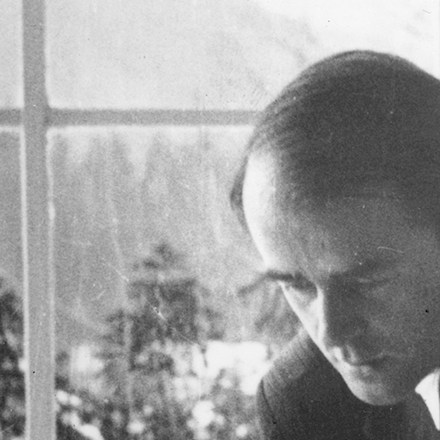
On a winter’s morning, outside the Three Lives bookstore in New York’s West Village, Karl Ove Knausgård has just finished signing copies of his latest novel, The School of Night. His features are familiar from the dustjackets – the gray-blue eyes, the grizzled beard – but he is surprisingly tall and his signature silver mane is now cropped short around the ears. Gone, too, are the cigarettes, traded for a vape. The School of Night is the fourth novel in Knausgård’s “Morning Star” series. It takes its name from a secret society of Elizabethan poets and scientists, which included the explorer Sir Walter Raleigh and the play-wright Christopher Marlowe.
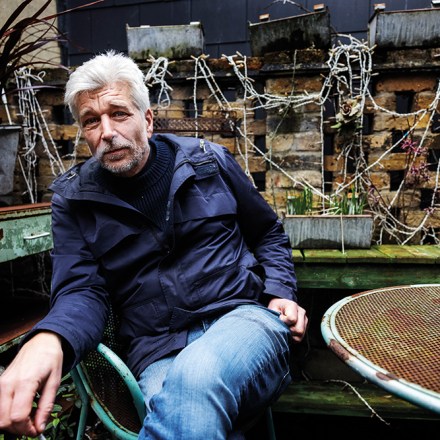
karl ove knausgård

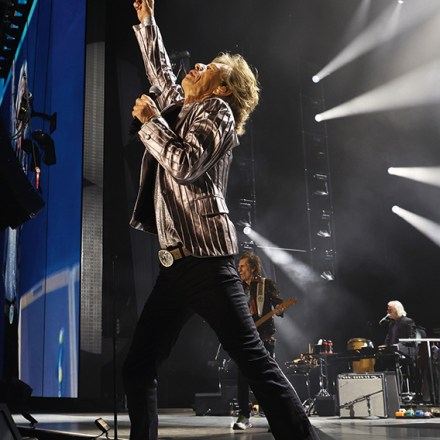
Will the Stones ever play live again?

How times change. Our forebears once thought that full-figured Bill Haley was at the razor-sharp, frighteningly decadent and anarchic edge of pop culture. Compared to the Rolling Stones’ subsequent carnival of drug busts, court appearances, car crashes, house fires, paternity suits and chosen or enforced overseas exile, not to mention the matter of Keith Richards’s alleged blood transfusion, or of his unusual choice in dispersing his father’s ashes (cocaine, nostril), Haley’s act now seems as quaint as the background accompaniment to an Edwardian tea-dance.

Why Hitler’s suave architect escaped the noose at Nuremberg

At the Nuremberg trial of the main Nazi war criminals, one man stood out: Adolf Hitler’s favorite architect and later armaments minister, Albert Speer. He cut a gentlemanly figure in a gallery of rogues. The strutting, smirking Hermann Goering reminded Rebecca West, who attended the trial, of “a tout in a Paris café offering some tourists a chance to see a black mass.” Julius Streicher, the Jew-baiting brute, was like “a dirty old man of the sort who gives trouble in parks.” On the same bench, all declaring their innocence in the face of overwhelming evidence of monstrous crimes, were the lantern-jawed SS leader Ernst Kaltenbrunner, the sour-faced ex-Champagne salesman Joachim von Ribbentrop, Fritz Sauckel, the thuggish slave-labor chief, and the rest of the sorry gang.

The misery of working with Chuck Berry

In Ian Leslie’s John & Paul, the creative relationship between the titular Beatles is treated as a platonic love story. Matt Thorne widens the paradigm with seven more pairings, variously rivalrous, amorous, respectful, disrespectful and occasionally frankly tenuous. The 11 American and three British musicians here have careers that collectively cover seven decades of popular music.  There are three dynamics at play. First, there are the Thucydides tensions, where a waning power tangles with a rising one. Frank Sinatra invites Elvis Presley to join him on a television show; Keith Richards throws a filmed concert with Chuck Berry. (Richards, for once, is the younger partner.) The older player is not always generous.

Tales of quiet intensity: The News from Dublin, by Colm Tóibín, reviewed

Colm Tóibín is a master of understatement, his work characterized by great emotional intelligence coupled with redoubtable restraint. This is his third anthology of stories, following Mothers and Sons (2006) and The Empty Family (2010). Within a few pages, he fills the gaps between words – the things he doesn’t say – with as much meaning as the prose. Familiar themes emerge. There is the Irish diaspora in the US (as in Brooklyn and Long Island); the Catalan Pyrenees (the setting for “The Long Winter” in Mothers and Sons); and Argentina (as in the novel The Story of the Night). Feelings of exile and being an outsider are aroused, while Catholicism still taps on the shoulders of those long lapsed.

colm Tóibín

Ovid puts today’s radicals to shame

It’s a crisp afternoon, and in a darkened room in central Amsterdam a woman is being smothered in snakes. Projected on to three walls is a massive video close-up of her face. She is young and beautiful and remarkably composed: just a nose twitch here, an eyelid flutter there, as a python wriggles across her mouth or languidly caresses her cheekbone with its tail. In the room behind me, another woman stares fiercely back. Her shoulders are bunched with muscle, arms stiff at her sides, like a nightclub brawler about to nut someone. But it’s the bull’s horns sprouting from her forehead, and the mane of matted fur marching down her back, that make it hard to meet her gaze.

Anthemic angst from The Twilight Sad

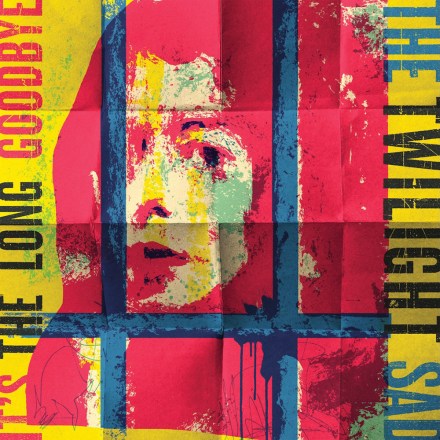
The only thing misery loves more than company is a backbeat. While capturing pure happiness surely remains the Holy Grail of any artistic endeavor, the blues is the bedrock of popular music for a reason. Sure enough, as we ready for the clocks to go forward, two albums arrive which could hardly be said to be full of the joys of spring, although they approach personal crisis – and catharsis – in very different ways. It’s The Long Goodbye, the sixth album by Scottish indie-rock band the Twilight Sad, is their first in seven years. During that hiatus lead singer and lyricist James Graham was dealing with his mother’s decline and eventual demise from early onset dementia, while also becoming a father.

twilight sad
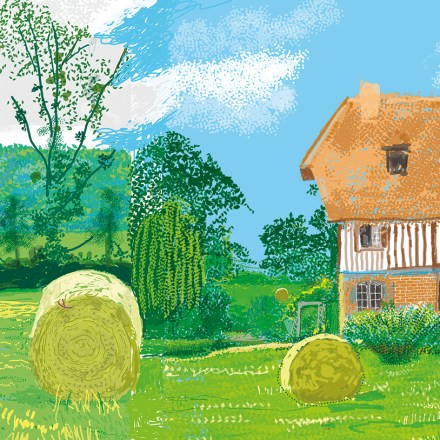
hockney

This Hockney show is disorientingly enjoyable

When so much contemporary art is riven with obscurity and angst, it is disorienting, at first, to encounter something as straightforwardly enjoyable as Hockney’s latest exhibition. Aged 88, the artist went out into his garden in Normandy with his iPad to make a visual diary of the year 2020. A hundred or so of the iPad sketches he made have been put together here, blended into a frieze, a walk-through panorama of the seasons rendered with Vivaldi-like virtuosity. As we move along the curve of this 90-meter frieze, we see nature through Hockney’s bright yellow spectacles. He distills the garden to its dramatic essences. The chill mist of winter is numinous, the dormant trees skeletal, the spring blossom riotously delicate, the blue sky bluer than blue.

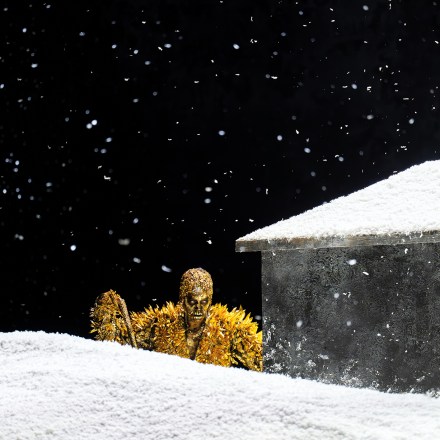
The Royal Opera’s Siegfried is magnificent

Covent Garden’s new Ring cycle has reached Siegfried, and once again, you can only marvel at Wagner’s Shakespeare-like ability to anticipate modern preoccupations. Want to talk about the manosphere? Well, here’s opera’s most profound study of the playful, disruptive, world-making energy of the adolescent male psyche. The least interesting thing that you can say about Siegfried is that he’s an impulsive oaf. Well, duh. Have you never met (or if you’re really unfortunate, been) a teenage boy? Wagner could hardly make it more clear. Siegfried’s upbringing has been toxic. He has been isolated from humanity, and his only inkling of love has been brutally transactional.

siegfried