Books & Arts

Books and Arts

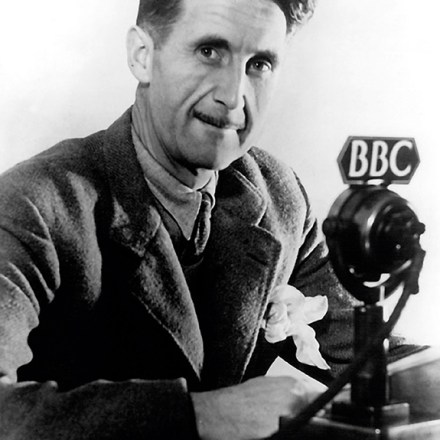
Life lessons from George Orwell

It was the British political journalist Jason Cowley, writing in London’s Sunday Times a month or two back, who posed a query calculated to strike terror into the heart of any self-respecting Orwell-fancier. Were we, Cowley wondered, with the air of one who tosses a Sèvres vase into the air to watch it descend into heap of fragments, approaching peak Orwell? Was the man in whose voluminous output so much of modern political and sociocultural malaise has been refracted losing his sheen? Some Orwellians – myself included – on hearing this would probably respond with a rather handy Latin phrase: si monumentem requiris, circumspice, which loosely translates as, “If you want evidence, buster, then take a look around.
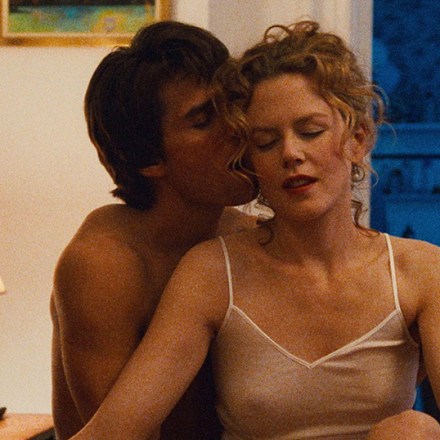
Looking back at Eyes Wide Shut, after Epstein

The constant parade of shocking and disturbing revelations from the Epstein files has been going on for a considerable time now. It shows no signs of coming to an end. Just when we all think that we’ve seen the worst of it, another 10,000 documents enter the public domain. Even though the stories have been widely disseminated, the details of the abuse of young women by the wealthy and powerful remain just as distressing – and scandalous – no matter how many times they are repeated. At some point in the future, Hollywood – or a streaming service, or AI, or however we get our entertainment by then – will probably make a film about the Epstein scandal.

Nintendo and the plumber who conquered the world

It’s not more than a parlor game, perhaps, to speculate about history’s most crucial inventions. One invention often makes the next possible. Electric light revolutionized human productivity, allowing us to work well beyond sundown. The combustion engine and later the turbine engine collapsed our sense of distance, putting other continents within a day’s travel. We’re still debating what the internet’s done; how social media offers the double-edged sword of instant communication and addressability for good and ill; how it encourages the avatarization of ourselves as online presences. We’re both ourselves online and not quite ourselves, entirely embodied and yet psychically elsewhere.

nintendo
lloyd blankfein

Lloyd Blankfein – guiding light of Goldman Sachs

Goldman Sachs inspires awe and envy in equal measure. Those who survive the Wall Street investment bank’s annual cull earn fortunes. Leavers join an alumni network that makes the Freemasons look like plodders. The “Government Sachs” roll call includes prime ministers (Mark Carney, Mario Draghi, Rishi Sunak and Australia’s Malcolm Turnbull); US Treasury secretaries (Robert Rubin and Hank Paulson); and central bank governors galore, not to mention two recent BBC chairmen (Gavyn Davies and Richard Sharp). After the global financial crisis, which Goldman navigated more adroitly than rivals, Rolling Stone compared the bank to “a vampire squid wrapped around the face of humanity.” New York magazine ran a cover story which asked: “IS GOLDMAN SACHS EVIL?

The art of aging

More than 30 contemporary artists have contributed to the Wellcome Collection’s latest exhibition, which asks what it’s like to age at a time of unparalleled longevity. But as so often happens at the Wellcome’s exhibitions, it’s the ephemera that draw the eye first. “These 2 men are the same age,” says a leaflet advertising Kellogg’s All-Bran breakfast cereal. “One has driving power – energy – the will to succeed. The other is listless – tired all the time – it is an effort for him to plod through each day’s work.” The point being that aging is, to a not inconsiderable degree, something we do to ourselves, and something we do to each other. It is a process, not an event.

aging

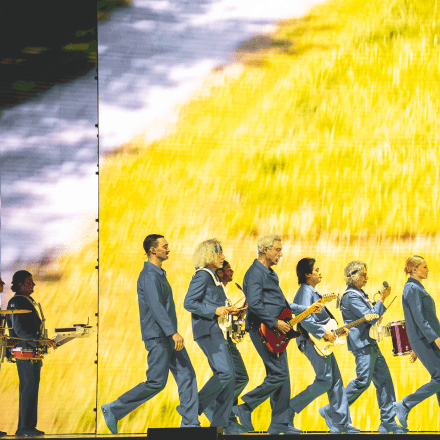
David Byrne has done it again

The title of David Byrne’s most recent album and current tour is Who Is The Sky? The phrase works two ways. Read literally, it has the playful 1960s feel of a Yoko Ono film or some absurdist Fluxus piece; firmly on brand, in other words, for someone as steeped as Byrne in New York’s downtown art lore. Read it aloud, however, and it becomes “Who Is This Guy?,” a more pointed title for an artist who has always seemed – to reference an old Talking Heads song – one of rock’s more slippery people. At the second of two recent Glasgow dates, both interpretations seem to fit. In Talking Heads, Byrne was a jerky, remote presence, aloof to the point of alien.

The Peaky Blinders film is surprisingly literate

Peaky Blinders: The Immortal Man is the film that fans of the television show have long been waiting for, so I must watch what I say. The story follows a group of exceptionally violent Birmingham gangsters operating between the wars and if you see it at the cinema you’ll hear a message before the opening credits. It’s Cillian Murphy imploring audiences not to give away any spoilers and ruin it for everyone else “by order of the Peaky Blinders!” There will be no spoilers here today. I have no wish to get my face slashed. Although I’ve dipped in and out of Peaky Blinders down the years, I’ve never stuck with it and am not steeped in its lore – I can’t stomach all those beatings even if they are highly stylized and set to cool rock music; my fault!

peaky blinders
harry styles

Harry Styles has a cute voice

Grade: B In which the foppish Davy Jones figure from the manufactured band One Direction (Zayn Malik being Peter Tork; One Direction didn’t have a Mike Nesmith) sheds the soft-rock pop-lite that has served him so well and goes with what he fondly believes is challengingly funky EDM, a genre which I do not believe plays to his strengths. So what you get is lyrics as fabulously inane as on “Watermelon Sugar” but very little of the pleasant tunes which accompanied that and his many other hits. There are some interesting rhythmic textures for sure, and a surfeit of old-skool playground synths. There is also a surfeit of repetition, a necessity for the oeuvre and a polite nod toward rap.