Books & Arts

Books and Arts

Nicolas Sarkozy’s inside story from Parisian prison

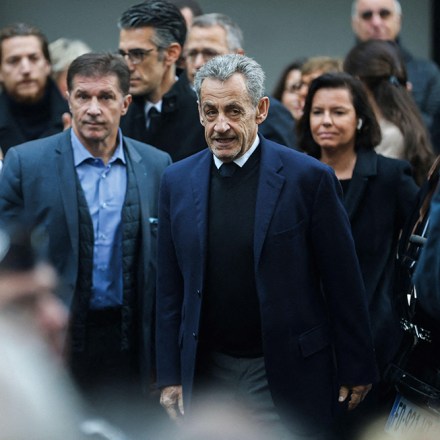
Nicolas Sarkozy’s prison memoir is a slender book about a short sentence that nonetheless makes for compulsive reading. It is unintentionally comic, occasionally moving and almost always politically calculating. This, despite the weight of its author’s self-importance, moral evasions and intermittent self-awareness. Sarkozy, 71, was sentenced to five years for criminal conspiracy linked to Libyan money in his 2007 presidential campaign. He served less than three weeks in Paris’s La Santé prison before being released under judicial supervision to finish his punishment at home, pending an appeal to be heard in March. He used the time efficiently, producing more than ten pages of writing a day. The result is a compact 200-plus-page chronicle of noise, bad showers and damaged pride.
sarkozy

The radical networks that hijacked the 1970s

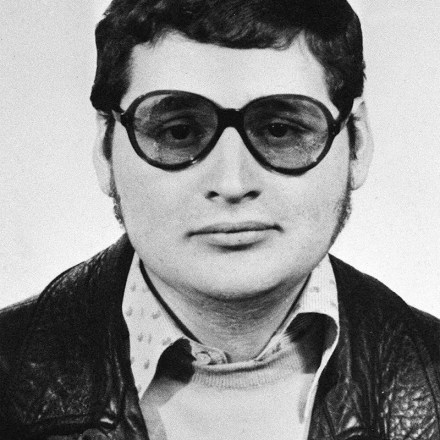
Airplane hijacking, like the mode of transport itself, became common in the 1960s. A practice largely confined to the United States, it was invariably a means for ordinary criminals to extort ransom money or flee to Cuba. In 1968, the hijacking of an El Al flight by the left-wing Popular Front for the Liberation of Palestine revealed the political utility of the act: in exchange for the safe return of its plane and passengers, Israel released 16 Arabs from its prisons. Encouraged by this outcome, the PFLP launched a spate of similar operations. One such mission, the hijacking of a TWA flight in 1969, revealed that prisoner exchanges and ransoms weren’t the only upside of this new tactic.

Crucible’s complex picture

The beginning of Crucible, the writer and Oscar-nominated director John Sayles’s eighth novel, opens with a feint. A couple of journalists are taken for a mock-perilous test drive at the presentation of Henry Ford’s latest automobile. On their return, what starts as a humorous Q&A becomes increasingly restrictive as it becomes clear there is to be one narrative only: the company’s, or rather, the founder’s. This familiar combination of showmanship and control may feel ubiquitous now, but the audacity of Ford and the outrage he provoked was to change the face of American industry.

crucible
Intellectuals pedants

The pedants’ revolt

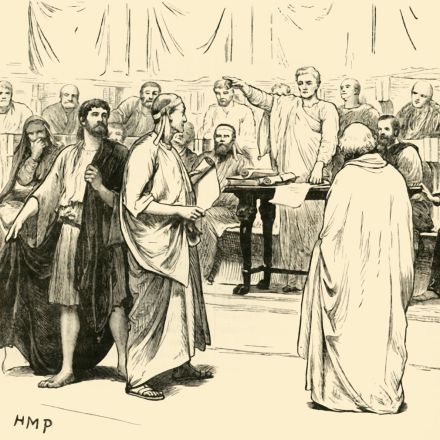
The scene is the imperial palace on the Palatine Hill in Rome in the 2nd century. The philosopher Favorinus is waiting to greet the emperor Hadrian when a grammarian corners him and launches into a lecture on the grammatical qualities of the word penus, meaning “provision.” “Well and good, master, whatever your name is,” Favorinus replies wearily. “You have taught us more than enough about many things of which we were indeed ignorant and certainly did not ask to know.” A thousand years later, the Muslim polymath Ibn al-Jawzi tells of an Arabic grammarian, notorious for punctilious use of archaic language, attempting to negotiate with a carpenter. “What is the price that this pair of doors costeth?” the scholar asks.

Our Mount Rushmore

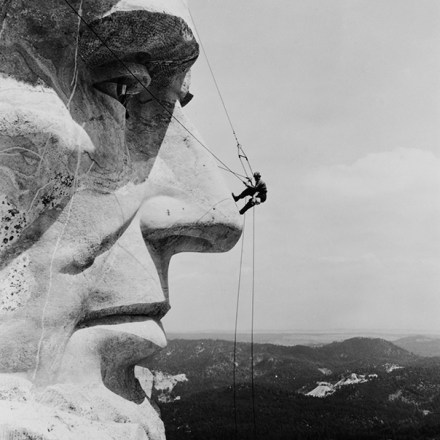
Personally, I regard Mount Rushmore as an excrescence on the mountain and a monument to the horror that Edward Abbey called industrial tourism. Beyond that, it is an expression of a naive piety and a patriotic sentimentalism that no longer exists in America. Matthew Davis correctly views the presidential sculptures carved into the face of Mount Rushmore in the Black Hills of South Dakota by Gutzon Borglum in the 1920s and 1930s as very much a period piece, an expression of popular American patriotism in the early decades of the 20th century. His “biography” of the mountain is equally a cultural work reflective of its time. Preeminent among Davis’s concerns in writing this book was to determine, “What is a memorial for?

rushmore

The depth of Edmund de Waal

“I’m very, very proud of making pots,” says Edmund de Waal. “I don’t call myself a conceptual artist.” He is putting the finishing touches to an exhibition of ceramic sculptures at Gagosian’s Beverly Hills gallery. Around the walls are sleek, tiered vitrines filled with porcelain vessels, along with a sequence of smaller gold-painted boxes – “reliquaries,” as de Waal calls them, inspired by the early Renaissance master Duccio. “I hate the word minimalism. I find it completely useless as a term.” In the last 20 years, de Waal has risen from the status of a humble ceramicist to become one of Britain and America’s leading contemporary artists, best known for his multipart installations of pots.

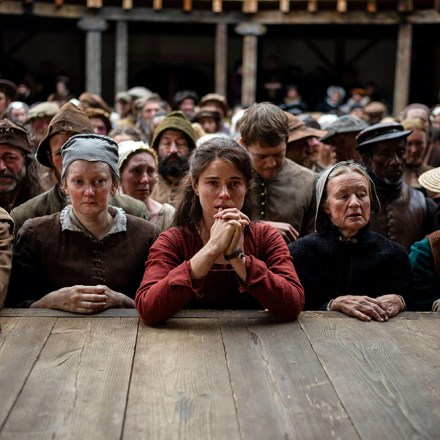
To see, or not to see Hamnet?

In 1966, the actor Raphael Montañez Ortiz staged his one-man show Self-Destruction at London’s Mercury Theatre. Intermittently screaming “Mommy! Daddy!,” Ortiz tore the clothes from his body, doused himself with baby powder, lay down in a diaper, downed a few bottles of milk and began vomiting profusely. Plastic bags were then distributed to members of the audience, who were encouraged to follow suit. Montañez Ortiz’s performance gave the psychologist Arthur Janov the idea to create primal scream therapy, a psychiatric fad that once counted John Lennon and Yoko Ono among its followers.

hamnet

Behind Wes Anderson’s infamous sensibility

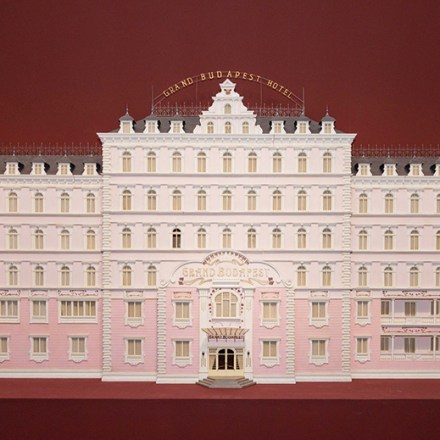
Woody Allen once sardonically described the fans of his films as being divided between those who liked the “early, funny ones” and the later, darker pictures. Much the same might be said of another famous WA: Wes Anderson, who has established himself as one of American cinema’s most significant auteurs despite no longer living in the country – he hops between England and France. Like most auteurs, his films are more succèss d’estime than they are succèss de box office, but he has the cream of Hollywood lining up to work with him and commands respect among actors young and old. Anderson is rightly celebrated – or castigated – as a visual stylist, but he has enormous flair as a screenwriter Anderson’s visual sensibility is infamous.

Why has it all gone wrong for The Night Manager?

The Night Manager is finally back after ten years with three major drawbacks: no Elizabeth Debicki for the sex scenes; no Tom Hollander for the comedy scenes; and no Hugh Laurie for the evil-kingpin-in-his-toothsome-mountaintop-lair scenes, I nearly claimed. But only because at the very beginning of the new season the Laurie character’s grizzled body is identified by Olivia Colman (in her most irritating performance ever, as a dowdy but capable MI6 officer with a gratingly suburban accent). And I didn’t want to spoil the coming plot twist in case any of you were foolish enough to have fallen for this blatant case of Chekhov’s misidentified corpse.

night manager