Spectator Life

Spectator Life

An intelligent mix of culture, style, travel, food and property, as well as where to go and what to see.

In celebration of street parties

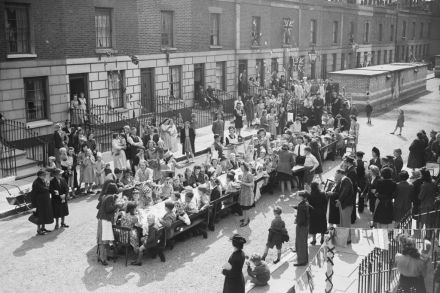
There is something very equalising about a street party. At one gathering I attended last year on a central London mews, a trust fund baby peered nervously out from his living room window before deciding to emerge, carrying two bottles of champagne and a flower vase filled with a tumultuous mess of a Platinum Jubilee trifle. When the lemonade for the Pimm’s ran out, the champagne was mixed in instead. He didn’t seem to mind. It’s good for us British to be thrust into these social settings. I get the impression that some of the Mediterranean peoples do this sort of thing every weekend: long balmy evenings help I suppose. But we are less accustomed to letting strangers in on our mealtime rituals.
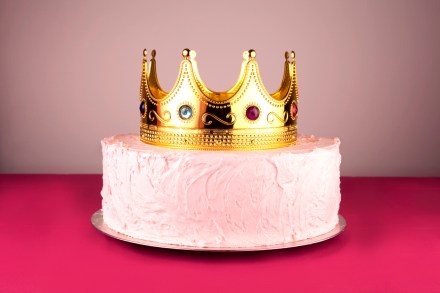
Charlotte Royale: a celebration cake fit for a king

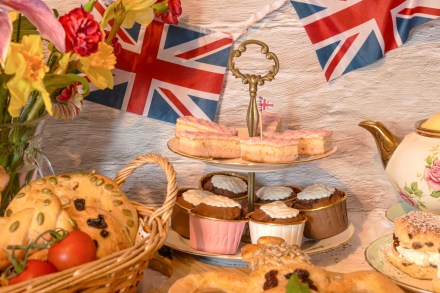
The big bank holiday weekend is about to begin. You’ve made that spinach and broad bean quiche. The bunting’s ready for your street party. You’ve crafted a coronation drinking game. But there’s something missing, isn’t there? An itch that just needs to be scratched. Where’s the pizazz? Where’s the cake? As the oft-misattributed quote goes: a party without cake is just a meeting. I know, I know: a quiche can be fun, but is it celebratory? No, what we need is a good old over-the-top, lily-gilded showstopper of a cake, that you can cut into with appropriate levels of pomp and circumstance. And, boy, do I have the pudding for you. It’s hard to think of a more appropriate pudding to celebrate the coronation of a King called Charles than a Charlotte Royale.

The joy of real beer

England. Despite being a Scotsman, partly brought up in Ulster, I have taken so much Englishness for granted over so many years. So do most Englishmen, to at least as great an extent as the inhabitants of any other major country. But I hope that I am just enough of a historian to enquire about this for-grantedness, and to wonder how it happened. I had chosen a good place to ruminate. We were sitting in the garden of the Mayfly pub near Stockbridge in Hampshire, watching the river Test glide by almost saucily. I have occasionally tried – and failed – to catch a trout on such a chalk stream, and have indeed been given sceptical instructions on the subject by Jeremy Paxman: sceptical because he was certain that my heavy footfall would always frustrate my efforts.

How to celebrate the coronation weekend

Lots of things seem to get described as ‘once in a lifetime’ experiences nowadays, but for many of us the coronation really will be just that. So, how to make the most of the historic long weekend? Clock off from work at a reasonable time on Friday and while getting dressed into your glad rags pour yourself a glass of English sparkling wine. Nyetimber and Hattingley Valley both have appealing coronation edition cuvées. Have some friends over – as with Christmas or new year, I think the tantalising eve of the big day is always the most fun time for a party. Serve some nibbles, such as Tyrrells's coronation chicken crisps, and a Jack Russell cake from the Waitrose coronation collection (at £24.99 their Leckford Estate Brut is also worth getting as a good-value English sparkling).

The ultimate guide to coronation food

There was nothing actually wrong with coronation quiche, Buckingham Palace’s suggested dish for a coronation lunch. Spinach, broad beans, cheddar: all fine. The trouble was, it wasn’t coronation chicken. When you’re following an actual classic, it’s impossible not to be overshadowed. And coronation chicken is that marvellous thing, a recipe which feels as though it has always been around because it’s so right as a combination of flavours and textures. But like every classic dish, it’s been traduced: take commercial mayonnaise, stir in curry sauce and a bit of mango chutney and a few raisins… and it’s cropping up in all sorts of weird combos now (CC scotch egg, anyone?).

Yorkshire puddings: is there anything as satisfying?

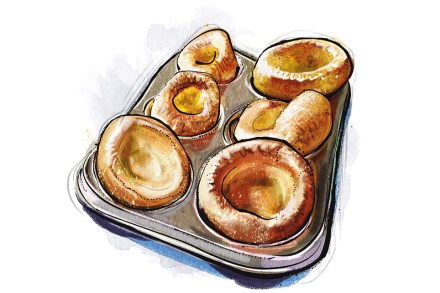
My mother, a Yorkshire woman, would occasionally take shortcuts in the kitchen, but not when it came to a roast, and certainly not when it concerned a Yorkshire pudding. She even owned a specific Tupperware shaker for the job: like a plastic cocktail shaker, in 1970s orange colour, with a propellor insert, and a lidded pouring spout. The batter would be prepared in this shaker and handed to anyone foolish enough to pass through the kitchen, and woe betide anyone who stopped shaking before they were so instructed. There are few things more satisfying than filling a perfect Yorkshire pudding with gravy I didn’t inherit my mother’s Yorkshire pudding shaker, but I make do with a vigorous whisk and then a short rest.

Faultless food with the promise of vengeance: The Trough, reviewed

Lady Bamford’s Cotswold fairy-land Daylesford Farm has sprouted leaves. It is no longer a farm shop, which should be a humble thing. I went to the Chypraze farm shop at Morvah last month, for instance. The proprietor only had honey, he said, and also pork, because he had just killed a pig. Daylesford is a sort of Las Vegas-themed hotel, invoking something half--imagined from something half-real. Caesar’s Palace; the Paris; the Luxor; the Venetian; Le Petit Trianon; Moreton-in-Marsh! It is not uncharming – many of us have a parallel life in which we live in Lady Bamford’s Cotswold fairy-land, on a pile of Lady Bamford’s dragon gold – but it is a travesty, and it should have a floor show.

Where to get your Lapsang (now Twinings has ruined theirs)

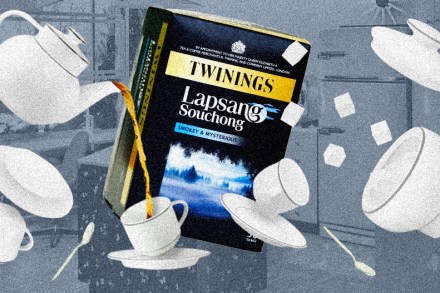
Tea drinkers erupted in a fit of caffeinated rage on Monday; kettle cosies were dashed across the kitchen, bone china was placed down hastily and many people were all very cross. Twinings sparked the uproar after axing its Lapsang Souchong tea and replacing it with something called ‘Distinctively Smoky’. It has been met with near universal disapproval and branded a stain on the company’s 300 year history. Famously Winston Churchill’s brew of choice, Lapsang Souchong is a centuries-old tea thought to have originated in the Wuyi Mountains in the Fujian Province of China, with the first record of it in 1646. Legend has it Wuyi locals fleeing Qing soldiers dried fresh batches of tea over fire to expedite their escape.

Inside London’s first community-owned pub

When Enterprise Inns closed the Ivy House in April 2012 – with plans to sell it to a property developer – things looked bleak for the south London pub. Its well-established status as a community and live music venue, which has hosted artists like Joe Strummer, Elvis Costello, and Ian Dury, was under threat. What followed is a story of civic triumph.  Nestled in the residential backstreets of Peckham Rye, The Ivy House has the proud title of being London's first cooperatively-owned pub. When its existence was threatened, members of the local community stepped forward, campaigning successfully for a Grade II listing and raising £1 million to buy the freehold and refurbish the building.

With Guy Tullberg

25 min listen

Guy is the managing director of The Tracklements Company, providers of artisan chutneys, relishes and preserves, all made in small batches and to traditional recipes.  On the podcast they talk about the joys beef dripping on toast, the thriving food scene in Wiltshire and Guy's desert island meal.

In defence of the hash brown

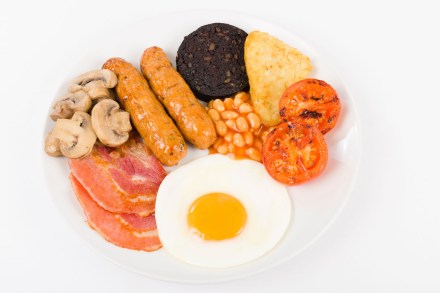
The English Breakfast Society has cancelled the hash brown, calling it a ‘lazy American replacement to bubble and squeak’. Guise Bule de Missenden, the society’s founder (sounds European to me), warned that giving hash browns the stamp of approval would only encourage the adoption of other ‘unsuitable fillers like chips’, or worse ‘fish fingers’ and ‘kebab meat’. (Seriously Guise, unless you are an infant or a drunk, the latter two are not part of any normal diet.) The boffins at the English Breakfast Society need to get with the times ‘Someone has to draw the line and say no to hash browns,’ he said. ‘They are served by those who lack pride in the full English breakfast tradition.’ Well, I've had enough. I’m taking a stand.

The restorative qualities of a great martini

It was a perfect setting for a spring day, next to a 15th-century barn. Other walls and buildings had clearly recycled ancient masonry over the centuries. This was in Kent. Though not that far from Ashford station, it was a garden deep in the garden of England: l’Angleterre profonde. There are excellent local pubs, with absolutely no pop music, but proper hoppy beer as well as proper dogs, looking forward to the shooting season. There was also modernity, in the shape of the Pleasant Land distillery, which has the most up-to-date impressive-looking German kit. Vorsprung Durch Technik also applies to pot stills. The fellow who inspired all this is Sebastian Barnick.

Chess pie: how to make the flakiest pastry

Chess pie was, in one sense, new to me when I started learning about it a few months ago. I’d never heard of this favourite of the American South until I came across it in a pie-centric cookery book. But in another sense, it’s extremely familiar – both to me and to anyone who’s ever eaten a pie or a tart before. Chess pie is a bit like an ur-pie, made with the most simple, most essential of pie ingredients. That’s possibly where its name comes from: the story goes that in the 1800s in Alabama, where nuts and other common pie fillings were expensive, a freed slave made a pie with the most basic of ingredients – eggs, sugar, butter, cream. When asked about it, she replied: ‘Oh it’s jes’ pie.’ And, lo, thanks to a mishearing, chess pie was born.

Serious about its whimsy: Sessions Arts Club reviewed

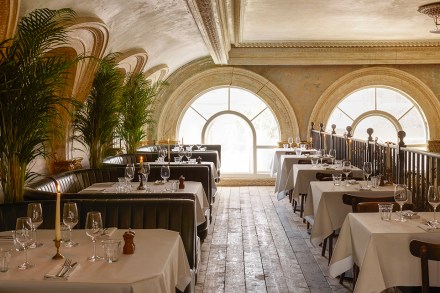
The Sessions Arts Club is a restaurant inside the Old Session House in Clerkenwell, a pale George III building where the criminals of Middlesex were once judged in splendour. It’s common for fine once-public buildings to become private buildings now: the old War Office on Whitehall will be, come summer, Raffles at the OWO. The acronym is not mine – it never is – and I doubt you could run a war from there, though you could try. You could throw a mojito at a laptop. I wonder if there is a connection between the ugliness of the new public buildings and the state of our public discourse: what is there to be proud of but rage?

With Jonathan Ray

33 min listen

Jonathan Ray is The Spectator’s drinks editor and formerly wine critic for the Telegraph. He has also written several books on the subject of wine and how to buy it. On the podcast Lara, Liv and Johnny share a glass of wine and discuss his earliest memories of food, his go-to hangover cure and his desert island meal.

The secret of perfect chocolate brownies: use a hairdryer!

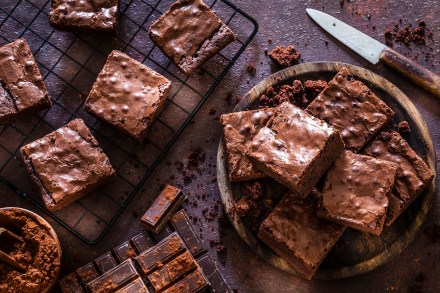
I'm standing in my kitchen aiming a hairdryer at a pan of uncooked brownie batter and feeling like I might have finally lost my mind. I’ve done a lot of strange things in pursuit of recipe perfection, but even for me, this is an odd one. Brownies are a funny old beast. We think of them as quite straightforward, both in the making and in the eating. But actually, that’s not fair. There are countless variables which can produce anything from a dry chocolate cake to uncooked fudge. And – more importantly – for a glorified traybake, they’re pretty damn expensive to make. A whole pat of butter, lots of chocolate, anything from three to five eggs, a boatload of sugar (rarely simple granulated). It’s a commitment.

In praise of Bellamy’s

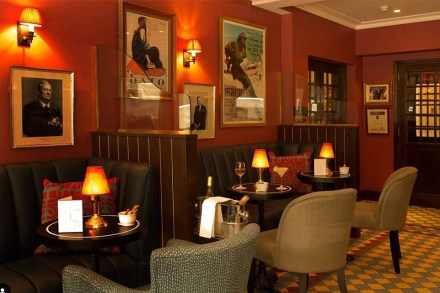
Of all London districts, there is no more charming name than Mayfair. It makes one think of pretty shepherdesses, giggling and blushing as swains serenade them with garlands of spring flowers. But that would have been some time ago, even before the last nightingale sang in Berkeley Square. These days, the serenading would be courtesy of powerful sports cars, revving through the traffic to cock a snook at the cops. Yet there are survivals from a gentler era. Behind Berkeley Square in Bruton Place, you will find the Guinea Grill, which sounds cheerful and lives up to its name. Virtually next door is Bellamy’s, with more gastronomic ambition, but equally traditional and wholly reliable. In recent years, an elderly lady would sometimes arrive, without fuss or fanfare.

Simnel vs colomba: which is the best cake for Easter?

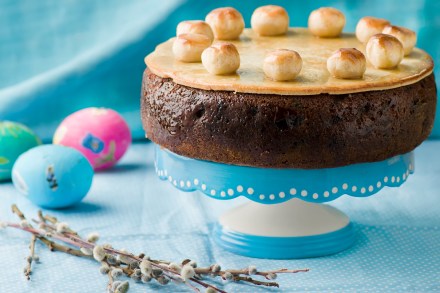
When it comes to Easter cake, there are two possibilities. From the home front, there’s simnel cake, which has 11 marzipan balls on the top – one for each of the apostles, apart from bad Judas. Or there’s colomba, the Italian dove-shaped panettone-style cake, with all its symbolic resonances. Not that the colomba actually looks like a dove, unless you try very hard – more like a cross with round ends (the wings and tail) and a wonky top (the head). Anyway, that’s the idea.  Colomba cake [iStock] So, which is the more perfect? Simnel cake is a lightly spiced and fruited cake, with marzipan in the middle as well as on the top. Made with homemade marzipan, which is easy, it’s a thing of beauty.

Eat here now: Darjeeling Express reviewed

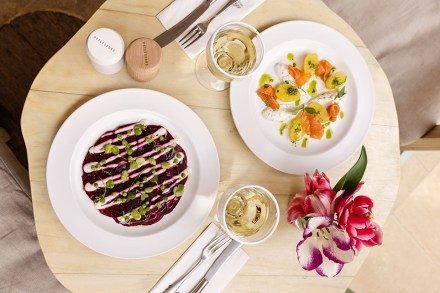
Darjeeling Express lives at the top of Kingly Court, just off Carnaby Street, which was once the world-famous embodiment of Swinging London but now seems the global capital of the sports shoe. No matter – Kingly Court, which is built in the shape of a medieval coaching inn, is a happy nook: it is shut away, which means you can’t see sport shoes from the window. It is small in scale; it is for Londoners in their thinning melting pot. Kingly Court already has a superb restaurant in Imad’s Syrian Kitchen. Darjeeling Express, newly opened, joins it on the second floor. My companion calls the chicken kati the platonic ideal of aa KFC wrap, and he is right It used to be a yoga studio, but I don’t let that bother me: the yoga hags have fled.

Bring back the savoury!

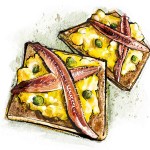
For a while now, we’ve been living through a renaissance of classical British cooking: a whole host of restaurants have been embracing the joy of the old school, the pies and puddings, the traditional and the retro. But there’s something missing. Bring back the savoury! An Edwardian favourite, a ‘savoury’ was an extra course that came towards the end of the meal, either just before or after pudding, or as an alternative to it. A savoury should be small – a ‘morsel’ – and strongly flavoured. To this end, the main ingredients are usually cheese, smoked or salted fish, bacon, or spice in the form of devilling. It is often served on toast or with a small pastry croute, and with something creamy as a foil.

A toast to the old man pub

I’ve always preferred ‘old man pubs’ to bars, old man pubs being the kind decked out in mahogany and offering up a gin and tonic to anyone clueless enough to ask for a cocktail. Having just moved to Glasgow, I find myself surrounded by these sorts of places, Scotland practically being the home of pubs so wooden they’d float. There’s a joy in walking into a pub and the staff knowing your name. I’m 33 and I’d like to meet someone, but I also want to make friends. My initial idea was to use dating apps to contact people in Glasgow. I recced Hinge from Bath, where I last lived, and set up dates for the first week I arrived. It was all too easy – I only had to say I was new in Scotland and I was immediately offered a dozen tours.

With Fadi Kattan

23 min listen

Fadi Kattan is a Palestinian chef and hotelier who has recently brought a menu inspired by all the different regions of his home country to his new restaurant Akub, in Notting Hill.  On the podcast he talks about inheriting his love of food from his grandmothers, what it was like opening a restaurant on the occupied West Bank and his love of oysters.

Why bother cooking?

In a world of ultra-convenience, I think making the argument for home cooking is important. Because a lifestyle of takeaway delivery apps, ready meals or eating out every day is not a recipe for health and happiness, no matter how easy the modern world makes it.   One of the downsides of the cult of the ‘foodie’ is that it can make food and cooking more intimidating than they need to be. If you’re a Londoner, invite friends over for a dinner of lasagne and garlic bread and you’ll have one guest asking if the pasta is fresh or dried and the other telling you to try roasting the garlic for 24 hours in a low oven next time to unleash its inner umami. It’s enough to put anyone off.

Baked custard pots: a sprightly spring alternative to crème brûlée

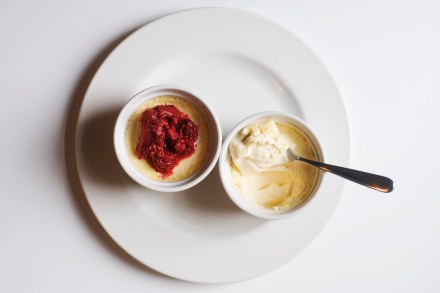
I am pretty capricious when it comes to puddings. I'm always ready to declare my most recent success the king of all desserts, swearing blind I will never make anything else, and just falling short of sending a newsletter to my entire address book informing them of the new love of my life – only for a new pretender to take its place a week a later. So you would be forgiven for feeling a little dismissive when I crow about my new favourite pudding. But listen, this really is my new favourite pudding. Maybe I will never make anything else again. Baked custard pots: richer than a crème caramel, but without the distinctive brittle ceiling of the crème brûlée, these are a make-ahead wonder, fantastically impressive, and really, completely delicious.

What the Cambridge dons drink

In June last year, King’s College Cambridge made more than £1 million from an auction of just 41 lots from its wine cellar. Not bad for a college that until just a few years ago had a hammer and sickle flag hanging in its student bar. But the Marxist sympathies of some of its legendary fellows and students stand little chance against the viticultural genius of the cellar’s buyer: Peter de Bolla, a scholar of 18th century literature and aesthetics. Included in the bonanza sale were 12 bottles of 1999 Echezeaux, an apparently legendary grand cru from Henri Jayer, for which someone bid £100,000. De Bolla had bought them on release and, to give some indication of the return on his investment, when he bought the 1996 vintage he had paid £31.11 per bottle.

A nose of wet chihuahua: the rich vocabulary of wine

Some decades ago, there was a Tory MP called John Stokes: eventually, and deservedly, Sir John. He had no interest in holding ministerial office, which was just as well, because he would never have been on any whips’ list for preferment. John was a right-winger: a very right-winger. I once told him that he was the Right Pole: impossible to move any further. He took this as a compliment. He had many uses, not least of which was in teasing the snowflake tendency among Tory intellectual lefties (or at least, Tory lefties who regarded themselves as intellectuals). ‘John thinks’, I would say: this was before John Major’s eminence. My interlocutor wondered which John I was citing. ‘Stokes, of course’ would come my reply.

Why is the food in parliament so bad?

Anyone who finds themselves gazing at a parliamentary samosa for two minutes or more (me, for the avoidance of doubt) probably has a problem. Sadly, this is what my life has become since the Twitter account @Parliscran arrived on the scene. The reason the samosa was so mesmerising is because I was trying to work out whether it had been covered in balsamic glaze, a long-held obsession of mine. The sauce, dark and sticky as it appeared, was more likely to be some sort of tamarind situation, but nevertheless I found it beguiling.  https://twitter.com/ParliScran/status/1625869677711839232 A cursory doom-scroll through Parliscran would be a cathartic deviance to anybody who enjoys food.

Where to find the best Guinness in London

London has always been dogged by the canard that the Guinness here can’t compete with what’s served across the Irish Sea. It is certainly difficult – perhaps impossible – to replicate the quality of the pints in Mulligan’s on Dublin’s Poolbeg Street, or at the Gravediggers by Glasnevin Cemetery. However, there are pubs here that do it admirably – if you know where to look. Whether you’re a lifelong aficionado, or you’re merely observant on St Patrick’s Day, these are some of your best bets for a great London Guinness: The Auld Shillelagh, Stoke Newington A stone-cold classic of a pub, the Auld Shillelagh’s deceptively small frontage on Church Street leads to a longitudinal bar that serves some of London’s finest pints.

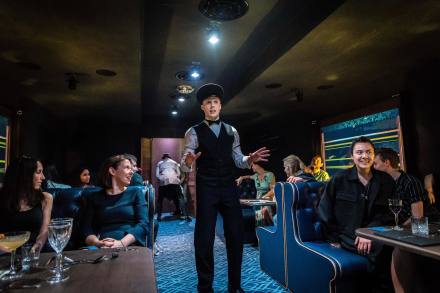
The wacky world of immersive dining

The human desire to turn life's mundanities into something altogether more agreeable never ceases to amaze and amuse. Take our homes, for instance. Once we were content to live in caves as long as they kept us dry and were reasonably warm. Then we decided it would be more appealing to build our own caves but with the added benefit of shag-pile carpets, front doors and locks to keep the jungle at bay. This ability to cocoon ourselves from an outside world that had once housed us became something of a status symbol and so we built bigger, more elaborate caves loaded with ostentatious accoutrements such as silk wall linings and sweeping marble staircases leading to bedrooms nobody used.