Spectator Life

Spectator Life

An intelligent mix of culture, style, travel, food and property, as well as where to go and what to see.

America should be more like West Virginia

Poor. Illiterate. Strung out. Those were the three words that Bette Midler used to describe West Virginia after the Mountain State's Joe Manchin announced he would vote against Joe Biden's Build Back Better bill. "He sold us out. He wants us all to be just like his state," Midler said. It's a tale as old as time. So, Bette, I'm giving you the old "West Virginia Salute," raising my middle finger...and my thumb, a local gesture that depicts the state's curious shape. I want to tell you about my home and why the rest of the nation should be just like it. I come from the furthest point on the West Virginia thumb, Charles Town.

In search of Sisi

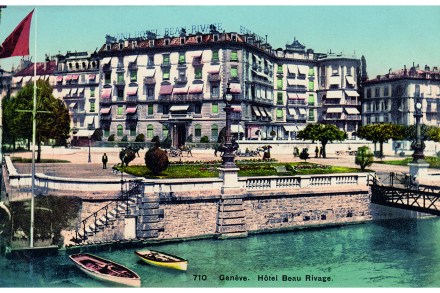
From my plush bedroom in the Beau Rivage, Geneva’s most historic grand hotel, I look down on the lakeside promenade where one of the most remarkable women of the nineteenth century met her dark, dramatic end. On September 10, 1898, Empress Elisabeth of Austria (commonly known as Sisi) was stabbed in the chest by an Italian anarchist as she was about to board a paddle steamer to Montreux. She was carried back into the Beau Rivage and up to the suite where she’d spent the previous night. Within half an hour she was dead. Today, the hotel’s palatial Sisi Suite still looks much as she would have found it.

sisi
staten

Staten my preference

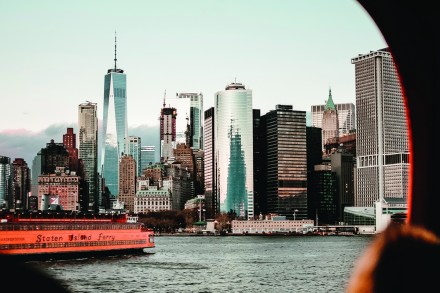
The Margarita, the divey bar facing an equally divey pizza joint in the Staten Island Ferry Terminal, is a special place. For one, it’s where a middle-aged African-American lesbian bought me a drink — the only instance I can recall from decades of drinking that a woman has offered to buy me a drink before I got her one. Given her preference for fuller Latino ladies over lanky white men — which she emphasized through photos on her phone — my new acquaintance clearly didn’t have an agenda behind that drink for me. We just got talking and she did that New Yorker thing of embracing companionship and the moment.

Ice fishing in the Arctic

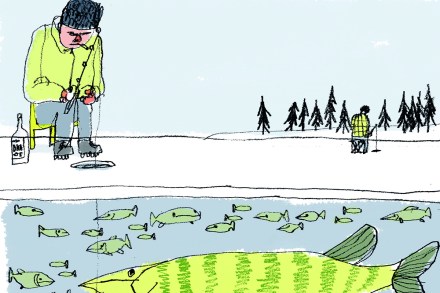
Like a rocket launch from the Cosmodrome, a Russian ice fishing trip must be timed just right. During my month in Archangel, a city in Russia’s far north on the edge of the Arctic Circle, the temperature swung between -30°F and a balmy 36°F. For ice fishing, the closer to the lower end of that range, the better. In fact, it’s a matter of life and death — the ice must have enough time below zero to freeze to a safe depth. I make it up to this chilly harbor town about once a year to visit my in-laws. It’s always a dramatic touchdown at the local airport as the runway, dusted with drifts of snow, appears at the last minute from out of a heavy fog.

ice
prague

Prague by design

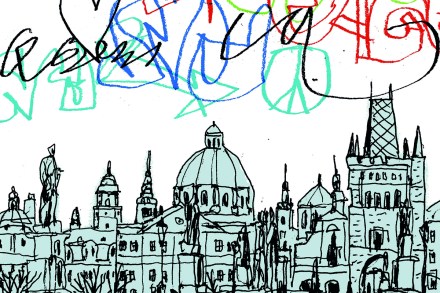
Prague has a graffiti problem. This becomes apparent as the train pulls towards the nineteenth-century Masarykovo Nadrazi station, through the old industrial east of the city. Huge derelict warehouses, some from the communist era, others much older, are covered top to bottom in scrawls and daubs amidst collapsed roofs and glassless windows. It’s unlikely to stay this way for long, though; Prague’s answer to gentrification is swiftly transforming previously rundown areas of the city, making it worth a venture off the beaten track. For all the genteel architecture at its heart, the graffiti is a sign of a city unafraid to show discontent. Trapped behind the Iron Curtain for so long, progress was, for decades, conducted at the whim of communist governments.

The history of the American Memorial Chapel

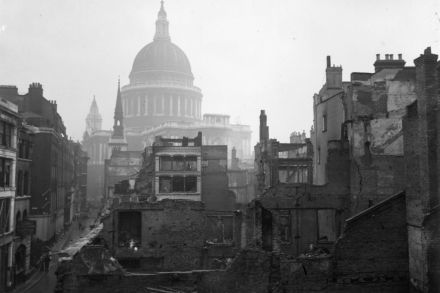
The clipped voice on the old television newsreel tells us that November 27, 1958 was a gray old London day. The Queen, accompanied by Vice President Richard Nixon, was dedicating and opening the American Memorial Chapel at the far east end of the City of London’s great cathedral. Ordinary men and women from all over Britain paid for the chapel by public subscription. It was the least we could do. It was a miracle that the cathedral had survived the Nazi Blitz almost intact. One part of the cathedral was hit by a bomb in October 1940, and it was on that site that eighteen years later the Memorial Chapel was built. The Chapel is dedicated to the 28,000 American people who were stationed on British soil and died in World War Two, many of them on D-Day.

chapel

Fall is America’s sentimental season

People are mad about fall. Kathryn Lively, a sociology professor at Dartmouth College, told the Huffington Post that autumn is America’s favorite season because it’s ingrained in us from childhood to view it as an exciting time of year. School starts up again, we get to see our long-lost chums once more, and acquiring the newest Elmo Interactive Backpack fills us with glee that lasts a lifetime. I’m not so sure about this theory, and must, for the onliest time ever, depart from my veneration of all things Fitzgerald, who wrote that “Life starts all over again when it gets crisp in the fall.

fall

An appreciation of the Trump International Hotel

That incomparable political and social gadfly P.J. O’Rourke once claimed that he did his “principal research in bars, where people are more likely to tell the truth or, at least, lie less convincingly than they do in briefings and books.” For anyone interested in covering the raucous rollercoaster years of the Trump presidency, that would have meant spending a lot of time in the bar at the Trump International Hotel on Pennsylvania Avenue, just a few blocks east of the White House.

trump hotel

Maybe Hawaii should be independent

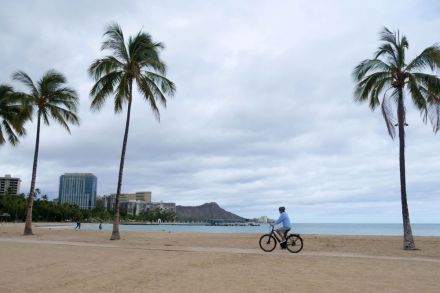
When you’re a writer, there’s no such thing as a vacation — there’s just visiting a new place with the potential to gather more material. Lucky for me, my most recent destination happened to be Hawaii. It’s a fascinating place, and if you didn’t already know it was a US state, it would be easy to mistake it for a distinct English-speaking country, albeit one with obvious and deep American influences. Oahu, the most urbanized island and home of the capital city of Honolulu, is shaped by an idiosyncratic mix of native Hawaiian, East Asian and midcentury American culture. Hawaii resembles a Pacific Island nation at least as much as it does the American mainland.

Perudo in Utah

I’m two miles outside Wanship, Utah, at a remarkable new hotel called The Lodge at Blue Sky. I’ve just met my host in the bar, a bear of a man called John Tuffman, or ‘Tuff’, as I’m told to call him by his assistant. Owing to my delayed flight, we’re running a little behind schedule. ‘Down the hatch’, he says, nodding to my beer while he repositions his Stetson. We climb into a car and are driven up to the barn. A few weeks ago, I received an email which I had every right to believe was a scam or an elaborate catfishing attempt. It was an invitation from an events company in San Francisco to appear as the World Perudo Champion at an executive retreat in Utah. At 6 p.m.

perudo
tigray

Tough times for tenacious Tigray

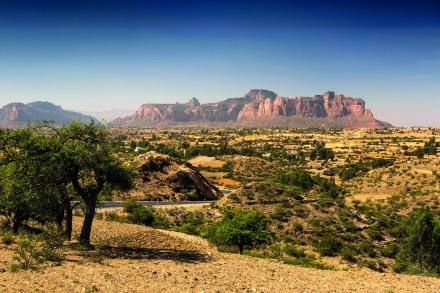
Tigray, Ethiopia’s most northerly region, makes its presence felt all the way down in Addis Ababa, about 430 miles to the south. Even before the current fighting, the prettiest beggars in the rambunctious and strangely endearing Ethiopian capital tended to be the Tigrayan single mothers. They made that daunting journey to escape a rural existence that struck me, during my trips around Tigray, as not dissimilar to European life during the Middle Ages. When I lived in Ethiopia, I reported from all over Tigray on humanitarian projects, tensions with Eritrea and the influx of Eritrean refugees, even on a brave British expat who was trying to establish a milk farm.

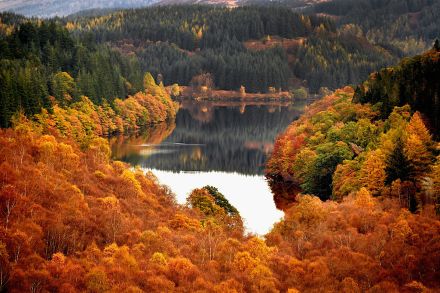
Leftist tree-huggers and backwoods conservatives unite!

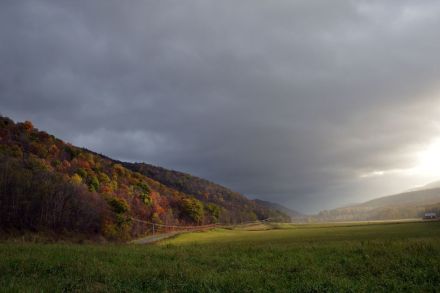
There is paradox among 'outdoorsy' people that manifested itself to me in an indelible way over the weekend. Being something of a 'crunchy con,' I took part in the Pennsylvania Environmental Council’s Public Lands Ride — a group bicycling event that tours riders through Moshannon State Forest — that happened to take place on opening day of archery deer season this year. I was biking beside Six Mile Run, admiring the picturesque outline of a lone fly-fisherman standing in the glittering stream, when I glimpsed a tired-looking Subaru Outback parked along the side of the gravel forestry road. 'A support vehicle,' I thought, wondering why the volunteer would choose to set up her station so close to the one I’d just passed.

nature

Bog bodies: mysteries of the Iron Age

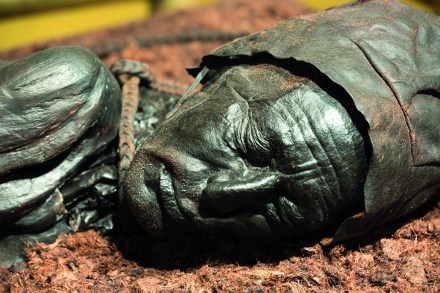
Some believe All Hallows’ Eve (October 31) is adopted from a much older Celtic holiday, Samhain, that marked the change from harvest’s richness to the darkness of winter. In its modern guise, Halloween still retains something of that pagan philosophy — a time when the borders between the living and the spirit world are supposed to be at their weakest. For our pre-Christian ancestors, this sense of the in-between was felt not only in the mulchy decay of autumn but in the land around them. Bogs were an in-between space for Iron Age Europeans. They thought that these muted open wetlands, with their sodden pools of still black water, exposed an opening to some other realm.

bog

Say yes to Yerevan

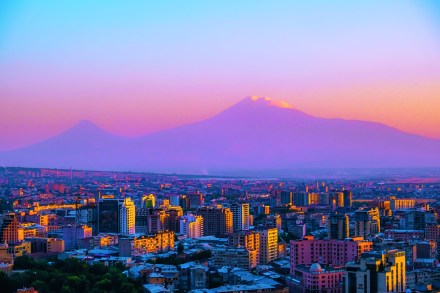
The Iranians, here for the booze and the vaccine, are impossible to miss. But Armenians reminisce that, only a few years ago, you couldn’t throw a stone in Yerevan, their zestful, rhubarb-hued capital, without injuring a Californian or a New Yorker. Americans, they say, used to be ubiquitous in Armenia. This is a claim animated more by nostalgia than fact. The truth is, even prior to the pandemic and last autumn’s horrific war with Azerbaijan and Turkey, Americans accounted for only a fraction of the tourists who flocked to Armenia: in 2019, only 63,000 among the nearly two million foreign tourists, and a majority of those members of the Armenian diaspora. I mention this to say that Americans really are missing out.

yerevan

In search of the Iliad

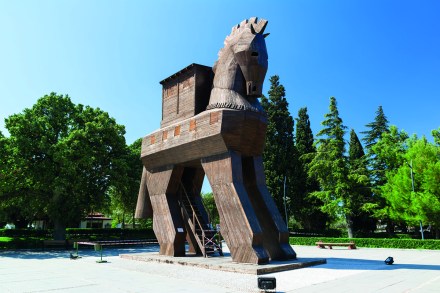
A wooden horse, a fallen hero and Helen, the most beautiful woman in the world. These three things transformed a hillock in Asia Minor into a legendary city. Few places can conjure up such stories of love and loss, homesickness and heroism, gallantry and grief as Troy. Over 3,000 years after Homer wrote in The Iliad of the 10-year siege of King Priam’s mighty citadel, I’m standing on an unremarkable patch of scrubland in northwestern Turkey. This unpromising site claims to be the real Troy — the very spot where Zeus’s daughter Helen fled to make love to Paris; where the mighty Hector, the Trojan general, fell at the hands of Greek warrior Achilles; and where the giant Trojan Horse entered the city concealing Greek warriors in its wooden belly.

troy

Samurai nights in Aizu

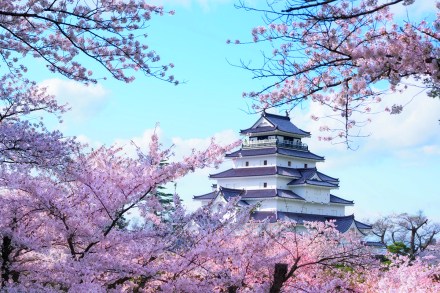
I started my visit to Japan’s north country deep in the mountains, in hot water in a bath the size of a swimming pool. Quietly simmering, I was intrigued to notice that the glass which formed the outside wall was not misted up, though the water was steaming. Through the darkness I could make out trees, bushes and the glint of the lake below. I waded over and reached out my hand, only to discover that there was no wall. One side of the bath was entirely open to the air. For the Japanese no journey, particularly to the north, is complete without soaking in as many hot springs as possible. The mineral-rich waters are the upside of the geological turbulence that brought about the devastating tsunami of March 2011. Today everyone knows the name ‘Fukushima’.

aizu

Paying the ferryman in Greece

It was not an auspicious start. Arriving at JFK the specified three hours before my departure to Athens I was met with a check-in line stretching out the door. The man behind me, in traditional dress and with a shocking amount of luggage for a single traveler, kept shouting ‘Senegal!’ Two hours later, check-in for my flight was closing. I was still at least half an hour away from the desk and so I shamelessly cut the line, earning myself a tongue-lashing from a dyspeptic German but also a boarding document one minute before the flight closed.

greece

Down Santiago way

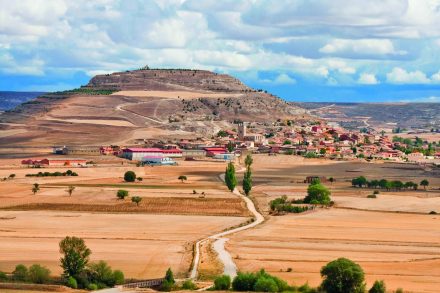
Hiking toward the Spanish border on my second day after setting off from Bayonne, I set down my backpack on a grassy patch beside a beach. It was bloody hot — August in the southwest of France — and the sight of beachgoers taking a shower had a cooling appeal. I stripped to my underwear and enjoyed the bracing shower burst. Then I looked down. Water was cascading over what looked like leprosy, breaking out over the right side of my chest. Feeling self-conscious, I got dressed and plodded on. Twenty-five miles later, at the sparkling city of San Sebastián, the pain proved too much. I lifted my shirt to two Portuguese pharmacists — and they pointed me toward the nearest hospital. I had herpes zoster, commonly known as shingles.

Camino

The Isles of Scilly, a botanist’s paradise

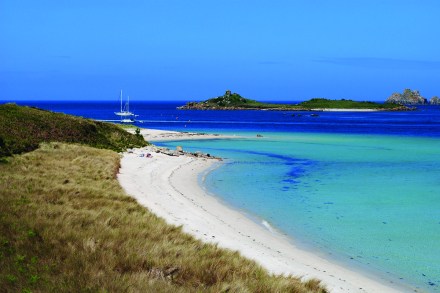
'You can get away from everything,’ said Harold Wilson of the Isles of Scilly, ‘not only in distance but also in time’. During the parliamentary recess, Wilson would frequently catch the sleeper from Paddington to Penzance before making the notoriously choppy crossing to Britain’s most westerly archipelago. There he would unwind in his cottage on St Mary’s. This family of five islands 28 miles off the nose of Land’s End has always enjoyed a somewhat secretive coterie of admirers — Jude Law and Michael Morpurgo to name but two. Deserted beaches with a Caribbean palette are surely part of the draw, as are hedgerows festooned with wild garlic, pink bells and exotic aeoniums.

scilly
Byzantium

Walking to Byzantium

I decided to walk from Athens to Byzantium — Constantinople, the medieval Queen of Cities, lately Istanbul. I had a little red tent and a vision of noble penury that evoked the ghosts of Cyriaco of Ancona (d. 1452) and Paddy Leigh Fermor (d. 2011). My girlfriend said she'd join me later. The lines that now smudge my map look more like the flight of a woozy bluebottle than the traces of a man with a plan. My earliest memories of the trek are melancholy.

A summer solstice on Long Island Sound

Where I live on Long Island Sound, something noteworthy is scheduled to happen today at about 12:30 post meridian. The sun will reach its northernmost point of the year, pause briefly, and then begin the (at first) slow movement to the south, bringing with it shorter days and (eventually) colder temperatures. Today, for the summer solstice (‘solstitium’, Latin for ‘sun-stopping’) in these parts, we’ll have 15 hours and five minutes of daylight. By the time the winter solstice rolls around near Christmas, we’ll be down to nine hours and eight or nine minutes. Brrr! And, turn on the light! We celebrated the solstice last night by attending a performance of A Midsummer Night’s Dream out of doors on the banks of Five Mile River right off the Sound.

solstice

Gibraltar rocks on

Tourists take the cable car to the Top of the Rock to pester the monkeys that live at the summit, but the best thing about this clifftop arena is the view. Standing on the cliff edge, gazing down at the big ships traversing the busy strait below, you realize what makes Gibraltar so important. Spain lies behind you, Morocco lies ahead. To your left is the Mediterranean and, on your right, the wild Atlantic. This is the bridgehead between Africa and Europe, the gateway between the Old World and the New. No wonder Britain has always been so determined to hold onto it. Whoever controls the Rock controls this narrow strait and all the traffic that passes through it, about a quarter of the world’s shipping.

gibraltar
montecito

Memo from Montecito

'The Montecito real estate market has gone bonkers,’ says realtor Brian King of this leafy enclave which is often referred to as California’s last paradise. ‘It’s almost as though Montecito has been discovered for the umpteenth time.’ He’s referring to Meghan and Harry — the Sussexes, that modest young couple who in June 2020 chose Montecito, California as a quiet, safe and rarefied environment in which to raise their environmentally-friendly family and, they claimed, escape unflattering and mostly self-inflicted press coverage. That was before they confessed all to Montecito’s resident agony aunt, Oprah Winfrey. This village of 8,500 residents has been drawing the rich and famous from Los Angeles since the early 1900s.

On the frontlines of the Pennsylvania gas station war

One afternoon towards the end of my first year of high school, as I filed through the crowded halls to my locker, I saw the news ripple as visibly as a breeze through a cornfield in August. A Sheetz was opening that very day, at the summit of Queen Street, off I-83. My little Pennsylvania city was on the map. We’d finally chosen a side in the great gas station wars. Now that the hit HBO show Mare of Easttown has brought the world’s attention to one of America’s greatest shames — Pennsylvania accents — it’s also reminded us of the fierce loyalty residents of the emptier parts of the mid-Atlantic have toward our convenience stores. Mare and her fellows refer to their Wawa hoagies and coffees with a curious, pointed frequency, satirized in a recent SNL skit.

wawa gas station

The romantic return of Florence’s wine windows

Stroll around Florence and you’ll notice little ornate openings embedded in the walls of Renaissance palazzos. They look like doorways for tiny people, though they would have to be quite athletic tiny people, as the openings are three feet off the ground. But they’re not entrances for Tuscan pixies — they’re for selling wine. There are more than 150 buchette del vino dotted around the city and they date back to the 17th century. You’d knock on the door, hand over some money and a bottle, and the mysterious person behind the wall would fill it full of wine. It wouldn’t have been just any old plonk either; the great merchant houses of the city like Frescobaldi, Ricasoli and Antinori, who still make some of Tuscany’s best wines, would sell in this way.

Wine

Keem Bay, Ireland: the best beach in the world

It’s a nail-biting cliff-edge ride down switchback, stomach-churning, hairpin bends. When you finally reach sea level, the Atlantic wind may be so strong and the rain so sharp that you can barely stand on the crescent of sandy shore. The distant islands of Clew Bay — 365 of them to match the days in the year — are nothing more than blistery shapes in the sea mist and wave spray. Yet this nerve-wracking mountainous route is a journey worth making. Despite — or maybe because of — being far from the madding crowd on Achill Island, off the west coast of Ireland, Mayo’s Keem Bay has been voted one of the top 12 beaches in the world, beating contenders in Fiji, Hawaii and Bermuda.

Keem

Bath time

In the center of Bath a giant obelisk sits in the middle of a little park called Queen’s Square. Standing in the park on a cool but sunny February morning, I realize that despite passing it on countless occasions in the 22 years I lived in the city — from playing bowls on the grass as a child to sheltering behind it to smoke cigarettes as a teenager — I have no idea what it is doing there. A black metal sign informs me that it was erected in 1738 by the Bathonian dandy Beau Nash in honor of Frederick, Prince of Wales. I wonder what Frederick thought about being presented with an obelisk. The sky is darkening. In the 10 minutes I have been sitting there, waiting for a friend with parking troubles, the place has been almost empty. Bath is a tourist town — or at least it was.

Bath

Under the skin of Seville

It was night when I arrived in Seville. A taxi took me through a maze of winding backstreets then came to an abrupt halt at the head of a pedestrian-only lane. ‘You’ll have to walk from here,’ said the driver. Uncertainly I dragged my suitcase down one dark alley after another, then suddenly came out onto a plaza lined with orange trees. Soaring above me, spotlit against the black sky, was the cathedral steeple. It was a breathtaking sight with its delicately latticed walls of golden stone, so tall I had to tip my head back to see the spire at the top. The cathedral stretched beside it, filling an entire block. Four hundred years have passed since Seville was the greatest and most glamorous city on earth, as glittering and alluring as New York City is today.

seville

Time for Tudorbethan

You’ll find them all over the boroughs of New York City. Multiple-dwelling buildings, usually large apartment blocks, slapped with a faux-Tudor façade defined by fake gables hiding a flat roof. They aren’t particularly attractive buildings. Even 100 years after most were built, they come off as self-conscious, a bit tacky, imparting to the viewer a dreaded feeling of secret working-class shame — a befuddling reproduction of a reproduction. They say New Yorkers never look up. But even during short journeys through Queens or parts of Brooklyn, New Yorkers are bound to have noticed examples, even if they don’t give it much thought.

tudorbethan