Spectator Life

Spectator Life

An intelligent mix of culture, style, travel, food and property, as well as where to go and what to see.

In defence of Blackpool

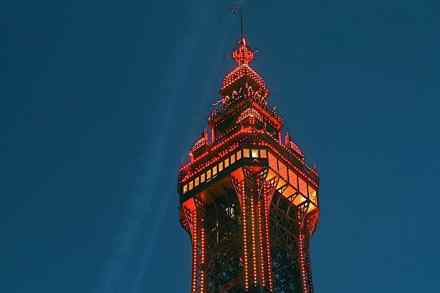
As a typically cynical son of Blackpool, I'm often one of the first to stick the boot in when the town hits the headlines. And who can blame me? In a top trumps of misery and woe, the seaside resort is declared the victor time and again. Once dubbed the 'most unhealthy place in England', life expectancy languishes at the foot of any table. Three years ago, a government poverty report found the town was home to the most deprived ward in England out of a total of 32,844. Unemployment? It runs at just 6 per cent — not bad. Though, as The Spectator has previously reported, another 26 per cent are out of work and not even looking for a job so don't count towards the unemployment figure — again, the worst in the country.

The European holiday spots easily reached by train

Imagine a holiday where you don’t need to arrive hours before departure…where there are no expensive taxis to inconvenient out-of-town locations or extra charges for daring to bring a medium-sized suitcase, and where the journey begins on time. All this is well within the realms of possibility – and has been for decades. Train travel is enjoying something of a revival. Although the travel time is longer on paper, you often find you win hours back, as the train takes you to/from a central location without a wait for your luggage and a bumpy transfer bus at the other end.   More often than not, the journey itself is an adventure. So what are you waiting for? Here are seven ideas for a rail-based escape.

Why you should swap Mykonos for Milos

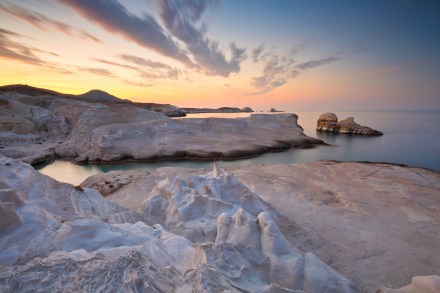
Choosing an island in the Cyclades is a familiar summer conundrum for those who love Greece. The array of choice is so dizzying that many opt for the safety of well-known options: Santorini and Mykonos. But if you’re seeking something off the beaten track, why not venture away from the tourist centrals? With a population of roughly 5,000, Milos strikes the perfect balance between adventure and unspoilt natural beauty. Situated between Piraeus and Crete, the 150km2 horseshoe-shaped island is the rising star of this group of well-trammelled islands. It gained significant attention from tourists in the last decade, with 2019 recognised as its best year before the inevitable shake-up of the pandemic, a local says.

The death of the gap year

When the University of Cambridge’s vice-chancellor Stephen Toope told the Times that students’ gap year projects abroad can build less resilience than the everyday lives of students from modest backgrounds, he was of course right. In today's culture, the three months I spent attempting to teach English in southern Malawi in the late Noughties now feel like a dirty secret of over-privilege; something that’s deserving of the same discretion as having a childhood pony or the fact that you spent the Easter holidays in the Alps.

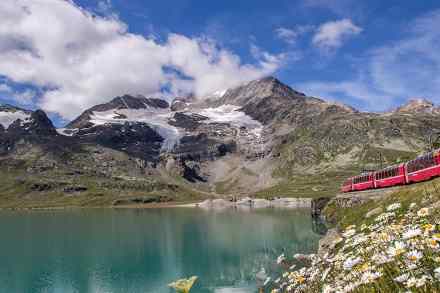
Follow Michael Portillo and experience Switzerland’s best railway experiences

Since the advent of the modern railways, the majestic landscapes of Switzerland have been home to some of Europe’s most stirring train journeys. This reputation continues today as modern luxury combines with age-old wonders to provide millions of passengers with an unforgettable premium railway experience. Of the many rail journeys that cross Switzerland, the eastern canton of Graubünden is home to two of the best known and most loved: the Glacier Express and the Bernina Express. As jewels in the Alpine crown, these routes are celebrated the world over for their ability to astonish even the most seasoned of travellers. https://www.youtube.com/watch?

Sitges: the idyllic beach town down the road from Barcelona

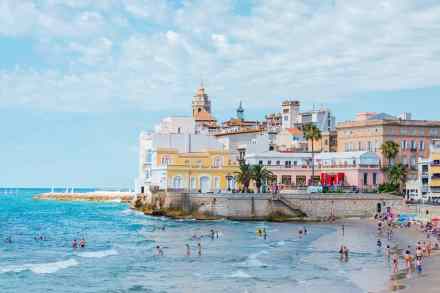
About sixty years ago, before my wife was born, her parents set off on a driving holiday to the Continent. They drove down through France and into Spain and ended up in Sitges. They went no further. They’d found the perfect holiday resort, a historic town with a sandy beach and a few bars and cafes, somewhere to sit back and enjoy the sunshine, with a bit of local culture thrown in. Sixty years later, Sitges is a lot busier, but British tourists are still relatively rare. Most visitors are Spaniards, mainly daytrippers from Barcelona. There are some modern buildings, and a lot more bars and cafes, but the town still looks much the same. Compared to most Spanish beach resorts, it’s remarkably unchanged. My wife Sophie and I first went to Sitges in 1999.

The holiday spots beloved by royals

Royal tours in glorious destinations might look like fun but they are technically classed as work. So where do the Royal Family choose to go to get their fix of sunshine and rest? Balmoral and Sandringham have always been favoured by the Queen but there are also several overseas spots that have become firm royal favourites. MaltaValletta, Malta (iStock) Between 1949 and 1951 Princess Elizabeth, as she was then, and Philip lived in Malta in a small town called Pieta very near the Maltese capital of Valletta. Their home was the Villa Guardamangia, an eighteenth-century ‘garden palace’ loaned to Philip by his uncle Lord Louis Mountbatten while Philip was stationed in Malta for naval duties with HMS Magpie.

What the French get right about guns

When a French friend invited me to the local shooting range here in my canton in the south of France, I was simultaneously intrigued and a little horrified, in a reticent British way. Guns are not really respectable in England. The carnage wrought by firearms in America would seem to make anyone advocating the right to own them something of a pariah. The French have a different attitude. Guns are legal to own here. Not just shotguns for hunting and clay pigeon shooting. But semi-automatic rifles including assault-type long guns and more or less any kind of handgun, except for the ones that fire armour-penetrating bullets. Here’s what I discovered at the shooting club. Shooting is, quite literally, a blast.

The best thing about the Isle of Wight? There’s not a gastropub in sight

This summer promises to be the hottest on record, which is not great news for those of you anxious about the coming climate apocalypse, but better news for those planning a holiday at home – which has become my default position of late. In truth, I haven’t left the country since before the pandemic, and I’ve only been able to make a couple of extended trips to the Isle of Wight – and it’s a place that I’ve come to love deeply. Rather like Mansfield Park’s Fanny Brawne, I can only think of the island, and why it appeals to me so. Might it be the sparkling weather? Or the unmatched literary heritage? The immaculate beaches, verdant downs and time-warp towns?

48 hours in Lisbon

Lisbon is, as they say; ‘having a moment.’ The Portuguese capital has become something of an international hotspot of late, with a deluge of, not just global tourists, but those decamping to become ‘alfacinhas’ – the local term for those living in Lisbon, which adorably (though mysteriously) translates as ‘little lettuce.’ The appeal is abundantly clear from the moment you arrive. This is a city which has atmosphere in spades. Aside from the sunshine, there is a feeling to Lisbon that immediately grips you: colourful façades, grand squares leading out to the Atlantic Ocean and the distinctive yellow trams cutting a precarious path down vertigo-inducing streets.

How to have the archaeological adventure of a lifetime

Anyone with even a passing interest in history and archaeology has surely, at some point, asked themselves: what would it be like, to be an eye-witness to a world-shaking discovery? To walk down the Valley of the Kings, even as Howard Carter opened Tutankhamun’s Tomb. Or to visit Sutton Hoo in the week they unearthed the first glittering Anglo-Saxon treasures. Maybe you’d like to have been among the first to see marvellous walls of Troy as the great German archaeologist Heinrich Schliemann lifted away the veil of thirty centuries. Well, remarkably, you can do something like this today, by visiting the so-called Tas Tepeler ('the stone hills') in eastern Turkey.

Paul Merton and the British obsession with motorhomes

In the past couple of years successive lockdowns and the need for self-contained holidays meant record numbers of people embraced motorhomes and campervans for the first time. 16,608 new motorhomes were registered with the DVLA in 2021, topping the existing sales record by 8 per cent. But was this just a lockdown fad? Not if the latest sales figures are anything to go by. Even as the economy looks shaky, motorhome purchases are on the rise, with both new and second-hand vans commanding a premium. One motorhome convert is comedian and writer Suki Webster.

The holiday spots beloved by the French

As the old saying goes: 'eat where the locals eat' – but why not travel like them too? Here are six Gallic-approved destinations in France to put on your radar. CassisCassis, France Not just a liqueur, this charming Mediterranean fishing port in southern France is a magnet for discerning Gallic tourists. It’s easy to see why. It possesses all of the picturesque landscape and warm weather that epitomises France’s southern shores, with none of the cost and crush of the Cote D’Azur. It is unfairly labelled ‘the poor man’s St Tropez,’ but why pass up the opportunity for analogous charm for half the price and a fraction of the crowds?

Why you should stay in a Spanish Parador

After all the frustrations and restrictions of the last few years, Spain is finally back on the map for British travellers. So where to go and where to stay? If you just want to drop and flop, a week or two in a resort hotel is fine, I guess. But after we’ve been cooped up in Britain for so long, it seems a shame not to see a bit more of the country – and the best way to do that is by splitting your trip between several of Spain’s splendid paradores. Spain’s paradores date back to the 1920s, when the government came up with the bright idea of converting redundant historic buildings into high quality hotels.

How to spend 48 hours in Turin

This May Turin’s stately boulevards and grand piazzas will be flooded with sequin-clad divas and flag-brandishing fans, as it gears up to host the 66th edition of the Eurovision song contest. This is only the third time ever that Italy has hosted the competition, following Rome in 1991 and Naples in 1965. The country’s first ever capital (from 1861 to 1865) and the urban hub of the stunning Piedmont region (a foodie haven) – Turin is an under-appreciated gem among European city breaks. There's no better to time to discover the best of what the city has to offer ahead of the Eurovision Grand Final on 14 May. What to do With a seductive mix of Renaissance, Baroque, Rococo, Neoclassical, and Art Nouveau buildings, Turin (or Torino) is best explored on foot.

The English summer gardens worth a visit

The RHS Chelsea Flower Show is mere weeks away – the floral spectacular that inspires us all to head out into gardens once again. In May and June a host of British flora comes to life, with dabbles of bubblegum peonies, shocking fuchsia azaleas and the syrupy smell of lilacs in the air. So why not draw inspiration for your own backyard by visiting some of the UK’s best and most beautiful gardens. RHS Chelsea Flower Show, LondonImage: Getty Rather than confining yourself to visiting one garden, head to this year’s Chelsea Flower Show, which brings together more than 30 – curated by some of the world’s leading landscape architects and designers.

Nothing beats a vélo in the Vaucluse

Michelet may have called Northern France 'la vraie France' and the wild and rocky outpost of Provence the 'rude pays', but for me, France is in Provence, in the dusty and strange contours of its angular landscape, in the rhythms of the day dictated by the heat. This is a feeling as much as a place; a subterranean and unformulated attraction for the land of Cézanne, Sade and latterly, Peter Mayle.  You can imagine my unformulated joy then, when my sister and I found ourselves most unusually without small children, husbands, or dogs in the lush surroundings of La Coquillade Provence in the Parc du Luberon.

Europe’s finest grand hotels

Most of life’s guilty pleasures eventually lose their lustre, but one decadent delight that never fades is spending a long weekend with a significant other in one of Europe’s grand hotels. For a few days you’re living a different life, a more glamorous existence, like characters in a Continental film noir. You’re bound to have your own favourites, places you love to revisit, but if you’re looking for somewhere new to stay, here’s my top ten. They’re not the most opulent hotels, or even the most expensive. What sets them apart is their understated elegance. Naturally they’re not cheap, but if your travel dates are flexible you can often find a bargain.

Britain’s best foodie pitstops

Savvy planning can negate succumbing to a sad Ginsters sandwich and insipid service station coffee as you hit the road and criss-cross your way around the UK this spring. Of course, there are the A-grade service stations run by the Westmoreland family (at Gloucester on the M5, Cairn Lodge on the M74 and Tebay on the M6). This trio has revolutionised our expectation of a motorway stop and are worth letting your petrol gauge hit the red for: no Burger King, proper coffee and farm shops heaving with local pies, pickles and preserves. But plot carefully and there are other lesser known foodie stops that make the prospect of a day spent in the car a little more enticing, from fish trucks and bakeries to hidden cafes and upmarket diners, all on the road or just a short diversion away.

The tiny Greek island beloved by Athenians

Hydra is where well-heeled Athenians go for weekend breaks. It’s what Long Island is to New Yorkers, or Île de Ré to Parisians. For, while Corfu is a 12-hour ferry ride away and Santorini six, Hydra can be reached in as little as 1hr20 on the regular scheduled boats out of Athens. And – unless you own your own yacht – there’s no other way to get there: there’s no air or heliport, there aren’t even any cars. We tacked a day trip to Hydra onto a weekend city break that was otherwise full of the classical antiquity you'd associate with Athens.

Welcome to globalised paradise

'I remember when this was a dusty old coastal road with stunning views across the length of Seven Mile Beach' recalls my charming cab driver as we cruise along one of Grand Cayman's many spotless highways. That was back in the 80s before mass tourism and the financial sector barricaded the island's most bankable asset behind a ribbon of luxury hotels and apartment blocks. Back in the early 60s Grand Cayman, the largest of a three-island archipelago, was little more than a sparsely populated, mosquito-infested swamp surrounded by some of the loveliest beaches in the Caribbean. Pronounced CayMan by locals, this British Overseas Territory continues to be a land of extremes. While the summer heat is off the scale so too are the income disparities.

The death of the guidebook

Is it the end of the road for the guidebook? Since Mariana Starke wrote Information and Directions for Travellers on the Continent in 1820, with tips on the most ‘tolerable’ inns and how to hire a horse carriage, travellers have been packing a volume of advice alongside their identity documents before setting off for foreign terrain. But last week, one of the world’s most widely read guidebook publishers, Lonely Planet, changed course. It released the first half-dozen of 35 ‘Anti-guidebooks’, declaring that the guidebook is dead. This new series – including Ireland, Portugal, Scotland and Japan – boast the familiar blue spine and two-tone globe logo that has accompanied my trips over decades.

The little slice of Route 66 that you can tackle in 24 hours

Blake Shelton’s ‘God’s Country’ plays on the radio as bolts of lightning tear through dark clouds, illuminating the corn fields of the Midwest. ‘Slow down,’ demands Mum, clutching her seat. It’s clear she’s grateful the rental company did not give me the muscle car that I was hoping for. We’re on America’s ‘Mother Road’, otherwise known as Route 66. Or what’s left of it that is. The original highway ran 2,448 miles cross-country from the city of Chicago, Illinois, to the beaches of Santa Monica in California, but was replaced in the 1950s by the Interstate.

The joy of car-free islands

No traffic, no pollution, no sound of engines revving at midnight; car-free destinations may be few and far between these days but there's no better way to escape the clamour of modern life. Perhaps the most delightful car-free retreats are the ones situated most closely to cities: the contrast only adds to their allure. Sail away from Athens for a couple of hours and you will reach Hydra, a car-less island popular with artists and writers keen to fuel their creativity under an azure sky. Henry Miller visited Greece at the invitation of Lawrence Durrell in 1939 and wrote ‘The Colossus of Maroussi’, an ‘impressionist travelogue’ partly based on his experiences of Hydra, inspired by Greek writer George Katsimbalis.

How freewheeling Austin drew in Covid-weary Californians

One of Austin’s monikers is the City of the Violet Crown. It comes from the beguiling atmospheric shenanigans known as the Belt of Venus that casts a bar of pinkish, purplish haze above the horizon at sunrise and sunset when the city’s Mexican free-tailed bats — about 750,000 of them — are either returning to or leaving from hanging out under South Congress bridge over the Colorado River flowing through the city. 'Austin, like Texas generally, has a big, eccentric personality,' says William Apt, an attorney who attended the University of Texas at Austin in the mid-seventies before coming back to Austin from New York in the early 1980s. Austin was just a sleepy college town when Apt first arrived.

What I learnt from retracing the iron curtain

Just before the pandemic, I spent several months travelling through Europe from the north of Norway to Istanbul and beyond to Azerbaijan. I saw unforgettable sights: the endless daylight of the Arctic summer; the vast Hammershus castle on the Danish island of Bornholm; Vienna’s ornate Prunksaal library; and the sandy beaches of Corfu. But the focus of my journey was precisely those things that most travellers to these places often ignore. I was following the route of the Iron Curtain. My aim was to visit every part of that old great divide, all the places where NATO once abutted the Warsaw Pact, where overwhelming military might stood constantly primed for apocalypse.

How to explore Colombia’s majestic Pacific coast

The poet Elizabeth Bishop wrote of South American waterfalls that spill over the sides of mountaintops ‘in soft slow motion’, and I was reminded of her lines on the Colombian Pacific coast where seemingly every bay has a wonderful waterfall tumbling down into it. As there are no roads to speak of, the only way to see something of the jungle is to advance up streams from the sea until you reach one of these waterfalls – with the great advantage that there is usually a rock pool to swim in when you get there.

Greece’s beauty masks untold poverty

I’ve long been drawn to sketchiness. In the Ethiopian capital Addis Ababa, I always preferred the dodgy and slightly dangerous old-town Piazza area to the trendy and sanitised Bole area next to the international airport. But even by my sketchy-embracing standards, it was hard not to find the grim state of Athens deflating. After all, this is the cradle of Western civilization. Now it appears to be the graffiti capital of the Western world. The luridly coloured scrawls are everywhere; Greek grannies air carpets over balconies marred by multi-coloured tags and swirls.

The opulent Nile cruise that evokes Agatha Christie’s Egypt

We’ve been warned about Aswan’s ‘little crocodiles’ – and it’s not long before they make their appearance. Gliding through the water, sleek bodies shining in the sun, they circle the felucca slowly, eyes glinting with curiosity. As only a handful of tourists currently exploring the Nile, we’re the exotic species – and potential rich pickings at that. ‘A dollar, please, a dollar, please,’ cries the ringleader, stretching out a hand from his paddleboard as another breaks into an off-key rendition of the Macarena. ‘Lovely jubbly,’ grins a third, pocketing a scrunched up note with appreciation.