Spectator Life

Spectator Life

An intelligent mix of culture, style, travel, food and property, as well as where to go and what to see.

The vision behind Woolsery

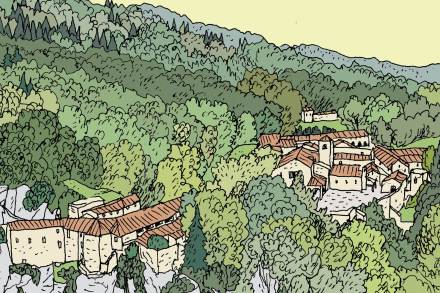
At first glance, it looks like any other sleepy village in southwest England. A medieval church and manor house face a fish ’n’ chip shop and post office across the green. There’s the obligatory pub, the Farmers Arms, where log fires crackle and ale-taps gleam beneath oak-beamed ceilings. Along the narrow lanes, whitewashed cottages peter out into rolling Devonshire hills. In true UK style, the place even has an obscure tongue-twister of a name: Woolfardisworthy. Population 1,123. Look closer, however, and you’ll realize this isn’t your standard British backwater. For every pint of cider being poured in the pub, there’s a craft cocktail infused with foraged botanicals and homemade cordials — think a crabapple cider margarita or a sea buckthorn gin sour.

village

Rwanda to Uganda: a cross-border quest

The shelves of my father’s study-cum-Tottenham Hotspur shrine, stacked with leatherbound match day programs and soccer players’ autobiographies, belie his life’s true obsession: gorillas. The clues are there, though. A small bronze statue of a silverback makes a heavy bookend. A wooden walking stick, its handle carved into the shape of an ape, is propped in the corner. Remove them — and our hazy memories of tracking black, fluffy balls of muscle through lush African forest could be chalked up to a fever dream. But we really did it. After a decade of idle talk, Dad and I devised our mission: we’d research gorillas in Rwanda and realize his life goal of tracking them in Uganda.

Skiing, sushi and hot springs in the Japanese Alps

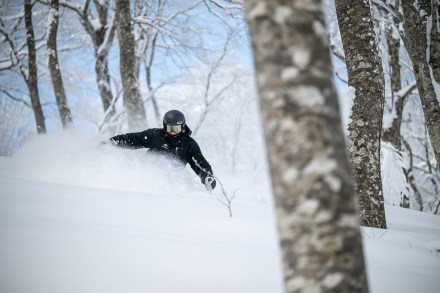
Nozawa Onsen and Hakuba, my favorite ski resorts near Tokyo, are booking up fast. A trip to Japan guarantees novelty, not least if you book a ski trip. Underpinned by excellent food, surreal views, reliable snow cover, fantastically cheap prices and delightful onsen culture, it’s no wonder the country is increasingly popular with gaijin (non-Japanese). Australian, American and European powder hounds now fill the towns every year, but there are endless authentic experiences waiting in each charmingly idiosyncratic resort. A quick Google betrays that my favorites are already filling up for winter ’24/25. So here’s a run-down of what to expect, and where I’d recommend you book, subayaku.

The George Washington Presidential Library at Mount Vernon is a DC treasure

The political pyrotechnics in Washington this summer have been so blinding as to blot out everything else happening in the national capital. The inside job that forced President Joe Biden out of his re-election campaign and the meteoric rise of Vice President Kamala Harris to be the Democratic nominee, all in the shadow of Donald Trump’s return to the national stage, have fascinated Washington like nothing since the Watergate scandal, exactly fifty years ago.  Yet even as Washingtonians focus on blood sport of politics, it is too easy to forget that the city is filled with far more edifying activities than the gladiatorial clashes in the political arena.

mount vernon
Maldives

The mysterious appeal of the Maldives

The world’s obsession with the Maldives has always been a mystery to me. I’ve witnessed as, one after the other, even my most beach-averse and device-addicted friends returned from these islands entranced by some ineffable quality, only able to give the vaguely cult-like response: “You have to experience it to understand.” One quietly admitted to spending more on her honeymoon there than on the wedding itself. Apparently, it had been entirely worth it. Having worked in travel for many years, I’ve been inundated with the pictures we’ve all seen a thousand times: lines of pristine over-water villas, tranquil turquoise ocean contrasting with startlingly white sand, all running together in a blur of gorgeous, but dare I say it, borderline sameness.

Rome

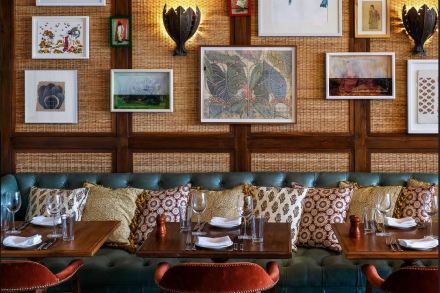
Hotel hopping in Rome

Summer in Rome. Expectation: breathe the soul of the classics, soak up the history, feel the romance. Reality: breathe in the AC, soak in a pool of sweat, feel ever so slightly unhinged. My plans to indulge in Italy’s time-honored tradition of la passeggiata — strolling around looking stylish, gelato in hand — were quickly nixed by the Cerberus heatwave. Dreams of meandering around perhaps the world’s most famous open-air museum gave way to lying recumbent with a handheld fan. Jumping from the relative cool of a sleeper-train carriage onto the platform at Termini station felt akin to opening an oven door and climbing in. Red alert warnings were issued as the mercury soared toward 119°F.

cycling

Cycling and sleeping in wine country

Tom Kevill-Davies and I are sitting on the deck of the Hungry Cyclist Lodge chatting about food and adventures. This enchanting forty-six-year-old man, a cyclist and a chef, arrived in the village of Auxey-Duresses in Burgundy eleven years ago, where he found an abandoned mill that was ripe for renovation. He met Aude, a local teacher, and they have two toddlers. Perhaps Tom is better known (but only slightly) for his captivating bestseller The Hungry Cyclist which he wrote in 2009. The book recounts his two-year-long trip by bike from New York to the beaches of Brazil. The Lodge is neither a B&B nor a gîte. Tom thinks of it as more like an auberge, “a home away from home,” he says.

Five Tokyo tourist traps worth falling into

With my Customs Declaration Form in hand and Japanese customs handbook in my pocket, I touched down in Tokyo for the first time, from Mumbai. I was wearing flip flops in February, but feeling as ready as I ever would. “Don’t point your chopsticks.” “Never raise your voice.” “No talking on public transport.” “Try to arrive early.” “Take your garbage home with you.” “Meetings should not be canceled.” “Make sure you slurp your noodles.” “Jaywalking is punishable with up to three months in prison.” There was a lot to remember. I was determined not to follow the trodden path, to find spots nobody else had. Then I got off the train in central Tokyo.

Why New York is a city built on the written word

When I visited New York for the first time in a decade recently, one of its most famous living writers, Paul Auster, died on the day I arrived. This was not, I hope, anything to do with my presence in the city he spent decades memorializing; he had been suffering from terminal cancer for a considerable time. Yet as I sat at my desk at the first hotel I was visiting, the Frederick in Tribeca — a comfortable and well-located spot, let down slightly by its surly and unhelpful staff, but redeemed by stylish touches like a tiled map of nineteenth-century Manhattan built into the well-appointed shower — and started to write a tribute to Auster for our website, it made me wonder what, exactly, I was trying to find out about literary New York. Was I exploring its distinguished past?

new york

Unplugging in the Western Ghats

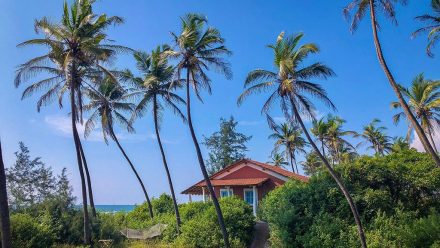
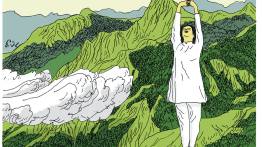
"Is that the one where they put a tube... up?” I asked, gesturing to the ceiling. “Yes, ma’am,” Dr. Arun nodded. It wasn’t the unplug I’d had in mind. Sitting in a doctor’s office in the middle of a forest near the western coast of India, clad from head to toe in white cotton, I was feeling vulnerable. Dharana Wellness Retreat had appeared the perfect place for me to attempt a true digital detox. If I couldn’t close my laptop in the famously spiritual mountains of the Western Ghats, there was surely no hope for me. A friend and I had flown in fresh from a boozy work event in North Goa, where unbeknown to me, my body had apparently celebrated a milestone birthday.

Dharana

A tale of two safaris

To grasp the untamed vastness of Samburu County, it’s necessary to get high. Above the thickets of acacia trees, thorny branches like barbed wire against the cloudless sky. Out of the Rift Valley’s rubbly trenches, dotted with bleached animal skulls and groves of candelabra-like doum palms clustered around some-time watering holes. To the peak of Sundowner Rock, for instance. After scrambling up its boulder-strewn slopes — wishing for the agility of the bug-eyed, Bambi-like dik-diks that prance about this terrain — I flop down on a sun-warmed granite slab and savor an eagle’s eye view of the bushland below. Legions of acacias and wiry shrubs mottle the red earth.

safari

Going ham in Andalusia

In Spain you can eat all day — and we did. Earlier in the summer, I spent two days in Andalusia, and most of the forty-eight hours were taken up by mealtimes. A breakfast of the sweet porridge poleá started the day, then ham-tasting for a mid-morning snack followed by a two-hour lunch. I didn’t think it was possible to eat all day, but when the food is this good and meticulously chosen, it is. Spanish chef José Pizarro led the way, taking us to his favorite restaurants and showing us where he sources the ham and caviar for his own.

ham

Rewilding the world

I recently found myself scrolling World Cement Weekly in search of news of a massive rewilding project in northern Mexico, created and funded by the cement giant Cemex. The growing success of the rewilding movement is strangely little known — though there are now places that are wilder, more vibrant, more teeming with life than they have been for centuries, few outside the movement know anything about them. Two decades ago, a nature-loving chief executive of Cemex decided that the company would acquire 346,000 acres of degraded land on Mexico’s border with America, an area larger than Los Angeles, renamed the El Carmen Nature Reserve.

rewilding

A mystery on Mount Everest

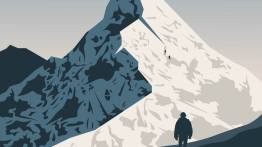
On June 8, 1924, veteran climber and geologist Noel Odell mounted the crest of a Himalayan crag and gazed up toward the tallest peak on Earth. Taking in the awe-inspiring sight, he noticed two tiny “objects” far ahead on a snowy slope “going strongly for the top.” To Odell, a trained and talented observer, the pair of ascending dots appeared to be a mere thousand feet or so below the summit. He later wrote that as he stood intently watching this dramatic appearance, the scene suddenly became enveloped in cloud and the “objects” vanished from his view. It was the last sighting of his fellow expeditionaries, George Mallory and Andrew “Sandy” Irvine, alive.

Mallory

Paris: a gold-medal minibreak

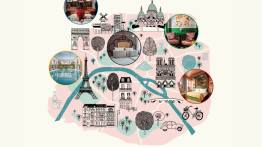
As the Olympic Games descend on the French capital this July, the contest that really matters for this sports-shy travel writer is where to stay. From historic heavyweights to new contenders, these Parisian properties stand head and shoulders above the rest. Best for wellness: Shangri-La Paris The cool marble interiors of Shangri-La’s Parisian outpost feel a world away from the tumult of the Champs-Élysées (in fact, it’s only a fifteen-minute walk). If the Grecian frescoes, silk wallpaper and sweeping, gilded staircase all seem distinctly regal that’s because the nineteenth-century building was originally the pied-à-terre of Prince Roland Bonaparte, Napoleon’s great-nephew.

Paris

You know when you’ve been ‘Peru’d’

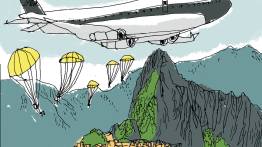
"Did you get Peru'd?" That's the question my boss, who once lived there, always asks people when they return. The idiom implies that something has gone terribly wrong, because, so my boss argues, that's inevitable during a visit to the land of the Inca. Lost luggage, food poisoning, petty theft: all of them, or worse, constitute being "Peru'd." During a recent happy hour, a colleague was describing how much she enjoyed her recent vacation to Lima and Cuzco. “Did you get Peru’d?” my boss queried. No, the woman asserted, she did not; it was a lovely trip. Another colleague piped in: “But didn’t you get Covid?” Well, yes, that’s true, she did get Covid. “You got Peru’d,” my boss decreed.

Peru

A solo summer sojourn in the Algarve’s Pine Cliffs resort 

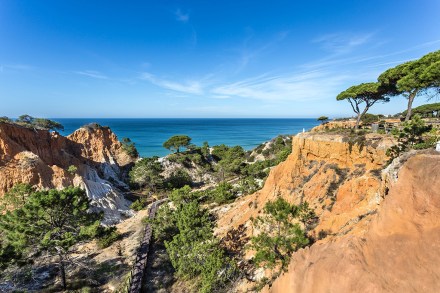
Strong, old pine tree branches cutting through a cloudless cerulean sky — a sight I find hard to beat. Throwing open the curtains at Pine Cliffs Resort in the Algarve, I wondered why I’d been away from Portugal so long.  Bleary-eyed, I reflexively photographed my first glimpse of the Atlantic from my Junior Ocean Suite’s balcony, seagulls cinematically swooping into the frame. Another vain attempt to capture the colors that always keep me coming back; the pictures somehow never as good as the real thing. I’d posted up from Tokyo gone dinnertime the previous night, just outfoxed by Japan’s famed pink sakura (2024’s late bloom meant I missed them by twenty-four hours). Waking up deathly early, I soaked away grizzly jet lag in my spacious room’s egg-shaped tub.

pine cliffs

Where to eat, drink and stay in Cape Town

Setting an early alarm while on vacation never comes easily to me, but making time to wander Babylonstoren’s fruit and vegetable garden before the day’s searing heat took hold was no problem. One of the oldest Cape Dutch farms, set at the foot of Simonsberg in Cape Town’s Franschhoek wine valley, it’s a sprawling, fantastical, technicolor utopia — positively Eden-like, with a lot more than apples to tempt you. Scarecrows made from terracotta plant pots wave from fields teeming with 300 edible crops, fat pomegranates growing alongside tangy tamarillos, willow trees swaying in the breeze.

cape town

Lisbon and the Algarve: the spots I find hard to share

World-class golf, more than 300 days of sunshine a year, flavorsome local seafood, excellent wines and more than 1,000 miles of Atlantic Ocean coastline. There are countless reasons to add Portugal to your bucket list, not least that United Airlines has announced direct flights from New York to Faro, starting in 2025. Me, I might have been living in Lisbon on and off for four years, but I’m continually surprised by new discoveries, from quirky bookstore openings in central Lisbon (Salted books, I love you) to secluded coves or gnarly rock formations in the Algarve’s emblematic places such as Praia do Marinha.

lisbon portugal
Normandy

On D-Day at eighty

Traveling to Normandy fourteen years ago, we encountered a rare guide. He was a middle-aged Frenchman native to the neighborhood. I do not recall how long he had been at it, but he had learned something important about the guide business that was evident the day he shepherded us, and another American woman and her teenaged daughter, about the places made famous before any of us were born. He knew when to show, when to tell and when to relate something from his own experience that would enlighten ours. He took things in a certain order, which was not the order I would have guessed. First we stopped at the German cemetery at La Cambe, where 21,200 of the some-80,000 German soldiers who died in Normandy are interred. I remember few other visitors.

Oradour

A terrible tale of a French village

The new prime minister of France, Gabriel Attal, has promised to “take care” of Oradour-sur-Glane. The village, in west-central France, was the scene on June 10, 1944, of an infamous Nazi massacre of 643 men, women and children, shot or locked in the local church and burned alive. Only six villagers escaped to tell the tale; the last of them died in 2023. For years Oradour-sur-Glane has been a site where schoolchildren were taken to learn about what France endured during World War Two. Recently the abandoned village has become overgrown with vegetation, but with the eightieth anniversary this summer, the descendants of the victims are making sure they are not forgotten.

Galápagos

The Galápagos evolution even Darwin didn’t foresee

Lonesome George, a Pinta Island giant tortoise, spent the latter half of his hundred years munching on cacti and roaming around the Charles Darwin Research Station on the Galápagos island of Santa Cruz. He borrowed his name from the 1950s American comedian and actor George Gobel and one of the three B-52 Stratofortresses that completed the first non-stop jet circumnavigation of the world in 1957. But the name was ultimately more fitting for the tortoise who was the last of a million-year-old species. In 1959, fishermen introduced three goats to Lonesome George’s home of Pinta Island, one of the smallest islands of the Galápagos archipelago. Just ten years later, they had multiplied to around 40,000.

Staten

Dispatch from an unloved borough

Once a year, Nick, a surgeon who lives on the Upper West Side of Manhattan, visits Staten Island. Almost as soon as he arrives, he literally runs back to where he just came from. Nick is a marathon runner — he’s done New York seven times — and like millions of similarly masochistic athletes and wannabes, he’s lined up at the mouth of the Verrazzano Bridge, the eastern edge of New York City’s least exalted borough, with the sole aim of getting back to more familiar territory as briskly as his legs can carry him. “Of course I don’t have anything against Staten Island,” he explains. “There’s just not that much of a reason to go there.” Many others, it turns out, feel the same. I moved to Manhattan just over four years ago.

Swapping aprés ski for aprés spa 

“Welcome to your thirties,” my friend Rich roared, throwing open the balcony door leading onto our hotel room’s private loggia. The sound of gushing water filled the room as I flopped, exhausted, onto the bed. The Ziller River rushed through the valley below, fast. Verdant hills stretched upwards to create a preposterously bucolic scene, practically begging for your best Julie Andrews impression, arms outstretched. I laid there, and took it in through the window. I pretended I didn’t mind that I was missing the party, Snowbombing Festival raging on in Mayrhofen town. The “Snolympics?” Didn’t sound like much fun. Pond skimming on skis, surely soggy and impractical.

Instead of stomping on the bar in our ski boots, we’d zipped home in a taxi to ZillergrundRock Luxury Mountain Resort, with high hopes

Bringing back rhinos in Pakistan

The drive from Islamabad to Multan takes about eight hours. We passed through fields of citrus fruit and farmers tending weed-burning fires. Boys carried giant bunches of twigs over their heads or zipped by on old Honda 70s, balancing water tubs. All had early-Beatles haircuts and wore the shalwar kameez, the Punjabi suit of lightweight trousers and a tunic. Multanis, distinguished by their good looks and their own musical dialect, are called meethi churiyans by other Punjabis, meaning “sweet knives.” They are charming and generous, serving up piles of warm chapati and mutton chops, before stinging you with a hefty bill.

rhinos

Montréal serves up a surprising array of off-season delights

There’s cold, then there’s winter-in-Canada cold. The kind where I’m jamming hand-warmers into my ski gloves — yet still somehow my fingers go numb — and snowflakes keep their intricate patterns as they scatter over my clothes (back home in comparatively balmy England, they’d melt instantly). But what did I expect? I’d made it my New Year’s resolution to travel off-season. Think Rajasthan in the summer monsoon, Sicily’s midwinter citrus harvest, Portugal’s Atlantic Coast when the record-breaking waves roll in come November. I’m not the only one with this idea.

Montréal
goose

My first family goose hunt

It's a slow Sunday in Paducah, Kentucky, the day before our snow goose hunt. Morning Mass down the road, where the priest quizzingly asked where we were from. Brunch with my husband’s family at a cozy café. Chocolate cake with that crackly boiled icing and fresh coffee in the late afternoon at his aunt and uncle’s house. It isn’t until close to dinnertime that we pack up our bags and hit the road for the bootheel of Missouri, where we will hope to catch a few hours of sleep at our hotel before we meet our local hunting guide. About halfway through our drive, the phone rings with bad news. Our guide, Scooter, spent the day scouting and could find no signs of geese at his usual spots.