Spectator Life

Spectator Life

An intelligent mix of culture, style, travel, food and property, as well as where to go and what to see.

Sorry, but you’ve got to love the Springboks

There may still be some poor benighted souls who regard the Springboks as the bane of rugby union. If you meet one, get ready to dispense a proper mauling. South Africa, for so long the Millwall of rugby, are playing an all-round game that is so breathtakingly attractive you have to love them. It may be hard for you, but tough. It would take a brave man to bet against them for the 2027 World Cup in Australia The scrum has always been irresistible, of course; relays of vast men who can shred opponents to bits: here’s hooker Malcolm Marx, accumulator of tries and the size of a terraced house but with added mobility; there’s Ox Nché, all 19.5st of him and the best prop in the world right now.

The joy of the early autumn Newmarket meetings

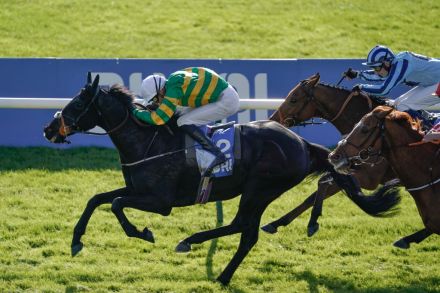
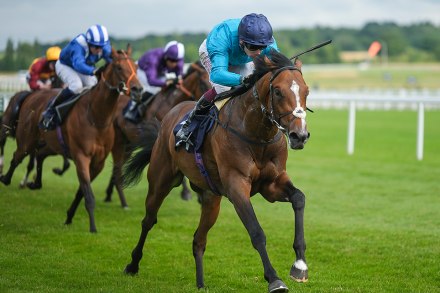
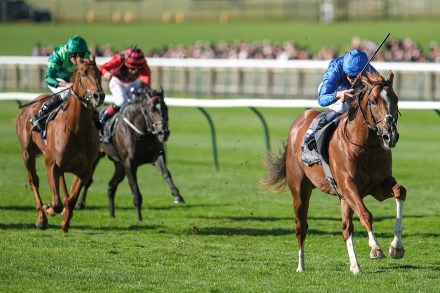
There’s no shrewder punter than J.P. McManus who likes to say: ‘There’d be many more fish in the sea if they could only learn to keep their mouths shut.’ Last year, clever young Emmet Mullins won the Cesarewitch with J.P.’s The Shunter but when Emmet let it be known that he was aiming for the other half of the Autumn Double, sending This Songisforyou to Newmarket for last Saturday’s Cambridgeshire, there was no way of keeping a lid on things. The money poured on him for days.

Back a mudlark at Haydock

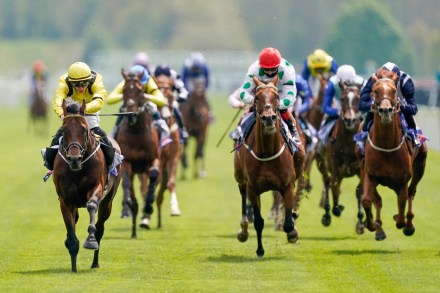
After a week of rain, the official ground conditions for tomorrow’s cards at Newmarket and Haydock both have ‘heavy’ in the description, with a little more of the wet stuff forecast too. If I have learnt only one thing from my decades as a punter, it is to bet with caution when the ground turns into a quagmire. Yes, of course, it is best to back horses that have won or run well on ground described as ‘heavy’ but it is not as simple as that, or even those with a basic knowledge of the form book would soon be rich. When the ground is really, really soft and the mud is flying, it is often accompanied by a series of unpredictable results.

Two bets for the Ayr Gold Cup tomorrow

It’s been all of 49 years since a horse trained in Scotland won the Virgin Bet Ayr Gold Cup, one of the classiest sprint handicaps of the season. However, I am hoping that trend ends tomorrow and that a horse in the care of genial Jim Goldie lands the winning pot of more than £92,000. Goldie, who trains in Uplawmoor, East Renfrewshire, and who loves to plunder big races in his native Scotland, has two excellent chances of winning the race (Ayr, 3.35 p.m.) that has attracted its usual maximum field of 25 runners. Jordan Electrics is a typical Goldie runner in that he is a veteran, at eight years old, and yet somehow the canny handler has got staggering improvement from the horse. Jordan Electrics started the season in April off a modest official rating of 72.

Farage’s plan, the ethics of euthanasia & Xi’s football failure

45 min listen

This week: Nigel’s next target. What’s Reform UK’s plan to take on Labour? Reform UK surpassed expectations at the general election to win 5 MPs. This includes James McMurdock, who Katy interviews for the magazine this week, who only decided to stand at the last moment. How much threat could Reform pose and why has Farage done so well? Katy joins the podcast to discuss, alongside Jovan Owusu-Nepaul, who fought Nigel Farage as the Labour candidate for Clacton (1:02). Next: who determines the morality of euthanasia? Matthew Hall recounts the experience of his aunt opting for the procedure in Canada, saying it ‘horrified’ him but ‘was also chillingly seductive’. Does Canada provide the model for the rest of the world? Or should we all be worried of where this could lead?

Why women’s golf is better than men’s

In the exhilarating event of Somerset managing to sneak past Surrey and being on their way to claim their first county cricket championship since the Norman Conquest – or since Vic Marks was playing – they would owe one of their captains from long ago, an eccentric gentleman by the name of Jack Meyer, a big debt of gratitude. Without Meyer it is unlikely that Somerset would have snared Archie Vaughan, the 18-year-old son of Michael and the hero of Somerset’s nerve-racking win over Surrey, the defending champions, last week.

Three bets for the Doncaster St Leger card

Only seven runners are due to line up for the final Classic of the flat season, the Group 1 Betfred St Leger. Unsurprisingly, the small field at Doncaster tomorrow (3.40 p.m.) is dominated by runners trained in Ireland by Co Tipperary maestro Aidan O’Brien. I had not expected to bet in the race but the sponsors are paying three places and so I can’t resist an each way dabble Of O’Brien’s three runners, Illinois is top rated and has a favourite’s chance because we know, from his Royal Ascot win in the Group 2 Queen’s Vase in June, that he will stay tomorrow’s trip of more than one mile and six furlongs.

A tip for my favourite flat handicap of the season

My favourite flat handicap of the season is the Club Godolphin Cesarewitch at Newmarket on 12 October. I have a good betting record in the race but this year the ante-post market is complicated by the fact that the brilliant Irish trainer Willie Mullins has entered no less than ten horses in the race. As always, the Irish runners, particularly those from the Mullins yard, are likely to have a big say in the outcome of this marathon contest which is run over two miles and two furlongs, and which therefore attracts lots of dual-purpose horses with decent hurdling form. The main problem is that Mullins keeps his cards close to his chest on his race plans and some of his best staying handicappers will go for the more valuable Friends of the Curragh Irish Cesarewitch two weekends earlier.

Bets for Sandown and Chester

Tamfana is just the sort of short-priced favourite that I love to take on. Yes, of course she might win tomorrow’s Sky Bet Atalanta Stakes (Sandown, 2.25 p.m.). After all, she was fourth in the Qipco 1000 Guineas at Newmarket in May and, with more luck in running, she would probably have won that day. However, her two runs since then have been more moderate and her French handler David Menuisier, who trains in West Sussex, seems unsure what is his three-year-old filly’s best distance. Last time she failed to stay a mile and a half on soft ground at Longchamp and so tomorrow she reverts to the Guineas trip of a mile. All in all, her current odds of around even money are terribly skinny for a horse that has yet to win this season from four starts.

Sven-Goran Eriksson: 1948-2024

The former England football manager Sven-Goran Eriksson died today. He had terminal cancer and said he expected to be dead before the year was out. In an age when such grim diagnoses are usually kept private until their morbid predictions have come to pass, it was characteristically candid of the 76-year-old Swede, even though doing so invited a fresh round of media scrutiny of a life that has already been scrutinised intensively over many years. He treated players as grown-ups, even though they often weren’t. Any England football manager gets attention – it comes with the territory.

The Hundred is glorious anti-cricket

When my son was young, around 8 or 9, we lived in north London. I’d pick him up from school and take him to Lords at tea-time when the entry price for adults was £5 and children were free. We saw all kinds of less popular matches – most memorably, a young Bangladesh Test side, which played with spirit and lost six wickets during our two-hour visit. This was old-style cricket – half-empty stands, occasional ripples of applause, everything charmingly sedate, with a few bursts of moderate excitement. The colour scheme was most definitely green and white. This, in truth, is my favourite kind of cricket.

Four bets for York’s Ebor meeting

Like most fathers, I occasionally offer words of advice to my children even if they choose not to take them. Over the years, I have often told my two (now grown-up) daughters: ‘judge a person on how he or she accepts bad news’. My thinking is that pretty much anyone can be charming and generous-spirited when they receive good news, but it takes a really strong, admirable character to be equally magnanimous and upbeat when they have to deal with really unwelcome news. Trainer Ed Bethell recently passed this quirky little test of mine in glowing style. He had to inform the press that Mickley, his first and only Royal Ascot winner – incidentally tipped in this column when he won in June – would continue his career in Hong Kong.

The simple beauty of the Hundred

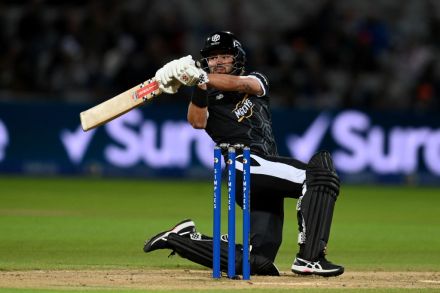
Time to come clean: I really like the Hundred. This is the sort of view that normally makes people look at you as if you had just professed an admiration for Gary Glitter. But come on, this is a crisp little short-form cricket tournament, played out at the height of summer to largely packed houses. What really is not to like? Cricket is one of the few sports that works in different formats, so it beats me why the Hundred arouses such venom. It has done wonders for the women’s game, it doesn’t take long and it is all televised – much of it on terrestrial TV. Crucially, it has brought new fans to the sport, especially families and youngsters.

The fun of the Shergar Cup

Gary Lineker once summed up football as ‘a simple game. Twenty-two men chase a ball for 90 minutes and at the end, the Germans always win.’ Ascot’s Dubai Duty Free Shergar Cup, a team contest in which four teams of three international jockeys, one of them restricted to female riders, compete for points on randomly drawn horses, is going the same way. In this month’s contest the Ladies team, led as usual by everybody’s favourite girl next door Hayley Turner and including Yorkshire’s Joanna Mason, won for the fourth time in six years. Hayley herself triumphed in two of the six races and for the third time collected the Alistair Haggis Silver Saddle for the most points.

The depraved world of chess cheats

Amina Abakarova, a 40-year-old chess player from Russia, supposedly tried to poison a younger rival at the Dagestan Chess Championship this month. Camera footage seems to show her furtively applying a substance to one side of a chess board before the start of the game. Her opponent later became unwell and a Russian news agency claimed that the substance contained mercury. I first saw the story on one of the many specialist chess news sites. Within 48 hours it was in most national newspapers. Two types of chess stories pop up time and again. First, the ones about child prodigies, which tend towards the formulaic – I know because they used to publish them about me in the 1990s.

The decline of football speak

The new Premiership season kicked off this weekend and, with all the usual hype, will come novelties. There are the gamely optimistic new arrivals and returnees, no doubt a breakout star or two, some eyebrow-raising new hairstyles (Mo Salah) and some ingeniously tweaked – and therefore ‘must-have’ – revenue-gouging strips. As ever, there will be new rules, including yet further tinkering with VAR. But what interests me, as an English teacher and student of socio-linguistics, will be any novelties in the figurative language which the players, fans and journalists use to describe the game. Over nearly 50 years of watching football, it has been fascinating to hear the football lexicon evolve in ways that can be quite culturally revealing.

Two tips for Ripon and Newbury

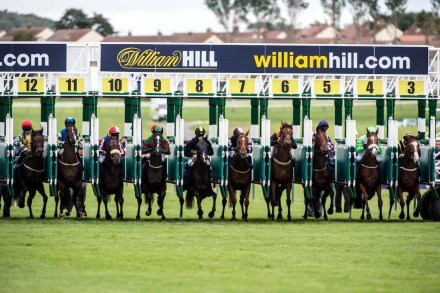
The William Hill Great St Wilfrid Handicap at Ripon tomorrow (3.20 p.m.) is always a difficult puzzle for punters to unravel. Run over six furlongs for a first prize of more than £50,000, a field of 19 runners has been declared. With its unusual undulations on the sprint course, Ripon is a specialist track which means that it is an advantage to have strong course and distance form. The trouble is that so many of these experienced sprinters have just that so it does not narrow the field down by that much.  Northern trainers have a superb record in the race too but, once again, they are extremely well represented in the race tomorrow and so this fact is not a huge help either in the search to find the winner.

How the Premier League abandoned its fans

It’s become a regular occurrence: a friend or a friend-of-a-friend is visiting London, wants to go to a football game and messages asking for help getting tickets. My standard response is: no chance. The most recent of these was from New Zealand-based Spectator contributor David Cohen, whose son will be in London in the autumn. I’d love to be able to help him but know I almost certainly can’t. The sad reality is that I’m struggling to get tickets myself these days, let alone able to assist others. The clubs themselves are too greedy to do anything other than continue to wring as much out of the fans as they can When I first started going to football, to West Ham games in the late eighties, it used to be easy getting in. You just turned up.

In praise of the Olympic champ stamp

As a confirmed critic of modern tattoos, who sounded off in these very pages about the ugly plague of body tats infesting our streets, I might be expected to disapprove of the latest manifestation of the fashion – the habit of many athletes taking part in the Paris Olympics to adorn themselves with the distinctive five interlocking rings of the Games’ logo: what I’m calling the ‘champ stamp’. In fact, the athletes have such beautiful bodies – young, toned and fit – and the rings themselves have such a pleasing symmetry that I can only approve and applaud the discreet addition of the logo to their rippling musculatures.

A tip for Britain’s richest flat handicap

York’s famous Ebor meeting will be here before we know it and trainer William Haggas will be attempting to plunder many of its top races with his talented string. Although his stables are in Newmarket, Haggas is a Yorkshireman and so he particularly enjoys seeing his runners win at the course which lies some 40 miles from his birthplace of Skipton. The race that Haggas targets with relish each year is the Sky Bet Ebor Handicap, which is the richest flat handicap run in Britain and has a prize of £300,000 for the winner. The contest on Saturday 24 August is over a distance of one mile six furlongs and for a maximum field of 22 runners so, with a fast pace all but guaranteed, stamina is of the essence.

This Olympics belongs to the female athletes

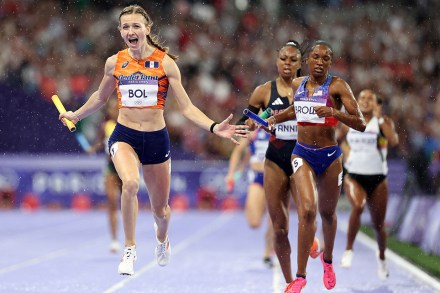
You knew it was going to be a superb Olympics from the moment Celine Dion belted out an Edith Piaf classic from the Eiffel Tower. And nothing since has disappointed – not least commentator Mark Chapman having to say things like ‘She was late with her eskimo roll’ during the incomprehensible kayak cross. But amid such a banquet of sporting greatness, what to single out? This has been a fantastic Games for women. And remember that the founder of the Olympics, Pierre de Coubertin, was opposed to the participation of female athletes, largely to preserve their dignity. Different times admittedly, but even so the 1500m became an event for women only in 1972, and the marathon only in 1984. Look what they’re achieving now. Amid such a banquet of sporting greatness, what tosingle out?

Four tips for Glorious Goodwood

Glorious Goodwood has hopefully saved the best until last with two fabulous days of racing still to come. The detractors will point out that too many races on this undulating, turning track have hard-luck stories and the draw is often all-important as well. However, when the sun shines, this meeting is hard to beat in terms of highlighting flat racing at its best. I am already heavily invested in the Coral Golden Mile (today 3 p.m.) in which it’s a huge advantage to be drawn in single figures. Johan bucked the trend on soft ground last year when he won from stall 18 but the previous seven winners were from berths 1, 3, 3, 3, 2, 5 and 2. Those who love statistics will be in no rush to back a horse with a double-figure draw.

Life in the slow lane

Mondays and Thursdays are my days. Eight a.m. Before breakfast. The pool opens at seven for those zealous souls who like to swim before going to work. They’re gone by eight when the pool is divided into five lanes with arrows telling you which way up and which down. I like lanes. You know where you are with lanes. Let those mad fools in the fast lane work up a storm with their splashy-flashy butterfly, the sexy crawl, the somersault flip back to the beginning and off again. I’m in the slow lane. It could be a metaphor for my life. I like lanes. You know where you are with lanes I grew up by the sea and learnt to swim when I was six.

What’s the point of martial arts?

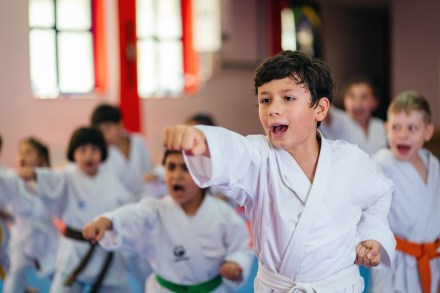
I was standing in a filthy sports hall at the back of the local leisure centre. A bony man with a shaved head handed me a green belt. ‘Well done, Master Zak,’ he said. Ten-year-old me bowed and walked towards the wall of parents. They had been stood there for three hours, watching other people’s children take turns punching the air, shouting a few mispronounced words of Korean. Someone played ‘Eye of the Tiger’ through a tinny speaker. One of the bug-eyed ‘instructors-in-training’ gave me a toothy grin and a thumbs up. I’m almost certain he worked there for free. Sitting in the back of the car on the way home, dobok still on, I realised that after four years of combat sports and a variety of colourful belts, I had learnt nothing about defending myself.

Damian Thompson, Paola Romero, Stuart Jeffries, Ysenda Maxtone Graham, and Nicholas Farrell

35 min listen

On this week’s Spectator Out Loud: Damian Thompson argues that Papal succession plotting is a case of life mirroring art (1:26); Paola Romero reports on Venezuela’s mix of Evita and Thatcher, Maria Corina Machado, and her chances of bringing down Nicolas Maduro (11:39); reviewing Richard Overy’s book ‘Why war?’, Stuart Jeffries reflects that war has as long a future as it has a past (17:38); Ysenda Maxtone Graham provides her notes on party bags (24:30); and, Nicholas Farrell ponders on the challenges of familial split-loyalties when watching the football in Italy (27:25).  Presented by Patrick Gibbons.

Age is just a number for 25-1 Ascot tip

Take a bow, SUMMERGHAND. Trainer David O’Meara’s gallant old warrior will be participating in his 100th race tomorrow when he contests the Moet & Chandon International Stakes over seven furlongs (Ascot, 3 p.m.). The achievements of this gelding are remarkable since he made his racecourse debut at Doncaster in May 2017. He has won 17 of his 99 starts and amassed more than £624,000 in prize money. Those victories, all of them over six furlongs, include the Unibet Stewards’ Cup at Glorious Goodwood in 2020 and the Virgin Bet Ayr Gold Cup in 2022. At the height of his powers, Summerghand was running off an official mark of 113 whereas tomorrow, aged ten, he will be running off just 91.

Has there ever been a jockey like Oisin Murphy?

We are blessed these days with a rare stream of jockey talent including the likes of William Buick, Ryan Moore, Tom Marquand and Rossa Ryan. Well clear of the pack though in the chase for the jockeys championship is former champion Oisin Murphy, and five minutes in the winners’ enclosure rather than on the track left me convinced at Newbury last Saturday that if I still had shares in a horse, Oisin would be the one I’d want riding it – and not just because of the two trebles he notched up last week. Successful trainer Hugo Palmer wasn’t in evidence but surrounded by a gaggle of owners after the 4.10 Novice Stakes, Oisin truly earned his £162.79 rider’s fee by giving them a state-of-the-art debrief.

Why Keely Hodgkinson is the one to watch at the Olympics

The Olympics have been creeping up on us through the forest of top-class sport this summer. But now they’re here, the third time the summer Games have been held in Paris. The first was in 1900, and reflect what a very different place the world was then. There were old favourites such as track and field athletics and cycling, but less probably croquet, firefighting and fishing and – one to scare the pants off the woke warriors of today – live pigeon shooting, making its one and only appearance at the five-ringed circus. Indeed an Olympic historian, reflecting on the fate of the luckless pigeons, said: ‘This disgusting event marked the only time in Olympic history when animals were killed on purpose.

Kate Andrews, Adam Frank, David Hempleman-Adams, Svitlana Morenets and Michael Beloff

40 min listen

On this week’s Spectator Out Loud: Kate Andrews argues vice-presidential nominee J.D. Vance is more MAGA than Trump (1:27); Adam Frank explains how super-earths could help us understand what life might look like on another planet (5:15); David Hempleman-Adams recounts his attempt to cross the Atlantic on a hydrogen ballon (14:31); from Ukraine, Svitlana Morenets reports on the battle to save Kharkiv (20:44); and, Michael Beloff takes us on a history of the Olympics (30:12).  Presented by Patrick Gibbons.