Spectator Life

Spectator Life

An intelligent mix of culture, style, travel, food and property, as well as where to go and what to see.

Gina Lollobrigida and the changing face of fame

Gina Lollobrigida, who died this week at the age of 95, was known in the 1950s and thereafter for the kind of beauty which drove Italian men to self-destruction; and for performances in films which seemed to define a scrappy, energetic, self-possessed Italian womanhood.   During her career, ‘La Lollo’ sculpted, took photographs, did a little journalism and maintained a chaotic personal and political life, in which both her husbands and her male executive assistants always seemed to be in their late twenties. But she ought to also be famous for something else: being the subject of one of the most exciting and vital early experiments in television, a great short film by Orson Welles.

Lumberjacks know the secret of happiness

The results are in and nature (i.e. God) wins again. A Bureau of Labour Statistics survey in the US has found that lumberjacks and farmers are the happiest, least stressed and most fulfilled workers, further proving that everything we need to be joyful and satisfied in this life is not man-made. Nor does it have much, if anything, in common with the prevailing culture. A Washington Post analysis of the survey noted that 'The most meaningful and happiness-inducing activities were religious and spiritual, followed by 'the second-happiest activity – sports, exercise and recreation'. I am fond of harping about how a godless society is a miserable one.

In defence of Spotify

‘Pitiful.’ That’s the verdict of Damian Green MP, acting chair of the digital, culture, media and sport committee, on the payouts that streaming companies such as Spotify and Apple Music provide to musicians. An update to the group’s Economics of Music Streaming report, published on Friday, calls on the government to take a ‘proactive strategic role’ to make sure Britain’s music industry – one of the few that truly is world-beating – gets the cash it deserves. With streaming now accounting for 84 per cent of UK recorded music revenues, its businesses model really matters.

Why tax-free shopping matters

One initially overlooked aspect of Liz Truss and Kwasi Kwarteng’s ill-fated mini-Budget was the plan to restore VAT-free shopping for tourists. The scheme, which allowed non-EU visitors to claim back 20 per cent on their purchases, was scrapped in 2020 by then chancellor Rishi Sunak but looked set for a comeback. This was excellent news where I live – Japan – and throughout Asia, where holidays are short and shopping plays a big part in overseas trips. But just as tourists were writing up their lists and planning their itineraries, Jeremy Hunt pulled the rug from under their feet by cancelling the uncancelling before it had even reached Kwarteng’s promised consultation phase. Was he right to do so? Almost certainly not.

Do you have ‘smart meter stress’?

Are you suffering from SMS? Smart meter stress, that is. When we decided recently to accept our energy provider's offer to install a smart meter, I had no clue how anxiety-inducing the digital display on the little black monitor could be. Smart meters tell us (and our suppliers) how much energy we’re using, minute by minute. In theory they make life easier, helping us identify where we can reduce consumption and sending automatic readings so that we’re less likely to underpay or overpay on our bills. There are already 29.5 million smart meters installed across the UK, and by the end of 2025 every home and office in Britain will have been offered one.

Why is social media pushing young women to donate our eggs?

As a millennial who spends a lot of time on social media, I assumed I was desensitised to adverts. I thought I was ad-blind, until I started being bombarded with posts asking me to donate my eggs. It was a post from the London Egg Bank which first caught my eye, offering a ‘freeze and share’ scheme. In this country egg donors are only allowed to be paid £750 in compensation, but there’s nothing to stop them being given treatments in lieu of cash – and egg freezing is expensive. The average cost to collect, then freeze a woman’s eggs is around £3,350. Medication and yearly storage add at least another several hundred pounds. To have the eggs thawed and implanted into the womb costs another £2,500 on average.

When street hawkers were a vital part of London life

If you read only the title of Charlie Taverner’s book Street Food you could be forgiven for assuming it was an exploration of the stalls that line the trendier streets of our cities, offering bibimbap and bao, jerk chicken and jian bing. But the author’s focus predates brightly coloured gazebo hoardings and polystyrene packaging and looks instead at the working lives of the itinerant traders who populated London before 1900, touting everything from oysters to milk, and what their work meant for a changing capital city. By placing these vendors at the centre of the story rather than as faintly comic support acts, Tavener provides something that goes beyond individual characters.

Will shoe-polishing be given the boot for good?

As I digest the news that Kiwi are ceasing the sale of its shoe polish in the UK, due to plummeting demand in the age of trainers, I find myself in mourning chiefly for the tin. What will the ritual of shoe-polishing feel like when it no longer starts with the thumb-against-index-finger rub of the butterfly-twist opener? That was a brilliant invention by Kiwi, and I’m afraid that the shoe polish tin that survives in the British market – Cherry Blossom’s, the same shallow cylindrical shape as Kiwi’s but with a ‘press hard here and the other side pops off’ opening system – doesn’t provide quite the Proustian kick of Sunday evenings in the 20th century: that combination of nausea at the strong smell and at the thought of tomorrow’s history test.

The secrets of London by postcode: NW (North West)

This month our trivia-inspired tour of London’s postcode areas reaches NW, where Tim Burton snored, Madness caused an earthquake and Desmond Tutu asked policemen for directions even though he knew where he was going… The Renaissance hotel at St Pancras station had the first revolving door in Britain. It was installed at the Midland Grand (as the hotel was then called) in 1899, by the device’s inventor Theophilus Van Kannel. (The door itself – or rather a modern replacement – is still in the same spot, at the entrance nearest the road, rather than the main one set further back.) Another innovation was the Ladies’ Smoking Room, the first in Europe where women could light up.

The unstoppable march of the celebrity author

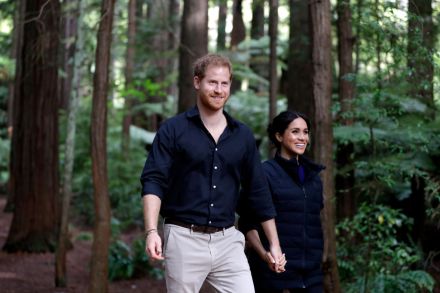
The anticipation surrounding the release of a certain memoir today obscures a bigger question about the changing face of our publishing industry. Why does every Tom, Dick and Prince Harry think they can write a book these days? Figures last week showed the number of independent bookshops in Britain reached a ten-year high in 2022, thanks to a reading frenzy fuelled by pandemic lockdowns, the mushrooming of book groups and, perhaps most of all, the incessant, unstoppable march of the celebrity (not to mention royal) author. It is good news that there are now more than 1,000 independent bookshops in Britain and Ireland, the culmination of six years of growth at a time when other retail sectors have taken a battering.

10 films about brothers at war

Sibling rivalry is nothing new, as the Old Testament’s story of Cain and Abel attests. Back in 1966, director John Huston cast hellraiser Richard Harris as fratricidal bad boy Cain in The Bible: In the Beginning. Years later, Ray Winstone played Cain’s even naughtier descendent Tubal-Cain in Darren Aronofsky’s decidedly odd Noah (2014). 2009 also saw the tale of Cain and Abel recounted more jocularly in Year One (2009), with David Cross and Paul Rudd as the feuding brothers. Of course, the Biblical duo’s argument was settled in a more lethal way than Harry and William’s ‘dog bowl brawl’.

AI is the end of writing

Unless you’ve been living under a snowdrift – with no mobile signal – for the past six months, you’ll have heard of the kerfuffle surrounding the new generations of artificial intelligence. Especially a voluble, dutiful, inexhaustible chatbot called ChatGPT, which has gone from zero users to several million in the two wild weeks since its inception. Speculation about ChatGPT ranges from the curious, to the gloomy, to the seriously angry. Some have said it is the death of Google, because it is so good at providing answers to queries – from instant recipes comprising all the ingredients you have in your fridge right now (this is brilliant) to the definition of quantum physics in French (or Latin, or Armenian, or Punjabi, or – one memorable day for me – Sumerian).

Crying shame: the weaponisation of weeping

‘Tears are not enough,’ ABC once sang defiantly - but these days, they’re more than enough for handsomely rewarded celebrities to assure us that they suffer like the rest of us, so please don’t hate them. Watching the BBC Breakfast presenter Sally Nugent - a 51-year-old woman - boo-hooing recently after watching a clip of some cute guide dogs, I sincerely wished that Lord Reith might rise from his grave and bundle the heaving hack under a cold shower. I’m just so bored by celebrity tears. Or take Frankie Bridge, the ex-Saturdays singer, an attractive young woman with an adoring husband and adorable children, who like her footballer spouse Wayne has a net worth of around £9 million.

Books to look out for in 2023

After a fair-to-middling 2022, it’s not unreasonable to hope that 2023 will see several stars burn brightly in the literary firmament. Whether what promises to be the most talked-about book of the year, Prince Harry’s Spare (out tomorrow with Bantam), is included in this number remains to be seen. On the plus side, the Prince has the estimable J.R. Moehringer as his ghostwriter; on the negative side is the fact that his every public appearance over the past few years has been so combative that we might expect little more than a 416-page exercise in score-settling. More reliable pleasures await. Pamela Anderson’s memoir Love, Pamela (Headline, January) should be a revelatory and fascinating dive beyond the usual bimbo clichés.

The tyranny of voice notes

Ping! My phone vibrates with a message from a new friend. A mild spike of dopamine dissipates on seeing she’s left me a WhatsApp voice note. However, it’s short and, hopefully, it’s a one-off.  I reply with a text message, hoping she’ll register the switch in communications. Ping! Oh no. She’s a voice-noter. She’s a bloody voice-noter. And this one is well over two minutes long and I don’t know her very well, so I’m going to have to listen to the whole thing without speeding it up. It’s an invitation to dinner, but this does nothing to quell my mounting frustration and irrational thoughts of disengaging myself from this nascent friendship.  ‘Yes great thanks,’ I reply by text, without – pointedly – an ‘X’.

My advice to Harry and William

Reading about the latest about the pathetic-sounding scuffle between Prince Harry and his older brother, I think I could tell the pair a thing or two about fraternal enmity. My older brother, another Harry, and I have not spoken to each other in more than 30 years. He was taller, blond and looked Germanic. I was shorter, brown-haired and looked Greek. He never made it at school, whereas I collected lots and lots of sporting trophies. My father named him an executive in his shipping companies, I was the odd man out. Harry had the largest house in the Hamptons and the poshest apartment in New York, whereas I sort of lived a gypsy life. Harry was not athletic, I excelled in sports and represented Greece in three of them.

In defence of Netflix’s Ancient Apocalypse

British writer Graham Hancock has riled the archaeology community with his Netflix documentary, Ancient Apocalypse. The series follows Hancock to ancient sites around the world in pursuit of proof that an advanced human civilisation existed thousands of years before the first cities of Mesopotamia. Hancock, a former Economist correspondent, argues that most archaeologists are too stubborn to admit even the possibility of such a civilisation. Several archaeologists have rebuked Ancient Apocalypse since its release in November. They claim that it propagates false theories, avoids inconvenient facts and regurgitates old beliefs about ancient myths. One Guardian columnist called it ‘the most dangerous show on Netflix’.

Stop broadcasting your ‘personal news’

‘Some personal news! Delighted to announce I’ll be joining [insert major company] as the new [insert extremely impressive-sounding, well-paid, prestigious job title] this week! It’s been great working at [insert other major, if slightly less gleaming company] but I’m so [insert word denoting excitement or thrill, including "excited" and "thrilled"] at what the future holds! You can find me at [new prestigious institutional email address].’ It is no exaggeration to say that over the past week, half of my Twitter feed has been composed of alerts that follow this exact script. As the trickle thickened to a deluge, I wondered if there was some secret spoof going on. Were they all in on a new year joke?

The rise and fall of agony aunts

What better barometer of the nation’s psyche could there be than the questions in an agony aunt’s postbag – and the answers they receive? ‘My transgender brother is furious over my choice of baby name’, ‘My Remainer husband is refusing to get a new passport’ and ‘My leftie wife is condescending and annoying’ are just a few of the timely examples from one recent broadsheet column. These days, many responses to such dilemmas are variations on ‘Live your truth’ (in other words, do and say whatever makes you happy) – which may go some way towards explaining why agony aunts are no longer the essential reading they once were.

There are no ‘correct’ recipes when it comes to pasta

A few years ago I was feeling peckish at Catania airport. I wandered over to the main café and spotted – beyond the stacks of panini stuffed with wilting prosciutto – a sign promising pasta. I assumed they’d be doling it out ready-made from a hulking pot, school-canteen style. But no: they were carefully blanching each portion of rigatoni, then finishing it in the sauce (a humble pomodoro). Who cares about foot-tapping customers on the verge of missing their flights? There were more noble priorities. The celebrity chef Carlo Cracco caused an uproar when he included garlic in his amatriciana sauce This national pedantry – more interesting than the British and their tea – has often been mined for comedy.

There’s nothing new about ‘nepo babies’

One of the neologisms of 2022 was the phrase ‘nepo baby’. Short for ‘nepotism baby’, it was coined by younger people, the so-called Gen Z, to describe the syndrome of the increased attention and opportunity afforded to the children of celebrities – in practice giving them a leg-up into a career in modelling, acting or singing.  A curious aspect of the trend is that these newly cynical youths are only belatedly realising that many of the young stars in their firmament have famous parents: Lily Collins of Emily in Paris, for example, is the daughter of the rather-better-known-to-their-parents Phil.   But it’s only the term itself that is new.

The Spectator’s best TV shows of the year

The Offer (Paramount Plus) https://www.youtube.com/watch?v=iowLzO9-aew Even when you know the ending, this ten-part drama about the making of The Godfather, seen from the perspective of novice producer Albert S. Ruddy (Miles Teller), is outrageously gripping, gorgeously evocative of louche, cocktail-drenched late 1960s Hollywood, wittily scripted and superbly acted. Matthew Goode is especially watchable as superproducer Robert Evans. And this mostly true story has so many eye-popping moments – often involving the real mafia who at first resisted, then supported the movie – it feels more like the raciest and most implausible fiction. Reacher (Amazon) https://www.youtube.com/watch?

Films to watch out for in 2023

It would be fair to say 2022 was not a vintage year in cinema, reflected in UK box office receipts which remain around a third below the pre-pandemic year of 2019. That’s not to say there weren’t some enjoyable releases (such as The Banshees of Inisherin, Triangle of Sadness and The Northman) – but the biggest hits of the year consisted of superhero franchises and movie sequels (Top Gun: Maverick, Avatar: The Way of Water, Jurassic World Dominion, Fantastic Beasts: The Secrets of Dumbledore, etc).

The best new year celebrations in literature

Literature presents many different ways of observing the new year. Much like real life, the options range from big parties to quiet stay-at-home gatherings… and existential crises. In Louisa May Alcott’s Little Women, Meg and Jo March attend a New Year’s Eve party at the home of their family friend Mrs Gardiner. ‘Down they went, feeling a trifle timid, for they seldom went to parties, and informal as this little gathering was, it was an event to them.’ This is the moment that Jo converses with Laurie for the first time and sparks fly as they watch the New Year’s Eve party from their shared point of refuge in a small curtained recess.

The Spectator’s best films of 2022

Banshees of Inisherin: a magnificent cinematic metaphor https://www.youtube.com/watch?v=uRu3zLOJN2c The In Bruges writer-director Martin McDonagh has made another film starring Colin Farrell and Brendon Gleeson which, this time, is set in 1923 on the tiny Irish island of Inisherin. Colm (Gleeson) and Padraic (Farrell) are lifelong pals and drinking buddies until Colm abruptly decides that’s it, friendship over, and he’s deadly serious. If Padraic so much as approaches him he’ll cut off one of his own fingers.

The remaking of Gainsborough’s House

From the road Gainsborough’s House looks like it could be a thoroughly plausible restaurant in a town like Godalming or Chertsey, the sort of place where a prawn cocktail costs £15 and comes with most of a lemon in a white gauze satchel on a separate plate. The stout two-storey structure is Georgian, red brick and has a front door flanked by a pair of handsome Regency windows. Glance up the neighbouring side street, however, and you immediately see that something extraordinary has happened: there’s an enormous, ultra-modern, industrial-looking extension to the rear in brick and flint. Is it a carbuncle? I’ll leave you to decide, but yes, I’m confident it’s the sort of thing that would make King Charles choke on his fountain pen.

A diary of divorce

I’m living in the interstices between smokes. I fill the gaps ruminating, on the unretrievable past and the foreclosed future. I can’t concentrate enough for any one of my thousands of books to be a distraction. I wake up and count the hours until I’ll be tired enough to go back to sleep (or, on the weekends, until Match of the Day). My wife is gone. She’s gone for ever. Sometimes I hear the voices of reassurance. Be grateful for the time you had with her. I’m idealising our marriage. There are other fish in the sea. Thoughts which seem momentarily plausible. Until, as C.S. Lewis writes in A Grief Observed, ‘then comes the sudden jab of red-hot memory and all this “commonsense” vanishes like an ant in the mouth of a furnace’.

The Lord of Misrule and the lost spirit of Christmas past

The Lord of Misrule is surely the jolliest spirit of Christmas past. He is certainly the best named. He used to gambol through cities and courts, churchyards and dining rooms, telling jokes, performing tricks and spreading good cheer. Society shook itself upside down at his coming, so knaves played at being kings, children became miniature tyrants and noblemen misplaced their manners (an exercise in which some, admittedly, needed little assistance). His origins can be traced back to ancient Rome, where each December masters and slaves swapped places for the festival of Saturnalia and engaged in various acts of tomfoolery while gorging on food and wine. These traditions survived the advent of Christianity and found their own expression in the Church.

Why war museums matter

On Christmas Day 1942, the German battlecruiser Scharnhorst, along with five destroyers, left its Norwegian base and headed for a series of Arctic convoys, the British fleets transporting material and support to the Soviets. The townclass cruiser HMS Belfast, used to escort the convoys through some of the most dangerous seas in the world, played a vital role in the Royal Navy’s clever game of bait-and-blast that resulted in the destruction of the Scharnhorst, a monster that had already sunk a British carrier and two destroyers. Belfast, the most powerful cruiser in the Navy at her relaunch in 1942 (she hit a mine in 1939 and needed three years of repairs), now sits in the Thames by City Hall, a visitor attraction operated by Imperial War Museums.