Spectator Life

Spectator Life

An intelligent mix of culture, style, travel, food and property, as well as where to go and what to see.

AI and the end of immigration

There are many things to be learnt from visiting an airport. A trip to Stansted Airport, for instance, will teach you that Stansted is a really dim place to locate an airport. Meanwhile, JFK in New York City will inform you that America is becoming seriously pricey for European tourists. But a recent trip to Bangkok airport taught me something more profound. There I was, supping some pleasant Singapore Laksa, and I saw this thing hove into view. It was an autonomous robot cleaner, busily keeping all the shiny floors of Suvarnabhumi airport in pristine condition.

How I found friendship through online Scrabble

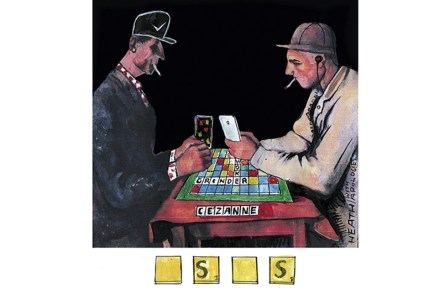
The internet, as we all know, is a place for rage and hate. It’s a free-fire zone in which even something as apparently innocuous as Facebook – original use-case: posting family snaps for your gran – ends up incubating armed insurrection and spreading 5G conspiracy theories. But what if there was some corner of it untouched by death threats, disinformation and the baleful influence of Vladimir Putin’s troll farms? What if there was still some corner of the world wide web which lived up to its original promise of connecting people who would not otherwise be connected, and what if once connected they were nothing but agreeable to each other? Be of good cheer. That corner exists. Not everyone is arguing with Owen Jones and India Willoughby.

Pay and dismay: the nightmare of ‘smart’ parking apps

In Notes from a Small Island, Bill Bryson bemoaned the ‘wilfully unhelpful’ ticket machines in car parks: ‘You go hunting for some distant pay-and-display machine, which doesn’t make change or accept any coin introduced since 1976, and wait on an old guy who likes to read all the instructions before committing himself and then tries to insert his money through the ticket slot. The remarkable thing is that everything about this process is intentionally – mark this, intentionally – designed to flood your life with unhappiness.’ While these apps are an annoyance for me, they’re positively prohibitive for those without smartphones Almost three decades later, you’d be lucky to find a parking meter at all.

Why are beds flat?

Last month in a Swiss hotel, I came across an idea so beautifully simple that I felt it would be immoral of me not to share it. The bed in our room, rather than having one king-sized duvet, was covered by two double-size duvets overlapping in the middle. Eureka! Given that the Swiss are world leaders in conflict-avoidance, it seems likely the idea originated there, although I have since learned the practice is also common in Scandinavia. Back in Blighty, when one person in a double bed rolls towards the edge, they take three feet of duvet with them, leaving their partner out in the cold. This typically leads to retaliation and often escalation. The Scandi-Swiss system, by contrast, creates a buffer, a DMZ of surplus duvet, which means that bedding fights are no longer a zero-sum game.

Self-obsession is killing music

Though I’m not the most avid fan of her oeuvre, I was cheered recently to see that Ellie Goulding wanted her new album to be less personal: ‘It was such a relief and really refreshing to not be sitting in the studio going through all the things that happened to me and affected me… it’s the least personal album, but I think it’s the best album because I got to just explore other things about myself. I just really, really enjoy writing; really enjoy being a singer.’ What a refreshing take on the creative process, which in modern times can often seem like a cross between a bulletin from the therapist’s couch and a ceaselessly-picked sore. Millennials can’t seem to get enough of spilling the tea, and that goes especially for their most successful singers.

The cult of Aesop

Do you think the luxury soap-maker Aesop would have been valued at £2 billion pre-pandemic? I don’t. Sure, the botanical Aussie cosmetics brand, famously seen in the prettiest restaurants and lining the bathrooms of the fashionable, has been valuable for some time, but ‘hands, face, space’ propelled its growing stardom into a multi-billion pound lather. Today, having one of the cult bottles on the basin is as ubiquitous a status symbol as driving a 4×4 around Chipping Norton.  L’Oréal announced this month that it has signed an agreement with Natura &Co, the brand’s owners, to acquire Aesop in a deal worth $2.5 billion USD (around £2 billion).

The secrets of London by postcode: E (East)

How Walford in EastEnders got its name, why Isaac Newton visited bars in disguise and what happened when the IRA parked on a double yellow line. Our tour of London’s postcode areas has reached its penultimate stop – who fancies an E? In the run-up to the 1997 general election, John Major visited the Mirror Group offices in Canary Wharf. One of the rooms he entered, high up in 1 Canada Square, was that of Kelvin MacKenzie, erstwhile editor of the Sun but by then boss of L!ve TV. Looking out of the window, the Prime Minister commented: ‘Incredible view you’ve got from here, Kelvin.’ ‘Yes,’ replied MacKenzie. ‘On a clear day, you can almost see a Tory voter.

The myth of atheist America

The American comedian Bill Maher is an intelligent man with a good sense of humour. When he's right, he tends to be very right. However, when he's wrong, he tends to be so wrong it leaves a person scratching their head in disbelief. He has a tendency to sometimes misrepresent the facts. This is true when it comes to weed. For the uninitiated, Maher loves weed. I mean, he really loves weed. He is forever talking about it (see here, here and here), arguing, repeatedly and unapologetically, that it's a largely harmless drug. As I have shown elsewhere, it’s not. It robs many people of motivation and happiness. Nothing good comes from smoking weed on a regular basis.  Maher has a reputation for being a truth teller, a voice of reason.

In praise of Prunella Scales

As I’ve got on in years I’ve been fairly successful in eliminating vices – most of the debauchery of my teens and twenties is a distant, hazy memory. But as I reached my fifties I found I had fallen into the grip of a compulsion that was as powerful and unshakeable as any drug. My name is John and I am addicted to Great Canal Journeys with Prunella Scales and Timothy West.  During my condition’s worst ravages I found myself staying up half the night binge-watching this endearing elderly couple navigating their way around the historic waterways of Britain at 2mph. The pottering about, the occasional prang while entering and exiting locks, the odd glass of wine in the afternoon ­­– it was the most addictive TV I’d seen since The Wire.

How common is your garden?

As spring (finally) arrives, it’s time to turn our attention back to what’s outside the back door. Helpfully, garden designer Isabel Bannerman (Highgrove, Houghton Hall, Arundel Castle) has written a memoir, Husbandry, in which she declares there is no such thing as ‘U and non-U’ in gardening. She then undermines her argument by immediately setting out her shibboleths: variegated leaves, curvy paths, statues, fountains, tidiness. Anything, in effect, that is ‘suburban’ (bedding plants) or reminiscent of municipal planting schemes (ibid. those big, blowsy King Alfred daffodils you’ll see blaring from roundabouts at this time of year).

In defence of Melania Trump

Where is Melania? This was the question on many people's lips after the former First Lady was absent from the after-party at the Mar-a-Lago estate on Tuesday night following her husband’s quick trip to New York City. Trolls took to social media to ridicule Mrs Trump for 'not standing by her man' during his indictment; some even cracked jokes that she was moving on to pastures new with freshly single Rupert Murdoch. Wherever she was, I hope she was happy. In fact, I hope she was positively beaming while horizontal at a spa getting a deep-tissue massage with martinis flowing and charging it all to her husband’s credit card.

Help! I’m trapped in a 15-minute city

It’s a nasty moment when you receive a letter informing you that a fortnight ago, at a specific number of minutes past an hour, your car was photographed turning into a side road which, at the time, you had no idea you weren’t allowed to turn into.   You vaguely recall the junction. There was no ‘No entry’ sign: just a torrent of words (‘except’, ‘through’, ‘motor vehicles’, ‘access’) that you didn’t have time to read. That outing will now be forever sullied in your memory by the £65 fine. Protesting ‘but the sat-nav told me to do it!’ is as ineffectual, legally speaking, as Adam bleating to God that ‘the woman gave me fruit from the tree and I did eat’. The punishment is still enforced.

Rock’n’romance is dead

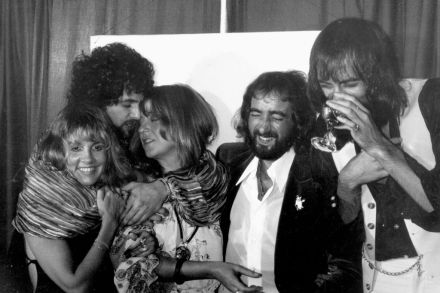
The alchemy wrought by a young man’s ability to gyrate and croon at the same time is notorious, turning shy mama’s boys from Presley to Rotten into love/hate machines. Something magical happens when someone – however unsightly – sings a song well, allowing him access to a quantity and quality of women undreamt of when he was just walking and talking like a normie. Two words: ‘Mick’ and ‘Hucknall’. The romantic image of the modern musician as tasty but troubled troubadour roving from town to town on his lonesome (except for his bandmates, backing singers, roadies, drug dealer and manager, of course) and taking sensual solace where he may is a powerful one, long propagated by he-sluts who would be intimate with a jack-in-the-box if it looked at them the right way.

The improbable genius of John Venn

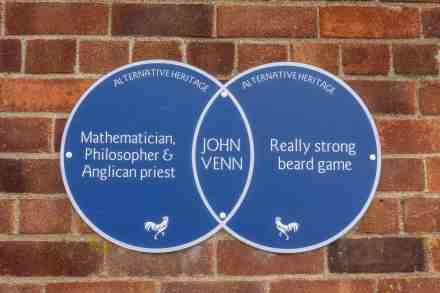
There aren’t many mathematicians who can claim to have bowled out Australia’s number one batsman. But then John Venn, who died 100 years ago today, was no ordinary scholar. Born in Hull and brought up in Highgate, he was also an Anglican priest – the ninth consecutive one in his family – with a magnificent Victorian beard. He won gardening prizes for his roses and white carrots. He was a keen advocate of women’s rights. And as the founding father of Venn diagrams, still the world’s most beloved tool for representing set-relationships, he can probably boast greater name-recognition than any other modern mathematician.  John Venn [Alamy] Next time you’re in Cambridge, pop into Gonville and Caius College, where Venn was a Fellow and President.

How to take an iconic mugshot

So you’re going to be arrested imminently: how do you prepare? I’ve dwelled on this question often since my arrest at 16, the ugliest age you can be. You draw on thick eyeliner and have even thicker acne, which you think you can cover with even thicker layers of makeup and a back-combed barnet. The outcome was the world’s worst mugshot. My first pointer therefore: if you’re about to be arrested, brush your hair.  Luckily for Donald Trump, when he’s arrested and brought before a judge on Tuesday, he won’t be handcuffed. Chic, right? The Secret Service and court authorities have ‘mitigated’ that issue, apparently. His hair is also pretty good for a 76-six-year-old when it’s not being blown about in the wind.

Gentlemen’s clubs for all!

Is it a stage of life thing? Recently I’ve got a hankering to join a gentlemen’s club. It might be the creeping realisation that having put it off for so long – drifting in and out of London’s clubs over the years as a guest thinking ‘This is rather nice…’ – as I near 50, it’s a case of now or never. So here’s a question – have you been to a club recently? Have you settled into the tightly stuffed, wing-backed armchair at the Athenaeum, White’s, Buck’s, Boodle’s or the Carlton? Have you dined at the Garrick surrounded by the some of the finest things to drip off the paintbrushes of Zoffany, Millais, Hogarth and numerous others?

Why do conservative men love Lana Del Rey?

The chanteuse is back. Did You Know That There’s a Tunnel Under Ocean Blvd, Lana Del Rey’s ninth album, arrived ten days ago. It’s a lush, dreamy voyage through said tunnel, one best listened to on vinyl, but not one that doesn’t pose questions about life, love and how Del Rey found said tunnel. Del Rey herself also causes people, specifically men, to ask questions, and not just about life, love and tunnels. One of those questions, put forth by a young heretic, was not so existential, but instead a plea for understanding, specifically about the 37-year-old's appeal. It read: 'It is once again time for me to ask that heterosexual conservative men please explain lana del ray to me.' https://twitter.com/SpencerKlavan/status/1639330375452295168?

What Prince Harry gets wrong about therapy

Prince Harry’s endorsement of therapy will likely turn some of us off ever seeking it out. Insisting that therapy has changed him for the better, he is urging his family to partake so that they too can ‘speak his language’ of simultaneously loaded and empty terms – such as ‘authenticity’. ‘If I didn’t know myself, how could members of my family know the real me?’ he said. This non-sequitur subverts the conventional wisdom that sometimes others can know you better than you know yourself. Yet tiring as all the Prince’s interventions are, a peremptory dismissal of psychoanalytic practice would be a mistake. In fact, psychoanalysts would probably refuse to accept the Prince is speaking their language anyway.

In defence of musicals

You can always rely on theatreland to serve up drama off stage as well as on. Hopefully the spat between Lord Andrew Lloyd Webber and Sir David Hare over whether musicals are ‘killing’ theatre will run and run.  Writing in The Spectator last week, Hare moaned: ‘Musicals have become the leylandii of theatre, strangling everything in their path… are dramatists not writing enough good plays which can attract 800 people a night? Will well-known actors not appear in them? Or did producers mislay their balls during lockdown?

The new technocracy: who’s who in the chatbot revolution?

Decades are happening in weeks in the world of artificial intelligence. A fortnight ago, OpenAI released GPT-4, the latest model of its chatbot. It passed the bar exam in the 90th percentile, whereas the previous model only managed the tenth. Last week, Google introduced its own chatbot, Bard. Now, the British government is announcing plans to regulate AI for the first time, as well as to introduce it into hospitals and schools. Even some of the biggest technophobes are having to grasp this brave new world. We’re familiar with some of the technology by now, but we know little about the humans in the world of AI.

Read all about it: 12 of the best novels about journalism

A recently published novel, Becky by Sarah May, is the latest in a long tradition of fiction based on journalism – and a good excuse to think again about the great books from that sub-genre. May’s is a curious hybrid of the life story of News UK CEO Rebekah Brooks and a repurposing of Vanity Fair. George Cochrane, reviewing it for The Spectator, called Becky ‘a good novel dwarfed by a great one’.  He was referring to the Thackeray, but he might just as easily have been talking about another classic English novel: Evelyn Waugh’s Scoop. That comic masterpiece from 1938 is the book against which all other fictional evocations of journalists and journalism are judged – and is almost invariably the first on any list of the best of such books.

The romcom is dead

From bucket hats to Britney Spears, the 1990s and 2000s are back in vogue. Who could have predicted that the cringe-inducing baggy trousers and All Saints-esque crop tops that filled teenage wardrobes 20 years ago would be resurrected with such gusto by Gen Z? But there’s one part of turn-of-the-century culture that remains firmly consigned to the past. Unlike the clothing of the era, the romcom has proved remarkably resistant to modern reinvention – no matter how hard Hollywood tries. Last month, two romantic comedy veterans – Reese Witherspoon and Ashton Kutcher – reunited in a stoic effort to woo audiences back to the genre.

Why should everyone have an electric car?

Some excellent thinking this month from the Italian complexity theorist Luca Dellanna: Two days ago, the EU parliament approved a ban on new fossil fuel cars starting in 2035. While I like the idea of greener cars, I’m not too fond of a fast and complete transition.    Let me use the metaphor of the Summer Olympic Games – an event with attractive economics during the planning phase that predictably overruns its budget by enormous amounts (an average of 213 per cent!). The Olympic Games are the only infrastructural megaproject that always has cost overruns. Why? Partly because it has inescapable deadlines – and everything is more costly when rushed.

Why adults should read children’s books

During a recent family trip to South Africa, there was one book from my holiday reading pile that I simply couldn’t put down. It had everything: suspense, mystery, humour, fantasy, plot twists, heroes, villains and, ultimately, a happy ending. It also contained talking animals, unicorns and fauns. Because this wasn’t the latest bestselling crime or psychological thriller – my usual genres of choice. It was The Lion, The Witch and The Wardrobe, the children’s story by C.S. Lewis that I’d first read almost 40 years earlier. Given that I have a nine-year-old son who adores books, you might imagine that my motivation for re-reading it was to do so aloud to him. Not so.

The purgatory of soft play

Are you familiar with the child-focused phenomenon generally known as soft play? Often located in the windowless recesses of garden centres with an innocent-sounding name like ‘Snakes and Ladders’, these are compounds dedicated to the frenetic, ergonomic joy of children – assault courses for mites, with slides, chutes, ball baths and various dangling hazards all swathed in gaudy soft foam-wrapped plastic. On paper, soft play sounds like fun: what could be more enjoyable than watching your tiny ones zipping gleefully down slides in an ultra-safe environment, one where there’s even compulsory armbands for accompanying adults and locked doors to keep out perverts?

My type: a love note for the typewriter

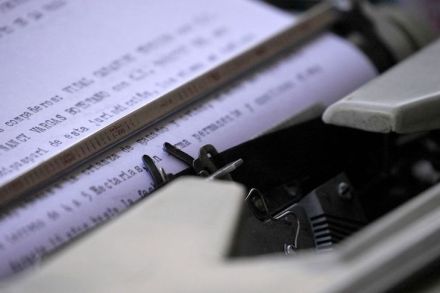
The last manual typewriter, after 150 years of commercial production, was manufactured in the UK in 2012. Yet like all design classics, it refuses to lie down and die. There is a roaring trade in old models on eBay, and dealers such as the Typewriter Man in the UK and Mytypewriter.com in the US sell them to hipsters and steampunks, among whom they are cult objects. The latter store, awash with Hermes, Remingtons and Underwoods, even has a list of famous writers and the machines they used – from John Ashbery to P.G. Wodehouse – so that you can buy a model to match your literary tastes.  They’re also, in various institutions, still in use.

‘Exciting’ has lost its meaning

Wow, can I just begin by saying how incredibly excited I am to be given this opportunity to write about such an awesomely exciting subject. Don't worry, this isn’t the start of some interminable Oscars-worthy speech. In truth, I'm not remotely 'excited' at the prospect of writing this article about the overuse of the word 'exciting'. That's because I'm an adult and adults tend to temper their enthusiasm with cold, hard reality.  The last time I felt genuine excitement, as in jumping around the room wild-eyed and whooping, was as a child when I awoke to find one of my dad's old socks stuffed with toys draped over the end of my bed. For children, everything is exciting because everything is new and filled with possibilities, even an old sock.

Two big-priced tips for Uttoxeter today

If it feels like this column is appearing far more regularly than usual, that’s because it is. Normally a Friday-only offering, there have been four daily previews for the Cheltenham Festival and now this one to make it five columns in as many days. It’s been tough going finding winners this week but we got there in the end (Iroko tipped at 9-1 in the 5.30pm today). Today we return to a more standard weekend fare, and I have a strong fancy for the big race of the weekend. I put up two horses last week for the Boulton Group Midlands Grand National at Uttoxeter (3pm) last weekend and they have both been declared and are now trading much shorter than seven days ago.

The unmaking of Russell Brand

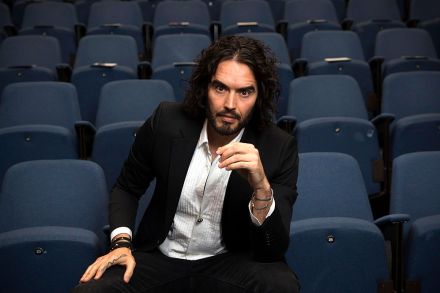
Russell Brand’s hero status among a prominent section of the British left began on Friday 13 September 2013 and officially came to an end one week ago. On both occasions the medium was the Guardian. The 2013 moment came when he wrote for the paper giving ‘his side of the story’ after being kicked out of a GQ awards event for making a joke about the Hugo Boss fashion label and its historic links with the Nazis. Just shy of ten years later, the paper’s columnist George Monbiot last week published a mea culpa for having once been an advocate for Brand. He had nominated the comedian as his ‘hero’ of 2014, saying he was ‘the best thing that has happened to the left in years’.