Spectator Life

Spectator Life

An intelligent mix of culture, style, travel, food and property, as well as where to go and what to see.

Woke was invented by angry schoolgirls

For the first half of the 2010s, any teenage girl in her room had a chance of amassing more political influence than a junior Spad. She could define political terms and concepts, blacklist undesirable elements, and argue for a different kind of society. Thousands, sometimes tens of thousands, of other teenage girls would be following her, reading and engaging. These were the days of Tumblr, a youth blogging website that functioned like a dysfunctional think tank. I first found out about Tumblr in 2012, when I was in Year 7; a girl in my year group started a blog about her depression and anxiety and linked it from her public Facebook. I wanted in on her mental anguish – the posts she shared would ring safeguarding alarm bells today, but they seemed impossibly grown-up at the time.
The Odyssey is more real than we thought

Odysseus is back on his eternal journey to Ithaca – and he’s sailing towards your cinema screen. Ralph Fiennes is playing Odysseus in The Return, released last week. And Christopher Nolan’s Odyssey, starring Matt Damon as the cleverest of the Greeks at Troy, should be out next year. I criss-crossed the Mediterranean for three years, in the wake of Odysseus, for a book – and I’m convinced The Odyssey is true. OK, the monsters, like man-eating Scylla and the one-eyed Cyclops, might not have existed. And you’d have to be a Zeus-fearing type to believe in the gods toying with Odysseus’s fate on Mount Olympus. But the catastrophic storms that tossed Odysseus back and forth across the Med are certainly true.

Save the Red Arrows!

You will be aware that we face a national emergency. I’m not referring to the fact that our closest ally has seemingly taken leave of its senses or the astonishing news that apparently one in four Britons is now disabled – nor that more than nine million of us of working age are economically inactive. I’m not even talking about the parlous state of the NHS. The national emergency I’m referring to is one that trumps even Trump, so brace yourselves. Soon we are going to run out of Red Arrows. The jolly red-painted planes they fly – the Hawk T1s made by BAE Systems – are now so old, they’re even older than Putin’s fighters.

Spare us from ‘nobituaries’

Sometimes it seemed to me as a young hack that writing obituaries must be the best job in newspapers. You can’t get sued – though people tend not to take the gloves off out of ‘respect’ and use ancient phrases like ‘bon viveur’ and ‘did not suffer fools gladly’ when everyone knows you mean ‘well-connected drunk’ and ‘ill-tempered’. It’s only once in a blue moon that someone really says what they think, like when the ‘social influencer’ Jameela Jamil barely waited until the fashion designer Karl Lagerfeld was cold in his casket before X-ing that the capering clown – widely being celebrated as a ‘genius’ – was in fact ‘a racist, misogynistic, fat-phobic rape apologist who shouldn’t be posted all over the internet as a saint gone-too-soon’.

Finally, we’re cracking down on buskers

At last, somebody has said it. Busking is akin to psychological torture, especially for those who have to live or work within earshot. This damning comparison came from no less than a judge at the City of London magistrates’ court, following a suit brought by Global Radio, the Leicester Square-based owner of LBC and Classic FM. The judge noted ‘the use of repetitive sounds is a well-publicised feature of unlawful but effective psychological torture techniques’. He found that the ‘volume’ of the buskers’ music was ‘the principal mischief’ but also delivered a damning assessment of the way out-of-tune pop songs are offensive to the human spirit. ‘It is clear that the nuisance is exacerbated by the repetition and poor quality of some of the performances,’ said the judge.

The Lady vanishes

The moment I stepped out of the Covent Garden sunshine and into the regal offices of the Lady magazine, it was like stepping into a 19th-century Tardis, and I was already in love. ‘I’m going for the editorship hell for leather,’ I wrote in my diary (published in 2010). ‘I’ve even been out and bought and read a copy of the magazine for the very first time!’ It was the funeral parlour ambience. The genteel tones of the telephonist, Ros, taking calls from deaf dowager duchesses placing adverts for a couple to prepare light luncheons and do some gentle housework in return for accommodation in the gatehouse. It was the fact that the Lady was the inspiration for P.G.

Beware the £5 coffee

It wasn’t until I received a notification from the Monzo app that I realised I’d spent nearly £10 on two coffees. This wasn’t in the Wolseley or even within the M25, but in Two Magpies, a café in Holt, our local market town in Norfolk – for two regular lattes (admittedly with an extra shot, since it was Monday morning) for myself and a friend. Just last year, I was taken aback when my caffeine fix crossed the £4 threshold, with the barista casually mentioning that coffee prices were rising. But £4.70 feels like it’s firmly in the ‘taking the mickey’ territory. I haven’t been back since (I’m currently writing this in a different café) because I know I’d be unable to resist exclaiming ‘HOW MUCH?

The problem with Oxfam Books

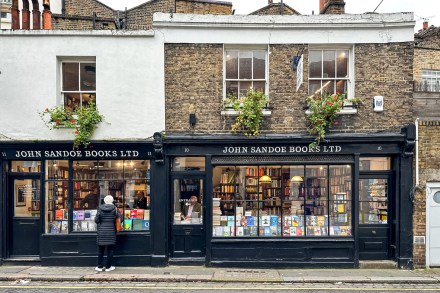
My home city of Oxford has been ravaged by shop closures over the past decade but there is still one outstanding second-hand bookshop (the estimable antiquarian department at Blackwell’s apart) and it’s the Oxfam bookshop on St Giles. Thanks to a regular donations from dons and writers, there are invariably high-quality and interesting items on its shelves, priced sensibly and reasonably. In the past, I reckon I’ve spent a decent three-figure sum there most months, which I persuaded myself was going to developing countries and their good work, rather than growing my unreasonably large collection. Yet I’ve rather fallen out of love with the Oxfam St Giles ever since it did something unexpected a couple of months ago: it stopped me buying books.

The sad decline of the local paper

Once at my old local paper, the Grimsby Evening Telegraph, a trainee made the mistake of sniggering when asked to cover the allotments sub-committee. ‘Don’t ever fuck with allotment holders,’ the news editor warned. ‘It may not matter to you, but they take those little patches of land very seriously indeed.’ Like most of the news editor’s salty words of wisdom, this advice was forged on the anvil of bitter experience. Grimsby’s allotmenteers guarded their marrow and runner bean patches with a Balkan-esque blood-and-soil passion. The slightest mistake could generate no end of angry phone calls and green-ink letters. I am not sure allotment coverage was quite what King Charles had in mind when he lavished praise on local newspapers last week.

The art of April Fools’ Day

The French claim authorship of April Fools’ Day, dating it to the late Middle Ages. Back then, those who celebrated the year’s beginning on 1 January under the new Julian Calendar made fun of those who still went by the old one. A paper fish was attached to the unsuspecting backs of Gregorian diehards and the festival became known as Poisson d’Avril. The joke has been somewhat lost in the intervening centuries, denoting either the start of the fishing season, the astrological symbol for late March, or some play on the phrase ‘taking the bait’. The era of mass media has seen many of us become April Fools (or fish).

How to walk away from greatness

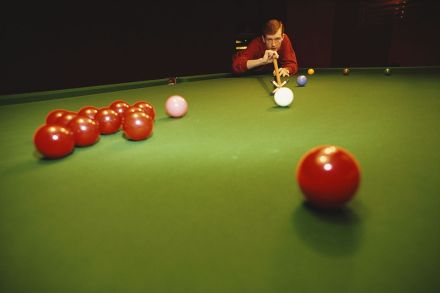
How do you walk away from greatness? How do you vacate the position of being literally the best person in the world at something? Most of us never have to face this challenge, but at some point Ronnie O’Sullivan will. In Steve Davis and Stephen Hendry he has contrasting examples of how to tackle it. I’d argue that Davis’s approach is by far the better – and indeed teaches all of us about life and the way it should be lived. ‘If he plays his best, he wins. It’s as simple as that.’ There aren’t many who disagree with Hendry’s verdict on O’Sullivan, his successor as the king of snooker and the greatest player, by common consent, ever to pick up a cue.

Recollections of a 1980s indie kid

It is the evening of Monday 23 September 1985. A band called the June Brides are playing a free gig in the bar of Manchester Polytechnic’s Students Union, the Mandela Building (of course) on Oxford Road. I find myself among the audience of freshers’ week first-year undergraduates. I am 18, a small-town boy who’s been living in a big city for just 48 hours.  The place is half empty, the audience awkward. But I am quite taken with the band and the following day go to Piccadilly Records to buy their just-released mini album, There Are Eight Million Stories. The US novelist Dave Eggers would later recall being a teenage Anglophile indie fan in the suburbs of Chicago and cycling 20 miles to get this record that autumn. I could just get the 85 bus from Chorlton.

How I rank my friends

I like to think of myself as good at making friends. I tend to rank them. There are kindred spirits (rare), very good friends (perhaps five at the most), and good (ten or more). Friendships, like plants, need looking after; they require time and attention. One rank below friends are acquaintances. Acquaintances add warmth and comfort to life but are not essential. You can abandon an acquaintance without much compunction. But good friends nurture the heart and soul and are therefore vital. Kindred spirits? By them you know you’re not alone, not mad, not a terrible person and, amazingly, that you’re loved. I think back to childhood when the need for a best friend was absolutely paramount. I suppose it’s an early version of wanting a mate.

Paddington Bear and the new idolatry

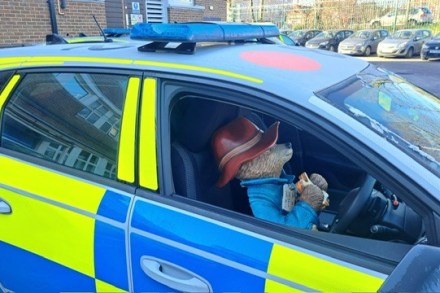
Is nothing sacred? Not quite, as it turns out. There remains one last object of piety in these, the early days of the third Christian millennium (don’t laugh). Surprisingly, it is a fictional bear from darkest Peru. Yes, Paddington is back in the news. Because he hath been desecrated. There is, or was, a sedentary statue of St Paddington Bear on a bench in Northbrook Street, Newbury. He was depicted clutching a marmalade sandwich in both paws, wearing an expression that was probably intended to be thoughtful, but that to any reasonable person appeared feral and malevolent. One dark night a few weeks ago, Daniel Heath and William Lawrence, RAF engineers from the nearby base at Odiham, both 22, decided – after drink had been taken – to remove Paddington for a laugh.

Australians are destroying our ancient past

I’ve been to a few underwhelming Unesco World Heritage Sites. Take the Struve Geodetic Arc, which curves almost invisibly across Eastern Europe. I visited without even realising. As for the Fray Bentos corned beef factory, in Uruguay, I’m writing this about 20 minutes from the Fray Bentos corned beef factory and I’m still reluctant to go and see. The same might be thought of Australia’s Lakes of Willandra, which I visited around 2014. Unesco itself describes them as ‘fossil remains of lakes and sand formations from the Pleistocene’, which is not exactly heart-racing. They are unhelpfully located in the south-west corner of New South Wales – lost in semi-desert, far from anywhere.

Children’s books are too depressing

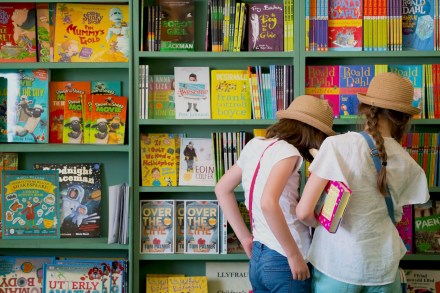
The Carnegies are a long-running award for children’s writing and illustration, established by the Library Association in honour of Scottish philanthropist Andrew Carnegie and first awarded in 1936 to Arthur Ransome’s Pigeon Post. This year’s shortlist of 16 for fiction and illustration, chosen by a dozen librarians, is out now and billed thus: ‘Marginalised Male Perspectives Explored with Empathy and Hope’. So, boys are the new girls as the left-behinds of our day and white boys in particular are the group most obviously marginalised.

Don’t write off literary fiction yet

I don’t intend to start a feud. Most of Sean Thomas’s essay on The Spectator’s website last week, titled ‘Good riddance to literary fiction’, I agree with. It’s true that the high-flown heavy hitters of the book biz get far less attention than in yesteryear – though ‘litfic’ has never been a big money-maker in publishing. It’s true that no one reads book reviews any longer, and I should know because I write book reviews. I’ve no use for fiction exclusively powered by plot. If the words are flat and lifeless, I can’t read the book It’s true, too, that literary prizes don’t trigger the massive surge in sales they once did, owing to a depreciation that awards judges have exacerbated by woking-out.

In defence of self-publishing

Years ago, newly triumphant from getting my first book published, I went to my parents’ house for a celebration dinner. Having duly toasted their son’s modest literary success, they then revealed that I wasn’t the new author in their social circle. An old university friend of theirs from Holland – we’ll call him Jörg – had just sent them a copy of his new book, ‘a sort of travel memoir, a bit like yours’. This was not a comparison I welcomed. My book was about quitting my job as pot-holes correspondent on the London Evening Standard to freelance in post-Saddam Iraq – not exactly Michael Herr’s Dispatches, granted, but more gripping, I liked to think, than writing about roadworks on Streatham High Road.

Kate Moss refuses to apologise

According to MailOnline, Kate Moss ‘sparked fan concern as she’s spotted looking “fraught” and “on edge” at Paris Fashion Week’. Good. Kate Moss is one of the very rare celebrities who I’m interested in – because she’s one of the very few celebrities who’s interesting – but in recent years she has become a bit ‘basic’, to use the word she once tossed along with ‘bitch’ at the pilot of the EasyJet plane. Police led her away from the plane after she was caught drinking her own booze after being refused airline hooch. (‘She was not aggressive to anyone and was funny really – the crew were acting out of proportion’, said a co-passenger.

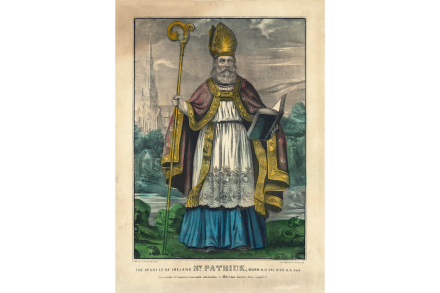
Which Saint Patrick are we celebrating?

Time was, you knew where you were with the patron saint of Ireland whose feast is 17 March. He was a Briton and he tells us in his Confessions that, when he was a teenager, he was captured by Irish slave traders and taken to Ireland, where he herded sheep. He turned to God and was told that he would escape; he duly got a passage back home. But in a dream, he heard the Irish calling out to him to come back to Ireland and walk again among them, and he knew his mission was to bring them the gospel. So he had himself consecrated bishop, returned to Ireland in AD 432 and converted the Irish in short order, with many miracles.

Andrew Tate has no place on Spotify

With more than 250 million subscribers, Spotify is by far the biggest audio streaming platform in the world – and for countless families like mine, it’s the first port of call for music, audiobooks and podcasts for children as well as adults.  In common with many apps, it has a children’s version which blocks inappropriate content for younger audiences. But in common with many parents of secondary school-aged kids, I was persuaded to remove this feature so my 11-year-old son could listen to songs by some of his favourite artists, from Oasis to Harry Styles. I had no idea that this would open him up to exposure to a step-by-step guide on trafficking women.

What my Irish passport means to me

I’m now officially Irish – the proud recipient of a shiny red passport. It arrived, with the luck of the Irish, in time for St Patrick’s Day. But as I gaze fondly at the words ‘European Union’ and ‘Ireland’ embossed in gold on the front, I do feel the awkward guilt of the hypocrite. I may have voted Remain just to avoid any upheaval but I’ve never been much of a fan of the EU. And while I’m in the confessional box, I should perhaps mention that I’m not even properly Irish – my mum was English. I’ve seldom visited the green fields of Erin and have never finished a whole pint of Guinness. So I’m afraid Paddies don’t come more plastic than me.

Why no news is good news

I’m hiding from something I used to love: the news. It’s a common tendency these days – Loyd Grossman noted it in his Spectator diary recently, calling himself a ‘nonewsnik… unable to deal with a daily diet of misery and despair’. I understand the need to escape the depressing effects of war and economic turmoil. That’s part of my own reasoning too. But my main point is slightly different: it’s not so much that the news is depressing, it’s that the news is boring. We’ve been here before. Whatever the issue, we’ve faced the same old problems and run through the same old arguments. For my 50th birthday, a friend gave me a copy of the front page of the Times from the day I was born.

How I fell for 78s

I recently made a programme about the British jazz pioneer Arthur Briggs. Yes, I know. Arthur who? The much-missed Jeremy Clarke told me: ‘If only he’d been called Arthur “Big-Boy” Briggs or “Honeydripper” Briggs, maybe things would have turned out differently.’ As it was, his name always suggested a painter-decorator from Edwardian Brixton rather than one of the hottest cornetists on the prewar jazz scene. Briggs was a Caribbean child of empire who, as a teenager, fell in with makers of the new music in New York, then after the first world war helped bring jazz across to Europe.

Good riddance to literary fiction

In case you hadn’t noticed, the London Book Fair has been gracing our nation’s capital this week, down in Earl’s Court. There, the publishers, agents and buyers of the literary globe (London is second only to Frankfurt in ‘book fair importance’) have been feverishly buying and selling the rights to hot new titles, hot new authors, maybe the odd lucky midlister, while identifying the trends, writers and genres that conceal the ultra-precious kernel of hotness to come. In today’s market it’s likely that buyers have been looking for visually rich comic books for children – enjoying a resurgence – and anything in a newish genre called ‘romantasy’ (think Fifty Shades of Grey meets Game of Thrones, with more vampires and less spanking).

We need a modern Wogan

Nowadays whenever an elderly celebrity dies – consider the death last month of Gene Hackman as a case in point – one of the first things that happens is that a chunky clip of them appearing on a talk show such as Wogan or Parkinson gets shared on social media. Before you know it, you’ve spent three or four minutes listening to them regale television-watchers of the 1970s, 1980s or 1990s with a reflective anecdote or a personal story that reveals something important or even profound about their lives and animating passions or influences.

Have you got compassion fatigue?

Experts warn that doctors like me risk a condition known as ‘compassion fatigue’ – an emotional numbness that comes from too much caring for too long. But aren’t we all on the edge? Distant hardships are now visible as they happen, and the sense that victims are everywhere becomes vividly real. Newsreaders, documentary makers, editorialists, politicians and campaigners imply we’re shallow unless consumed by the wretchedness they describe. I meet the unfortunate, struggling and afflicted on my ward rounds. And I deal with those who have been made frail by age, bad luck and bad choices. Obstetricians get flowers and wine for helping bring wonder into people’s lives, orthopaedic surgeons for fixing hips and restoring freedom. I tend not to get gifts.

What happened to BBC Radio 3?

The decline of Radio 3 makes a sad story. Established in 1967 to reflect the world of classical music, and high culture in general, it has become a swamp of mediocrity, peopled by presenters who might feel more comfortable on a pick ’n’ mix stall. Every day, in almost every way, it seems determined to forfeit the goodwill of listeners who remember what public service broadcasting used to sound like. Last week, building up to International Women’s Day, the station fluttered its feathers like a randy peacock. The Kanneh-Mason family, those latter-day Von Trapps, were on parade, and there were lashings of featherweight female composers. In the case of Florence Price, a favoured daughter, featherweight is possibly a division too steep.

Why can’t pop stars just stick to their hits?

Any old fossil like me keen on harrumphing that popular music isn’t what it used to be will have taken a certain snarky pleasure on reading that, last year, no British act figured in the world’s top ten singles or albums for the first time since 2003. To be fair, 2003 wasn’t the best year for chart music ever; Dido had the top-selling album – going 6x platinum – with Justin Timberlake, Christina Aguilera, Daniel Bedingfield and Norah Jones completing the top five. The bestselling single of 2003 was the Black Eyed Peas’ ‘Where is the Love?’, followed by ‘Spirit in the Sky’ by Gareth Gates and the Kumars, R. Kelly’s ‘Ignition’ (Remix)’, ‘Mad World’ by Gary Jules and ‘Leave Right Now’ by Will Young.