Latest from Coffee House

Latest from Coffee House

All the latest analysis of the day's news and stories

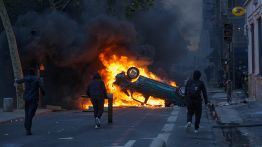
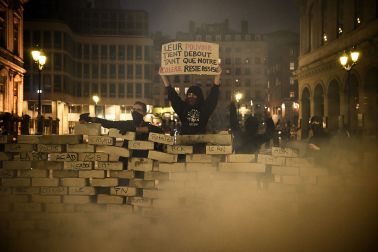
What I saw in the French riots

It’s the third week of the student-led protests in Lyon, and the second that my university has been blockaded “in solidarity.” When clouds of tear gas drift onto my street on Saturday, it’s an almost routine sight. My neighbor across the road is sitting by his window, eating potato chips, pointing out some of the more family-friendly placards to his toddler. Smartly dressed shoppers move through the crowds with scarves as improvised gas masks. I decide to make myself some porridge.   I am interrupted by a series of heavy thuds. Out of my window I see a group of balaclava-clad men taking turns to launch themselves at my neighbor’s front
lyon french riots

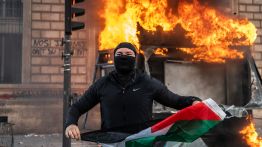
The Palestine flag has become the symbol of anti-West hatred

Given that the French-speaking world gave us the science of semiotics, they would be the first to recognize that the Palestine flag, as it is being hoisted and brandished across the French republic at the moment, has come to signify something far more than the aspirant state of Palestine. You don’t have to be Ferdinand de Saussure to appreciate that this signifier has become unmoored from its original meaning. You don’t have to be Roland Barthes to see that this emblem has now assumed a wholly mutated significance: in short, it has become an all-encompassing symbol to denote hatred of the West and of European civilization.

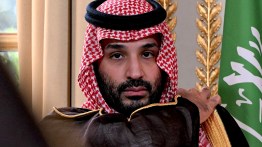
Who will condemn Saudi Arabia’s Islamic barbarism?

On Wednesday, Saudi Arabia executed a Bangladeshi man and woman over an “indecent act” inside a mosque in Mecca. While the Saudi interior ministry hasn’t specified the “indecency,” and some reports suggest that the two had kissed within the parameters of the Islamic worship place, the kingdom mentioned “adultery” as the offense in its prisoner list sent to the Bangladeshi consular general. Nonetheless, for any extent of “indecency” to be deemed a crime worthy of capital punishment is a barbaric affront to humanity.
France is far too soft on crime

France experienced its first night of calm since the weekend on Monday evening after the imposition of curfews in several cities and towns. The Prime Minister, Sebastien Lecornu, said he is “absolutely determined to restore order” in the wake of the weekend’s urban warfare that stunned the Republic. Lecornu delivered his promise after a crisis meeting in which a series of measures were discussed. While the Premier held back from declaring a state of emergency – for the time being – Lecornu said the curfews in cities such as Paris, Nice, Lyon and Lille were necessary. Rioters are rarely jailed and so far the sentences given to those arrested on Saturday have been derisory “The French get the impression that it's chaos everywhere,” said Lecornu.

Is a robot running the Fed?

We recently learned that Donald Trump has been taking guidance from Grok, Elon Musk’s chatbot best known for enabling nude images of real women. As Time magazine reported: In December 2025, Elon Musk returned to the Oval Office for a clandestine meeting. Trump spent hours asking Grok, Musk’s AI chatbot, questions about his presidency and legacy… He asked Grok how Venezuelans would react if the U.S. captured Maduro… the chatbot responded that Maduro was a repressive and deeply unpopular dictator and that many Venezuelans would likely celebrate his downfall. After Trump ordered the mission to seize Maduro, the following month, celebrations broke out in the streets. Trump, according to officials, came away thinking Grok was ingenious.

Americano Presents

Is libertarianism dead? Daniel McCarthy vs Robby Soave

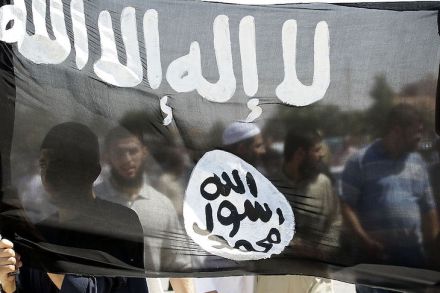
Al-Qaeda haven’t gone away, you know

“They haven’t gone away, you know.” Gerry Adams’s chilling words, uttered during the peace process, to remind everyone that the IRA still existed, would do as well for al-Qaeda, the architects of the 9/11 outrage, the 25th anniversary of which fell on Friday. Osama bin Laden’s killing in May 2011 may have removed the titular head of al-Qaeda but, neither that well-deserved death, nor the subsequent splintering of al-Qaeda from ISIS (Islamic State of Iraq and Syria) in 2014, has diminished either the virulence or potential danger that al-Qaeda presents.

al-qaeda

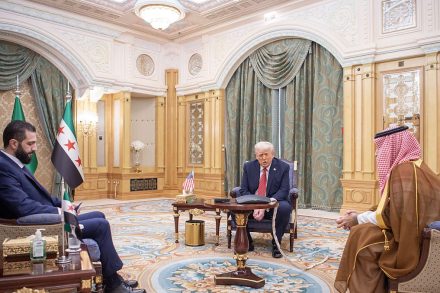
Why Trump met Syria’s interim president

Few career arcs in modern history can be as remarkable as that of Ahmed Hussein al-Sharaa – or Abu Mohammed al-Jolani, to give him the nom de guerre under which he fought American troops in Iraq back when he was a firebrand member of al-Qaeda. Twenty years ago al-Sharaa was languishing in a US military prison in Baghdad, held on suspicion of terrorism. Today, as Syria’s new interim President, he shook hands with Donald Trump posing for photo-calls alongside the de-facto ruler of Saudi Arabia Mohammad bin Salman. Trump was evidently impressed by al-Sharaa, who has swapped the turban and dusty fatigues that he habitually wore before taking Damascus by storm last winter for a plain blue suit and purple tie. “He’s a young attractive guy.

al-sharaa

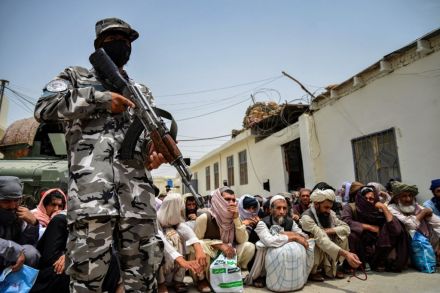
Afghan leaders say country is a terror haven

The Biden administration is using every tool at its disposal to paint a rosy picture of Afghanistan as a terrorist-free state as the two-year anniversary of its disastrous withdrawal approaches. But a coalition of Afghan generals, diplomats and civil servants is writing to Congress to explain that in reality, “today’s Afghanistan under the Taliban and their al-Qaeda allies, is again the greatest terrorist safe haven in the world.

afghan taliban

One year later, Biden is right to have left Afghanistan

A year ago today, the Taliban captured the northern Afghan city of Kunduz, dealing the US-supported Afghan government an embarrassing blow and setting in motion a blitz across the country that would eventually send Afghan President Ashraf Ghani and his closest aides into exile. A week later, Taliban fighters entered Kabul virtually unopposed. American forces would leave the country two weeks later, cutting the cord on a two-decade war that cost the US over $2 trillion and tens of thousands of casualties. "We succeeded in what we set out to do in Afghanistan over a decade ago,” President Biden said from the White House last August 31. "Then we stayed for another decade. It was time to end this war.” Much has changed since the troops left.

What happens to US fighters captured in Ukraine?

Alex Drueke and Andy Huynh are two former American military members now in Russian custody, captured by the Russians in Ukraine, where they were fighting for the Ukrainian government. What is going to happen to them? The most likely thing is that both men will eventually be traded to the US in return for captured Russians. Prisoners are very valuable and rarely wasted in executions unless those carry much more value than the prisoners held by the other side. The deal may be public or secret, and the US can expect to pay a premium. Israel usually releases ten or more Palestinian prisoners in exchange for one of its captured troops.

Noninterventionists never win arguments

I’ve been thinking about where I was on the eve of the US invasion of Iraq in 2003, and my memories of the event are quite depressing. What have we learned? As a research fellow at the Cato Institute at that time, I was working with other analysts preparing research, authoring commentaries, publishing op-ed articles and giving interviews to the broadcast media, warning about the consequences of the coming American military conquest in the Middle East. It's not polite to toot one’s own horn, but we were right.

terror

Will Biden deal with the Taliban?

When President Joe Biden tapped longtime aide Antony Blinken to be his secretary of state last November, Blinken landed his dream job. Here he was, a man widely respected in foreign policy circles, continuing the family business (his father and uncle were both ambassadors and his stepfather was an adviser to John F. Kennedy). What Blinken could have lived without, however, was the grandstanding, bravado and livid speeches from lawmakers responsible for overseeing his work. Unfortunately, fielding self-righteous questions is a part of the job description.

taliban

A new ‘War on Terror’ is a terrible idea

Does anyone in their right mind really think the ‘War on Terror’ waged by the United States since 9/11 has been a successful policy? , The terrorist group the US claimed it was most determined to destroy, al-Qaeda, has surged in strength over the last few years. ISIS sprouted in Iraq and Syria as a direct consequence of the general ‘War on Terror’ posture, which had its most egregious manifestation in the 2003 invasion. Today, the US bombs countries and stations troops all over the world with the nebulous goal of ‘defeating terrorism,’ which of course is just a tactic and can never be truly ‘defeated’ – or so we once thought.Back in the George W.

war on terror

A losing battle

From our UK edition

Foreign fighters are returning from the battlefield — not Islamists but the Americans, Europeans and South Americans who fought to rid the world of Isis. But for all their bravery, their homecoming is a tricky one because their home countries do not want them back. I have now interviewed more than a dozen volunteers. Many of them share similar stories of arrests and detentions. They have been stripped of their ability to travel, have their movements monitored, their bank accounts closed. One of them, an American, has since committed suicide. One fighter, who wishes to be known as Max, tells me in an email that he has left his home country of Denmark.

Syria Notebook

From our UK edition

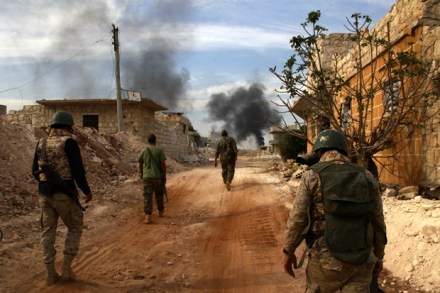
In order to avoid the Labour conference and yet more predictable media attacks on Jeremy Corbyn, I escaped late last month to Syria, where children were returning to school after the summer holidays. Large tracts of the country have recently been liberated from the control of jihadi groups, meaning that in some places children are going back to school for the first time in five years. At Sinjar elementary school in Idlib province, I found the local headmaster painting the school sign. Five years ago rebels gave him the choice of closing down or being killed. He was confined to his house while the school buildings were converted into an arsenal.

How to beat terrorism

From our UK edition

Until a few years ago, Pakistan was one of the most dangerous countries on earth. The tribal areas in the north were infested by the Taleban, whose bases stretched to within 100 miles of the capital, Islamabad. Western intelligence agencies feared that the Taleban could seize one of the country’s nuclear installations, then hold the world to ransom. Large parts of the country elsewhere were lawless or terrorised by armed groups. It would be foolish to claim that Pakistan’s security problems are over. But something extraordinary and unexpected has certainly happened. Since it fails to fit the established narrative of Pakistan as a dangerous nation, it’s gone unacknowledged in the West. Violence has not just dropped a bit.

A tale of two battles

From our UK edition

For the past few weeks, British news-papers have been informing their readers about two contrasting battles in the killing grounds of the Middle East. One is Mosul, in northern Iraq, where western reporters are accompanying an army of liberation as it frees a joyful population from terrorist control. The other concerns Aleppo, just a few hundred miles to the west. This, apparently, is the exact opposite. Here, a murderous dictator, hellbent on destruction, is waging war on his own people. Both these narratives contain strong elements of truth. There is no question that President Assad and his Russian allies have committed war crimes, and we can all agree that Mosul will be far better off without Isis. Nevertheless, the situations in Mosul and Aleppo are fundamentally identical.

Clueless in Syria

From our UK edition

The other day I was speaking to a Kurdish journalist who was held in Isis captivity for ten months. He and a colleague had had the bad luck to run into an Isis checkpoint in Syria. ‘How do you perform the midday prayer?’ they were asked after their car was waved to a halt. Unable to answer — they were not believers — they were immediately beaten around the head. Then one of the jihadis from the checkpoint was put into the back of their car and they were told to drive to the Isis base. The fighter had a pistol pointed at them the whole time, which was superfluous because he was also wearing a suicide belt. ‘Make a move and I’ll detonate myself,’ he said. ‘We’ll all die together.

The caliphate strikes back

From our UK edition

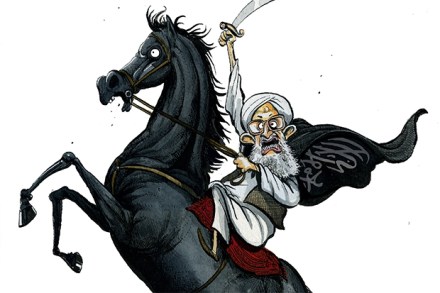
[audioplayer src="http://rss.acast.com/viewfrom22/jeremyhunt-scatastrophicmistake/media.mp3" title="Douglas Murray discusses what Isis might do next" startat=1814] Listen [/audioplayer]When the creation of a new caliphate was announced last year, who but the small band of his followers took seriously its leader’s prediction of imminent regional and eventual global dominance? It straddled the northern parts of Syria and Iraq, two countries already torn apart by civil war and sectarian hatreds. So the self-declared caliph, Abu Bakr al-Baghdadi, appeared to be just another thug and opportunist ruling over a blighted no-man’s land, little known and still less revered in the wider Islamic world.

Why I left

From our UK edition

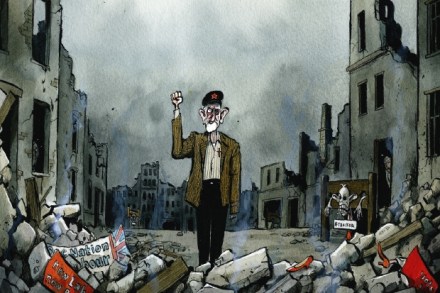
[audioplayer src="http://rss.acast.com/viewfrom22/thedeathoftheleft/media.mp3" title="Nick Cohen and Fraser Nelson discuss the death of the left" startat=32] Listen [/audioplayer]‘Tory, Tory, Tory. You’re a Tory.’ The level of hatred directed by the Corbyn left at Labour people who have fought Tories all their lives is as menacing as it is ridiculous. If you are a woman, you face misogyny. Kate Godfrey, the centrist Labour candidate in Stafford, told the Times she had received death threats and pornographic hate mail after challenging her local left. If you are a man, you are condemned in language not heard since the fall of Marxist Leninism.

Monumental heroes

From our UK edition

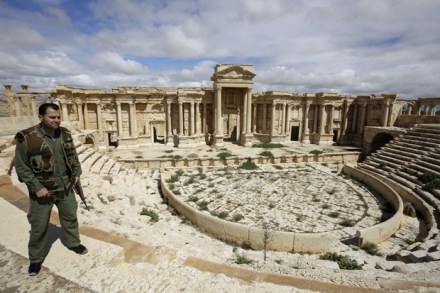
Leptis Magna was deserted when I last visited — no wonder. Tourists daren’t visit Libya these days and so I had the ruins to myself. I climbed the steps of the vast Roman theatre, looked out to where the Wadi Lebda meets the sea, then stopped. Men with AK-47s. My immediate fear was that they were Islamic State. Isis move closer to Leptis Magna every day and it would make sense for this most spectacular site to be next on their hit list. Their last great coup was on the other side of the Med, when they blew up the Temple of Baal Shamin in Palmyra, known as ‘the Pearl of the Desert’. It’s part of their cultural jihad, but they also do it for the global outrage that follows. No such thing as bad press for Isis.

Vespasian vs Islamic State

From our UK edition

As Ahmed Rashid argued last week, it is hard to see what the West is doing in the Middle East, occasionally dropping bombs on Isis, whose effect may well be to hand Syria over to al-Qaeda. The Roman general Vespasian (ad 9–79) would propose a different strategy. The Romans had never found the Jews easy to get on with — the feeling was mutual — and semi-provincialising Judea in ad 6 had not helped matters. In ad 66 a major revolt broke out there, and the legate in Syria, Cestius Gallus, was ordered to crush it. He was driven off in disorder, and in ad 67 the emperor Nero sent Vespasian with a much larger force to restore Roman control. He attacked rebel towns, dealt out punishments and took Galilee.

Barometer | 23 July 2015

From our UK edition

Gesture politics A royal home movie from 1933 apparently showed the future Queen, aged seven, and her mother giving a Nazi salute. Like the Swastika, the stiff-armed salute was not invented by the Nazis. In this case they took it from the Mussolini and his Fascists, who thought it came from ancient Rome. Three Roman soldiers are shown making such a gesture in Jacques-Louis David’s 1784 painting ‘Oath of the Horatii’.But the US beat both Nazi Germany and Fascist Italy by using the gesture to accompany the pledge of allegiance. Hitler himself claimed the salute was one of peace, saying it meant ‘Look! I am holding no weapon.

Al-Qaeda could end up the big winners in Syria

From our UK edition

[audioplayer src="http://rss.acast.com/viewfrom22/workingwithal-qa-eda/media.mp3" title="Ahmed Rashid and Douglas Murray discuss how the West is working with al-Qa'eda" startat=38] Listen [/audioplayer]After plunging Syria into five years of a bloody civil war that has killed 300,000 and displaced 10 million, Bashar al-Assad is preparing for the endgame. He has been digging a bunker for himself, creating an enclave in the mountains around the coastal city of Latakia where his community, the Alawites, are in a majority. The Iranians are helping him set up this new retreat, but his hope of hanging on to Syria is dying.

Portrait of the week | 18 June 2015

From our UK edition

Home Talha Asmal, aged 17, from Dewsbury, West Yorkshire, died in a suicide bomb attack on forces near an oil refinery near Baiji in Iraq, having assumed the name Abu Yusuf al-Britani. A man from High Wycombe, Buckinghamshire, Thomas Evans, 25, who had changed his name to Abdul Hakim, was killed in Kenya while fighting for al-Shabab. Three sisters from Bradford were thought to have travelled to Syria with their nine children after going on a pilgrimage to Saudi Arabia. Britain had had to move intelligence agents, the Sunday Times reported, because Russia and China had deciphered documents made public by Edward Snowden, the CIA employee who has taken refuge in Russia. Payments expected by customers of the RBS group of banks failed to enter accounts overnight.

Shifting sands in Saudi

From our UK edition

Whatever happened to America’s desert kingdom? In the four months since Salman bin Abdulaziz al Saud became king of Saudi Arabia, everything we thought we knew about this supposedly risk-averse US ally has been turned on its head. In a ruling house long known for geriatric leadership, the new king has pushed aside elder statesmen and seasoned technocrats alike in favour of an impetuous and uncredentialled son, Mohammed bin Salman, who may be in his late twenties. Now the world’s youngest defence minister, the princeling is already second in line for the throne, prompting grumbles from Iran’s supreme leader, Ali Khamenei, about ‘inexperienced youngsters’.

Why does Isis slay hostages? To cover up the fact that it’s losing

From our UK edition

At this point in the war between the jihadist group known as the Islamic State and a US-led international coalition, many observers are wondering how Isis keeps winning. Isis is up against western air power and powerful regional opponents, and yet has apparently seized a territory larger than the United Kingdom, and is expanding into Egypt, Libya, Algeria, Yemen, and elsewhere. It seems incredible. But the truth is that it’s difficult to say Isis is winning by any objective measure. In Iraq, the group has been put on the defensive in the provinces of Nineveh, Salahaddin, and Diyala, and may soon face a major offensive on its stronghold of Mosul. It’s true, unfortunately, that Isis is on the offensive in Anbar province, and could potentially capture new territory there.

How Islamic State commanders squeeze their hostages for every penny

From our UK edition

 Turkish/Syrian border ‘They asked $5,000 to $10,000 for every move they made. Emirs are making a living by such means’ It was Abouday’s heavy metal T-shirt that started the trouble. Two jihadis at a checkpoint said the fire-breathing dragon showed he was a devil worshipper. In fact, he worshipped only Metallica, but he did not realise the danger he was in. People had scarcely heard of the Islamic State in Iraq and Syria back then. His mother, Faten, sat weeping at her kitchen table as she told me how she had begged him not to travel at night. After being seized at the checkpoint, Abouday was interrogated by a 20-year-old ‘emir’, or commander, a man the same age as him. Faten was told he would be sentenced to memorising the Koran.

The lesson of the young men fighting for Isis: evil is in all of us

From our UK edition

I had an interesting discussion with my friend Aidan Hartley earlier this week about whether the young men fighting for the so-called Islamic State are psychopaths. (This was before the news broke of Steven Sotloff’s beheading.) Aidan is better placed than most to answer this question, having worked as a war correspondent for many years and written a classic book on the subject called The Zanzibar Chest. His view is that the Islamic radicals attracted to IS are not run-of-the-mill jihadis, but a particularly nasty sub-species. Without in any way trying to defend the activities of terrorist groups like al-Shabaab, whose handiwork he’s witnessed close up, he thinks of them as being more like the IRA.

I like the look of this exciting new Islamic State. But why don’t they want Belgium?

From our UK edition

There is something attractive about almost the whole of southern Europe being part of an immense and somewhat rigorous caliphate, as promised by the exciting Sunni Islamic movement formerly known as Isis. This new entity, stretching from Santander in what we currently know as Spain, to Cox’s Bazar on the Bangladesh and Burmese border, would handily encapsulate 98 per cent of the worst countries in the world, as defined by me out of rank prejudice, but also by various more scientific UN criteria.

Please, Cameron – no moral grandstanding over Iraq

From our UK edition

If there’s a bright spot in the murky mess of Iraq, it’s that finally we have a war that it is impossible to paint in simple terms, as a battle of good against evil. This time, even our PM, the self-appointed heir to Blair, can’t grandstand about defeating ‘terror’ or protecting ‘innocent civilians’ because there’s terror and innocence on every side. He can’t pose as world policeman; stand side by side with Obama and say ‘we must not let this evil happen’, because clearly we already have. Take ISIS, the Islamist group once affiliated to al-Qa’eda who’ve become the world’s new public enemy number one. ISIS have captured parts of northeast Syria and Iraq, and have begun to eye up Baghdad.

The new Iraq war

From our UK edition

[audioplayer src="http://traffic.libsyn.com/spectator/TheViewFrom22_12_June_2014_v4.mp3" title="Former solider Tom Tugendhat and Fraser Nelson discuss ISIS in Iraq" startat=1758] Listen [/audioplayer]Seven weeks ago, Barack Obama proclaimed that ‘it’s time to turn the page on more than a decade of war’. The people of Iraq do not have this option. They’ve seen, in Basra, Iran-backed militias take on and defeat the British military. They’ve seen highly effective jihadis, disowned by al-Qa’eda for their brutality, take control of a major city, Fallujah, just 40 miles from Baghdad. This week they have seen their second city, Mosul, fall to that same band of psychopaths.

Iran, Saudi Arabia, and the Middle East’s 30 year war

From our UK edition

[audioplayer src="http://traffic.libsyn.com/spectator/TheViewFrom22_23_January_2014_v4.mp3" title="Douglas Murray discuss Islam's 30 year war with former solider Thomas Tugendhat"] Listen [/audioplayer]Syria has fallen apart. Major cities in Iraq have fallen to al-Qa’eda. Egypt may have stabilised slightly after a counter-coup. But Lebanon is starting once again to fragment. Beneath all these facts — beneath all the explosions, exhortations and blood — certain themes are emerging. Some years ago, before the Arab ‘Spring’ ever sprung, I remember asking one top security official about the region. What, I wondered, was their single biggest fear? The answer was striking and precise: ‘That the region will clarify.

A new Islamist alliance among Syria’s rebels has given Assad the enemy he wants

From our UK edition

   Amman — Beirut — Istanbul I recently bumped into a senior officer with the rebel Free Syrian Army who was waiting in the passport queue at the Turkish border. I didn’t recognise him at first, out of uniform and without his entourage, and I told him so. He was following the example of the 7th-century Second Caliph, Omar bin al Khattab, he replied. The caliph was so humble he took turns with his servant riding a horse to Jerusalem to receive the city’s surrender. There was no imagery from Islamic history when I first met the officer a year ago. He was one of those ‘rebels’ western officials have in mind when they describe a ‘secular, moderate’ armed opposition.

The Free Syrian Army is being taken over by groups of jihadist thugs

From our UK edition

Ghadi had spent the past two years on the run from the Syrian regime but it was the rebels fighting against the government, the so-called Free Syrian Army (FSA) who finally caused him to abandon the revolution and flee Damascus. He had made the mistake of speaking out against one of the big FSA brigades running the Yarmouk district of the capital. ‘They are thieves and gangsters,’ he told me. ‘One Facebook post about what they’re doing will get you killed.’ I met Ghadi in a Beirut café, after he had made the long trek over the mountains from Syria to Beirut. Other activists joined us, all bitterly disillusioned by the corruption, looting and kidnapping that has consumed the uprising.

Ways of making men talk

From our UK edition

Eric Rosenbach is a former academic who is now deputy assistant secretary of defence in Washington. Aki Peritz used to work for the CIA and now advises the Third Way think tank. Their book, therefore, is not a breathless account of terrorist-hunting nor the sensational inside story of how, in Obama’s words, ‘We got him’ (bin Laden). Rather, it is an exposition of legal, bureaucratic, political and military developments within the US following 9/11, illustrated by summaries of how various terrorists were killed or captured. If you want thrills and spills, go elsewhere, but if you are a student of counter-terrorism or are interested in the legal limbo of rendition, detention and targeted killings, you should probably read it.

Can this man defeat al-Qa’eda?

From our UK edition

Amr Khaled’s TV preaching has made him Islam’s answer to Billy Graham – and he’s mounting a direct attack on the terror camps of Yemen Aden, Yemen There’s a new weapon in the war on terror, ladies and gentlemen. Never mind drones and spies, surgical strikes and covert ops, they’re old hat. There’s a time and a place for them, of course, and we must thank our spooks and soldiers for helping to keep us safe, for foiling plots and knocking off the odd wayward beardie in distant deserts and freezing mountain passes. But that’s not really draining the swamp.