Latest from Coffee House

Latest from Coffee House

All the latest analysis of the day's news and stories

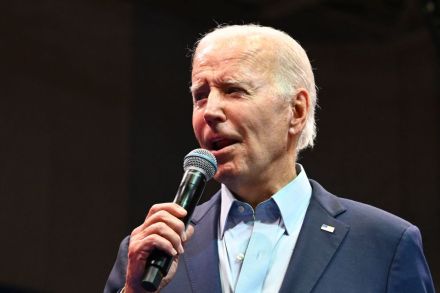
Biden will never let Silicon Valley fail

After a bank run on Silicon Valley Bank left the institution in ruins, the Federal Reserve announced it would make whole the bank’s customers, including those with uninsured deposits in excess of $250,000, which should have made them ineligible for the Deposit Insurance Fund. President Biden promised the American people that this was not a bailout because no losses would be borne by taxpayers — a claim the Wall Street Journal assessed as a “whopper.” But the debate we should be having is not over the definition of the authorities' actions, but how to judge them morally — especially given how the Fed has been trying to tame inflation for the past two years.

Poverty is a major issue in the midterms

My friend here in rural Pennsylvania is the director of our local anti-hunger program. It’s orchestrated through the YMCA and has been ongoing for years, mostly providing supplemental food for rural children. But the program started running at full throttle when Covid hit in March 2020, and now, more than two years later, my friend tells me they’re doing about 25 food distributions a month — more than they were doing at the height of Covid. What’s more, he’s seeing twice the number of people lining up for free food, and 85 percent of those people have jobs. “When people think of hunger, they think of poverty,” my friend says.

White House deletes tweet bragging of Biden’s role in inflation crisis

You know the Democrats are grasping at straws when you see the White House Twitter account praising President Biden for this year’s increased Social Security checks. Particularly, Cockburn is at pains to point out, as the increase in Social Security is indirectly indexed to inflation. "Seniors are getting the biggest increase in their Social Security checks in ten years through President Biden's leadership," the White House bragged on Tuesday. Even Twitter's in-house moderators were taken aback, deigning to slap a "context" label on the post. After helpful users added the missing context on Wednesday, the White House's tweet mysteriously disappeared. How curious!

inflation

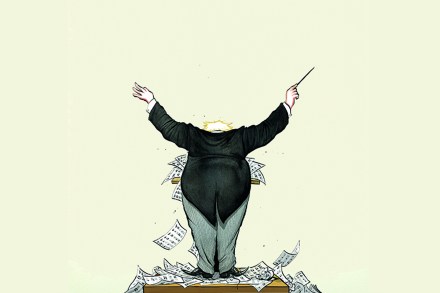
The inevitable Boris Johnson

London, England When I checked the date that Boris Johnson resigned as prime minister, I thought it must have been wrong. July? The psychodrama that ensued felt as if it had been going on for years. If Boris’s tenure was the main show, Liz Truss’s stint as Britain's shortest-serving PM was the slapdash encore that no one asked for. You know, when the music restarts as you’re eyeing up a taxi home and secretly thinking the act needn’t have bothered. Boris’s downfall, the real one — not the multiple wobbles — began with Partygate. A steady drip of salacious stories for months, each one getting slightly more unforgivable, recounting incidences of Boris and members of his government breaching the strict lockdown rules he himself had set in place.
boris johnson right neoliberalism

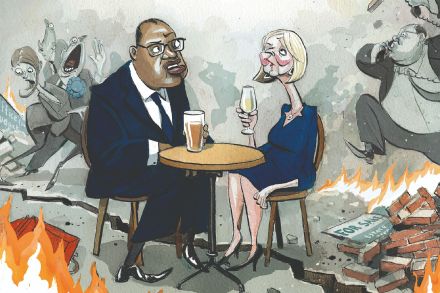
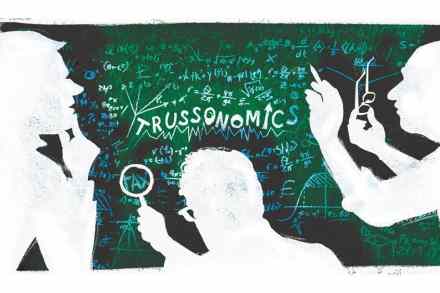
What crisis? A tough week for Trussonomics

From our UK edition

What’s the sign of a successful Budget? Chris Philp, the new chief secretary to the Treasury, gave his answer moments after Chancellor Kwasi Kwarteng’s statement last Friday: a strong pound. ‘Great to see sterling strengthening on the back of the new UK growth plan,’ he tweeted out. A (temporary) rising pound made sense to Truss supporters, who argued that markets would support their transition to a lower-tax, higher-growth economy. This was, they thought, their vindicating moment. The moment didn’t last. Within minutes, the pound had entered a steep descent and UK borrowing costs surged. But Kwarteng is not a politician who panics.

You, too, can shoot feral hogs from a helicopter with Marjorie Taylor Greene

A little bleary-eyed from not yet partaking in his morning Bloody Mary, Cockburn thought at first that he was hearing one of those Newsmax commercials for Tanto Paronto’s HD Vision Night Ops glasses. He listened more closely, and thought it might be “Top Gov” Ron DeSantis dogfighting with the corporate media. But upon closer inspection, it was something altogether more extreme: Representative Marjorie Taylor Greene’s latest YouTube video, in which she braves a lightning storm to carry a gigantic gun toward a camera, then appears to be struck by the lightning, giving her white glowing eyes à la Storm from the Marvel comics. It gets way more normal after that, don’t worry.

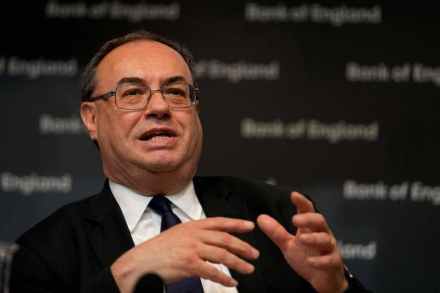
Can the Bank of England inspire confidence?

From our UK edition

It has dawned on the government that last week’s mini-Budget might have been a bit too one-sided: £70 billion worth of extra borrowing and not a single mention of spending cuts or efficiency gains has seen borrowing costs spike (up by 0.3 per cent just today). As James Forsyth reports on Coffee House, this afternoon’s announcement that a ‘medium term fiscal plan’ will be announced next month is an attempt by the Treasury to reassure markets – and convince them that fiscal responsibility has not totally disappeared from this government’s agenda. Emphasis is being placed on previous promises to make sure debt falls as a percentage of GDP in the coming years. But what about the other side of the coin?
Why the interest rate rise might frustrate Liz Truss

From our UK edition

Rising interest rates is a key pillar of Trussonomics. Liz Truss herself has always stopped short of saying this explicitly, pointing fingers instead at the Bank of England for its failure to curb spiralling inflation. But the economists advising her have made clear, in no uncertain terms, that they think interest rates have been too low for too long.  Right from the start of her leadership campaign, Truss was far more vocal about her criticisms of the Bank; a point made even clearer once she entered No. 10 and her Chancellor Kwasi Kwarteng set up bi-weekly meetings with the Bank’s governor Andrew Bailey. With this new pressure being applied on the Bank, many thought it would make history today by implementing its first 0.

The painful road to lower inflation

From our UK edition

In the end, it could have been worse. The Federal Reserve might have followed Sweden’s lead, with a whole one point rise in interest rates, or it could have even decided to short-circuit the whole process and go straight for a 1.5 per cent increase. Instead, it opted for the safer course, imposing a 0.75 per cent increase in rates much as the market expected. Even so, it made one thing absolutely clear. It is not going to let up in its battle to bring inflation back under control – and the rest of the world will have no option but to follow its lead. The markets were primed for another rise in rates from the Fed chairman Jay Powell today. That was precisely what he delivered. American interest rates will go up to 3.

Has inflation peaked?

From our UK edition

This morning’s surprise update from the Office for National Statistics shows headline inflation at 9.9 per cent on the year to August, down slightly from 10.1 per cent in July. While consumer inflation remains at a 40-year high, the drop from double digits back into single digits has the optimists whispering: might inflation have peaked? This update is no doubt good news, but this is likely to be a brief moment of calm in an ongoing storm. The slight fall in headline inflation has primarily been driven by easing fuel prices, as the cost of oil has been on a downwards trajectory. That at least is an early sign that global markets are starting to fill in the gaps created by the West’s decision to shun Russia’s crude oil supplies.

Can anything halt the pound’s fall?

From our UK edition

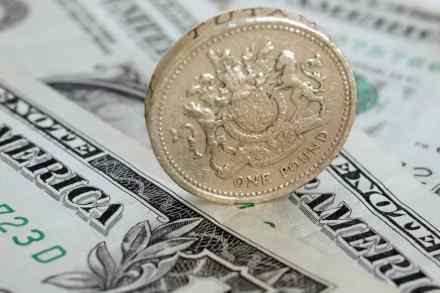
My predecessor Christopher Fildes looked at exchange rates through a cocktail glass: three negronis for the Italian lira equivalent of a tenner, good; a $2 martini for £1, even better. That latter ratio applied briefly 30 years ago when, he wrote, the favoured tipple ‘brushed against my lips like an angel’s kiss’. It recurred during the financial crisis of 2007-08, when no one was really able to enjoy it, and has never been seen since. On Monday, as Liz Truss was crowned, the pound dipped below $1.15, in sight of its 1985 all-time low of $1.05. ‘The prospect of …parity versus the dollar,’ said Bloomberg, ‘is becoming ever less outlandish.’ What cocktail of misfortunes brought us to this?

Trussonomics: a beginner’s guide

From our UK edition

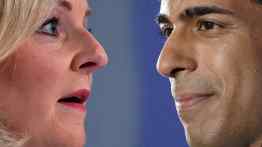
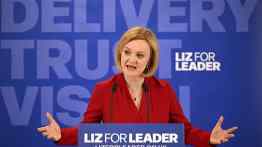
When polls started to show Liz Truss miles ahead of Rishi Sunak in the Tory leadership contest, her team adopted a cautious campaign strategy. Why gamble on another interview with Nick Robinson when last time she had struggled to name a single economist who backed her economic plans? Eventually she landed on Professor Patrick Minford, an academic at Cardiff Business School and a bullish Brexiteer. Minford went on the record calling for interest rates to rise to 7 per cent, which Truss then had to defend and deflect. But that moment in the Robinson interview, widely reported as a humiliation, turned out to be one of the most helpful points in her campaign. Within days, like-minded economists were grouping together to praise her tax-cutting agenda.

Portrait of the week: Drought in Europe, property crisis in China and barristers and binmen strike

From our UK edition

Home Inflation would reach 18.6 per cent by January and the energy price cap £5,816 in April, according to a forecast by Citi, the investment bank. An annual National Grid exercise simulating a gas supply emergency has been extended from two days to four in September. Workers at Felixstowe, Suffolk, Britain’s biggest container port, handling 48 per cent of traffic, went on strike for eight days. Strikes by Scottish dustmen spread from Edinburgh. Barristers belonging to the Criminal Bar Association voted to go on an indefinite strike in England and Wales after their demand for a 25 per cent increase in pay for legal aid work was denied. A man was charged with the murder of Rico Burton (a cousin of the boxer Tyson Fury), who was stabbed to death in Altrincham at 3 a.m.

Inflation hits double digits. Is it out of control?

From our UK edition

Long gone are the days when politicians and experts dared to claim inflation was simply ‘transitory’. Now it’s hang-on-to-your-hats as prices spiral faster than anyone predicted. This morning the Office for National Statistics reveals that headline CPI inflation hit 10.1 per cent on the year in July. This double-digit figure takes inflation to a 40-year high, outpacing consensus yet again, which was 9.8 per cent. That figure means all those horrors that have been discussed for months have become more immediate: the instability that comes with spiralling prices, the risk of stagflation, increasing fears of recession as consumers grow more cautious, not to mention the very real fear that people will struggle to afford basic necessities.

Unpicking the armed IRS agent hysteria

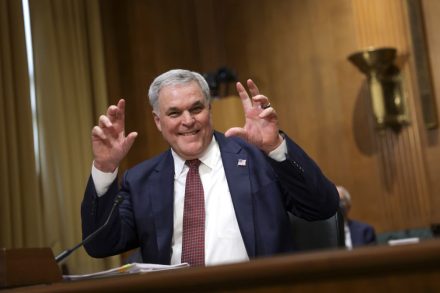
For a profession more hated than telemarketers and meter maids, last week the Internal Revenue Service put up a job ad that sounded so cool it even made Cockburn consider it. The IRS is in the market for a Special Agent, specifically one that can fire a gun and is “willing to use deadly force if necessary,” for its law enforcement division, Criminal Investigation (CI). The agency is set to double in size and is recruiting more staff following the passage of the Inflation Reduction Act, a Democratic spending bill which President Biden is set to sign today.

irs

The death of saving

From our UK edition

I was intrigued to learn from Tom Daley – that young man who became famous for jumping off a platform into some water – that homophobia is a ‘legacy of colonialism’. The Ugandan President, Yoweri Museveni, begs to differ. He believes that it is homosexuality which is a legacy of colonialism and had been brought to his benighted country by effete whitey – and so he may well think Tom is indulging in the disagreeable act of ‘whitesplaining’. However, it is possible, if not likely, that both Tom and Yoweri are correct – after all, it is difficult to be homophobic if you have around you a complete absence of homosexuals, as I have discovered since moving back to the north-east of England.

A strange kind of recession

From our UK edition

It’s possible that I owe Joe Biden some sort of an apology, however mealy-mouthed it might be. Last week I mentioned here the weird prevarication from the US government and its supporters over whether or not the US is technically in a recession. It arose from the news that the US had two successive quarters of negative GDP growth. Biden’s critics – myself included – leapt to declare the US in recession. According to the Bank of England, the UK is heading for a recession too, so there should be no especial shame in accepting the fact and then trying to deal with it. But then last Friday the US jobs figures landed and it became clear that the situation in the country is curiouser than we might have predicted. Everybody was expecting a contraction in the economy.

Is Britain really ‘on the brink?’

There’s a macabre joke in Britain these days that my friends and family also play. We compete to see who has had to wait the longest for medical treatment. It starts relatively innocuously. People talk of the ordinary things: like having to wait days to get an appointment with a doctor. They call up in the morning at 8 a.m., only to be told that all of the slots are gone. Best of luck tomorrow. Then someone will say that they’re waiting for minor surgery. Perhaps a small corrective procedure. It was put off first for the pandemic, and now is lost amid a sea of backlogged work. They wonder if someone has lost their details in the slush. Normally I win, although not always. My old general practitioner retired before the pandemic, and his practice was transferred over to another doctor.

Will there be blackouts this winter?

From our UK edition

The debate about energy has, understandably, concentrated on what is going to happen to households bills. The numbers are alarming. The energy price cap is now predicted to peak at £3,649 in April 2023, meaning that the average household bill will be above £3,000 for more than a year. As I say in the Times today, this is going to require a response from whoever is prime minister. As Covid showed, in times of crisis contracts across borders are not always honoured But less attention has been paid to the question of whether there’ll be sufficient energy this autumn and winter. National Grid is suggesting that the UK will avoid blackouts. But it is not hard to see how they could end up taking place.

Why British Gas’s owner is right to restore its dividend

From our UK edition

‘What’s worse, they’re paying the profits to shareholders,’ said a grey-haired woman ahead of me in the Co-op queue. ‘Bloody shareholders,’ her friend of similar age and class spat back. I guessed they were talking about Centrica, parent of British Gas, which at a time when domestic energy bills are rising 23 times faster than wages (as Frances O’Grady of the TUC puts it) has announced half-year operating profits of £1.3 billion, up from £262 million last year – and the restoration of a penny-per-share interim dividend after a three-year gap. Both ladies looked likely to be beneficiaries of pensions nourished by dividends from the likes of Centrica, Shell and BP.

China delayed its 2008 financial crisis until 2022

The year 2008 was consequential by many measures. The collapse of the US investment bank Lehman Brothers sparked a worldwide financial crisis. Yet China appeared to emerge out of it relatively unscratched after Beijing introduced a massive stimulus package in the world, about three times the size of the United States government's rescue program. Thanks to this expansionary fiscal policy and the easy credit that came with it, the Chinese economy quickly returned to its robust growth by growing 8.7 percent in 2009 and 10.4 percent in 2010. After 2008, the Chinese Communist Party leaders concluded that China "escaped" the financial crisis because of its outstanding leadership and the superiority of the Chinese political system over deeply flawed western democracies.

Are we in a recession? Does it matter?

Since the latest growth numbers have come out, much ink has been spilled over the question of whether the economy is in a recession. Perhaps unsurprisingly, the Biden administration tried to get out ahead of Thursday’s release with a press statement noting that back-to-back quarters of negative growth doesn't necessarily mean a recession. Also predictably, Republicans strongly rebuked the idea, saying, “You can’t change reality by arguing over definitions.” Both sides of the debate will continue to play out, and both sides will continue to miss the point. Ultimately, it doesn’t matter very much whether growth goes up or down by 0.2 percent. What matters is the general trajectory of the economy. And on that front, the Biden track record is mixed at best.

democrats abortion

Is the US in recession or not?

From our UK edition

There's an almighty debate ongoing in the US about what exactly a 'recession' is. Treasury secretary Janet Yellen said the US economy is not shrinking, saying it is in a state of 'transition', not recession. But in a clip from 2000 being circulated on Twitter that is comically apt, Bill Clinton said 'a recession is two quarters in a row of negative growth'. https://twitter.com/DailyCaller/status/1552720121445105666?ref_src=twsrc%5Etfw Regardless of who's right, the US is currently in Bill Clinton's definition of a recession. Figures show that the economy shrank by 0.2 per cent in the second quarter of this year, following a 1.6 per cent fall in the first quarter. Over the year, the US economy is now 0.9 per cent smaller than it was a year ago.

The next PM’s growing to-do list

From our UK edition

In theory, the Conservative leadership contest could have stretched to the autumn, but the 1922 Committee and CCHQ decided to crunch the timetable due to the sheer number of crises facing the country. So Tory MPs had only a fortnight to choose the final two candidates, which did perhaps change the course of the race. Given the support that Kemi Badenoch managed to raise in a short period, it is not hard to imagine her being in the last two if she had been given more time to make her case. A longer contest would also have allowed the Tories more time to think about what changes they need to make if they are to win a fifth term. But for all the problems posed by a short competition, the essential logic of that judgment holds.

Trussonomics doesn’t add up

From our UK edition

I’ve been lucky enough in my working life so far to hold a string of jobs that have allowed me – if not actively encouraged me – to be critical of government. Coming up through Westminster thinktanks in my twenties, I had great fun putting out press releases that tore apart bad public policy. When I had the opportunity to speak to MPs, they’d remind me of the ‘political realities’ that tied their hands and prevented change. In other words, check your policy privilege. Thinktank wonks, commentators and journalists can make all the punchy points they want; they don’t face re-election.

How Biden made the energy crisis worse

During the course of my daily media interviews, one of the most frequent questions I hear is, “when will things get better?” Being the bearer of bad news is frustrating, but unfortunately that’s all I see for the next few years. Following the basic laws of economics, energy prices can only come down based on two factors: increase the supply or decrease the demand. They may not like to admit it, but President Joe Biden and his team understand the need for a supply increase. It explains the president's trip to Saudi Arabia to ask their king to increase oil production. He has dispatched envoys to Venezuela and Iran for the same purpose. Unfathomably, his administration continues its relentless attacks on domestic oil production.

energy

The problem with euro-dollar parity

From our UK edition

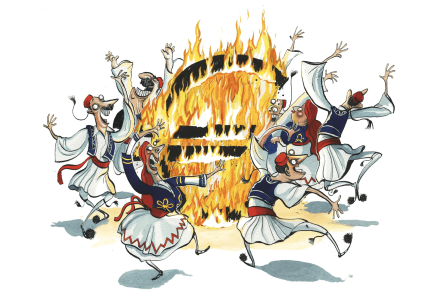
The euro is nearly level with the dollar. It should not matter in theory, because of the relatively low share of the US in EU trade. But it does in practice. Some predict that the euro will fall below parity. There is a straightforward explanation for this: the war in Ukraine and unpredictable Russian gas supplies to Europe make the dollar a safe haven for investors. On top of this, US interest rates offer a higher return on investment. But it is not only the dollar. Looking at the broader picture, the European Central Bank's measure of the euro's real effective exchange rate against 42 partner countries confirms this trend towards a new historic low: really bad news comes from the combination of the euro's falling value, the energy crisis, and the return of inflation.

The numbers are in: red states are winning

Americans are voting with their feet and the results are in: red states are winning. An incredible 46 million people moved to a new ZIP code over the year to February 2022, the highest annual total since Equifax, a credit agency, began tracking moves in 2010. Republican-leaning red states gained the most residents — led by Florida, Texas, and North Carolina — while the blue states of California, New York, and Illinois were the biggest migratory losers. The most popular pandemic-era moves were from New York to Florida and California to Texas — so much so that U-Haul ran out of moving trucks leaving California last year. Given the chance to flee high-cost cities, Millennials did so in droves.

desantis

Is our card-only culture fuelling inflation?

From our UK edition

Is anything anywhere getting noticeably better – economically speaking – or at least less bad? Are commodities and manufactured goods beginning to move more freely, for example, to ease the demand pressures that are stoking inflation? It’s good news that the number of container ships anchored off Los Angeles-Long Beach waiting to unload has fallen from more than 100 in January to around 20 at the latest count, but I note also that dockers there are demanding a 10 per cent pay rise. Drewry’s World Container Index – the handiest indicator of global shipping costs – has fallen 32 per cent from its peak last autumn, but remains five times higher than in the autumn of 2019.

Runaway inflation is proving costly for Turkey’s oil-wrestlers

From our UK edition

Edirne, Turkey There is a distinctive sound that an oiled-up palm makes as it slaps against an oiled-up pair of leather shorts. Both squelchy and sharp, this noise rings around the Thracian town of Edirne each July as it hosts Turkey’s biggest oil-wrestling championship. As the name suggests, contenders are greased up with either olive, corn or sunflower oil before they start to fight. The competition begins with a languid ritual in which the wrestlers stomp around each other, touching the ground and themselves before commencing their tussle. The winner must then flip his opponent on to his back, often by reaching into his shorts and grabbing hold of a tag sewn into the lining. It may look like a novelty event put on for tourists, but oil-wrestling is centuries old.

Letters: Why do we bully PMs’ wives?

From our UK edition

Strong leaders Sir: Freddy Gray states that ‘voters seemed most enthusiastic about the leaders who removed their liberties’ (‘Leaderless’, 18 June). I believe people just like to see their government take strong measures. People like to see the effect of a government policy straight away, especially in a crisis. This is probably the reason so many Americans like the idea of Trump’s wall. It is an immediate and physical solution to a large problem that can be seen and felt, even if it is not necessarily the best solution.

Where’s Boris’s plan to stop the economic chaos?

From our UK edition

Interest payments on the national debt rose 70 per cent last month to £7.6 billion (compared with a year earlier) – largely because of the impact of inflation on income paid to holders of index-linked gilts, which are inflation-protected government bonds. More worryingly, this was 49 per cent more than the official forecast made in March by the Office for Budget Responsibility (OBR). It suggests the OBR’s forecast that the government will have to pay £87.2 billion in interest payments (a colossal sum) may be too low, especially since the ONS is not factoring in the most recent inflation figures in its calculations of the monthly bill.

The real plan for inflation? To let it rip

From our UK edition

Check out these hyperventilating headlines from last week: ‘What the Fed’s largest interest rate hike in decades means for you’ (PBS.org). ‘Federal Reserve interest rate hike opens new era for economy’ (Washington Post). ‘The Fed delivers biggest rate hike in decades to fight inflation’ (National Public Radio). ‘Fed goes for inflation’s jugular with 75bps rate hike’ (Schwab). While it’s true that the US Federal Reserve has not hiked its funds rate by 0.75 percentage points in one go since 1994, the figure prominently missing from those bug-eyed bulletins, and bizarrely unmentioned in all the television news coverage of this ostensibly bold move that I encountered, is what the Fed raised its interest rate to: a miserable 1.

Boris Johnson’s inflation contradiction

From our UK edition

As Boris Johnson tries to limit pay rises to bring down inflation, ministers have no explanation for why planned rises in the state pension and benefits would be less inflationary than increasing teachers’ and nurses’ pay. The government is attempting to limit public sector pay to 3 per cent, while allowing pensions and benefits to rise to around 10 per cent.  This is not to argue against protecting the poorest through the standard indexation of pensions and benefits. But it is to say that Mr Johnson’s pay policy is confusing. And he cannot pretend there is no pay policy. Even refusing to engage directly in pay talks with rail workers – despite owning the network and funding services – is a policy.