Latest from Coffee House

Latest from Coffee House

All the latest analysis of the day's news and stories

What I saw in the French riots

It’s the third week of the student-led protests in Lyon, and the second that my university has been blockaded “in solidarity.” When clouds of tear gas drift onto my street on Saturday, it’s an almost routine sight. My neighbor across the road is sitting by his window, eating potato chips, pointing out some of the more family-friendly placards to his toddler. Smartly dressed shoppers move through the crowds with scarves as improvised gas masks. I decide to make myself some porridge.   I am interrupted by a series of heavy thuds. Out of my window I see a group of balaclava-clad men taking turns to launch themselves at my neighbor’s front


lyon french riots

The Palestine flag has become the symbol of anti-West hatred

Given that the French-speaking world gave us the science of semiotics, they would be the first to recognize that the Palestine flag, as it is being hoisted and brandished across the French republic at the moment, has come to signify something far more than the aspirant state of Palestine. You don’t have to be Ferdinand de Saussure to appreciate that this signifier has become unmoored from its original meaning. You don’t have to be Roland Barthes to see that this emblem has now assumed a wholly mutated significance: in short, it has become an all-encompassing symbol to denote hatred of the West and of European civilization.

Who will condemn Saudi Arabia’s Islamic barbarism?

On Wednesday, Saudi Arabia executed a Bangladeshi man and woman over an “indecent act” inside a mosque in Mecca. While the Saudi interior ministry hasn’t specified the “indecency,” and some reports suggest that the two had kissed within the parameters of the Islamic worship place, the kingdom mentioned “adultery” as the offense in its prisoner list sent to the Bangladeshi consular general. Nonetheless, for any extent of “indecency” to be deemed a crime worthy of capital punishment is a barbaric affront to humanity.

France is far too soft on crime

France experienced its first night of calm since the weekend on Monday evening after the imposition of curfews in several cities and towns. The Prime Minister, Sebastien Lecornu, said he is “absolutely determined to restore order” in the wake of the weekend’s urban warfare that stunned the Republic. Lecornu delivered his promise after a crisis meeting in which a series of measures were discussed. While the Premier held back from declaring a state of emergency – for the time being – Lecornu said the curfews in cities such as Paris, Nice, Lyon and Lille were necessary. Rioters are rarely jailed and so far the sentences given to those arrested on Saturday have been derisory “The French get the impression that it's chaos everywhere,” said Lecornu.

Is a robot running the Fed?

We recently learned that Donald Trump has been taking guidance from Grok, Elon Musk’s chatbot best known for enabling nude images of real women. As Time magazine reported: In December 2025, Elon Musk returned to the Oval Office for a clandestine meeting. Trump spent hours asking Grok, Musk’s AI chatbot, questions about his presidency and legacy… He asked Grok how Venezuelans would react if the U.S. captured Maduro… the chatbot responded that Maduro was a repressive and deeply unpopular dictator and that many Venezuelans would likely celebrate his downfall. After Trump ordered the mission to seize Maduro, the following month, celebrations broke out in the streets. Trump, according to officials, came away thinking Grok was ingenious.

Americano Presents

Is libertarianism dead? Daniel McCarthy vs Robby Soave

Who lives in the countryside?

From our UK edition

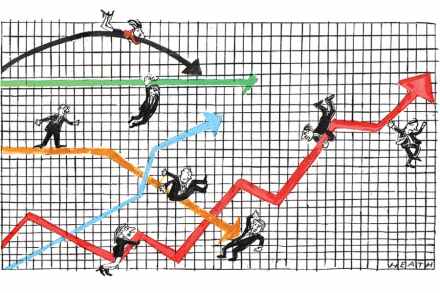
The recession relationship There are fears that the US and UK may both be heading for a recession. Has the US ever suffered a recession which did not spread to Britain? Since the Great Depression of the early 1930s there have been 16 identifiable periods in which the US met the usual definition of a recession (two consecutive quarters of negative growth), the most recent being in 2022. Britain has seen only ten such periods – even though its economy has grown by less overall. Periods when the US saw a recession but Britain did not include 1937-38, when the US economy shrank by 18 per cent over a year, 1945, 1949, 1953, 1958, 1969-70, 2001 and 2022. The UK suffered recessions not shared by the US in 1956 and 2023.

jerome powell

Powell pays for past mistakes

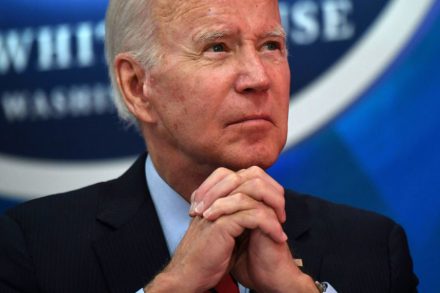
Powell pays for past mistakes In the summer of 2020, Fed chair Jerome Powell could not have been clearer. “We’re not thinking about raising rates,” said Powell, before doubling down: “We’re not even thinking about thinking about raising rates.”   Things, as we now know, turned out a little differently. The months marched on, and with the Biden administration determined to spend, spend, spend, inflation went from “high class problem” to “transitory” to the biggest problem facing the US economy. Powell and his Fed colleagues went from not thinking about thinking about raising rates to, well, raising rates. From virtually zero around this time last year to 4.75 percent as of January.

Joe Biden

Coronavirus keeps the spotlight on Trump and away from Joe Biden

Well, well, well. There was former White House press secretary Sean Spicer at today’s press conference in a new incarnation as Newsmax reporter. Looking much better tailored than when he was press secretary — Trump was apparently livid about his schlumpy appearance back then and a GoFundMe campaign was launched to buy him fresh habiliments — Spicer was looking quite the dandy, or about as dandyish as he can get: checked jacket, pocket square, shirt and tie all of which appeared to be various hues of purple. For the most part, Spicer’s posture towards Trump remained unchanged, which is to say that he was as cringing as ever. 'Mr President, two questions if you’ll indulge me,' he said. Trump indulged.

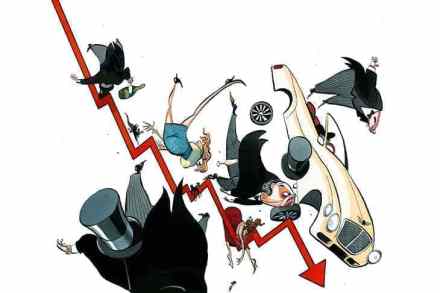
Recession? What recession?

The stock market, traditionally a leading indicator, entered correction territory last week. But does that indicate that a recession is coming? Well, it’s an old saying on Wall Street that the market has predicted ten of the last three recessions. Markets hate uncertainty, and no one knows how President Trump’s efforts to use American tariffs to force our trading partners to lower theirs will turn out. But foreign trade is increasingly important to all countries, so it’s likely that, after some political Sturm und Drang, deals will be struck and international trade will continue the strongly upward path it has been on since the end of World War Two. By definition, a recession is two consecutive quarters of contraction.

shares

Can the MAGA coalition survive a recession?

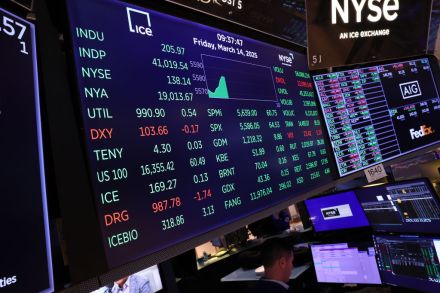
The color red splashed across every news channel yesterday, as Donald Trump’s seemingly blasé attitude towards a possible recession wiped $4 trillion off the United States’s stock market. All day and all night, the airwaves were dominated by talk and speculation over the future of the US economy, as the President pushes forward (and pulls back) certain parts of his tariff agenda.  It’s the sheer uncertainty that has investors spooked, leading to one of the worst days on Wall Street in years. The details of this “period of transition” for the economy that the President alluded to are so vague, and so unclear, that you can make of the comments almost whatever you want.

recession

The corona stimulus shows we’ve learned the lessons of the crash

From our UK edition

The Bank of England hasn’t wasted time getting in front of the coronavirus, and its actions this morning show how far things have moved from the days of Mervyn King. Perhaps more interesting than the interest rate cut is the Bank’s moves to quickly free up the best part of £200bn of lending capacity for UK businesses, particularly small firms who are entirely reliant on banks for funding. The idea is to create a firebreak, to make sure economic malaise doesn’t lead to businesses failing through lack of working cash flow. Fewer restaurants and hotel customers, a fall in those travelling, and more people working from home will all put pressure on businesses who need day-to-day income to cover their costs.

Trump or Biden? A dreadful choice

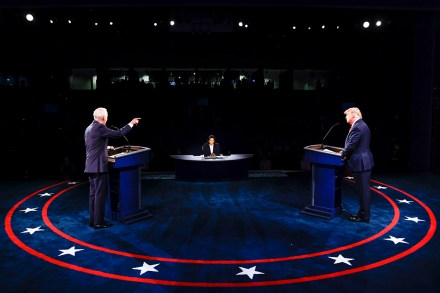
“What a revoltin’ development this is.” That catch phrase from the 1950s sitcom The Life of Riley succinctly describes America’s political morass today. It sums up Washington’s diddling over the debt ceiling, the administration’s inability to close the southern border and, most of all, the dismal quality of the two presidential frontrunners. The phrase, “what a revoltin’ development,” was Chester A. Riley’s description of his woeful situation at the end of each episode — sitting on his front steps, bemoaning his fate over the consequences of some bad decision or ill-conceived scheme. Then, we sympathized as viewers. Now, we identify as American citizens, looking at the country’s leadership. Let’s begin with the sitting president.

debate bruises biden trump

Britain is teetering on the edge of recession

From our UK edition

One of Liz Truss’s suggestions on the leadership campaign trail was that her economic agenda could avoid recession. But one of the (many) gambles attached to these comments was what had already happened to the economy before she entered No. 10. This morning we got some more insight about how the economy fared over the summer, as the Office for National Statistics revealed that GDP grew by 0.2 per cent in July: a small uptick, following a 0.6 per cent contraction in June. The small, but still positive, growth was mostly a result of a boost to services industries, which fell by 0.5 per cent in June, with the largest contributing sectors including computer programming, consultancy and telecommunications.

Is Britain really ‘on the brink?’

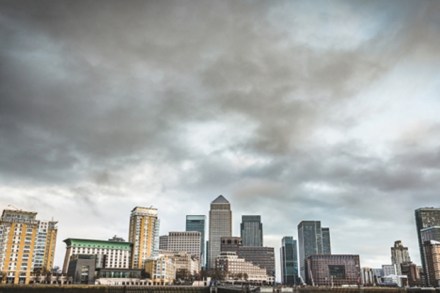
There’s a macabre joke in Britain these days that my friends and family also play. We compete to see who has had to wait the longest for medical treatment. It starts relatively innocuously. People talk of the ordinary things: like having to wait days to get an appointment with a doctor. They call up in the morning at 8 a.m., only to be told that all of the slots are gone. Best of luck tomorrow. Then someone will say that they’re waiting for minor surgery. Perhaps a small corrective procedure. It was put off first for the pandemic, and now is lost amid a sea of backlogged work. They wonder if someone has lost their details in the slush. Normally I win, although not always. My old general practitioner retired before the pandemic, and his practice was transferred over to another doctor.

Is Britain really heading for a Brexit recession?

From our UK edition

The sense of excitement among some Remainers is almost palpable. Finally – after three years of waiting – a quarter of negative growth has materialised following all the grim warnings of Brexit-related economic turmoil. The Office of National Statistics (ONS) this morning released its first estimate for economic growth for the second quarter of this year, which has come out at minus 0.2 per cent. That counteracts unexpectedly strong growth in the first quarter of 0.5 per cent. Manufacturing, which shrank by 2.3 per cent, was the worst-performing sector of the economy. The dominant services sector expanded but only just, at 0.1 per cent.

The 2007 financial crash changed all our lives for the worse

From our UK edition

It started as displacement activity, my immersion in the market mayhem of the summer of 2007. I was at home looking after my wife Sian Busby and our youngest child. Sian had just been diagnosed with a horrible cancer, and was recovering from radical surgery. She did not want a fuss. And did not want our friends to know the seriousness of what had happened. So in the absence of being able to talk about it, I needed a distraction. So in the study across the hall from where Sian was convalescing, I tried to work out what the hell was happening in global debt markets. What I needed to understand was the mounting mistrust of investors for all manner of what were called asset-backed securities, especially those manufactured from low quality loans to US home buyers, or subprime loans.

China delayed its 2008 financial crisis until 2022

The year 2008 was consequential by many measures. The collapse of the US investment bank Lehman Brothers sparked a worldwide financial crisis. Yet China appeared to emerge out of it relatively unscratched after Beijing introduced a massive stimulus package in the world, about three times the size of the United States government's rescue program. Thanks to this expansionary fiscal policy and the easy credit that came with it, the Chinese economy quickly returned to its robust growth by growing 8.7 percent in 2009 and 10.4 percent in 2010. After 2008, the Chinese Communist Party leaders concluded that China "escaped" the financial crisis because of its outstanding leadership and the superiority of the Chinese political system over deeply flawed western democracies.

Are we in a recession? Does it matter?

Since the latest growth numbers have come out, much ink has been spilled over the question of whether the economy is in a recession. Perhaps unsurprisingly, the Biden administration tried to get out ahead of Thursday’s release with a press statement noting that back-to-back quarters of negative growth doesn't necessarily mean a recession. Also predictably, Republicans strongly rebuked the idea, saying, “You can’t change reality by arguing over definitions.” Both sides of the debate will continue to play out, and both sides will continue to miss the point. Ultimately, it doesn’t matter very much whether growth goes up or down by 0.2 percent. What matters is the general trajectory of the economy. And on that front, the Biden track record is mixed at best.

democrats abortion

Is the US in recession or not?

From our UK edition

There's an almighty debate ongoing in the US about what exactly a 'recession' is. Treasury secretary Janet Yellen said the US economy is not shrinking, saying it is in a state of 'transition', not recession. But in a clip from 2000 being circulated on Twitter that is comically apt, Bill Clinton said 'a recession is two quarters in a row of negative growth'. https://twitter.com/DailyCaller/status/1552720121445105666?ref_src=twsrc%5Etfw Regardless of who's right, the US is currently in Bill Clinton's definition of a recession. Figures show that the economy shrank by 0.2 per cent in the second quarter of this year, following a 1.6 per cent fall in the first quarter. Over the year, the US economy is now 0.9 per cent smaller than it was a year ago.

Biden’s energy policy is sending us toward recession

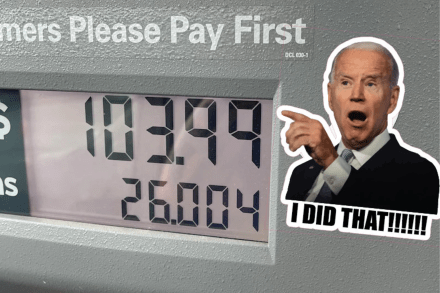
With the travel-heavy Memorial Day weekend upon us, the fast-rising cost of gasoline is getting a lot of attention. Last week, gasoline rose above $4 a gallon in all fifty states. That’s the first time that has happened. Some are predicting gas could reach $6 a gallon this summer. If that comes to pass, the average American family could see a major impact on their budgets. (It might be noted as well, that the price of home heating oil has nearly doubled this year. If that continues, the economic impact next winter, especially in the northeast, where a high percentage of homes are heated by oil, will be considerable.) The threat of a recession is rising thanks to fuel shortages. Why has the price of gasoline risen so far so fast?

gas

Enough with the 1970s comparisons

The media are abuzz these days about a purported “return to the 1970s.” Generally speaking, such chatter is not intended kindly, for many today would likely agree with the sardonic assessment of the Seventies made by the editors of New West magazine as that decade wound down: “It was the worst of times, it was the worst of times.” And not just because of the popularity of bell-bottom pants, platform shoes, and disco music. In the Seventies, we had problems far more troubling — more troubling even than the pop group ABBA. For starters, we saw a quadrupling of real oil prices between 1973 and 1979. We suffered high rates of both inflation and unemployment, which hitherto varied inversely, leading to the creation of the portmanteau “stagflation.

1970s

Australia shows the cost of zero Covid

From our UK edition

The UK is growing at the fastest pace in 80 years. The United States, fuelled by President Biden’s stimulus programme, is expanding at a breath-taking pace, while Sweden is growing at a rapid rate. Most of the global economy is bouncing back from the Covid recession at remarkable speed. There is, however, one exception. Australia. What has long been one of the most successful economies in the world is heading back not just into lockdown but into recession as well — and giving the world a sharp lesson in the cost of ‘zero Covid’. Over the last year, Australia, along with New Zealand, has been heaped with praise for the way it has managed to keep Covid-19 under control. There is, of course, plenty of justification for that.

Ignore the gloomsters, the economy is roaring back

From our UK edition

The horror! Yesterday we discovered that UK economic output — as measured by GDP — fell by 1.6 per cent in the first quarter of the year, 0.1 per cent worse than the 1.5 per cent originally reported. This is practically a rounding error. To put it in context, as recently as March the Office for Budget Responsibility, which crunches the numbers for the Chancellor, was forecasting that GDP would fall by 3.8 per cent in Q1. As well as still beating these gloomy expectations, the latest figures are also old news. But if anything, the detail is encouraging. The downward revision to headline GDP was largely due to a bigger decline in consumer spending than first thought, mirrored by an upward revision to household saving.

Why aren’t we in a recession?

From our UK edition

Well, that’s alright, then — we’re not going to have another recession. True, the Bank of England’s monetary policy committee expects the economy to shrink by 4 per cent in the first quarter of this year — following a fall of 9.9 per cent fall last year, itself the deepest plunge in economic growth in modern times. By the spring, we may have several million unemployed as the furlough scheme comes to an end. Many thousands of businesses could go bust as they run out of money and government help is withdrawn. But at least we won’t be in recession: because that ended last June and now we’re back in an era of economic growth. No, it doesn’t make a lot of sense to me, either.

Is Britain heading for the worst economic hit in Europe?

From our UK edition

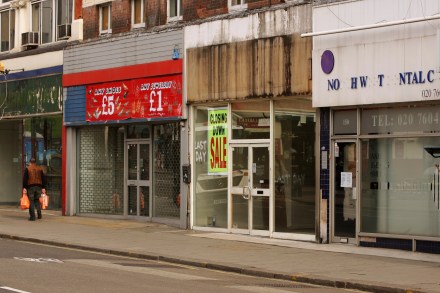
It’s odd to read headlines today saying that the UK has officially entered recession. We’ve known this for months: shops were closed, restaurants shuttered. You couldn’t get a cup of coffee or a haircut, offices were closed and millions furloughed. These were not normal times – but we knew that then, as we know it now. What we didn’t know was how far the economy had contracted, and how much this could be remedied by ending lockdown. The big news today, revealed by official figures released by the Office for National Statistics this morning, starts to answer this. It turns out that our economic hit was one of the hardest in Europe. UK GDP fell 20.

The coronavirus crisis reveals the misery of ‘degrowth’

From our UK edition

This is an economic horror show. According to YouGov, UK unemployment may have jumped five per cent in a matter of weeks. The consultancy CEBR estimates that global GDP may shrink by twice the rate seen in the Great Recession. This may be the worst hit to British people’s livelihoods since the Great Depression of the 1930s. Except one thing is different: this is a deliberate economic shutdown, made necessary to avoid a deeper, more human one. It isn’t that the economy is failing to work because the credit system has seized up as in 2008. We are actively contracting productive work in order to limit a tragedy. A recession it will be, but it is our choice in a time of acute crisis, demanding Herculean lifting and leadership by the state.

We’re all Chinese now

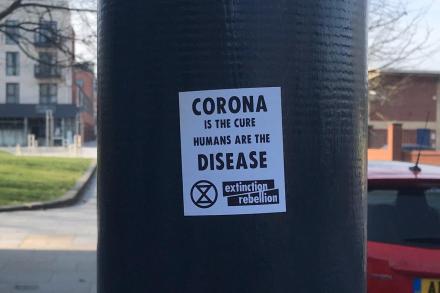
I didn’t know this was what they meant by ‘cancel culture’. Sports events, theatre shows, plane flights, weddings, funerals: everyone is in a mad rush to cancel everything. Governments are ordering citizens to remain indoors, with Spanish police even deploying drones to catch miscreants. I don’t know whether it is the best way of tackling coronavirus — the UK government, which has gone to greater lengths than others to explain the scientific modeling behind its decision-making, has come to the conclusion that banning things and forcing the entire population into lockdown will have minimal effect and may even be counter-productive, at least at this stage. But it is going to cause a global recession, if not depression.

chinese

Market hysteria is not all down to coronavirus

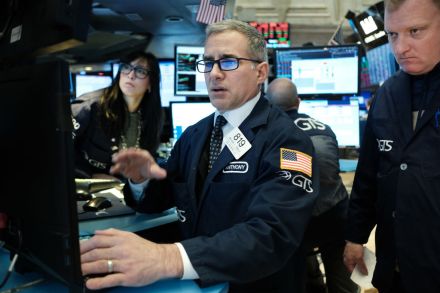
Is this really about a virus? Oil has plunged 30 percent, the S&P Index seven percent. What is happening on the markets today has less the feel of a rational reaction to world events than one of the periodic panics which grips world markets — with coronavirus a mere excuse for a sell-off which was perhaps coming anyway. The deadliest words for world markets are not ‘coronavirus’ and ‘Covid-19’ but ‘decade-long bull market’. The latter idea has planted in many investors’ heads that the good times could not have gone on much longer — there had to be a correction or crash. It is true, as well, that the US, in common with many developed countries, has not suffered a recession for over 10 years. That, too, feels unnatural.

market

Why didn’t the experts warn us about the Remain Recession?

From our UK edition

The economy would tank. Trade would collapse. Unemployment would soar, and house prices would sink. In the run-up to the referendum, and in the three years of tortured negotiations about leaving since then, we heard lots of dire warnings about what would happen to the economy if we left the EU. And yet we heard very little from the same experts - the Bank of England, the CBI and so on - about what would happen if we didn't leave at the end of March. And yet it turns out that the British economy has contracted sharply, not because we left the EU, but because we didn’t leave. We are heading into a Remain Recession, and the only fix for it now is to finally complete our departure. According to figures out today in April the British economy shrank by 0.

If it takes a credit card to live like Kim Kardashian, then so be it

From our UK edition

Recent figures around the UK’s credit and debit card debt are startling indeed, with the number of transactions rising to its highest annual rate since 2008. This, paired with the fact that household income has barely changed over the last decade, has left financiers scared that the UK is on the verge of another recession. Some politicians will blame the government for the current situation. They will say that years of ‘austerity’ forced the British public to buy things with money they didn’t have. Though it is true to an extent that cuts have pushed many towards credit, it is not the whole picture. Relaxed attitudes towards lending have to be blamed, too, particularly among the young.

Crunch time

From our UK edition

For anyone considering a career in economic forecasting, the Bank of England’s inflation report for August 2007 ought to be required reading. A graph illustrating its Monetary Policy Committee’s ‘best collective judgment’ of annual economic growth two years ahead is fixed around a central prediction of 2.5 per cent, with extreme boundaries of 0.8 per cent and 4.2 per cent. But after two years, economic growth was running at –5.6 per cent, and the economy had just completed its fifth consecutive quarter of negative growth. The finest minds of Threadneedle Street could not see two years ahead.

Britain’s borrowing binge – not Brexit – should be the big worry for the Bank of England

From our UK edition

So, the Office of National Statistics has confirmed that the economy grew by 0.7 per cent in the last quarter of 2016, and by 1.8 per cent over the course of the year. Can we now please stop worrying about a post-Brexit recession and worry instead about an unsustainable consumer boom fed by interest rates which remain at panic levels. The bad news this morning is that the UK saving ratio – which is an estimate of the percentage of their income which households are saving – has fallen sharply from 5.3 per cent to 3.3 per cent. That takes it lower than it was a decade ago, just before the financial crash, and indeed is the lowest level measured in half a century. As Helen Nugent wrote here yesterday,  consumers are piling on credit card debt at the fastest rate in a decade.

Today’s GDP figures show the ‘inevitable’ Brexit recession wasn’t so inevitable after all

From our UK edition

So now we know. The recession that we were told would be ‘inevitable’ if we voted to leave the EU was not quite so inevitable after all. In fact, it hasn’t happened at all. The Office of National Statistics’ first estimate of economic growth for the third quarter has the economy growing by 0.5 per cent. Though this is just an early estimate and could well be revised – revision upwards or downwards of 0.1 to 0.2 per cent are perfectly normal – it is certainly not indicating a recession, which would be two quarters of negative growth. It is pretty much in line with how the economy was growing prior to the vote – a healthy annualised growth of around two per cent.

The Treasury dishes up more Brexit fearmongering. Will it work?

From our UK edition

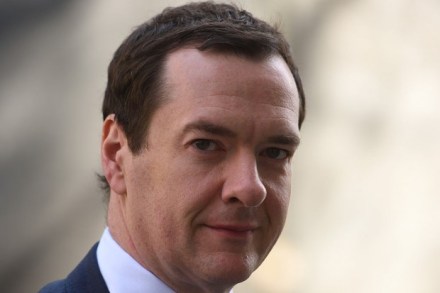
It’s now exactly one month until the EU referendum and the Treasury has marked the moment with another economic warning about the consequences of Brexit. The analysis out today claims that walking away from the European Union would kick-start a year-long recession. Brexit would also lower the country’s economic growth down by 3.6 per cent, according to the analysis. Although George Osborne must be nearing the point of running out of words to describe the economic ramifications of Brexit, in an article in the Daily Telegraph, Osborne and Cameron had this to say: ‘It is clear that there would be an immediate and profound shock to our economy. The analysis produced by the Treasury today shows that a vote to leave will push our economy into a recession that would knock 3.

Land of the Donald

From our UK edition

[audioplayer src="http://rss.acast.com/viewfrom22/donaldtrumpsangryamerica/media.mp3" title="Freddy Gray talks to Isabel Hardman about Donald Trump's angry America"] Listen [/audioplayer]It was, in the end, the best possible night for Donald Trump. On Super Tuesday, 11 American states voted for Republican and Democratic presidential candidates. Trump won seven. That was enough to ensure he remains easily the frontrunner, but not enough to persuade his opponents to coalesce around one of his rivals. Had he won nine or ten, the Republican party might have fallen in behind the man in second place, Ted Cruz. As it turned out, Marco Rubio, the last establishment man standing, won one state, which has encouraged him to keep fighting.

The debt monster

From our UK edition

Just after last year’s general election, George Osborne delivered a budget that he hailed as proof that his policies were working. ‘The British economy I report on today is fundamentally stronger than it was five years ago,’ he crowed, as he started to detail the record number of jobs created and a growth rate that had accelerated past our neighbours. ‘Our long-term economic plan is working. But the greatest mistake this country could make would be to think all our problems are solved.’ As it turns out, this final sentence summed things up the best. There was growth but a whole lot of debt as well. The national debt today stands at £1,580 billion, some 50 per cent more than the Chancellor inherited.

Apocalypse now? Markets seem set on a self-fulfilling prophecy

From our UK edition

All this talk of a new financial apocalypse, so soon after the last one, is starting to annoy me. Partly because investors as a crowd are so irrational; -partly because so much that governments and central banks have done to contribute to the current market mayhem seems to work against the sensible efforts of ordinary folk to build a bottom-up recovery. Markets first. We’ve had hissy fits about China, even though connections between the Chinese and UK economies are so marginal. We’ve had near-hysteria about the prospect of (and in the US, the start of) rising interest rates.

From Celtic tiger to pussycat

From our UK edition

After a healthy Irish lunch I drove blithely off through the streets of Roscrea, I think it was, to find that everywhere I went the populace was cheerfully waving at me, smiling, gesticulating or blowing horns. When I stopped to ask them why, I found that I had left on the roof of my car a wallet containing my entire worldly wealth, cash, credit cards and all. So paradoxically enjoyable was all this, so irresistibly amused and sympathetic were the bystanders, that I came to think of the event as a sort of leitmotif of my visit to Ireland. For whatever else has happened to the Republic, through it all the populace has remained fun, quick, laughing and kind to foolish visitors.

Jobs miracle or low-pay disaster? Andrew Lilico and David Blanchflower debate

From our UK edition

Dear David, From Q2 1979 to Q1 1981, quarterly real GDP fell in the UK by 5.5%. Unemployment rose rapidly, from 1.4m in Q2 1979 to 2.4m by the end of the recession, then continued rising through to its peak of 3.3m in 1984 – 12% of the workforce. Unemployment stayed above 3m for 51 straight months. This is the pattern economists expect in a serious recession. Unemployment rises, then stays persistently high, falling back only well into the recovery. It has also been the experience of much of the developed world since the Great Recession of 2008/09. So, for example, whereas US unemployment was below 5% in 2007, it rose to about 10% in 2010, falling back only gradually over several years thereafter. Similarly, in Spain unemployment rose from 8.4% in 2007 to 27% in 2013.