Economy

  • AAPL

    213.43 (+0.29%)

  • BARC-LN

    1205.7 (-1.46%)

  • NKE

    94.05 (+0.39%)

  • CVX

    152.67 (-1.00%)

  • CRM

    230.27 (-2.34%)

  • INTC

    30.5 (-0.87%)

  • DIS

    100.16 (-0.67%)

  • DOW

    55.79 (-0.82%)

What was the point of Trump’s diesel deal with Russia?

Donald Trump’s telephone call with Vladimir Putin last Friday was supposed to be about a suspected outbreak of plague in Russia, but it ended, as their conversations tend to, with a deal. Russia, the President announced, would supply America with more than 300,000 tons of diesel immediately, 500,000 tons in November, a million tons “immediately thereafter” and another three million “within a short period of time.” The Treasury issued a license exempting Russian diesel from American sanctions until April. In the same breath, Trump proclaimed another energy ceasefire between Moscow and Kyiv, the second in a month, and took another swipe at Volodymyr Zelensky, whom he would plainly like to see replaced at the ballot box.

Spotlight

Featured economics news and data.

Nine times Tories backed scrapping the triple lock

2017 manifesto ‘The triple lock has worked,’ Theresa May’s election manifesto read in 2017. ‘It is now time to set pensions on an even course. So we will keep our promise to maintain the triple lock until 2020, and when it expires we will introduce a new double lock, meaning that pensions will rise in line with the earnings that pay for them, or in line with inflation – whichever is highest.’ Although the Conservatives went into the general election campaign set for a landslide, their lead over Labour bled away and they ended up eight seats short of a majority. They abandoned plans to reform the triple lock as part of their confidence and supply arrangement with the DUP, keeping them in office and, just barely, in power.

The national debt is back with a vengeance

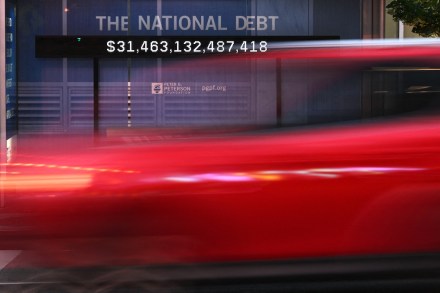
The 5 percent barrier has long since been left behind. This week, the yield on 30-year American government bonds hit 5.6 percent, its highest level since way back in 2002, while the cost of ten-year borrowing rose to its highest level in 20 years. However hard the Treasury Secretary Scott Bessent tries to control it, the interest rate the American government has to pay to finance its vast deficit keeps on rising relentlessly. As it climbs towards 6 percent and perhaps even higher, surely we must soon see a change in the political debate. Three decades of financial complacency will be swept aside – and the politics of deficit reduction will be back.

Russia’s economy is slowly rotting

For several years already, every fall, Russia's finance ministry has performed the same ritual. It unveils a budget that looks sober, even responsible, with a shrinking deficit and falling inflation. Every year, it is ignored by reality. The budget for 2027, outlined at the end of last week, is no exception. The headline promise is a deficit of 2.2 percent of GDP next year, about 5.5 trillion roubles ($65 billion), down from roughly 3 percent expected this year. Revenues are to rise by 7.5 percent, which after inflation is barely 1 percent. Spending will grow by less than 6 percent, which after inflation is a cut of about 1 percent. For the first time since the invasion of Ukraine, the government even plans to start refilling the National Welfare Fund, the country's rainy-day savings.

Trump’s economic fantasies

Donald Trump has never had many reservations about attacking the Federal Reserve. Last night, at a rally in North Carolina, he renewed his attacks on the Fed after it raised interest rates by a quarter of a point to 4 percent, which remains historically low. With inflation persisting at well over 2 percent, the hike was long overdue. The longer inflation is allowed to fester, the harder it becomes to tame. For the self-described “King of Debt,” however, the Fed’s move was an intolerable affront. It is a reminder of the independence of a government agency, something that Trump regards with anathema. He, and he alone, is supposed to dictate economic policy.

Scott Bessent versus the world

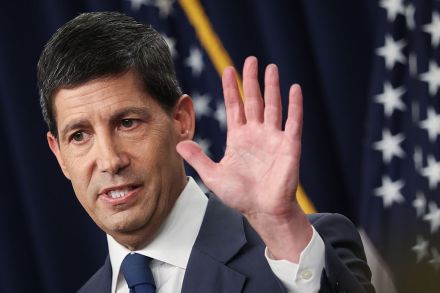
It was the kind of line that Robert De Niro would deliver perfectly in a gangster epic. “I am the house now,” the United States Treasury Secretary Scott Bessent declared confidently last week. “And you can bet against me if you want.” It was the most aggressive attempt yet by the most powerful financial official in the world to take on and tame the traders of Wall Street. With major interventions underway to control the yen-dollar exchange rate, and the yields on America’s $40 trillion national debt, Bessent’s message was clear. They will lose money if they dare to defy his will. Well, perhaps they will in the short term. With a background at the world’s most successful hedge fund, Bessent knows more about the market than most people. There is just one snag.

Bessent

Are the bond markets finally turning on the US government?

Donald Trump has spent much of his second term probing the limits of presidential power. This week, he has discovered another means by which to test them: by promising every American adult $5,000 in the event Republicans retain both houses of Congress. The proposal would cost around $1.2 trillion: representing around 3 percent of America’s $40 trillion in national debt. Washington is likely to reject the idea, but even if they approve it, there is one constituency who is likely to ensure that it remains untenable. That constituency would be the people and institutions expected to lend the United States money. As a deficit mushrooms to a projected $1.9 trillion, there is still little appetite in Washington for any sort of fiscal course correction.

Bond markets

Is the government deliberately disrupting the prediction markets?

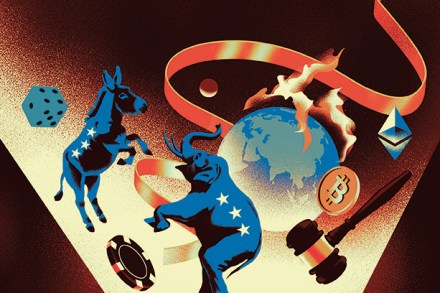
Earlier this summer, I sat barefoot in Berkeley with a dozen aspiring “geopolitical traders,” learning how to make money from war. We were at a conference billed as a “festival for predictions, and markets thereof” – that is, a celebration of prediction markets. The venue, a hippie-ish compound, mostly forbade shoes indoors. Our instructor, Mike, claimed to have grown his money eightfold on Polymarket, mostly by trading on politics. Now he would share his wisdom. Prediction markets were legalized in the United States in 2020 on the premise that they would “allow us, more often than not, to predict the future.” That, at least, is what Kalshi’s marketing copy claims.

UBI will make us miserable

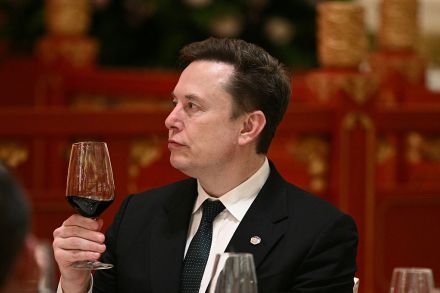
It’s hard to avoid the constant prophecies of doom about how AI is going to take our jobs – with some of these already being borne out. However, AI leaders such as Elon Musk have declared that the population will be supported by Universal Basic Income (UBI) instead, in which the government will financially support everyone through the huge revenues produced by AI. “Universal HIGH INCOME via checks issued by the Federal government is the best way to deal with unemployment caused by AI,” Musk posted on X earlier this year. Musk imagines that we wouldn’t be unemployed but rather liberated – UBI would allow us to live without the mundane tasks of everyday life, like making PowerPoint presentations, writing emails or finding synergies in our deliverables.

Warsh Derangement Syndrome will prove very expensive

One of the sub-plots of the last twenty years has been the growth of “derangement syndromes.” It started with Bush Derangement Syndrome at the start of the century, morphed into the far more powerful Trump Derangement Syndrome, took a side trip to the other side of the Atlantic with Brexit Derangement Syndrome, and then turned into Tariff Derangement Syndrome. The basic symptoms are always the same. Some fairly minor, and probably not even very radical reforms, get reframed as an existential threat to the economy, democracy and even civilization itself. We are now seeing the latest example. Warsh Derangement Syndrome, named after the new Chairman of the Federal Reserve, Kevin Warsh – and for investors it is likely to prove the most expensive yet.

Kevin Warsh

Trump’s tariff wars are a godsend to the Democrats

Donald Trump was revved up for his Freedom 250 Grand Prix auto race, which took place in downtown Washington yesterday. But even as the American President enjoyed the festivities, the mood elsewhere was distinctly less buoyant. With Democrats pounding away at voter concerns about affordability, Republican legislators are fretting that Trump might crash the party’s political fortunes with his costly tariff policies. If the President wanted to promote an economic program that was designed to bolster the political prospects of the Democrats in the impending November midterm elections, he could hardly do better than his institution of new duties of 50 percent against Canadian goods.

Firing a senior banker won’t save Putin’s faltering war economy

In a sign of the unease about Vladimir Putin’s ongoing war in Ukraine that exists behind closed doors in Moscow, one of Russia’s most senior bankers was fired yesterday after a series of critical comments he made earlier in the year about the fragility of Russia’s economy. Warning that Russia was “falling behind” globally both technologically and economically, Andrey Klepach stated the country would fail to win the economic “war of attrition” against Ukraine. “The Ukrainian economy, despite everything, is surviving,” he said. Klepach, chief economist at Russia’s second-largest, state-owned bank VEB, gave a speech in May, during which he linked the pressure on the country’s economy with Putin’s invasion of Ukraine.

America gets the AI boom. Europe gets the layoffs

The management consulting giant Accenture has laid off 11,000 people. The reason? It turns out that a smart chatbot can churn out meaningless waffle about “boiling the ocean” just as well as a recently hired MBA. Oracle has cut more than 20,000 jobs, as it discovered that Claude or ChatGPT could code as effectively as the quiet guy with glasses, while the legal giant Baker McKenzie is laying off as many as 1,000 people after figuring out that a machine could churn out a letter about “the aforementioned party of interest” as effectively as any of their junior lawyers. America is getting both sides of a process of ‘creative destruction’ Almost every day, another round of white collar professionals falls victim to the AI-driven jobs apocalypse.

America can’t let the Japanese yen fail

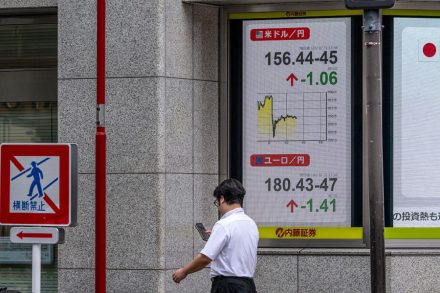
In an extremely rare bilateral move, the US and Japan have intervened to shore up the Japanese yen, which has been steadily losing value and sliding towards a 40-year low. The news was confirmed by the Japanese Finance Ministry this morning. President Trump preceded the announcement by explaining that the US was “always there to help Japan.” In truth, there wouldn’t have been much point in denying it – a Reuters photo showed a memo on US Secretary of the Treasury Scott Beasant's desk with the simple instruction “To Do – Buy Japanese Yen (JPY) 5-10 billion.” The dollar fell to 157 yen after the announcement, well down from the 164 (considered by Morgan Stanley the highest tolerable point for the Japanese government) of the previous week.  This is an extraordinary move.

Why aren’t American companies passing on tariff refunds?

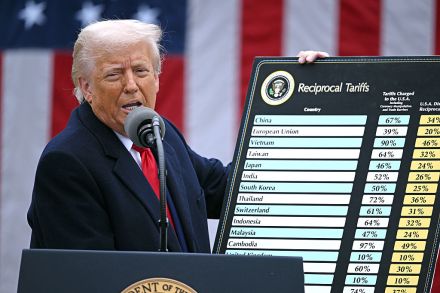
Even for an economy as large as the United States, $70 billion still counts as a significant sum of money. After the first round of President Trump’s tariffs were ruled illegal by the Supreme Court, customs officials have already issued that amount in refund checks. Here’s the problem, however: none of it appears to have been passed on to consumers in the form of lower prices. In reality corporate America is pocketing the money – but it is also playing with fire by inviting retaliation from President Trump. Almost no major policy has ever been quite so chaotically implemented as the tariffs imposed by President Trump on the oddly named Liberation Day in April last year.

Tariffs

Trump Accounts are good economics

The most interesting piece of economic policy from the Trump White House is not a tariff, nor is it an AI export restriction. It’s a brokerage account for babies. Under the new Trump Accounts program, eligible American children born between 2025 and 2028 will receive $1,000 from the Treasury, to be invested in a broad index of American companies. Parents, employers, and other benefactors can contribute up to $5,000 more annually. Before these children can walk or speak, they will own their slice of corporate America.  At first glance, this seems uncharacteristically left wing – as if a fever dream from Andrew Yang’s presidential platform had escaped and somehow convinced the Trump administration of its merits.

Is the US heading for another oil shock?

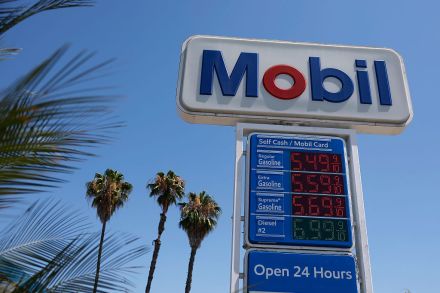
It won’t be anything on the scale of 1973, when President Nixon imposed year round daylight saving time to reduce electricity consumption as well as a 50mph highway speed limit. Nor are we likely to see the thermostat restrictions, or the standby plans for rationing, that were introduced by President Carter in 1979.  The "oil shocks" of the 1970s were not just from a different era, they were of a different magnitude as well.  Trump may well step in with some form of oil export controls Yet that does not mean that the American economy is immune to another crisis, nor that we won’t see a dramatic response from the White House - because, in reality, the US could easily run out of oil later this year.

Oil prices

Can the Kremlin afford to fix Russia’s oil crisis?

For a country that pumps roughly nine million barrels of oil a day – the third highest of any country in the world – Russia has managed to achieve something genuinely remarkable: it cannot keep its own gas stations stocked. More than half of its regions are now reporting shortages, the consequence of a Ukrainian drone campaign that has struck with increasing frequency and precision at the refinery infrastructure on which the country's civilian economy depends. The sometimes hours-long lines that have appeared – even in Moscow, for what may be the first time in the war – carry a symbolic weight that no amount of official reassurance from the Kremlin has managed to dispel. How this has come about is obvious enough.

oil