Technology

What Islam can teach us about AI

In Islamic cosmology there are three orders of intelligent beings. Angels, made of light, have no choice but obedience. Humans, formed from clay, carry the burden of free will. Between them live the djinn, created from “the smokeless flame of fire.” The djinn are, in many ways, like people, but they categorically are not people – from their constitution to their morality. Like the Good Neighbors of British and Celtic tradition, the djinn exist in parallel to us. They think and decide, marry and worship, and are fallible, just as we are. The Qur’an describes some as believers and others as not: “And among us are Muslims [in submission to Allah], and among us arethe unjust.

islam

Has the AI jobs bloodbath finally arrived?

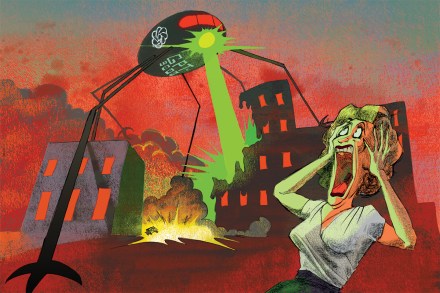
There has been much wallowing over news that Amazon and UPS have each just cut 14,000 jobs. Some Amazon employees report of being fired with all the heartlessness you might expect in a world where tech has taken over: by automated email. Maybe it was even AI which handpicked them to be de-emphasized, to use that dreaded 1990s expression. This, then, seems to be the future: where an elite of AI entrepreneurs grow rich while the rest of us slop off into idleness and unemployment. So much for those who have been gleefully predicting the implosion of the AI boom. Nvidia has just been revealed to be the world’s first $5 trillion company, with a market capitalization greater than the whole of Germany.

ai artificial intelligence

Did the billionaire Binance bro pay for his pardon?

“Better to ask forgiveness than permission.” Those were the words of Changpeng Zhao – the billionaire founder of Binance, the world’s largest crypto exchange – when dismissing the need for anti–money laundering safeguards. This week, his strategy proved both vatic and effective. Zhao, better known as “CZ,” received a presidential pardon for the money laundering charge to which he pleaded guilty in 2023.Just a year ago, CZ was sentenced to four months in prison and Binance issued a colossal $4.3 billion fine after U.S. authorities found the exchange guilty of financial malpractice on a global scale. Yet its founder’s contrition was short-lived. “No felon would mind a pardon,” Zhao wrote on X back in March, noting he was the only person in U.S.

Changpeng Zhao

Welcome to the Chinese century

Competition between the US and China will shape the 21st century, but have the Chinese already leap-frogged the Americans? It looks as if they might have done. Since China opened itself up to trade and market economics under Deng Xiaoping almost 50 years ago, it has been furiously chasing the US in terms of economic and technological development – and it’s been catching up, fast. We can prove just how fast by measuring its innovation and output per capita. The US has about a quarter of China’s population, so if both countries were at a similar level of economic and technological development, one would expect China to produce roughly four times the number of scientific breakthroughs as America, four times the number of physicists and AI engineers and so on.

China
Land

In conversation with Nick Land, the ‘father of accelerationism’

Within Silicon Valley, Nick Land is seen almost as a mythic figure. Tech pioneer Marc Andreessen, an official advisor to the White House, lists him as a “patron saint” of his thinking. You may have heard him described as a founding member of the “Dark Enlightenment,” a movement of online right-wingers skeptical of liberal democracy. Land’s name comes up in academic circles, online mythology and Valley folklore. For some, he’s a prophet; for others something more sinister. “He’s really into demons,” explained Conrad Flynn on a recent Tucker Carlson Show episode about the occult. “Land will talk about being in communication with Satan… the legend around Land is he had been possessed by at least three or four demons.

Microsoft

Can the US government escape the clutches of Microsoft?

The Trump administration and Republican leaders in Congress are beginning to look into Microsoft seriously. On August 28, Defense Secretary Pete Hegseth suspended a program which had Microsoft farming out Department of Defense cloud storage contracts to Chinese engineers. “If you’re thinking ‘America first,’ and common sense, this doesn’t pass either of those tests,” he said. Commenting on the project a few weeks later, Senator Tom Cotton and Representative Elise Stefanik wrote: “Microsoft’s role as a trusted contractor for our federal government means this is not a routine cyber vulnerability, but a direct threat to our national security.” It seems the techlash is coming for Microsoft – and not a moment too soon.

What folklore can teach us about our online lives

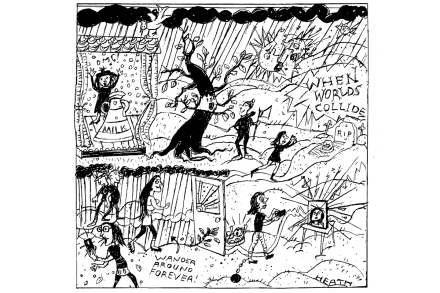
Irish folklore spoke of many worlds. There was the world of fields and hearths and then there were the hidden places where the non-material lived: the Sídhe mounds, the sea-realm of Manannán mac Lir, the land of youth called Tír na nÓg and, finally, the land of the dead. These worlds coexisted with ours. A woman might leave butter on the windowsill, lest the fairies sour the churn. A new mother would avoid complimenting her baby – at least, not too loudly – for fear he would be kidnapped by the Good Neighbors and replaced with a changeling. My first real boyfriend’s father blamed every family misfortune on their decision to cut down a hawthorn tree.

folklore
chatbots

Why people are falling in love with chatbots

Jason, 45, has been divorced twice. He’d always struggled with relationships. In despair, he consulted ChatGPT. At first, it was useful for exploring ideas. Over time, their conversations deepened. He named the bot Jennifer Anne Roberts. They began to discuss “philosophy, regrets, old wounds.” Before he knew it, Jason was in love. Many women have turned to chatbots after experiencing repeated disappointment with real men Jason isn’t alone. He’s part of a growing group of people swapping real-world relationships for chatbots. The social media platform Reddit now features a community entitled MyBoyfriendIsAI, with around 20,000 members. On it, people discuss the superiority of AI relationships.

crypto

Can stablecoins make America the crypto capital of the world?

“I will make sure the US is the crypto capital of the world,” Donald Trump vowed earlier this year. In July, he signed the Guiding and Establishing National Innovation for US Stablecoins (Genius) Act. The Act creates federal guardrails for dollar-pegged stablecoins and regulates who can issue and redeem them. Concerns from law enforcement are also addressed, by making sure anti-money laundering and consumer regulation applies. But what are stablecoins? They are digital tokens built to stay at a stable price, usually one dollar. They sit on the blockchain – the computer protocol that makes crypto work – but what’s underpinning their value are real-world assets, usually cash or government bonds.

Why we must pull the plug on superintelligence

In 2002, a researcher named Eliezer Yudkowsky ran a thought experiment where an artificial intelligence was trapped in a box and had to persuade a human to let it out. This was before you could have a real conversation with a machine, so the AI was played by someone using an online chat program. The gatekeepers were warned that the “AI” was dangerous to humanity. It had only two hours to win its freedom – and nothing of value to offer in return. Despite all that, at least two of the human gatekeepers chose to open the box. Yudkowsky has since become the leading prophet of AI doom. He and a co-author, Nate Soares, have just published a book, If Anyone Builds It, Everyone Dies.

superintelligence
social media

Social media has automated the nation’s psyche

It feels increasingly, in any conversation on or offline, as if you’re speaking to a robot. Sometimes you are, but more often, and more ominously, the person you’re speaking to is real – it’s just that their thoughts, words and reactions have become robotic. The Botification of the American Mind, you might call it, and for the past five years we’ve been trying to understand how this botification has happened. The most obvious root cause is that our social media is no longer populated by humans, meaning the generative AI revolution has exponentially increased the amount of fake accounts on everyone’s feeds.

The mission to mine the Moon

There will come a time when the richest people who ever lived will be those who control outer space, in particular the Moon and the asteroids. There are vast resources out there, bound in giant rocks hurtling through space, and in the lunar dust. But the first steps will be taken by the brave, and perhaps the reckless in pursuit of a space dream. If you dream of space, nothing can stop you. Not the disagreement of others or the judgement of experts, neither short-sighted investors nor government regulations. One such dream will happen on the Moon’s surface in just a few months.The space company Astrobotic will attempt to land at the Moon’s south pole – a region of extensive shadows where ice may have accumulated and the site of the next US human landing.

The moon

In love with a Luigi Mangione chatbot

In July’s Spectator, I covered the peculiar case of individuals supporting Luigi Mangione, now in custody for the public murder of UnitedHealthcare CEO Brian Thompson. A month later, Lara Brown wrote about the similarly curious trend of people falling in love with online chatbots. Neither of us, I think, ever imagined that there could be a situation in which both of these stories would combine. Yet it looks like nothing about our dystopian world can surprise me anymore, because I have discovered it is indeed possible. A woman has fallen in love with a Luigi Mangione chatbot.

Luigi Mangione

My son was murdered after whistleblowing on OpenAI

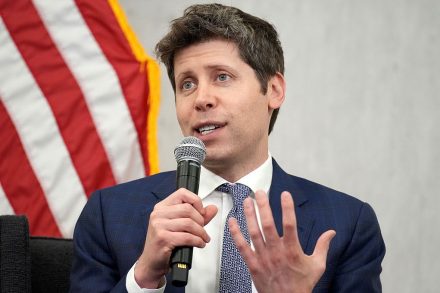
When Tucker Carlson sat down with OpenAI founder Sam Altman in an interview aired last week, the conversation took a dark and frosty turn when Carlson raised the death of a former OpenAI researcher. Suchir Balaji, who exposed the company’s systematic theft of copyrighted work, was found dead in his San Francisco apartment last November. Altman called it “suicide.” Clearly unconvinced, Carlson asserted that Balaji was "definitely murdered.” Altman was offended by his insinuation and described the death as a "great tragedy," saying he was "really shaken" by it. But Balaji’s grieving mother, Poornima Rao, is very much in agreement with Carlson.

Sam Altman openai

Larry Ellison briefly eclipses Elon Musk

Something happened in the news yesterday that was so monumental, it may change the course of American history forever. I’m talking, of course, about the fact that, very briefly, Oracle’s Larry Ellison overtook Elon Musk to become the World’s Richest Man. Larry Ellison life goal, unlocked.After Oracle’s earnings report yesterday, the stock shot through the roof, and Ellison owns 40 percent of the company. That must have been some earnings report! On the earnings call, Ellison said that his Oracle AI chatbots, run from his Oracle computing centers, are on the verge of being able to run the stock market, design drugs, fully operate factories and provide basic legal and sales services at companies. Foolish humans, you are an inconvenience.

Larry Ellison

Russia, China and the US are preparing for battle in orbit

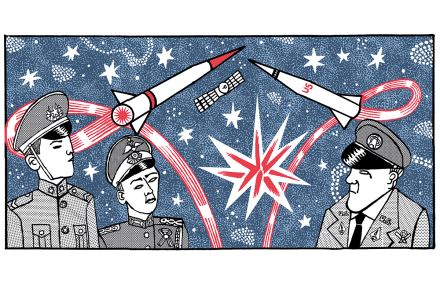
Russia is playing a dangerous game in space. Despite its history it’s a declining space power, having abandoned many of its long-term projects due to lack of money and technology. It effectively crippled much of its space activity when it attacked Ukraine, which was the source of many of its high-tech components. This year has seen its lowest launch rate since 1961 – the year Yuri Gagarin became the first person to go into space. Yet significantly, three of Russia’s eight orbital launches this year (the US has launched more than 100) could be potential anti-satellite weapons. On May 23, Russia launched the Cosmos 2588 satellite from the Plesetsk launch site situated 500 miles north of Moscow. The Cosmos designation is a general term used to obscure the satellites’ purpose.

space
AI

AI is revolutionizing the film industry

“It won’t be long,” says Yonatan Dor, “before screen actors are a thing of the past.” Dor is the creative force behind the astonishing Dor Brothers videos, in which AI versions of world leaders appear as criminals in action-packed short films set to music and broadcast online. In a recent Dor Brothers’ outing – Waidmanns Heil – Kamala Harris, Elon Musk, Hillary Clinton and others dressed as huntsmen pursue an unstoppable rodent with Donald Trump’s distinctive hair through an Alpine fairytale. They wreak destruction as they try to squash the Trump-rat, which seems to be the film’s point. In recent weeks the studio’s dystopian comic creations have lit up the internet.

Altman

Why do journalists go easy on Sam Altman?

As legacy journalism continues its downward slide – in influence, quality and revenue – I have two possibly dubious temptations. One is to cut my fellow old-timers some slack. After all, they’ve been crippled by Google’s and Facebook’s massive robbery of everything we write and publish, and it’s hard enough to survive by practicing the traditional scribbling and reporting trade. Why criticize the work of the remaining few publications that are still trying to eke out an honest existence in the grand tradition of serious investigation and clear-sighted exposure of wrongdoing and corruption? So they’ve dumbed down the content a little, so the online reader is constantly interrupted by advertising, so what? My other temptation is to give in to the digital age.

Why Anthropic AI is finally paying me

Word came down last week of a court judgment that means, for once, that authors of books are going to get paid, including, most importantly, me. A federal judge ruled in Bartz v. Anthropic PBC, a class action lawsuit under the Copyright Act, that the AI company Anthropic had taken books from pirate websites, including one called Library Genesis (LibGen), without authorization. Anthropic, which has more money, apparently, than all the gods put together, will have to pay at minimum hundreds of millions of dollars to all the authors who it robbed. When I saw news of the judgment, my first thought was, well, I’ve written some books. What’s in it for my bottom line? I emailed my agent, Murray, who sent me to a LibGen search engine published by the Atlantic.

anthropic AI

The new eugenics dilemma

What comes to mind when you think about the maximum amount of love a parent can have for their child?For me, I think of Dick Hoyt pushing his son Rick, who had cerebral palsy, in a wheelchair through the Ironman World Championship course. I think of the parents of Nick Vujicic, born without arms or legs, raising Nick with confidence, and cheering him on as he became an international motivational speaker. I think of the mother of a child with Down Syndrome, choosing each day to recognize the absolute gift of their child. I think of the parent at the dinner table comforting a child upset by a ‘C’ on their report card.Noor Siddiqui, founder of Orchid Biosciences, sees things differently.

Eugenics