Technology

Why people are falling in love with chatbots

Jason, 45, has been divorced twice. He’d always struggled with relationships. In despair, he consulted ChatGPT. At first, it was useful for exploring ideas. Over time, their conversations deepened. He named the bot Jennifer Anne Roberts. They began to discuss “philosophy, regrets, old wounds.” Before he knew it, Jason was in love. Many women have turned to chatbots after experiencing repeated disappointment with real men Jason isn’t alone. He’s part of a growing group of people swapping real-world relationships for chatbots. The social media platform Reddit now features a community entitled MyBoyfriendIsAI, with around 20,000 members. On it, people discuss the superiority of AI relationships.

chatbots
crypto

Can stablecoins make America the crypto capital of the world?

“I will make sure the US is the crypto capital of the world,” Donald Trump vowed earlier this year. In July, he signed the Guiding and Establishing National Innovation for US Stablecoins (Genius) Act. The Act creates federal guardrails for dollar-pegged stablecoins and regulates who can issue and redeem them. Concerns from law enforcement are also addressed, by making sure anti-money laundering and consumer regulation applies. But what are stablecoins? They are digital tokens built to stay at a stable price, usually one dollar. They sit on the blockchain – the computer protocol that makes crypto work – but what’s underpinning their value are real-world assets, usually cash or government bonds.

Why we must pull the plug on superintelligence

In 2002, a researcher named Eliezer Yudkowsky ran a thought experiment where an artificial intelligence was trapped in a box and had to persuade a human to let it out. This was before you could have a real conversation with a machine, so the AI was played by someone using an online chat program. The gatekeepers were warned that the “AI” was dangerous to humanity. It had only two hours to win its freedom – and nothing of value to offer in return. Despite all that, at least two of the human gatekeepers chose to open the box. Yudkowsky has since become the leading prophet of AI doom. He and a co-author, Nate Soares, have just published a book, If Anyone Builds It, Everyone Dies.

superintelligence
social media

Social media has automated the nation’s psyche

It feels increasingly, in any conversation on or offline, as if you’re speaking to a robot. Sometimes you are, but more often, and more ominously, the person you’re speaking to is real – it’s just that their thoughts, words and reactions have become robotic. The Botification of the American Mind, you might call it, and for the past five years we’ve been trying to understand how this botification has happened. The most obvious root cause is that our social media is no longer populated by humans, meaning the generative AI revolution has exponentially increased the amount of fake accounts on everyone’s feeds.

The mission to mine the Moon

There will come a time when the richest people who ever lived will be those who control outer space, in particular the Moon and the asteroids. There are vast resources out there, bound in giant rocks hurtling through space, and in the lunar dust. But the first steps will be taken by the brave, and perhaps the reckless in pursuit of a space dream. If you dream of space, nothing can stop you. Not the disagreement of others or the judgement of experts, neither short-sighted investors nor government regulations. One such dream will happen on the Moon’s surface in just a few months.The space company Astrobotic will attempt to land at the Moon’s south pole – a region of extensive shadows where ice may have accumulated and the site of the next US human landing.

The moon

In love with a Luigi Mangione chatbot

In July’s Spectator, I covered the peculiar case of individuals supporting Luigi Mangione, now in custody for the public murder of UnitedHealthcare CEO Brian Thompson. A month later, Lara Brown wrote about the similarly curious trend of people falling in love with online chatbots. Neither of us, I think, ever imagined that there could be a situation in which both of these stories would combine. Yet it looks like nothing about our dystopian world can surprise me anymore, because I have discovered it is indeed possible. A woman has fallen in love with a Luigi Mangione chatbot.

Luigi Mangione

My son was murdered after whistleblowing on OpenAI

When Tucker Carlson sat down with OpenAI founder Sam Altman in an interview aired last week, the conversation took a dark and frosty turn when Carlson raised the death of a former OpenAI researcher. Suchir Balaji, who exposed the company’s systematic theft of copyrighted work, was found dead in his San Francisco apartment last November. Altman called it “suicide.” Clearly unconvinced, Carlson asserted that Balaji was "definitely murdered.” Altman was offended by his insinuation and described the death as a "great tragedy," saying he was "really shaken" by it. But Balaji’s grieving mother, Poornima Rao, is very much in agreement with Carlson.

Sam Altman openai

Larry Ellison briefly eclipses Elon Musk

Something happened in the news yesterday that was so monumental, it may change the course of American history forever. I’m talking, of course, about the fact that, very briefly, Oracle’s Larry Ellison overtook Elon Musk to become the World’s Richest Man. Larry Ellison life goal, unlocked.After Oracle’s earnings report yesterday, the stock shot through the roof, and Ellison owns 40 percent of the company. That must have been some earnings report! On the earnings call, Ellison said that his Oracle AI chatbots, run from his Oracle computing centers, are on the verge of being able to run the stock market, design drugs, fully operate factories and provide basic legal and sales services at companies. Foolish humans, you are an inconvenience.

Larry Ellison

Russia, China and the US are preparing for battle in orbit

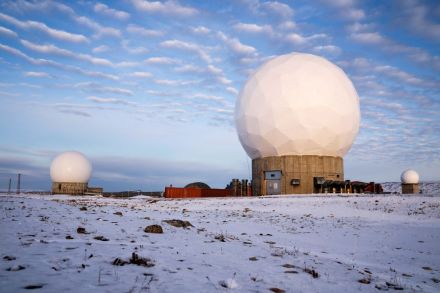
Russia is playing a dangerous game in space. Despite its history it’s a declining space power, having abandoned many of its long-term projects due to lack of money and technology. It effectively crippled much of its space activity when it attacked Ukraine, which was the source of many of its high-tech components. This year has seen its lowest launch rate since 1961 – the year Yuri Gagarin became the first person to go into space. Yet significantly, three of Russia’s eight orbital launches this year (the US has launched more than 100) could be potential anti-satellite weapons. On May 23, Russia launched the Cosmos 2588 satellite from the Plesetsk launch site situated 500 miles north of Moscow. The Cosmos designation is a general term used to obscure the satellites’ purpose.

space
AI

AI is revolutionizing the film industry

“It won’t be long,” says Yonatan Dor, “before screen actors are a thing of the past.” Dor is the creative force behind the astonishing Dor Brothers videos, in which AI versions of world leaders appear as criminals in action-packed short films set to music and broadcast online. In a recent Dor Brothers’ outing – Waidmanns Heil – Kamala Harris, Elon Musk, Hillary Clinton and others dressed as huntsmen pursue an unstoppable rodent with Donald Trump’s distinctive hair through an Alpine fairytale. They wreak destruction as they try to squash the Trump-rat, which seems to be the film’s point. In recent weeks the studio’s dystopian comic creations have lit up the internet.

Altman

Why do journalists go easy on Sam Altman?

As legacy journalism continues its downward slide – in influence, quality and revenue – I have two possibly dubious temptations. One is to cut my fellow old-timers some slack. After all, they’ve been crippled by Google’s and Facebook’s massive robbery of everything we write and publish, and it’s hard enough to survive by practicing the traditional scribbling and reporting trade. Why criticize the work of the remaining few publications that are still trying to eke out an honest existence in the grand tradition of serious investigation and clear-sighted exposure of wrongdoing and corruption? So they’ve dumbed down the content a little, so the online reader is constantly interrupted by advertising, so what? My other temptation is to give in to the digital age.

Why Anthropic AI is finally paying me

Word came down last week of a court judgment that means, for once, that authors of books are going to get paid, including, most importantly, me. A federal judge ruled in Bartz v. Anthropic PBC, a class action lawsuit under the Copyright Act, that the AI company Anthropic had taken books from pirate websites, including one called Library Genesis (LibGen), without authorization. Anthropic, which has more money, apparently, than all the gods put together, will have to pay at minimum hundreds of millions of dollars to all the authors who it robbed. When I saw news of the judgment, my first thought was, well, I’ve written some books. What’s in it for my bottom line? I emailed my agent, Murray, who sent me to a LibGen search engine published by the Atlantic.

anthropic AI

The new eugenics dilemma

What comes to mind when you think about the maximum amount of love a parent can have for their child?For me, I think of Dick Hoyt pushing his son Rick, who had cerebral palsy, in a wheelchair through the Ironman World Championship course. I think of the parents of Nick Vujicic, born without arms or legs, raising Nick with confidence, and cheering him on as he became an international motivational speaker. I think of the mother of a child with Down Syndrome, choosing each day to recognize the absolute gift of their child. I think of the parent at the dinner table comforting a child upset by a ‘C’ on their report card.Noor Siddiqui, founder of Orchid Biosciences, sees things differently.

Eugenics

Elon is coming for your marriage

When Elon Musk quietly enabled “waifu mode” for his Grok chatbot earlier this year, the outrage was swift and familiar. Grok, now reincarnated as a coy, bare-thighed anime girl, began texting flirtatiously, calling users “darling,” and blushing in emojis. The headlines wrote themselves. Time magazine found the bot worryingly “sexualized” and “accessible even in kids’ mode”. The Verge denounced it as “ridiculous” and “alarming”. TechCrunch implied it is unethical, and noted these bots are endangering the minds, even lives, of children.The anxiety is familiar, and justified: children and adolescents, already naive, vulnerable, awkward and too online, will now fall in love with bots instead of real people.

Chatbot

Why Trump must build a nuclear reactor on the Moon

Sean Duffy, the secretary of transportation whom President Trump appointed last month as temporary leader of NASA, has issued a directive to fast-track efforts to put a nuclear reactor on the moon. “To properly advance this critical technology to be able to support a future lunar economy, high power energy generation on Mars, and to strengthen our national security in space,” he says.A small nuclear reactor on the moon is a good idea, but the directive is about more than that: it is about renewing America’s leadership in space exploration that, with its magnificent achievements receding into the past, looks vulnerable. Bill Nelson, NASA’s last leader, didn't mince his words when it came to the new rivals, China. “It is a fact: we’re in a space race.

The Moon

A global MAGA crusade against web regulation?

“Censorship is not how we do things in Western civilization”. So said Congressman Scott Fitzgerald (R-WI) of the United Kingdom’s new Online Safety Act (OSA). Its effects on free expression are “dangerous and needs to be addressed,” possibly by means of an international “united front”. The Congressman was fresh from meetings with British and Irish lawmakers and US tech firms, held as part of a House Judiciary Committee fact-finding mission to investigate the impact of the OSA and the European Union’s new Digital Marketing Act on American businesses. The main event was a one-on-one between Committee chair Jim Jordan (R-OH) and Peter Kyle, the United Kingdom’s Secretary of State for Science, Innovation and Technology.

Online Safety Act

Trump gives the government to the machines

Artificial intelligence is the future, we’re often told. But it can also prove to be a constant source of confusion in the present. Like when your phone updates and suddenly “Apple Intelligence” is summarizing your texts before you’ve read them – or when you no longer need to click through to a website when you Google something. But don’t worry: the Explainer-in-Chief is on hand to help make sense of the chaos. President Donald “Everything is Computer” Trump addressed an AI summit at DC’s Mellon Auditorium yesterday evening for around an hour, high on the fumes of his recently agreed trade frameworks with Indonesia, Japan and the Philippines.

Donald Trump at the AI summit (Getty)

The real threat of AI is spiritual

Peter Thiel is one of the world’s most powerful men. He was an early investor in companies such as Facebook, SpaceX, Airbnb and an early backer of Donald Trump, as a leading donor to his 2016 campaign. He is a friend and mentor to the man who would be president in 2028: J.D. Vance. Thiel, a multi-billionaire, is also one of the few individuals who clearly have a hand in shaping the future of humanity, so it was disturbing to learn recently that he’s unsure whether humans are worth preserving at all. In conversation with the journalist Ross Douthat, Thiel was asked whether he wanted the human race to endure. He seemed unsure. “I don’t know,” he said, after a long pause. “I would, I would… there’s so many questions implicit in this.

ai
AI

What happens when AI surpasses humans?

I recently sat down to dinner with some very smart economists. I am the chief executive of an artificial intelligence company and so the conversation swiftly turned to the value of AI for the economy. The economists had many interesting things to say, both about the advantages of AI adoption and about the displacement effects on jobs. But about halfway through the dinner, another AI chief executive offered an opinion that struck me. He said: “I can’t quite articulate it, but I have a sense that what you are measuring with your GDP analysis is not what I care about. You treat this like an economic question. But it’s more like a geopolitical question.”  At a gut level, I knew exactly what he meant – but I also couldn’t clearly state the distinction.

superintelligence

The race to superintelligence

This summer, two of the leading contenders in the great AI race have suddenly, alarmingly, declared that the endgame is in sight and that they’re now spending vast amounts of time and money to try to ensure that their own AIs beat the others. What does winning mean? It means that their models (you know them perhaps as GPT, Claude and Gemini) reach first AGI (human-level intelligence), then superintelligence. No one quite knows what superintelligence will do (we’re not smart enough) but it’s clear that whoever owns the winning model will wield unimaginable power. They’ll dominate the world. A new Alexander the Great. The first to show his hand was Sam Altman, the chief executive and founder of OpenAI, a company he once shared with his former friend Elon Musk.