Society

The game you are not allowed to win

Some years ago I heard a moving story about Roy Jenkins. An unpromising start to any anecdote but stay with me. It involved a croquet match during the late period of his life – as Chancellor of the University of Oxford – when Jenkins had become one of the grander, not to say more pompous, figures in Britain's public life. According to someone playing with him, his Lordship had appalling luck. Although he wielded his mallet with all requisite skill, his ball would not go through the hoops. Eventually the grand old man stormed off the pitch in a great huff. Only after he had left did the other players discover that the ball Lord Jenkins had been working was from a different croquet set, and too big to fit through the hoops.

When will Meghan Markle bring ‘As Ever’ to Britain?

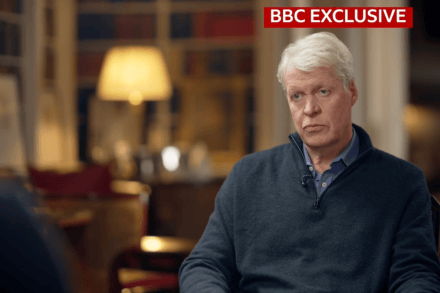
As controversy continues to rage about the “he said/he said” dynamic in Earl Spencer’s damning memoir – and whether Prince Harry knew (and, crucially approved) of the allegations in the book – there is, at least, the opportunity to draw light relief from something rather less consequential. It might seem strange to remember this, given the various other disasters in the world today, but Meghan Markle – now, of course, a resident in Britain once again – is continuing to run her As Ever brand. Even though she no longer has the backing of Netflix and her cursed With Love, Meghan television specials to promote it, it continues to be a going concern. Now, we have been treated to Meghan's dinner party hosting tips. They are neither profound nor revelatory.

meghan

Why did Britain give a Hamas chief’s bodyguard a passport?

The failure of the British state is long-term and corrosive. It emerged this weekend that Mr. X, a former bodyguard of Hamas leader Ismail Haniyeh, was allowed to settle in the UK and given British citizenship – before going on to allegedly coordinate a Hamas terror plot in Germany. He also faces separate terror charges in this country. The case of Mr. X was quickly followed by the news yesterday that Britain's Home Secretary plans to launch a new resettlement scheme which prioritizes Afghan women and girls, and Palestinians of both sexes. By the time Mr. X arrived, a succession of Hamas exiles had already made England their home The chronology as it has emerged so far is well worth examining. From 2006, Mr.

Is the West ready for the undersea war?

Last spring, a Chinese icebreaker turned up in the tropical waters of Palau. That was after Chinese research vessels arrived uninvited in the waters off Taiwan, Vietnam and the Philippines. In Europe, Russian research vessels and navy ships turn up uninvited too. The ships reveal nothing about the nature of their visits, but create fears of impending cable sabotage. These days, Russia and China are also building lots more submarines, and they’re impressive. Western countries, too, are building submarines, and all the while they’re trying to defend their cables and pipelines. Last week, the UK’s 12-meter Excalibur drone submarine used a testing range off the coast of Scotland to fire a torpedo.

The real reason kids are giving up reading

Another day, another dispiriting survey about the crisis in childhood reading. Parents who earn more than $130,000 a year are the least likely of all social groups surveyed to read aloud every night to their children. So much for the sharp-elbowed upper-middle classes. Even when we factor in the possibility that the cash-rich and time-poor are outsourcing bedtime stories to nanny, it’s a less than encouraging finding. It tells us something about the dwindling importance of reading to the most successful among us.

Should I be more like Bryan Johnson?

“Journaling” is now a good thing, which we know because it’s part of Bryan Johnson’s morning routine, sandwiched between eating algae and sauna-ing with a Bryan Johnson-trademarked ice pack on his crotch. It’s nice to check in with Johnson – the tech millionaire who wants to “defeat death” – every few hours. This week I embarked on my biggest ever stand-up tour, a tour whose scale makes it seem like a culmination of everything to this point. Venues you dream of playing, ones which seem so distant in the mud and piss of the UK’s comedy circuit. Twelve hundred people tonight, 1,500 the night before. “Only 680 tonight is it?” I shrug from the back seat of my tour manager’s Skoda, like a man used to four-figure wine rolling his eyes at a mere Château Lafite.

bryan johnson

I like a good hypocrite

I’ve always admired Diane Abbott, one of the most left-wing British MPs, though admittedly only for one thing. Many years ago she campaigned against private schools. As a good socialist this comes as part of the ideological package, and Abbott was more than happy to join in the class war against parents who are in a position to educate their children outside the state system. However, as some readers might remember, when it came to her own school choice Ms. Abbott looked around the local state schools and decided that none of them was good enough for her own progeny. So she sent her son to the City of London School, a private school for boys. Confronted with this hypocrisy, Abbott did the sole thing that I admire her for.

The rise of anti-migration direct action in Britain

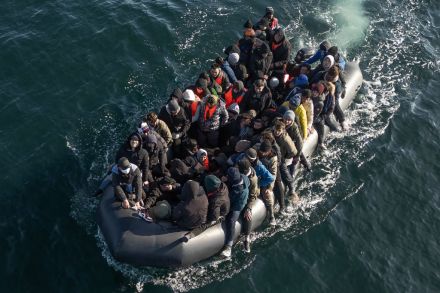
On Monday and Tuesday, a so-called “mega dinghy” made its way across the English Channel from the coast of Normandy. Originating from the town of Vierville-sur-Mer, near Omaha Beach, the inflatable represented what many Brits would see as a direct reversal of Operation Overlord, which began on D-Day. The prospect of around 60 illegal migrants landing on England's shores, many of whom will likely come from countries with much higher rates of violent crime, was not exactly welcomed in the area. Hundreds of people poured out onto the streets of Gosport, where the Royal National Lifeboat Institution was expected to bring its passengers ashore after scooping them up in English waters.

Did AI write the French book of the year?

Many decades ago (or so it seems, it was actually January 2023, but things move fast in AI-world) I wrote a Spectator piece claiming that The End of Writing was coming, thanks to AI. In return for this favor, I got large amounts of angry and derisory scorn, mainly from writerly types, who banged on about the uniqueness of human creation, but also from techy people, who pointed out that as a mere hack I could not possibly know anything about AI, and anyway AI was just a glorified next-word-predictor. The French, being French, have responded with wise philosophy, or cowardly evasion, depending on your taste Now, I'm not the sort of cheap, mean-minded person who says “I told you so,” so I'll just say “I told you so.

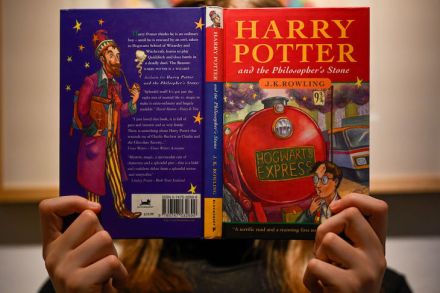
The Hobbit is not a great book

It was 1937, an age away, when JRR Tolkien's book The Hobbit was first released. There are people alive who remember that year, but not many. The Hobbit was published by George Allen & Unwin after Stanley Unwin commissioned a review of the typescript (standard fee, one shilling) from his ten-year-old son, Rayner. When he reviewed The Hobbit, CS Lewis said it was a children’s book “only in the sense that the first of many readings can be undertaken in the nursery.” “Bilbo Baggins was a hobbit,” it read, complete with a ten-year-old’s errors, “who lived in his hobbit-hole and never went for adventures, at last Gandalf the wizard and his dwarves perswaded him to go. He had a very exiting time fighting goblins...

Is Earl Spencer telling the truth about Charles III?

When Earl Spencer was interviewed by Larry King in 1997, he had nothing but words of praise for the-then Prince Charles, in the aftermath of Diana’s death and funeral. When Larry King asked if the Prince of Wales had had anything to say about Spencer’s fiery eulogy, his guest replied, “Not about the speech, no, but he was perfectly polite all day,” and went on to stress that, “Nothing nasty has ever been said about it by him to me.” Spencer attempted to claim that he was drawing a distinction between Charles as king and Charles as unpleasant brother-in-law.

Earl Spencer

Meet the adult toddlers who play with toys

A colleague of mine has a sizable collection of sportscars. He has, he notes, every expression of his favorite, the Lotus Esprit. He lovingly cleans them, occasionally changes up the way they’re displayed. What he might then jokingly add is just how easy this is. The biggest of his cars is just a few inches long. They’re models, of the kind that small children might push over the carpet making “brrm, brrm” noises, once they’ve passed out of what the toymakers call the “bash and crash” phase, when motorway carnage is the name of the game.   What might appear strange to an older generation – overlooking their own love of train sets – is that this mid-life interest in toys is not unusual.

Where are my reparations?

The natural coalition of rural people which was forged 25 years ago, before the hunting ban, is forming once more. In Westminster, we recently gathered under the Countryside Alliance banner to hear David Blunkett, David Cameron and others set out the issues. Poor Andy Burnham had inadvertently stoked our feelings by joking feebly about how he hardly ever visits farms and considers DEFRA the least important government department (would it were so!). There are strong current individual issues – the proposed trail-hunting ban being the most egregious and the inheritance taxes for farms the most economically damaging – but the sheer number of government-inspired rural harms is astonishing. The Alliance counts 27 of them.

reparations

The autistocracy: the men on the spectrum who rule our world

Ben Delo, the source of one half of Reform’s £72 million mega-donation, wrote in The Spectator last year about being diagnosed with Asperger syndrome as a child. The self-confessed geek, now 42, was socially awkward. He did not fit in and he did not care to. His condition would shape the course of his life, making him very good at math, very rich and hellbent on getting involved in politics. Christopher Harborne, the crypto billionaire who has matched Delo’s donation, we know much less about. Despite being a billionaire many times over, the 63-year-old has the air of a chemistry teacher and an aversion to interviews. Like Delo, who until recently lived in Hong Kong, he also forged his way in the Far East, living in Thailand.

autistocracy

How whimsy took over

An intelligent reader is annoyed by whimsy. “Clothes, interiors, children’s birthdays...  it’s everywhere!” she exclaims. “What is whimsy anyway?” It is indeed everywhere. “Whimsy has been institutionalized,” wrote James Marriott in the Times, its symptoms including Larry the Downing Street cat and the saintly Paddington Bear. This recognizes a modern side to whimsy that is sentimental and twee. But to me its historical side acquires interest from a remark in the Oxford English Dictionary: “Whimsy may be related to whim-wham as flimsy to flim-flam.” Flim-flam was only one such reduplication with a vowel variation expressive of contempt.

Forget sturgeon caviar – go for lumpfish

Pity the poor lumpfish. It’s lumbered with an unflattering name, or its equally unattractive moniker “sucker fish.” It also looks unappealing. The poor blighters are endowed with a stubby nose and knobbly, spotty, tubercular skin that gives them their lumpy look. With a carbuncled, ridged back, bulging eyes and a suction disc so it can attach itself to rocks, it hardly cuts the sexiest figure. But God bless the lumpfish, it does deliver poor man’s caviar in spades. It couldn’t look more different from the king of caviar, the sturgeon, which is the most elegant fish in the ocean. Long, sleek and silver, the sturgeon flows effortlessly through the water like Concorde flying through the sky. It has handsome stitching along its body.

Driverless cars must learn to drive like Brits

I’ve ridden in Waymo driverless taxis in both Miami and Austin and it is, as you would expect, a slightly surreal experience. When an empty vehicle turns up, displays your glowing initials on the roof, then invites you to unlock the doors via your phone, you feel as if you’re in a science-fiction film. Once you drive off, it feels doubly weird. Yet what’s most surprising is how quickly it ceases to feel strange. After three minutes, you pay scarcely more attention to the progress of the vehicle than you would when riding in a car driven by any competent human driver. A colleague of mine who has used Waymo on faster roads tells me you experience another burst of unease when the car first hits 50mph, but this, too, rapidly dissipates.

How Prague cured me of my communism

Proust can keep his soggy madeleine. For me the word “Prague” is a trigger of memory like no other. It stirs me up like some plaintive half-heard tune, or the faint scent of lavender in sheets left folded for years. Evil news from Prague, in a stuffy August long ago, turned my world over completely. This was 1968, a year of wonders, none of them very nice, which will not easily leave my recollection. It was the year I joined a Trotskyist sect. It was the year I punched a man (in self-defense). It was the year I attended my first violent raucous demonstration, against the war in Vietnam, with the police horses thundering through the March mud in Grosvenor Square. A few weeks later Paris was full of tear gas and flying cobblestones, and how I wished I was there.

Does a dog-friendly car exist?

The valet parking man at Gatwick climbed out of my car with an expression that suggested he’d just driven a Panzer at the Russian border as opposed to bringing a very underpowered VW Polo around from the car park. “Madam,” he began, unsteadily. “I need to have a word with you about the state of your car.” I apologized. My Polo is an abysmal state. Empty coffee cups, paper napkins, crinkled bags that once contained sandwiches or donuts, plastic water bottles, 58 hair ties, decaying dog biscuits and poo bags (albeit unused) all litter the floor. It’s also disgracefully muddy because Dennis doesn’t go in the boot. He either sits beside me in the front, or lies along the back seat as if I am his chauffeur and he is a debutante who’s overdone it at The 400.