
“You are going to die before me and leave me to deal with this, and I will curse your soul for all eternity,” I once said half-jokingly to my husband over a glass of wine. We were having one of our regular conversations about what he was going to do about his late uncle’s possessions, which had arrived at our house in lorry-loads about a year after we had married. “Why don’t you do half an hour of sorting every weekend? I will help you,” I would suggest in reference to the multiple barns, basements and attics at our farm, which were now piled high with three generations’ worth of male hoarding. But with an increasing number of children in the house and no sense of urgency, progress was slow.
So when my husband was diagnosed, out of the blue, with terminal cancer early last year, I realized that my prophecy was to come true, and so did he. “Being ill really focuses the mind,” he said rather sheepishly when he came home after a long hospital stay. By this point he was in no fit state to tackle the mountains of stuff he had accumulated, which visibly distressed him.
A friend who came to see us around the same time with a large chocolate cake joked about Swedish death cleaning, the act of consistently decluttering as you go through life so that your loved ones won’t be burdened with sorting through a lifetime of hoarding after you die.
My thoughts immediately went to the attic room which I had entered only once seven years previously by mistake (I think my husband hoped I would never find it) and vowed to erase from my memory forever.

My terror at the prospect of being widowed with three small children in a house which I knew I wasn’t going to be able to manage easily on my own was compounded by the knowledge that I, and I alone, was going to have to tackle the uncle’s possessions – a lifetime of keeping absolutely everything – plus everything else on top of that.
I didn’t even have adult children to help me and I couldn’t put it off. My husband, who died in May last year, four months after his diagnosis, had thankfully given me his blessing to sell his beloved 500-year-old farmhouse and I knew that this was my only option.
Last winter, my first without him in the house, was a series of power cuts and plumbing emergencies. It rained continuously from October to March. Water poured into the house, causing the power to go out multiple times a week, usually just as I was settling down to watch the television after putting the children to bed. At one point there was rain coming down the chimney into my bedroom. This sort of thing was almost bearable when my husband was alive, as he would laugh it off and flick some switches (there are five fuse boards in the house, in different places) and all would be well. But I could not live like this.
My kids despaired for me. “Our new daddy is going to have to be a builder or an electrician, Mummy,” my five-year-old shouted over the noise of the burglar alarm that had been ringing for four hours as I tried to pretend that I was not teetering on the verge of a nervous breakdown.
At one point, on a particularly miserable evening – having no power in a freezing cold and frankly extremely spooky house in the middle of nowhere is not that much fun – I lay awake planning how I would proposition the electrician the following morning.
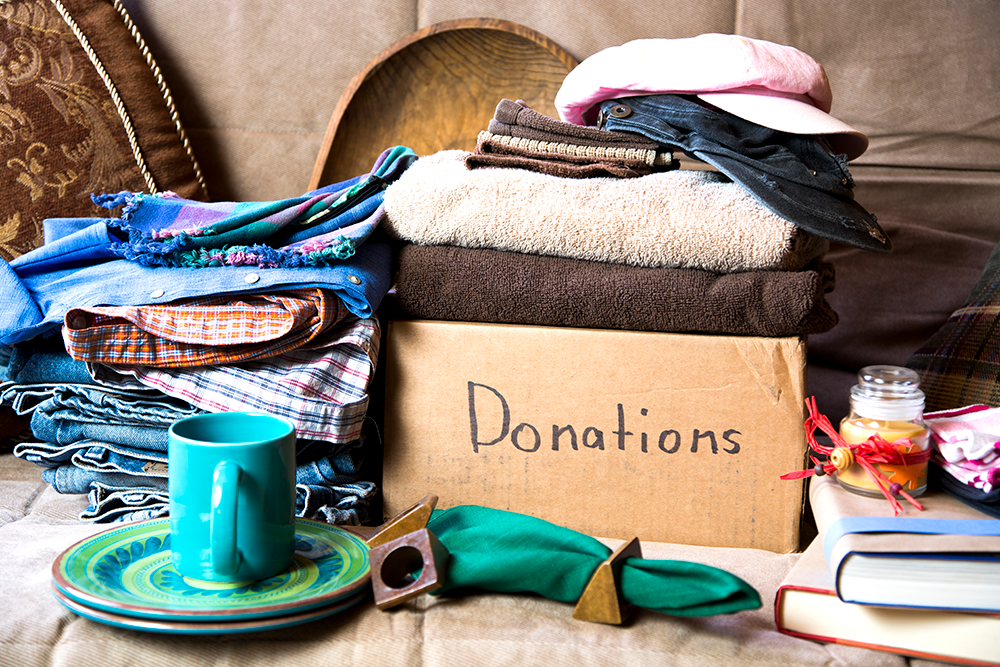
So ensued six months of sorting, clearing and burning in order to prepare the house for sale. An estate agent came over a couple of weeks after my husband’s death and delicately suggested I “try and declutter a bit. It will look better in the photos.” I employed my cleaner, who used to run an antiques shop and house-clearance business, full-time to help me. Her burly teenage sons turned up twice a week with a pick-up truck. I didn’t ask where the stuff was going.
In the meantime, I was having continuous nightmares that my husband was furious with me for throwing out his things. Like his uncle, he had kept everything, just in case.
There were boxes and boxes of photograph albums, more than 100 framed pictures and photographs, more than 100 Ordnance Survey maps, about 80 books on Shropshire canal systems alone. There was enough glassware and crockery to hold a large wedding, as well as a suitcase full of perfectly polished silver which had not seen the light of day for at least 50 years.
Every single diary and checkbook that my husband’s uncle had ever owned. Every single letter and invitation that my husband and his uncle had ever received. Every single car and train magazine the two men had ever bought. The list goes on. Nothing had ever been thrown out.
There was enough glassware and crockery to hold a large wedding, as well as a suitcase full of silver
Yet all this was nothing compared with the car parts, tools and machines which filled the farm’s outbuildings to the brim, including five lawnmowers and two broken mobility scooters.
Luckily my husband had made a deal with a fellow car enthusiast friend that he would help me clear the car workshop. Tim came to the house five times, once with four large vans and a team of men to empty just one of the buildings.
We finished the job a few months ago and yet last week someone called me to say that a garage in Cheshire, which I didn’t even know existed, was full of more of my late uncle-in-law’s possessions. More lawnmowers, car parts, tools and glassware.
On the upside, I am sure the process helped me through some of the early grief. The work was satisfying and gave me something concrete to focus on when I needed the distraction. But I probably could have done without the added stress.
My husband was fit, slim, apparently healthy and full of energy until a few months before his diagnosis. He thought he had decades in front of him. Let this be a cautionary tale to the hoarders out there. Freeing your family of the burden of your junk – because that is what 90 percent of it is – while you still can, is the ultimate act of love.






Comments