Society

My friend the failure – and the star

“Altogether Elsewhere.” The title page of an unpublished travel book caught my eye during a recent clear-out. The author, Matthew Leeming, was a character who deserved to be famous but somehow never made it. He was imaginative, witty, fearless and greedy – wonderfully greedy. He inherited his father’s ceramics company and ran it for years with great success. He loved being rich. “Money,” he used to say wistfully, “eases the pain of being alive.” To pique women’s interest, he claimed to be off-limits. ‘I’m training for the priesthood,’ he confided He invented businesses out of thin air. In Oxford he lived in a neighborhood called St. Clement’s and he created a summer school by printing a ream of luxury notepaper with an imposing letterhead: “St.
matthew leeming

The curious history of sporting superstitions

My father had been waiting his entire life for that whistle. After 75 years, the curse was over. Mayo were Gaelic football champions, having overturned the second-biggest deficit in the history of All-Ireland finals. The county hadn’t seen such a miracle since Father Horan got the taoiseach to fund an international airport near the shrine of Our Lady of Knock. Three months before Dad was born in Castlebar, Mayo won the 1951 title. Their celebrations on the way home were exuberant and, so the legend goes, disrupted a funeral in Foxford. The furious priest (some versions blame the widow) cast a curse on them, saying Mayo would never again lift the Sam Maguire Cup while any of those players lived. Nonsense, right? Except that Mayo then lost 11 finals, four by one point.

sporting

What Istanbul gave me

Why do novelists set their stories in cities or landscapes which seem to haunt them? Not the places of their childhood – an obvious choice – or places they’ve researched because those places are intellectually attractive. The places they can’t avoid in their own subconscious. I’m often asked this question because the places I write about are considered exotic. But to me, it’s the reverse. I write about a city long after I’ve lived there and left it, having never had any intention to write about it at all. Such was the case, for me, with Istanbul. I moved there in 2011 after 20 years in New York. It came about by chance. My mother died that year and I came back to Brighton to attend the service.

istanbul

‘He’s either the Messiah – or the Antichrist’: on the campaign trail with Nigel Farage

“We love you, Nigel!” In Clacton-on-Sea, there is little sign that the Reform leader’s star has waned. Campaigning with Nigel Farage here is a burst of cackles, quips, nicotine and selfies: a march through sun-kissed streets with a cast of canvassers, aides and minders. A child clasping a teddy bear dances around, a Reform rosette pinned to her top; a groaning assistant clutches two dozen poster boards. On the doors in Seawick there is near-universal support, with variations on the theme which Farage has made his campaign slogan: “I’m with Nigel.” In the middle of silly season, Clacton is hosting one of Britain’s most bizarre by-elections.

nigel farage
love

Love lessons from my grandfather

After a lovely 25th birthday trip to Vienna, I returned home to face the reality of my quarter-life circumstances. I had been happy with my milestones to date – a degree, a stint of modeling on the European and New York runways, a couple of relationships and some encouraging writing contracts – but was then told by my mother what my grandfather Alexander Chancellor had pulled off by the time he was my age. Having moved to Italy to work for Reuters news agency, he spoke Italian fluently and had married my grandmother, Susanna Debenham; he had two children, he had bought a house and even had someone iron his shirts from time to time, which Susie was definitely not going to do. By the time he reached 35, he was editing this magazine.

rod

Rod had one great regret

In 2019, I had to explain to Iain Dale – live on LBC – that Rod Liddle’s suggestion in his Spectator column that elections should be held on Islamic holy days to deter Muslims from voting was not a serious proposal. Neither was his idea that students be drugged by their parents to the same end. It was humor, and they were jokes. When he was in hospital a few weeks ago, I visited Rod with some cake. While he munched away, he expressed a sense of regret that he could have been a great writer. Rod always thought his true calling was writing fiction, rather than journalism, and always wondered if he’d sold his soul by following the money. He was right – he did have the makings of a British Houellebecq.

rod

‘The Middlesbrough Shakespeare’: Why I loved Rod

I met Rod 22 years ago this month. We had been selected as teammates on a gameshow pilot, and, halfway through the morning’s filming, we went for a fag break. He said to me: “This is crap, shall we go to the pub?” We scarpered and spent the rest of the day in a Covent Garden pub, working our way through the drinks list and chatting away like chipmunks. I’d never been starstruck by anyone before I met Rod. However famous or talented actors are, their job is to say stuff written by other people. Rod, however, was a legend to me. I began reading his Guardian columns at university. Though I was studying all the greats of English literature, it was Rod’s writing which felt like a ribbon-wrapped gift, a treat, a joy.

rod

Can I fucking swear yet?: Rod Liddle’s last column

The following column was written in 2024 for former Spectator editor Fraser Nelson when he left the magazine. This is the first time it has been published. My favorite ever email came from a friend and fellow hack, Roland White. It said: “You bastard. I had a 50 quid bet that Charles Moore would be the first Spectator writer to use the word ‘clunge’ in an article.” Ha. I admit I had been surprised to see the word there, in hard copy, when the mag was published. I had expected the usual haggling. “Can’t you say vagina, Rod? Or just leave it out altogether? Or how about Lady Garden?

rod liddle

Rod’s genius? Driving his enemies nuts

There is a reason the death of Rod Liddle has provoked such a swirling tide of grief among his millions of followers, including readers of this magazine, and that is that in the last 25 years Rod came to occupy a crucial position in journalism, and indeed in our country as a whole. His columns became a haven, a refuge, in which he gave us permission to think things that are in fact common sense, but which have for some reason become taboo. He gave us a renewed permission to laugh – at him, at ourselves, at our collective absurdities – at a time when laughter is increasingly controlled and often suppressed.

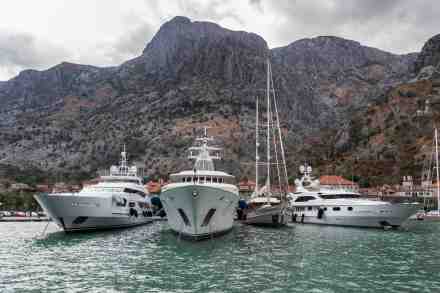
Welcome to Tivat, the ‘Monaco of the Balkans’

“Quiet luxury” is all the rage these days, the social media algorithms tell me. On Instagram and TikTok, Americans inform their followers that clothing with no visible branding is a true status signifier, before extolling the virtues of Barbour jackets and Loro Piana shoes. Aspirational people shouldn’t drive flashy new cars, they argue; instead, they should drive a 30-year-old Range Rover – as if the inevitable engine rebuild wouldn’t cost more than most people would spend on a car. When decorating, millennial gray is wrong, garish and uninteresting; everything must be sage green with brass accents. There is nothing more quiet and luxurious than the B&Q color-matching desk.

tivat

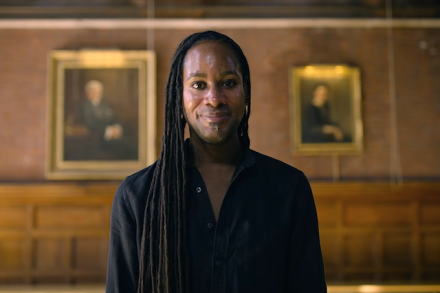
Why progressives were desperate to believe Jason Arday

The Jason Arday affair has been a great revealer. On the one hand, it is a glorious romp that has brought much-needed mirth to Britain. On the other, the exposure of Professor Arday isn’t really about the guileless Arday himself, but the establishment that elevated him. It has served up a moment of unavoidable clarity in which the nonsense of progressivism stands exposed like the imperial scrotum. Arday himself can hardly be blamed for this scandal. Like Puff the magic dragon, he is notable only for the effect he had on others It is a perfect storm. We have a fantasist in an environment where, for political and social status reasons, everyone takes his claims at face value, or pretends that they do because to express doubt would be to invite unwanted attention.

jason arday

My debt to Rod Liddle

Rod Liddle got me into journalism. We always had The Spectator lying around the house when I was young. I soon learned to turn to him first, as most good readers of the magazine do.  My father and I would often read his columns aloud to each other and laugh ourselves into fits. That was Rod’s sublime talent: he made people LOL, long before the internet did.  My first job was at the Catholic Herald, and my then-boss Damian Thompson advised me to improve my writing by copying out the articles of my favorite columnist. I chose Rod, obviously, though of course I could never dream of imitating his style or imaginative wit. I particularly enjoyed his fascination with "the nematode worm which stabs itself to death with its own penis.

rod liddle

Rod Liddle, 1960-2026

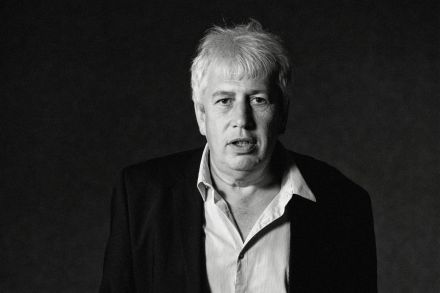
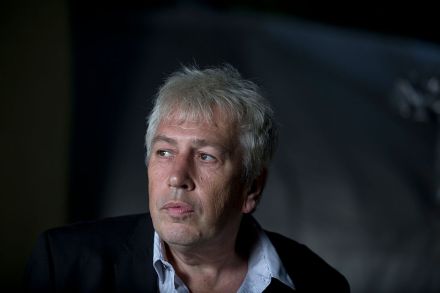
Rod Liddle, The Spectator’s associate editor, has died at the age of 66.  Rod, who was also a columnist for the Sunday Times of London and Sun, died at the James Cook University hospital in Middlesbrough yesterday evening, following a short illness.  His children, Wilder, Tyler and Emmy said in a statement: “We’re all very saddened and shocked at the sudden passing of our wonderful father. He raised us much as you might imagine, to be inquisitive, brave and always humorous. Even in hospital in the last few weeks, he consistently held the room and never let the awful situation show. He has left a legacy that we are all incredibly proud of, he will always be our guide on how to live an extraordinary life.

Gen Z is going back to physical media

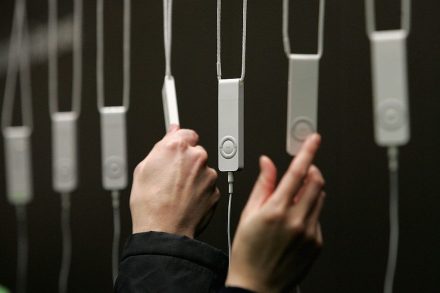
One of my friends has never made her own playlist. “I just get on Spotify and use what the algorithm has made for me,” she says. “If I’m in a good mood, I ask for a ‘happy playlist’.”  Then again, I also have friends who are going out of their way to make life less easy. Three of them recently purchased flip phones with no internet connection. Others have bought digital cameras to lug along to every event. CDs are popping up in the center consoles of some of their cars.  Even ‘purchasing’ a movie or TV show on a streaming platform doesn’t guarantee your ownership Is this just an extreme extension of the Y2K aesthetic that has overtaken Instagram feeds?

physical media gen z

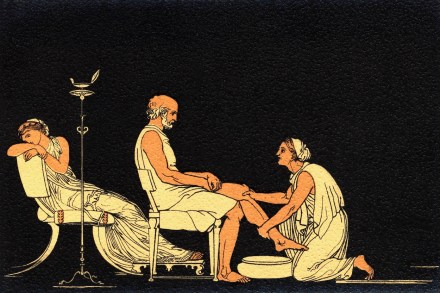
What the Odyssey means to America

In 1899 Jack London, beginning his career as a writer, sold a story to Atlantic Monthly for $120. Drawing on his experiences during the Klondike gold rush and on the Yukon River, it was a tale of an Aleutian native wandering the Arctic for years on end in search of his wife, who had been stolen by a powerful Nordic sea captain. London titled his saga, “An Odyssey of the North.

Cambridge is coming out very badly from the Jason Arday affair

I’ve never met Professor Jason Arday. I don’t know whether he has genuinely run 600 miles in six days. I also genuinely don’t know the truth about the remarkable similarities between parts of his doctoral thesis at Liverpool John Moores, which helped propel him rocket-like up the academic greasy pole to a chair at Cambridge, and passages in a dissertation written six years earlier by someone at Brunel. From the parts of Arday’s output I have seen, I have found some fairly thin gruel It is undoubtedly possible that this is nothing more than an honest, if rather careless, omission to acknowledge earlier work: academics are, after all, proverbially absent-minded, and writing theses is stressful.

jason arday

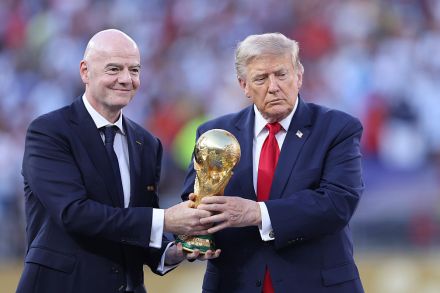
FIFA should be allowed to sell off the World Cup

It will bring in outside investors, open the doors to global money, enrich a handful of inside executives and, perhaps most outrageously of all, might even involve the Trump family. The plans by FIFA, the governing body that controls the World Cup, to sell a stake in the competition, have drawn predictably condemnation, not least from the British Prime Minister Andy Burnham. But hold on. This is getting ridiculous. Soccer has become the preeminent global sport precisely because it has been so successfully commercialized – and it is too late to change that now.  Soccer is about the most commercialized activity on the planet. A few outside investors will hardly change that The plans to sell a stake in FIFA are more complex than the offside rule as reviewed by VAR.

soccer

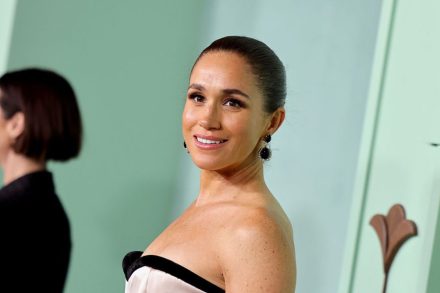
There’s only one reason Meghan Markle went on MasterChef Australia

Picture the scene. You have bravely battled onto the set of MasterChef Australia, hoping that your strawberry pavlova or similar hero dish is going to be the one that sends the judges into gasps of culinary ecstasy. Then the producers and host smile conspiratorially at you and reveal that the stakes (as opposed to steaks) have been raised. There will be a guest judge, they tell you, a figure who is “a global icon, a philanthropist, a humanitarian, a woman known around the world for her heart, her voice and her deep love for home cooking”. You draw a deep breath. Who on earth is this multi-faceted hyphenate, you wonder, an all-in-one combination of saint, queen and legend?

meghan markle
berlin pride

We should politicize the Berlin Pride attack

Of all the platitudes trotted out after an Islamist attack, the maddest has to be: “Don’t politicize this tragedy.” The bodies of our fellow citizens are barely cold before we’re being pre-emptively told off for “exploiting” their deaths for “political ends.” But it’s already political. When a religious hysteric takes up arms against innocents, that’s a political attack. ‘Don’t be divisive’ is a demand for self-censorship masquerading as a plea for social peace The “no politics” rule was swiftly enforced following the atrocity at Berlin Pride. The minute it was announced that the suspect was an ISIS fanboy known for mingling with other Islamists, the cry went out: “Don’t politicize this. Don’t let it divide us.