Politics

Read about the latest political news, views and analysis

Will the NHS ever give up the national insurance levy?

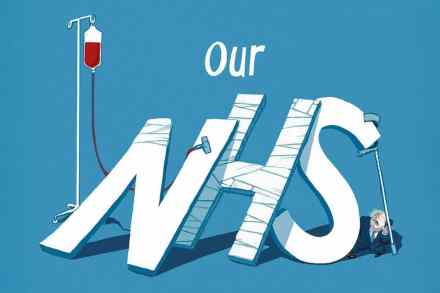
This week’s rise in National Insurance has caused the government enough trouble, but it faces potentially an even bigger problem next year – when it tries to prise the extra £12 billion raised in NI away from the NHS and use it to fund social care instead. The extra revenue from NI has been earmarked for the next 12 months for the NHS, to help it catch up with a backlog in routine treatments following the Covid-19 pandemic. But from April 2023 the intention is to rebrand the NI rise as the ‘Health and Social Care Levy’ – and to spend it instead on funding social care. Just how does a government take money away from the voracious financial beast that is the NHS?
The changing face of No. 10

David Canzini has made quite an impression since he joined No. 10 as the Prime Minister’s deputy chief of staff in February. He’s there not just to provide focus but to make the operation feel a bit more traditionally Tory. At a recent meeting with government aides, Canzini, a former Tory party campaign director from the Lynton Crosby school of bluntness, asked for a show of hands: who was a signed-up Conservative party member? More than half the room. For the uninitiated, Canzini pointed to membership forms in the corner. No. 10 plans to check on their progress in a few weeks. Canzini’s approach marks a wider shift in No. 10 to try to repair the Prime Minister’s relationship with the parliamentary party.

The revealing backlash to Boris’s Channel 4 sell off

Why is there so much anger over the sale of Channel 4? Tonnes of slebs are very cross and have signed a petition. But there’s no guarantee it will actually happen now that some Tory backbenchers have expressed their misgivings. If I were a Tory and cared at all about this issue — which, to be clear, you shouldn't — I’d be mindful of the Prime Minister's track record when it comes to matters requiring a backbone. Grassroots and instinctive Tories bear the brunt of his laziness and disloyalty. It is, after all, the things they care about – the things they love and hate and believe in and fear – that are sidelined by a Prime Minister who doesn't govern like a conservative for the wholly legitimate reason that he isn’t one.

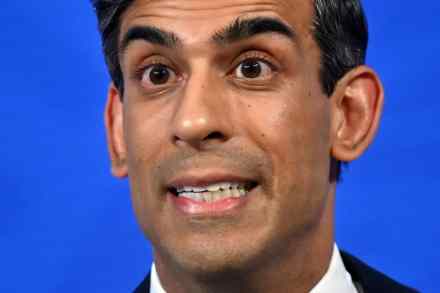
What’s behind Sunak’s poll slide?

15 min listen

The National Insurance hike comes into effect today which is going to hit doubly hard when coupled with the ever-increasing cost of living. While we are all going to feel this burden on our bank accounts, Rishi Sunak is taking his first major political blow. Is there anything he can do to bounce back, or are his future aspirations dead in the water?Max Jeffery talks to Katy Balls and Kate Andrews about the Chancellor's political future and our economic one.

How to waste an 80-seat majority

Cast your mind back to Channel 4’s election night programme. The 2019 exit poll results flash up on screen. Realising the size of the Tory majority, hosts Krishnan Guru-Murthy and comedian Katherine Ryan, along with pundits Amber Rudd and Tom Watson, all look crestfallen: the Conservatives had won and Brexit was secured.  However, nearly two and a half years on from that night, the joy of the Channel 4 clip feels a bit empty. Very little has been done with that huge parliamentary advantage. Instead, the government’s big announcement this week is that they’re privatising the broadcaster. Fine. No problem with that; it’s probably a good thing. Except it doesn’t seem to be part of a wider programme for government. https://www.youtube.com/watch?

Does Rwanda offer the answer to Britain’s Channel migrant crisis?

Away from the well-merited focus on Ukraine, normal politics carries on in Britain. One has to poke around a bit to find it, but there are several issues, rendered all but invisible, that will weigh heavily on the minds of voters at the next general election. Rather than Russian barbarism in Ukraine, it is these things that will determine Boris Johnson's fate. Britain’s broken immigration and asylum system is close to the top of the list. Among Leave voters, it is the second most important political topic, above healthcare and defence and security. Eclipsed only by economic pressures, Boris cannot afford to ignore what is happening in the Channel.

Sunak’s popularity plummets

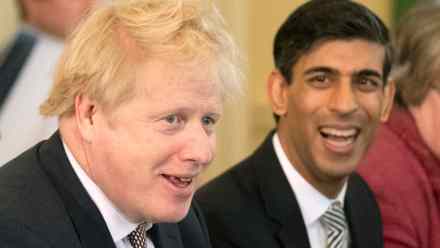
The government's National Insurance hike takes effect today, meaning many workers will feel even more squeezed as the cost-of-living crisis grows. While measures on thresholds announced in the spring statement will help to soften the impact for lower-income workers (although not for another three months), the tax rise remains very unpopular in the Tory party.  Boris Johnson was the one to push for a new social care policy; Rishi Sunak insisted that it must be funded properly rather than through borrowing, thus the National Insurance rise came about. A YouGov poll today suggests that of the two, it is the Chancellor who is currently paying the political price for the cost-of-living squeeze.

The war on workers

It is been a familiar story in recent years: a Budget that sounded reasonably good when delivered, but that unravels in subsequent days. Rishi Sunak’s spring statement was no exception. When he delivered it a fortnight ago, he said he was going to compensate low-earners by raising the primary threshold for National Insurance, bringing it into line with income tax and relieving people who earn less than £12,500 from having to pay NI at all. But as the 1.25 percentage point rise in National Insurance kicks in today, it turns out that the rise in the threshold for NI will not take effect for another three months, on 6 July. In the meantime, any employee who earns more than £9,880 a year will be paying 13.25 per cent of their earnings on NI.

Matt Hancock, crypto bro

The Matt Hancock comeback tour continues at pace. After the mothballed memoir, the Serpentine stunt and the UN embarrassment, you might think that the Casanova of the Commons has run out of ideas for retrospective rehabilitation. Far from it: alongside doing endless media rounds to defend Boris Johnson's latest blunder, Hancock has reinvented himself as a champion of crypto-currencies. Just the kind of flag bearer that the scandal-riddled industry needs. The backbencher tweeted a video yesterday, giving a speech to the London Crypto Club.

The true cause of No. 10’s conversion therapy muddle

The government has had to bow to the inevitable and cancel its own international LGBT conference after more than 100 organisations withdrew their support as a protest against the decision to not ban conversion therapy for transgender people. The die was cast much further back than last week’s botched double-U-turn on a ban on gay conversion therapy: it was when ministers committed to the legislation without thinking it through at all. This latest row highlights one of the serious problems with the way Westminster deals with legislation. Its focus is almost entirely upon the principles at stake, rather than the impact of the way the laws are drafted.

Why does Twitter think Russian lies are OK but Trump isn’t?

So on Twitter you can lie about war crimes but you cannot tell the truth about biology? That is the only conclusion one can draw from Twitter’s decision to leave up a vile, false tweet posted by Russia’s Ministry of Foreign Affairs. The tweet says the massacres in Bucha are made up. They didn’t happen. The photos and videos of dead bodies on the streets are all part of a ‘hoax’ drawn up by ‘the Kiev regime’, it says. This is a lie. Russia’s claim that the bodies were dumped in the streets by Ukrainian forces after Russian troops had withdrawn, all in an effort to demonise Russia as a commissioner of war crimes, is entirely without foundation.

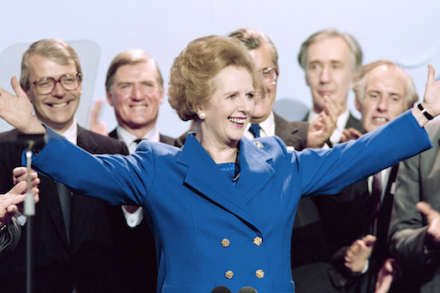
Thatcher wanted to privatise Channel 4

It is always amusing to hear the left selectively invoking Margaret Thatcher. This week, they are doing so to prevent the privatisation of Channel 4, citing the fact that she brought the channel into being. She did, in 1982; but in her memoirs, she explains that by 1988, when she was striving for the phasing out of the BBC television licence fee, she decided that Channel 4 would be better off privatised. On both subjects, she was defeated by what she calls ‘the monopolistic grip of the broadcasting establishment’. That grip is scarcely looser today.

Tory backlash over Channel 4 privatisation

Downing Street's plan to privatise Channel 4 is already facing a Tory revolt – less than 24 hours after the plans were confirmed. On Monday night, the channel's chief executive told staff that the government plans to proceed with privatisation. The official line from Culture Secretary Nadine Dorries is that this will ‘give Channel 4 the tools and freedom to flourish and thrive as a public service broadcaster long into the future’ and compete with streaming giants like Netflix. Only the broadcaster takes a different view: that this is a mistake – and plenty of senior Conservatives agree.

Should Channel 4 be privatised?

13 min listen

There has been a wave of backlash against the government's announcement that it intends to privatise Channel 4. What's behind their decision? Some argue it could be politically motivated given that Channel 4 has historically been a left-leaning news organisation. Also on the podcast, Iain Anderson has resigned as the UK's LQBTQ business champion over the government's u-turn on trans conversation therapy. He said the decision to exclude trans people from the conversion therapy ban was 'deeply damaging'. All to be discussed as Cindy Yu talks to Isabel Hardman and Katy Balls.

Five hysterical reactions to Channel 4’s sell-off

Roll up, roll up! The great Channel 4 sell-off is now on. The Culture Secretary, Nadine Dorries, is pushing ahead with plans to privatise the broadcaster after 40 years in public ownership. Ministers hope to raise around £1 billion, with the proceeds potentially being used to fund the levelling up agenda.  Inevitably, such a plan has sparked the squeals and howls from the usual suspects. There's the accusations of 'cultural vandalism' and selling the 'family silver' – the implication being that the broadcaster ought to be considered a precious substance. After all, if we lose C4, we run the risk of gems such as Naked Attraction and Made in Chelsea being replaced by cheap, low-brow commercial rubbish. God forbid.

Rishi Sunak’s NFT gimmick is a step too far

We had got used to the expensive trainers. The carefully curated hoodies were just about acceptable. The Twitter feed was starting to grate on people’s nerves, and so were the stage-managed photo ops, such as filling up a borrowed Kia Rio at Sainsbury’s right after cutting fuel duty, but they were part of the package. But the Chancellor Rishi Sunak may finally have come up with a gimmick too far with the launch of the Treasury’s very own digital token. Sunak’s addiction to gimmicks is starting to undermine his credibility The Chancellor, between figuring out how to control inflation, pay for public services and reboot the economy found some time this week to launch the British government’s first NFT.

Lutfur Rahman’s return beckons

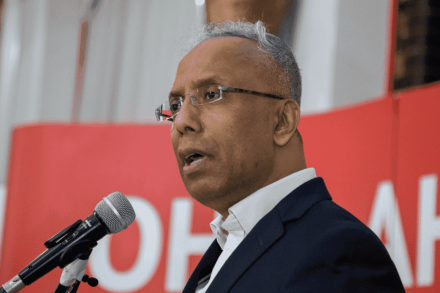
Westminster is in recess but many of its finest are out and about, knocking up doors in their local constituencies. Council elections are just five weeks away and while some struggle to muster enthusiasm for such contests, the result will invariably be seen as a referendum on the two main party leaders. But amid all the paper candidates and MP wannabes, one name on a forthcoming ballot paper clearly jumps out: Lutfur Rahman, the prospective mayor of Tower Hamlets. Steerpike has long covered the antics of Rahman, who in 2015 earned himself the dubious distinction of being Britain’s first directly elected mayor to be removed after being found guilty of electoral fraud.

Why Hungary’s opposition failed

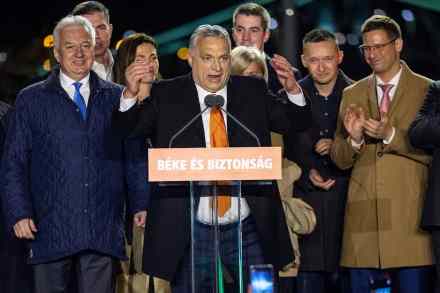
Viktor Orbán has now spent a total of 16 years as Hungary’s Prime Minister but he has not lost his hunger for power. Energetically campaigning across the country, exploiting every advantage of incumbency, and excoriating the incompetent opposition, on Sunday he notched up his fourth landslide victory in a row. Crucially, he maintains the two-thirds majority in parliament that he has held since 2010, allowing him him to amend the constitution whenever he chooses. Predictably, the opposition challenged the legitimacy of the election process even before the votes had been counted. They note that the lion’s share of the media supports Orbán. But this is an excuse, not an explanation.