Politics

Read about the latest political news, views and analysis

What’s going on with the Met and partygate?

I don't understand the logic behind how the Met Police is conducting its probe into unlawful parties at Downing Street and the Cabinet Office. My confusion reached brain-aching proportions after my ITV colleague Anushka Asthana disclosed on Friday that officials had received fixed penalty notices – fines – for attending perhaps the most famous of all the Downing Street events, the Bring Your Own Booze garden party on 20 May 2020, revealed by an email leaked to ITV News. The point is that I know of at least two relatively junior officials who have been informed by the police that they've been fined. So there is no longer any doubt this was a law-breaking party.
Why Scotland’s census blunder matters

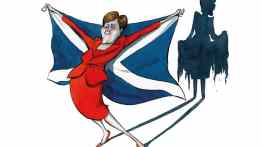
Around 700,000 Scottish households – a quarter of the country – are facing £1,000 fines for failing to complete the census. Eleven years ago, the last time the census was run, it took 10 days to reach the current response rate of 74 per cent. This time it’s taken over a month. There’s not much hope in getting the rate up either. Studies from the US show census return rates don’t improve after the first few weeks.  If 700,000 households are to be fined this would be the largest prosecution in Scottish legal history, probably British too. In 2011 – where the final response rate was 94 per cent and over 90 per cent in all council areas – just five people were reported to prosecutors. By the following February there’d only been one conviction.

A vision for the future: Can Britain become a biotech superpower?

30 min listen

The UK's vaccine programme was hailed by the government as a success story for Global Britain. It became an example of how Britain could speed up regulation, reduce bureaucracy and become a worldwide home for tech and innovation in life sciences.  The government recently published a Life Sciences Vision, but how much vision was there? This podcast will look at the importance of the industry, the hurdles that it faces and its contribution to the government's Global Britain agenda.  Fraser Nelson, the editor of The Spectator is joined by Anthony Browne, Conservative MP for South Cambridgeshire; Zoe Martin, a policy manager at Cancer Research and Samin Saeed who is the medical director & chief scientific officer for Novartis Pharmaceuticals UK Ltd.

In praise of Elon Musk’s Twitter takeover

If there’s one quality that defines Elon Musk other than his entrepreneurship, it’s his ability to drive his detractors mad. From this perspective, his attempt to buy Twitter is his greatest success yet. With Twitter poised to accept a buyout today, we can expect more entertainment on this front. We can also expect a significant improvement to the social network. Musk's motivations are twofold. Firstly, he is a passionate believer in free speech, a quality he views as sorely lacking on the platform. A commitment to enabling unfettered conversation would make it a far more interesting place to be. Secondly, and relatedly, he thinks he can run it better than the current management. Given his track record disrupting other industries, it would be a brave man who bets against him.

British universities took £24 million from China

China is back on the agenda in Westminster. Whether it's Boris's trip to India or a Beijing-based take-over of Newport Wafer Fab, it's hard to escape the flutter of the five-starred red flag. And there’s few signs of that abating any time soon, with leading US Senator Marco Rubio launching an attack this month on American universities that entered into financial arrangements with China-based entities, including those directly governed by the Chinese Communist Party (CCP). According to Rubio, such educational investment is 'all part of Beijing’s plan to overtake the United States as the world’s most powerful nation.' Naturally, Steerpike wanted to find out just how much the CCP has invested at centres of higher learning here in the UK.

Speaker goes for the Mail over Rayner

Westminster has been ablaze with indignation. What's the cause this time – another Downing Street lockdown party? No, on this occasion it's an article in yesterday's Mail on Sunday about Angela Rayner. The Deputy Labour leader was accused by an anonymous Tory MP of 'flashing' the Prime Minister at PMQs, in the manner of Sharon Stone in Basic Instinct. The article's publication prompted a storm of online criticism, with even the Prime Minister feeling it necessary to weigh in and offer Rayner his support. Conservative backbencher Caroline Nokes – the chair of the women and equalities select committee – meanwhile wrote to the Speaker of the House of Commons to ask whether the paper's political editor Glen Owen should retain his parliamentary lobby pass.

A football regulator is bad news for the beautiful game

It will stop shady oligarchs and brutal autocracies buying up clubs simply to whitewash their reputations. It will ensure financial stability and fair play between the teams. And it will protect local fans, many of whom have been standing on windswept terraces for years, from seeing their teams turned into mere units of anonymous global corporations. In the wake of the Super League fiasco, and the sanctioning of Chelsea owner Roman Abramovich, it is not hard to understand why the government has today announced the creation of an Independent Football Regulator with sweeping power to oversee the national game. But hold on. Like all regulators, while it is no doubt well intended, it will have unforeseen consequences.

Sadiq reveals his priorities for lawless London

It's not just The Smiths who warned of panic on the streets of London. The capital's crime rate isn't doing terribly well these days with five stabbings, a shooting and an acid attack all in the past week. Indeed, 2021 was a record year for teenage homicides in the great metropolis. Even former boxing champion Amir Khan has now claimed the capital is 'a very dangerous place to visit' after being mugged of his £70,000 watch, telling Sadiq Khan to 'pull his finger out' over the issue. Fortunately, it seems that the city's beloved mayor has indeed finally listened.

The case that sums up the police’s warped priorities

If you want a snapshot of how warped the police’s priorities are these days, look to the case of Kevin Mills. Mills, a 63-year-old electrician, has just had a ‘non-crime hate incident’ scrubbed from his record following a bizarre battle with Kent Police. It all stems from a testy exchange in 2019 between himself and a woman he was doing some work for.  Mills showed up to the woman's house in Maidstone in Kent to install a bathroom mirror. When he realised he’d need £50 more for materials, the two got into a row and she insisted on keeping some materials he’d already bought for the job. Mills walked out, saying something to the effect of ‘I'm not working for someone like you’.

Apres Macron, the radical left?

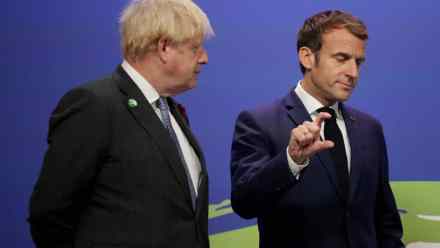
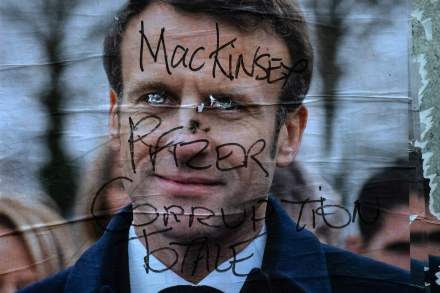
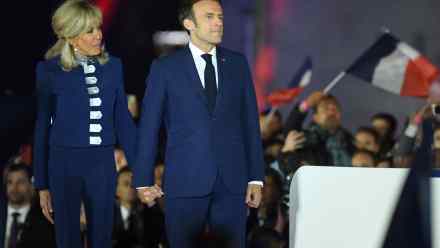
Bof! That useful French word – an older and slightly less irritating version of the American-English ‘meh’ – is how many people feel about the re-election of Emmanuel Macron. The centre holds even as things fall apart – in 21st century France, anyway. It was inevitable and in the end easy. Mainstream commentators, almost unanimously pro-Macron, have spent the last few days trying to inject a sense of drama into the vote by suggesting the threat Le Pen posed was great. But it was painfully obvious that Macron would win. At 44, he will almost certainly still be President in 2027, when the constitution (as currently composed) will compel him to stand down. He isn’t loved. The abstention rate on Sunday is estimated to be 29.

Privilege vs poverty in the French election

In a few hours France will know who has won the presidential election. Macron, predict the polls – though Marine Le Pen’s National Rally remain convinced that the ‘voice of the street’ will sweep them to power. The truth, however, is that there will be no winner from this election. Macron told Le Pen during Wednesday’s live television debate that her wish to ban the headscarf would precipitate a ‘civil war’, but France is already at war with itself. Macron vs Le Pen is how it has manifested itself this month but the battle lines were first drawn a decade or more ago as the effects of globalisation began to bite in what is called la France Périphérique.

Sunday shows round-up: Tory MPs are ‘sick of defending the indefensible’, Starmer says

Sir Keir Starmer was back on the BBC this morning, to be interviewed once again by Sophie Raworth. The Labour party is calling for an ‘emergency budget’ in order to help ease pressure on the cost of living. However, Raworth pulled Starmer up on why, when presented with opportunities to challenge the government on rising prices, he was still relying on the partygate scandal to hammer away at the Prime Minister’s authority: https://twitter.com/BBCPolitics/status/1518179654393335810?ref_src=twsrc%5Etfw …‘I don’t accept’ I broke the law in Durham… During Keir Starmer’s last appearance with Raworth, she brought up a photo of him drinking beer in an MP’s constituency office during the 2021 Hartlepool by-election campaign.

Why the Tories can’t replace Boris with a Remainer

Readers of a certain vintage will remember the 1980s heyday of the light entertainment show Blind Date. A series of well-scrubbed young men and women would compete to be taken out by a potential paramour who was hidden on the other side of a screen. They would begin their moment in the spotlight with a tightly-scripted introduction in which they would offer their name and where they were from. The mass television audience, who had the advantage of being able to see each contestant, would very often form an instant impression based on these few seconds of exposure and its own prejudices. I have often thought this merciless formula is not a bad approximation for the challenge a new political leader faces when seeking to make an impression beyond the party faithful.

Partygate isn’t a constitutional crisis

As you may have gathered despite the understated media coverage, Boris Johnson became the first serving Prime Minister to be found to have broken the law when he was issued a fixed penalty notice (FPN) by the Metropolitan Police for breaching Covid-related laws on gathering for non-work purposes. There has been much written about this in the press, with distinguished commentators and historians declaring variously that it is a ‘constitutional crisis’, that ‘a law-breaker cannot be a law-maker’ and all shades of outrage between. They may well be right that Boris Johnson’s position is untenable, politically speaking. But they are wrong to say this is a legal or constitutional crisis.

Whitehall swells its army of consultants (again)

The government seems keen to conduct something of a war on Whitehall. Jacob Rees-Mogg, the minster for government efficiency, has even taken to leaving calling cards in empty offices in order to encourage civil servants to return to their workplaces. But hybrid working isn't the only problem facing the civil service: a more costly issue, perhaps, is the spiralling bill to taxpayers of Sir Humphrey's army of outside advisers brought in to aid Whitehall's finest.  For total government expenditure on external consultants increased by 70 per cent in the last five financial years, rising from £717 million in 2016/17 to £1.2 billion in 2020/21.

Why are most Tory MPs so quiet over partygate?

18 min listen

At the beginning of the year, letters from Conservative MPs looked to be reaching the 54 threshold needed to trigger a no-confidence vote in Boris Johnson. Most would think a fixed penalty notice from the Met would bring us at least back to those levels. And though there have been some full-throated calls of support and condemnation of his leadership from his parliamentary party, the majority have remained conspicuously quiet. James Forsyth asks Katy Balls and Fraser Nelson why?

Has Boris really lied yet about partygate?

Labour MPs and parts of the media are currently exploring, as part of the partygate scandal, whether if you repeat often enough that someone has lied, you can make that an accepted fact, even if you do not have a shred of evidence or reason to believe it. The latest example came in the Commons this week when MPs referred Boris Johnson to the privileges committee for potentially misleading parliament. The problem is that Boris Johnson did not lie about having received birthday greetings from work colleagues between work meetings. His team literally briefed the event to the press on the day it occurred. In June 2020, during the height of lockdown, the Times reported that Boris Johnson had received a cake for his birthday. No one noticed.

Jonathan Miller, Cindy Yu and Laura Freeman

21 min listen

On this week's episode, Jonathan Miller says that whoever wins France's election on Sunday, the country is going to the dogs. (01:00) After, Cindy Yu says that China's online censors are struggling to suppress critics of the Shanghai lockdown. (07:47) And, to finish, Laura Freeman reviews a Walt Disney exhibition at the Wallace Collection. (12:06)Entries for this year's Innovator Awards, sponsored by Investec, are now open. To apply, go to: spectator.