Politics

Read about the latest political news, views and analysis

Is Lithuania next on Putin’s hitlist?

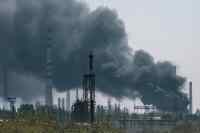
For countries bordering Russia, Putin’s war on Ukraine raises a disturbing question: might they be next? A bill put forward to the Duma’s lower house on June 8 suggests Lithuania is in the country’s sights. If passed, the proposal by MP Evgeniy Fedorov could see Russia potentially try to lay claim to Lithuania's territory. Bonkers and alarming in equal measure, it seems that, not content with focussing on the war it started in Ukraine, some factions of the Russian government are already setting their sights further afield.
How high might interest rates go?

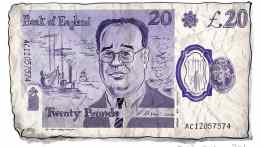
To nobody’s surprise, the Bank of England has hiked its base rate, and, equally unsurprisingly, it has chosen to do so by a relatively modest 0.25 per cent, bringing rates to 1.25 per cent. In 25 years of its existence, the Monetary Policy Committee (MPC) has never raised rates by more than 0.25 per cent at a time. That stands in contrast to the Fed’s decision to raise rates by 0.75 per cent on Wednesday. If the modesty of the rise was supposed to calm markets, however, it doesn’t seem to have worked. The FTSE100, already down nearly 2 per cent on the day, plunged further on the announcement.

Which MP’s time is worth the most?

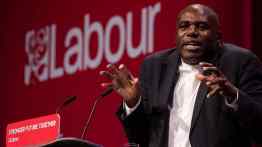
The explosion in new TV channels hasn't been good news for all broadcasters but it's certainly benefited one group of people: media-loving MPs. The register of MPs' interests has today been published and the contrast in hourly pay between different right honourable members makes for fascinating reading. David Lammy, for instance, has made more than £100,000 from LBC since returning to the Labour frontbench – despite his leader's tough talk on second jobs. Yet Lammy's most recent entry lists him as receiving £8,172 for just shy of 50 hours of work, which works out as £165 per hour. By contrast, Tory backbencher Philip Davies received £3,000 for 30 hours of presenting six episodes of his GB News show; the equivalent of £100 per hour.

Lord Geidt reveals what pushed him over the edge

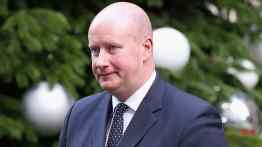
Over twelve hours after Lord Geidt resigned from government, Downing Street has published his resignation letter. In his letter tendering his resignation as the Prime Minister's independent adviser on minister's interests, Geidt raises his concerns over partygate – noting how he 'alluded' to his 'frustration' previously – namely over Johnson's failure to make any public reference to how his conduct related to the ministerial code. However, he says that despite his misgivings over Johnson's handling of the episode and whether the fixed penalty notice counted as a breach, he had ultimately concluded that 'it was possible to continue credibly as Independent Adviser, albeit by a very small margin'.

The January 6 hearings are partisan political theatre

Is it possible to hold two ideas in our heads at once? If so, I should like to put forward a case study. That Donald J. Trump did something that makes him ill-suited for public office, and that the current January 6 hearings in Washington are partisan political theatre. For anybody who was in outer space at the time, it is worth recalling that 6 January 2021 was the day Trump urged his supporters to join him in Washington to ‘Stop the steal’. The outgoing president could not accept that he was outgoing. He did not agree that he had lost the election two months earlier, and though it is now clear that some of his advisers told him that he had lost, he chose not to believe them.

Portrait of the Week: Knighthoods, Northern Ireland and Mick Jagger

Home The British economy contracted by 0.3 per cent in April after shrinking by 0.1 per cent in March, according to the Office for National Statistics. Wages by April were 2.2 per cent lower in real terms than a year before, and economic inactivity fell by only a smidgen (0.1 per cent) to 21.3 per cent. Kwasi Kwarteng, the Business Secretary, urged the Competition and Markets Authority to see whether a 5p cut in fuel duty, from 58p to 53p a litre, was being passed on quickly enough to drivers. VAT at 20 per cent is charged on the price including duty. The Duke of York, on family advice, took no part in the Garter Day procession to see the Duchess of Cornwall and Sir Tony Blair installed.

Boris Johnson’s loss of authority

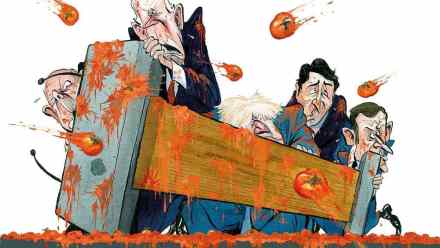
There is an uneasy truce in the Tory party. The 148 MPs who voted no confidence in Boris Johnson last week haven’t suddenly changed their minds, but some of them are prepared to give him a year’s grace to try to turn his premiership around. Others are looking for an earlier opportunity to strike, yet they know it is counterproductive to admit that now. They realise that if they are going to persuade the 1922 executive to change the rules to allow another confidence vote within 12 months they will need to argue that the circumstances have substantially changed. While they wait for the moment to attack, it would not be helpful to their cause if they hinted that they are already working out how to change the rules.

Geidt of the long knives: what the PM’s ethics adviser’s resignation means

Boris Johnson has lost his second ethics advisor since entering No. 10. This evening Lord Geidt announced his resignation as the Prime Ministers's independent adviser on ministers' interests: 'With regret, I feel that it is right that I am resigning from my post as Independent Adviser on Ministers’ Interests.' It’s clearly not good news, yet the timing could have been worse There have been rumours for some time that Geidt – who previously served as the Queen's private secretary – could be on the brink of resigning. He was brought in last April to replace Sir Alex Allan, who quit the role in late 2020 after Priti Patel, the Home Secretary, stayed in post despite being found to have broken official guidance on ministerial behaviour.

The question Boris’s Rwanda plan critics must answer

There are many reasons to oppose Boris Johnson's government’s policy of removing migrants to Rwanda. There’s certainly a moral case against this asylum policy, one which the Church of England’s bishops have presented with some force; and there could be a legal case which the Supreme Court will consider in July. But given the lack of achievements of Boris's government, we should be grateful, at least, that this is a policy that attempts to actually achieve something. For one thing, the Rwanda plan has a definite purpose: to stop the flow of migrants using small boats, often dangerously unseaworthy ones, to cross the English Channel.

Hoyle and grandees declare war on booze

First it was drugs, then it was the press. Now Lindsay Hoyle and the grandees on the House of Commons Commission have turned their guns on the demon drink in a bid to restore parliament's reputation. They are seeking to end the age-old tradition of 'Thirsty Thursdays' in the Palace of Westminster, whereby staff enjoy the freedom of the place while their bosses return to their constituencies for weekend meetings with voters. For now changes have been announced today to restrict the access to Strangers' Bar by the Thames: the favoured watering hole of thirsty MPs who fancy a quick snifter between votes. From tomorrow, the bar will close at 8 p.m on a Thursday before a non-sitting Friday; on the day before a sitting Friday it will now shut at 10 p.m.

Starmer certainly put more welly into it at PMQs

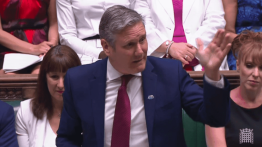
Last week, Sir Keir was monstered by his critics after a feeble performance at PMQs saw him he fail to trouble a wounded Boris. Even his closest allies were in despair. ‘Put some more welly into it,’ advised his deputy Angela Rayner. Today we saw Sir Keir transformed and unleashed. He was flinging wellies in all directions. The search for his inner populist began with a reference to a film released 45 years ago. ‘The prime minister thinks he can perform Jedi mind-tricks on the country …. The force isn’t with him any more … He’s Jabba the Hut.’ He called Boris ‘the ostrich’ and said he was busy massaging the figures to pretend that our flat-lining economy is surging ahead on magical rocket boosters.

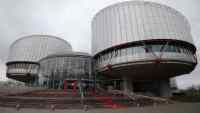
The European court has seriously overstepped over Rwanda

Last night’s abrupt order from the European Court of Human Rights that led to the grounding of the first Rwanda deportation flight delighted progressives everywhere. They will of course say – rather in the fashion of twentieth-century home secretaries calmly refusing to reprieve a condemned murderer – that the law is merely taking its course, and that we should be proud that the rule of law has been upheld. This sounds comforting. It is also wrong-headed. The Rwanda debacle in fact raises very serious questions about the legitimacy of the Strasbourg judges and their interference with national administrations. To remind you of the background, concerted lawfare in the English courts failed to block the flight.

Is the Rwanda flight block a problem for No.10?

11 min listen

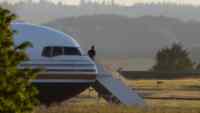
The first flight taking asylum seekers to Rwanda was stalled just before takeoff after a late intervention from the European Court of Human Rights (ECtHR). As Priti Patel returned to the Commons to defend the policy, many Tory MPs are furious at the prospect of the courts taking precedent over government legislation. Could this lead to the UK leaving the ECtHR?Also on the podcast, is Keir Starmer too boring? After growing accusations, the Labour leader has urged his shadow cabinet to stop calling him boring and focus on returning to government. Cindy Yu is joined by Katy Balls and James Forsyth.

PMQs: Starmer is haunted by the ghost of Corbynism

Keir Starmer has of late come under pressure from his shadow cabinet to, in their words, stop 'boring everyone to death'. In response, the Labour leader has told his colleagues that really 'what’s boring is being in opposition'. However, the comments appear to have got under his skin. At today's Prime Minister's Questions, Starmer was notably more confrontational – attacking Boris Johnson on several counts. For all the current criticism of Starmer, stepping out of his comfort zone comes with risks of its own After the Labour leader failed to capitalise on Johnson's internal party woes last week, following the Prime Minister's no-confidence vote from his own MPs, Starmer attempted to remedy things.

Is the western boycott of Russian oil backfiring?

Ukraine’s ability to defend itself against the Russian invasion has surprised almost everyone outside the country, none more so, presumably, than Vladimir Putin. As for the West’s efforts to harm Russia through sanctions on its fossil fuel exports, that is a very different matter. Sanctions have not been entirely useless. According to a report by the think tank Centre for Research on Energy and Clean Air (CREA), they have led to Russia losing over €200 million (£173 million) a day relative to what it was earning at the start of the year: €880 million (£692 million) per day in May compared to €1.1 billion (£951 million) per day in January and February.

The bravery of Carole Cadwalladr

Carole Cadwalladr’s victory over Arron Banks is a triumph for free speech that has come at a cost no free society should bear. For the courts to rule on a passing remark she made in a 2019 TED talk and a tweet about the Leave.EU tycoon, who gave the pro-Brexit campaign the largest donation in British political history, has cost Banks somewhere between £750,000 and £1 million. Cadwalladr’s costs must be about the same, and it is very unlikely that the court will order that she and her supporters be reimbursed all their money. So we are talking about between £1.5 and £2 million for a single case. For three years, as a friend and colleague of Cadwalladr's, I've seen how lawyers have dominated her life.

How the Treasury maintains its power

Don’t bring a bottle. Your chances of finding a party in full swing down those chilly corridors are close to zero. At most, you might hear the sound of a distant flute playing a courante by Lully. As Sir Howard Davies puts it in this insider’s view, which manages to be both authoritative and quite cheeky: The Treasury does not cultivate a warm and cuddly working environment. You may well not know if your immediate boss has a spouse or partner, and would certainly never meet them if they exist. Social events are at a premium. Yet this notoriously ascetic culture is not in the least hierarchical.

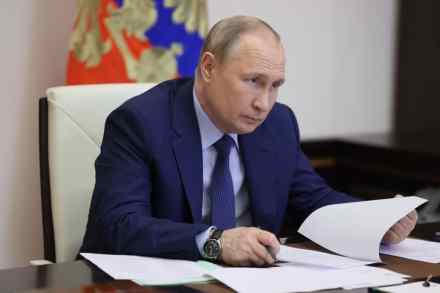
Putin’s Davos flops after sanctions

Oh dear. It seems that starting an unprovoked war is not the best way to inspire foreign investment in your country. For 25 years, the Kremlin has touted the St Petersburg International Economic Forum (SPIEF) as Russia's equivalent of the World Economic Forum, using the summit to try to attract the forces of capital. But after a string of sanctions, it seems that no one from the West now wants to be seen at 'Putin's Davos' this week (quelle surprise). No names of American and European companies or their CEOs are on the published schedule for SPIEF, which begins today and ends Saturday.