Politics

Read about the latest political news, views and analysis

Changing the Northern Ireland Protocol won’t break the law

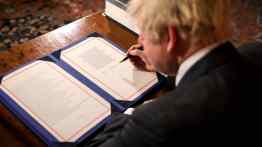
The UK is about to publish a bill that will override parts of the Northern Ireland Protocol. We are doing this unilaterally – the EU doesn't want us to do it, but we're going to do it anyway. Surely that means we’re about to breach international law? It's worth quickly going over why this is happening. The EU wanted to protect its common market, and no one wanted a border down the island of Ireland, so a trade border was placed in the Irish Sea. That has created trade friction between two constituent parts of the United Kingdom. Unionists are unhappy with that arrangement. And unhappy Unionists have led to the suspension of power-sharing at Stormont and therefore a problem for the Good Friday Agreement. So, the UK feels it has to act. But – ah!

The royal rabble vs the Queen

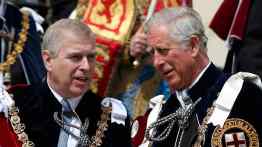
By and large, the Platinum Jubilee celebrations were a success. Barring the odd moment of inexplicable poor taste, it was a well-choreographed blend of pageantry, ceremony and fun, and the deservedly viral clip of Paddington taking tea with the Queen seemed to epitomise a spirit of generosity and togetherness. Yet Her Majesty might be forgiven, looking at the headlines since the Jubilee, for wishing that she could always be in the company of an amiable fictitious bear, rather than her unpredictable and wilful family.

Welsh Tories would be wise to split from the Conservatives

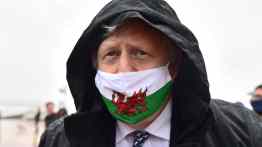
Conservatives in Wales are jumpy. Seeing Boris’s name as poisonous on the doorstep, a number of them have suggested disaffiliating from the national party and forming their own Welsh Conservatives as the party of the right west of Offa’s Dyke. Some in the central party in London are, perhaps unsurprisingly, aghast: one unnamed Tory MP has referred apocalyptically to the Balkanisation of the Conservatives. At least one very vociferously unionist Senedd member, James Evans, is also furious. They should not be worried. Why? Because the break-up of the Tory party is actually rather a forward-looking idea, beneficial in the long term to Conservatism. CCHQ should welcome this plan with open arms. For one thing, the union issue is a red herring.

How much did Sadiq Khan’s California cannabis trip cost the taxpayer?

Like many Londoners, Mr S was baffled to see our beloved mayor cavorting around America last month. As crime in the capital continued to soar, Sadiq Khan found time for a four-day jaunt across the States, in which time London suffered a murder and an eight-man mass brawl at Selfridges. The highlight of Khan's trip appeared to be the right-on Labour man announcing a plan to move towards decriminalising cannabis, even though he, er, has no power to do so. So how much did this joint venture cost the taxpayer? Well, Steerpike's Freedom of Information request has finally got a reply and it turns out that more than £34,000 was spent on the nine-man delegation.

Cadwalladr wins libel case against Banks

Visitors to Westminster this morning might have experienced a meteorological disturbance shortly after 10 a.m as SW1 types took a sharp intake of breath. For Carole Cadwalladr, the ever-online Observer journalist has today won her libel case against brash Brexit-backer Arron Banks, the founder of Leave.EU. Banks tried to sue Cadwalladr for defamation over two instances – one in a TED Talk video and another in a tweet. He claimed he was defamed after comments Cadwalladr made about his relationship with the Russian state. The High Court judgement follows a five day hearing in January and centred on comments she made in a TED talk in April 2019 and a tweet she later posted which included a link to the talk.

The next Brexit battle is here

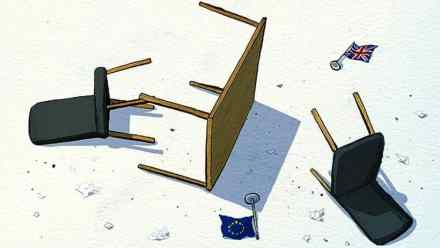
The government will today reveal its plans to unilaterally rewrite parts of the Northern Ireland Protocol. Depending on who you speak to, this is either a necessary step in protecting the Good Friday agreement or a breach of international law set to damage the UK's standing on the world stage. The details of the bill have been subject to government wrangling over the past week. Liz Truss sided with backbench members of the European Research Group of Tory Brexiteers to toughen up the bill while ministers including Michael Gove and Rishi Sunak argued for a more cautious approach.

Will the government stand up to mob rule?

A very big week is in store for the government’s strategy to tackle illegal immigration with all eyes on the planned first air transfer of irregular migrants to Rwanda, due to take place on Tuesday. Whether the flight takes off at all and how many migrants will be on board is yet to be seen. But the policy has already attracted strong adverse commentary from leading lights in Britain’s unelected establishment, from the Archbishop of Canterbury to the heir to the throne. But another struggle over the enforcement of immigration law is being waged at ground level, with the springing up of networks of local activists seeking to prevent immigration enforcement officers accompanied by the police from detaining illegal immigrants to facilitate their deportation.

Did Rishi Sunak really make an £11 billion blunder?

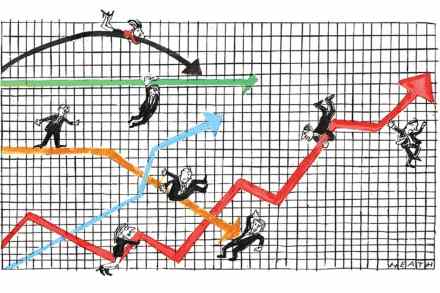
Could Rishi Sunak really have saved the taxpayer £11 billion by insuring against higher interest rates last year? That was the extraordinary claim made by the National Institute of Economic and Social Research (NIESR) and in the Financial Times on Friday. The NIESR claims that the government could have saved the money had the Chancellor taken up the institute’s own suggestion last year and forcibly converted £600 billion worth of reserves held by commercial banks at the Bank of England into two year fixed-rate bonds. By failing to foresee rising inflation and interest rates, the FT asserts, the Chancellor has blown even more money than Gordon Brown did by selling half Britain’s gold reserves at the bottom of the market in 1999.

Sunday shows round-up: Tories ‘united’ behind Boris

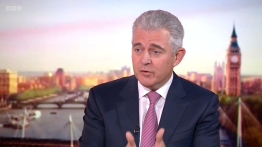
Brandon Lewis: Conservatives are now ‘united behind the PM’ Mounting dissatisfaction with Boris Johnson’s leadership came to a head last Monday when he survived a vote of confidence amongst Conservative MPs by 211 to 148. The party’s rules as they stand mean that his position is now notionally safe for a year. The Northern Ireland Secretary Brandon Lewis spoke to Sophie Raworth about what this result meant for his leadership https://www.youtube.com/watch?v=W0guA_zVE-o CMA will review petrol stations’ practices Raworth asked Lewis about how the government would ensure the cut in fuel duty would be passed on to motorists at the petrol pumps: https://www.youtube.com/watch?

The NHS’s disturbing trans guidance for children

Sajid Javid spoke some sense earlier this week when he said that the word ‘woman’ should not be removed from NHS ovarian cancer guidance. The Health Secretary was responding to the revelations that the NHS website had been stripping the word ‘woman’ from its advice pages. But fine words are only a start. The Health Secretary needs to get a grip on an NHS website that seems in thrall to magical thinking on sex and gender. The problem is wider than he might realise. Quite apart from the row over the advice to women seeking advice on cervical cancer and ovarian cancer, the NHS is currently hosting a page entitled, ‘Think your child might be trans or non-binary?

Boris’s rewilding obsession could backfire

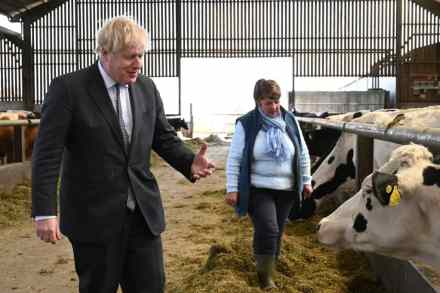
Does Boris Johnson have the faintest idea what he and his government are trying to achieve anymore? I ask because of the Prime Minister’s ‘grow for Britain’ strategy which has been leaked to the Daily Telegraph. The strategy, due to be launched on Monday, apparently demands that farmers grow more fruit and vegetables to make us less reliant on imported food, especially in the face of the Ukraine crisis – which has created the headache of how to continue production and exports from one of Europe’s most agricultural nations. To this end, the grow for Britain strategy will, it is said, commit to ‘changes to planning rules to make it easier to convert land into farms’.

Is Britain heading for a summer of discontent?

With workers across the economy looking set to go on strike during the next few months there is talk of a ‘summer of discontent’. The inspiration for this trope is the infamous 1978-9 ‘winter of discontent’, when despite the urgings of Labour ministers to show pay restraint, poorly paid public sector workers left rubbish piling up in the streets and, legend has it, the dead unburied. When the strikers returned to work the government’s effort to keep wages down was in tatters, along with its perceived authority to govern. There have been many mooted summers of discontent over the years, but none has ever rivalled the original. They have all – appropriately enough given the vagaries of the British weather – ended up as damp squibs.

Will Jeremy Hunt run for PM again?

12 min listen

Has Jeremy Hunt had a good week? When the former health secretary – and 2019 leadership hopeful – announced on Twitter on Monday that he would be voting against the Prime Minister in the confidence vote, Nadine Dorries, the culture secretary, replied that Hunt was 'wrong about almost everything'. Boris Johnson went on to narrowly win the vote, but is that really the end of Hunt's ambitions?  Max Jeffery speaks to James Forsyth and Katy Balls.

Britain’s ivory ban is needlessly draconian

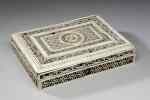
The world’s most draconian ban on the trade in ivory came into force in the UK this month. It does not increase the legal protections already enjoyed by all living elephants, but rather extends these protections to elephants that have been dead for decades. Trade in ivory and most ivory products from elephants killed after 1947 was already illegal; now all trade in ivory except that covered by five narrow exemptions is banned and subject to a maximum penalty of a £250,000 fine or five years’ imprisonment­­ – even if the tusks were last attached to a living elephant centuries ago.

Putin is no Peter the Great

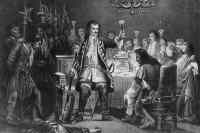
Putin has a penchant for history, but only insofar it flatters him and his views. Last year, he gifted the world a 5,000 essay that essentially pre-justified his invasion of Ukraine with amateurish fantasy history, and now he is comparing himself with Tsar Peter the Great. It is not a comparison that fits or flatters. Peter the Great is one of the, well, greats of the Russian historical pantheon. He ruled from the late 17th to the early 18th century, and in that time became the first tsar to travel in Europe, built a new capital at St Petersburg, and was both founder of the Russian navy and victor, on points, of the 20-year Great Northern War against the Swedish Empire, leaving Russia a dominant Baltic power.

What is the point of the January 6th committee?

30 min listen

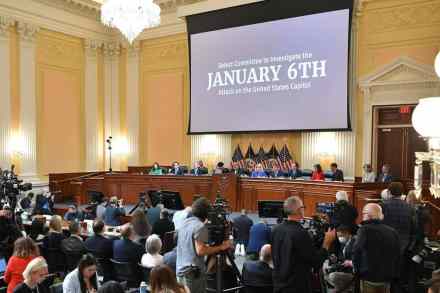
Freddy Gray talks to journalists Jacob Heilbrunn, the editor of The National Interest, and John Daniel Davidson, senior editor of The Federalist, about the beginning of public hearings at the House Select Committee into the events of January 6th 2021.

FT’s Treasury ‘scoop’ shredded by FT readers

Has the Financial Times just been sold another pup? Its economics editor Chris Giles (who predicted that the Brexit vote would lead to recession) has written what could be a Labour Party press release today. He reports as fact a claim by the NIESR, a left-leaning economics think tank, that Rishi Sunak could have saved £11 billion had he taken their advice and taken out insurance against rising interest rates. A startling claim, interesting hypothetical and worthy of a report. It might fall down upon further scrutiny: could the Treasury really ordered the Bank of England to force commercial banks to swap reserves for gilts? Would this not have been a massive gamble that could easily have lost money?