Politics

Read about the latest political news, views and analysis

Sunak still has it all to do

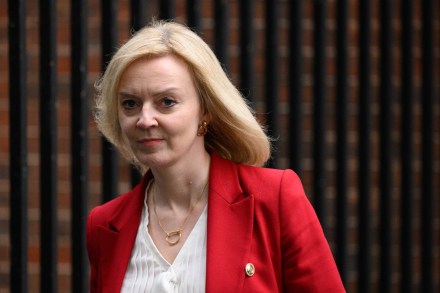
Tonight's membership hustings in the Tory leadership contest showed both candidates – but particularly Liz Truss – relaxing and even enjoying themselves a fair bit. But they also underlined what the two of them feel they have to say in order to get a hearing with their selectorate.  Both had to commit to more grammar schools because this is a policy that – in spite of abundant evidence suggesting it does not improve social mobility or educational excellence in the way the two claimed tonight – the membership and indeed many Conservative MPs get misty-eyed about. Both will also have been very aware of quite how angry many members in the audience were about Boris Johnson being forced out of office, as they see it.

Ben Wallace backs Liz Truss

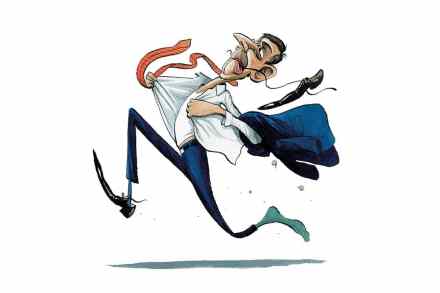
It was the endorsement that they were all after. Ben Wallace, the most popular member of Boris Johnson's cabinet has finally named his preferred candidate to be Britain's next Prime Minister: Liz Truss. The current Defence Secretary, who has won plaudits for his handling of the Ukraine crisis, has given an interview to the Sun in which he extols Truss's virtues. Wallace, who has worked closely with Truss to counter Russia's aggression, told the newspaper that: What you see is what you get with Liz and that is what the public wants more than ever at this moment. She’s authentic. She’s honest. And she’s experienced. I’ve sat next to Liz in the Cabinet for two and a half years. I’ve sat next to her in National Security Councils.

Labour’s trade union troubles

13 min listen

You can always count on Labour to descend into civil war while the media is focused on the Conservative party's in-fighting. After Keir Starmer fired a junior shadow transport minister, Sam Tarry, earlier this week for his involvement in the strike action, the left of the party has hit back, raising questions over Keir Starmer's leadership and the raison d'etre of the Labour party itself. Cindy Yu talks to James Forsyth and Kate Andrews about the best line for Starmer to take, as this will not be the last strike of the summer. On the episode, they also discuss the energy crisis coming in the autumn and what Truss and Sunak plan to do about it.Produced by Cindy Yu.

Rishi’s mad dash

47 min listen

In this week’s episode:Can Rishi catch up?Katy Balls and Kate Andrews discuss Rishi Sunak’s mad dash to catch up with his rival, Liz Truss in the polls (0.55)Also this week:Is it time the UK severed ties with Chinese-made tech?Charles Parton argues this in the magazine this week. He is joined by Dr Alexi Drew, a consultant in emerging technologies and international relations (13.33)And finally: What’s not to love about country-pop music?Sam Kriss writes about this in the magazine. Joining him for the podcast is Rod Liddle, the associate editor at The Spectator (31.01)Hosted by William Moore.Produced by Natasha Feroze.Subscribe to The Spectator today and get a £20 Amazon gift voucher: spectator.

Why the Tavistock clinic had to be shut down

There are many reasons why what is sometimes crudely called ‘the trans issue’ is important. One is the political failure that left the legitimate views of many women (and men) ignored by decision-making individuals and bodies, who instead prioritised the views of interest groups and campaigners. Another is the multiple failures of governance that have seen numerous public bodies fail to deal properly and responsibly with questions of real public interest, because of their enthusiasm to follow the subjective agenda of interest groups rather than amass and act on objective evidence. Simply put, organisations that are supposed to make decisions on the basis of facts have sometimes chosen to proceed on the basis of feelings and claims.

Could Boris return?

Asked recently whether Boris Johnson, Britain’s soon-to-be-ex-Prime Minister, would ever return to the highest elected office in the land, super-loyalist Nadine Dorries enigmatically replied: ‘Who knows what the future will hold?’ With Johnson allies reportedly looking to trade a safe Conservative seat in return for a peerage with any elderly MP hoping to secure a retirement in ermine, it looks like the hero of 2019 is, at the very least, thinking of making a come-back before he has even gone. Indeed, most polls suggest the next general election will be disastrous for the Conservatives and predict Johnson’s constituency of Uxbridge will fall to Labour. With being an MP a prerequisite to standing in any leadership contest, Johnson is keeping his options open.

Fact check: would nationalised energy help UK taxpayers?

Soaring prices have again reignited one of the long-running debates in British politics: should the energy companies be re-nationalised? The Trades Union Congress (TUC) certainly seem to think so, having produced a pithy film which purportedly compares the two sectors in the UK and France. It features a rather baffled looking Brit and a smug looking French girl. The former claims 'in Britain, billions in profits go to private energy companies'; the latter that 'in France, the profits go back to EDF, which is publicly owned by the French people so the profits go back to us and keep the bills lower.' They contrast the 54 per cent increase in bills in the UK this spring with the 4 per cent with that in France.

The next PM’s growing to-do list

In theory, the Conservative leadership contest could have stretched to the autumn, but the 1922 Committee and CCHQ decided to crunch the timetable due to the sheer number of crises facing the country. So Tory MPs had only a fortnight to choose the final two candidates, which did perhaps change the course of the race. Given the support that Kemi Badenoch managed to raise in a short period, it is not hard to imagine her being in the last two if she had been given more time to make her case. A longer contest would also have allowed the Tories more time to think about what changes they need to make if they are to win a fifth term. But for all the problems posed by a short competition, the essential logic of that judgment holds.

Rishi’s mad dash: can he catch up with Truss?

Just a couple of weeks ago, Rishi Sunak was the clear bookies’ favourite in the Tory leadership contest. He had the largest parliamentary support and was set to top every round of MPs’ voting. He had 20,000 volunteers, a well-organised team, a slick launch – and (he thought) all of August to convince party members that he was the real deal. His strength, his supporters argued, was a firmer grasp of policy and better verbal dexterity than his opponents. So the final format – a dozen head-to-head debates – would give him time to win. Then, disaster. The Tories became paranoid that the unions could sabotage the process with a Royal Mail strike, so Conservative campaign headquarters announced they would send out the voting papers almost as soon as the final two had been selected.

Trussonomics doesn’t add up

I’ve been lucky enough in my working life so far to hold a string of jobs that have allowed me – if not actively encouraged me – to be critical of government. Coming up through Westminster thinktanks in my twenties, I had great fun putting out press releases that tore apart bad public policy. When I had the opportunity to speak to MPs, they’d remind me of the ‘political realities’ that tied their hands and prevented change. In other words, check your policy privilege. Thinktank wonks, commentators and journalists can make all the punchy points they want; they don’t face re-election.

‘You can’t have your cake and eat it’: Rishi Sunak talks to Charles Moore

The morning after the first one-on-one Tory leadership debate, Rishi Sunak came to 22 Old Queen Street to speak to Charles Moore for SpectatorTV. This is an edited transcript of their conversation. CHARLES MOORE: Rishi Sunak, welcome to the offices of The Spectator. Just a preliminary – because you mentioned it first in the debate last night [Monday] – David Trimble died and you paid tribute to him. Almost the last thing he intervened on in public life was on the Northern Ireland Protocol. He was worried because he said it threatened the Belfast Agreement. Do you agree? RISHI SUNAK: David Trimble was someone who did an enormous amount to support the Union and bring peace to Northern Ireland, and we’ll miss him dearly for that.

Prince Harry presiding over ‘toxic boys’ club,’ former employees claim

Steerpike is fond of a periodical check-in with modern Renaissance men. And they don’t come much more multi-talented than Prince Harry, Duke of Sussex, Mr. Meghan Markle, formerly HRH. Following his departure from official royal duties, the people’s prince has kept busy by locking himself into lucrative positions at some of the planet’s most prestigious companies. His multiple deals — Netflix and Spotify to name two — were not uncommon for an up-and-coming sleb, but the most bizarre of his roles was joining the ‘mental fitness’ start-up BetterUp as ‘chief impact officer.’ Oh, how we smirked, with the occasional eye roll, firm in the belief that he’d be back in Britain soon enough, grovelling to granny for his lovely old life back.

Biden’s word play can’t save the United States from a recession

Some denials are more worrying than their absence. A company insisting that its director will be vindicated by the forensic auditors is unlikely to succeed in calming investors; a sports team insisting it has total confidence in its coach is likely to receive a flurry of speculative applications; and a president insisting that 'we’re not gonna be in a recession in my view' is unlikely to do consumer confidence a great deal of good. The major difference here is that the White House has the advantage of being able to mark its own homework. No matter what today’s GDP data shows, Biden’s team will be able to claim the US is not in recession by the cunning mechanism of simply choosing a different definition. Output’s fallen for two quarters in a row?

Truss gambit outflanks Sunak on China

Talk about a tale of two campaigns. China has been one of the dominant themes this week in the Tory leadership race. Both candidates knocked lumps out of each other in BBC's Monday debate, with the Foreign Secretary suggesting she could even ban TikTok. But tonight, the issue has reared its head again twice within a few hours. First, Rishi Sunak was left embarrassed by a leaked Treasury paper which suggested he was close to signing a deal with Beijing to 'deepen trade links' earlier this year. It boasted 47 pages of 'policy outcomes' for closer ties in 20 areas. They included inviting a huge Chinese sovereign wealth fund to open a London office and welcoming the listing of Chinese companies on the London Stock Exchange.

Has Rishi U-turned on tax cuts?

10 min listen

Having spent the last four debates suggesting that tax cuts are irresponsible and immoral, Rishi Sunak says he will cut VAT on energy bills if he becomes the next prime minister. Those defending him have suggested that this particular tax cut is temporary, it is funded and will help ease the cost of living crisis. Are they right?Katy Balls is joined by Kate Andrews. Produced by Natasha Feroze.

Has the lab leak theory really been disproved?

The BBC carried a story this week with the headline ‘Covid origin studies say evidence points to Wuhan market’. Bizarrely the paper in Science they are referring to, by Michael Worobey and colleagues, says no such thing. It says: ‘the observation that the preponderance of early cases were linked to the Huanan market does not establish that the pandemic originated there’. All three of the scientists quoted in the BBC story have been highly dismissive about even discussing the possibility that the pandemic began as an accident in a Wuhan laboratory. Their vested interest is clear: they worry that the reputation of their field of virology would be threatened by such a discussion.

Labour MPs cheer ‘drag story hour’

Summer recess is here and MPs are competing for the Tory leadership or jetting off on their hols. For some, though, they prefer to remain in their constituencies. Stella Creasy, the right-on MP for Walthamstow Central, chose to go to 'Drag Story Hour UK' with her infant son. She wrote on Twitter yesterday that she had 'a lovely afternoon' with 'the wonderful Greta who put so much energy into story telling and entertaining local children.' Her colleague Nadia Whittome replied by saying 'this is so wholesome.' Yet it seems not all in the UK share the enthusiasm for 'Drag Story Hour,' which began with drag queens in the US in 2015. For an ongoing nation-wide tour of council libraries descended into chaos earlier this week when an event at Reading Borough Council was stormed by protesters.