Politics

Read about the latest political news, views and analysis

Putin at 70: How The Spectator has covered his life

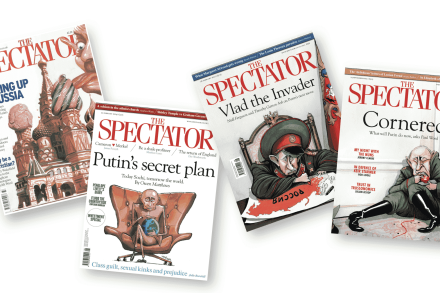
Vladimir Putin turns 70 today. Since he became Prime Minister of Russia in 1999, some of The Spectator's greatest contributors have asked the perennial questions: who is Putin, and what does he want? We've compiled the following pieces from our fully-digitised archive.  ‘Joking with a nine-year-old boy at a televised awards ceremony by the Russian Geographical Society, President Vladimir Putin said: ‘The Russian borders don’t end anywhere.’’ Portrait of the Week, 1 December 2016 Appointment as Prime Minister  ‘Not surprisingly, given his background, Putin has a lugubrious and somewhat sinister manner.
Liz Truss’s fate rests with the Bank of England

James Carville, an ostentatiously aggressive adviser to Bill Clinton, once said that when he died, he wanted to be reincarnated ‘as the bond market – you can intimidate everybody’. Carville and Clinton had learned something that a lot of people in UK politics seem to be overlooking. The bond market, where government loans (gilts, in the UK) are traded, can decide what governments can – and cannot – do. It can also determine whether governments survive. But because bonds are boring and a bit complicated (yields go up as prices go down – what does that even mean? And what on earth is a yield curve?) they don’t get enough attention.

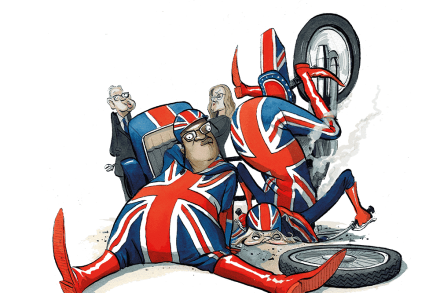
Crash course: how the Truss revolution came off the road

37 min listen

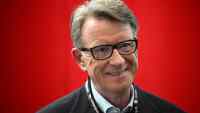
On this week's podcast: As Liz Truss returns from Conservative Party Conference with her wings clipped, has she failed in her revolutionary aims for the party?James Forsyth discusses this in the cover piece for The Spectator, and is joined by former cabinet minister and New Labour architect Peter Mandelson to discuss (01:08).Also this week: Is it time that the West got tough with Putin?Mark Galeotti writes in this week's magazine about the likely scenarios should Putin make good on his thermonuclear threats. He is joined by Elisabeth Braw, fellow at the American Enterprise Institute, to consider how the West should respond (13:14).

Has Team Boris turned on Truss?

17 min listen

Nadine Dorries, a loyalist to Boris Johnson, has a front-page piece in the Times today, accusing the new Liz Truss government of lurching too far towards the right. As someone who previously backed Liz for leader, is there a growing sense that people wish Boris never left? Also on the podcast, the National Grid has suggested we may face blackouts this winter – how likely is this? And will we end up relying on energy supplies from the French?Cindy Yu speaks to Katy Balls and James Forsyth.Produced by Natasha Feroze.

Sadiq Khan’s strange stabbing statement

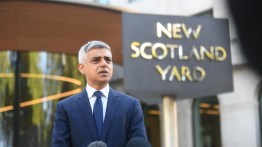
What an odd thing Sadiq Khan said following this morning’s stabbings in central London. Shortly before 10 a.m., three people were attacked by a man on a bike in Bishopsgate. The criminal is still at large, according to the Telegraph. This horrifying incident was no surprise to Londoners, so you would think that the Mayor would – from experience – strike the right chord. Instead, Khan had this to say: The good news is, it’s not a terror attack. And another piece of good news is the three victims of the stabbing are not in life-threatening situations, thank God. But it’s just a reminder of the dangers of carrying a knife… Where was the Mayor while the carnage was unfolding?

The preventable death of the Scottish Tories

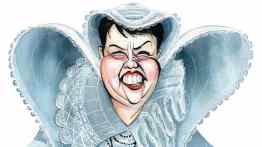
The Ruth Davidson era is over. It has been three years since the now Baroness Davidson stood down as leader of the Scottish Tories, but the last decade of opposition politics has belonged to her. It was Davidson who parlayed opposition to independence into tactical support for the Scottish Conservatives, convincing a section of older, blue-collar Labour voters to lend her their vote to stop the SNP. In doing so, she took the Tories from third to second place at Holyrood and, in 2017, to their biggest win in a general election since the days of Margaret Thatcher. What she failed to do was make the Scottish Tories a viable party of government (a tall order at the best of times) and now the gains she made look set to be reversed.

How likely are the lights to go out this winter?

Britain will make it through the winter without the lights going out. That’s the view of the National Grid, which is responsible for Britain's energy system. You'd be forgiven for thinking otherwise based on the BBC's headline: 'Homes face winter power cuts in worst-case scenario, says National Grid'. But Fintan Slye, executive director of the grid, offered some words of reassurance:  ‘Under our Base Case we are cautiously confident that there will be adequate margins through the winter period.’  In other words: the lights won’t go out. In the scenario considered most likely, we’ll be left with a small margin of six per cent – or just under four gigawatts (GW) of unused capacity.

Many Europeans continue to yearn for British leadership

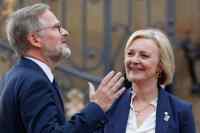
Liz Truss's mind was probably elsewhere when she arrived in Prague for the inaugural summit of the European Political Community (EPC) today. After precipitating a financial panic, backtracking on tax reform plans, and seeing her approval rating plummet to -37 within a week, the Prime Minister has a lot on her plate. It would be a mistake, however, for the PM not to seize the opportunity to strengthen the leadership role the UK is currently enjoying among much of Central and Eastern Europe, and the Nordic states. Despite its French DNA, the idea of an EPC is a sound one.

Opec’s oil cut spells more bad news for Brits

Liz Truss joins other European leaders in Prague today at the first meeting of the European Political Community. Truss’s presence is sensible, a reminder of Britain’s point that it left the EU, not Europe as a whole. It should also help relations with Emmanuel Macron given how much he has invested in this project. One of the subjects discussed will be energy. The conversation will focus on Putin’s weaponisation of energy and how to keep the lights on this winter. But the anti-Russian alliance has suffered a blow after the news that the Opec+ countries, which include Saudi Arabia and Russia, are going to cut oil production by two million barrels a day. Already, oil prices have risen on the production cut. The White House has angrily condemned the move.

Iran’s leaders are fighting a losing battle

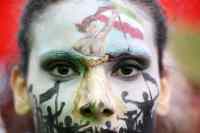
Iran's rulers are holding firm. The country's Supreme Leader Ayatollah Khamenei has expressed sorrow at the killing of Mahsa Amini – who died last month after being arrested by the state's morality police – while squarely, and unsurprisingly, blaming foreign agitators for the protests that have followed. Ominously, Khamenei has said the protestors are not ‘real Iranians’ – a statement which echoes his crocodile tears in 2009 before he unleashed a bloody crackdown. Protesters have a key advantage over the regime Hundreds died during those and subsequent demonstrations, in 2017 and 2019, as state security forces struck back against ordinary Iranians who had taken to the streets.

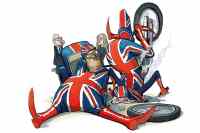
Crash course: how the Truss revolution came off the road

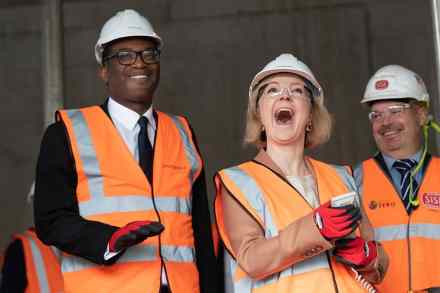
Liz Truss and Kwasi Kwarteng wanted to shake things up. They were radicals in a hurry, keen to show that Britain was under new economic management. Theirs would be an unapologetic pro-growth agenda: no more genuflection in front of failed orthodoxies, no more being paralysed by fear or criticism. As a sign of this, they abolished the 45p tax rate for the highest earners: a move that many Tories longed to make, but did not dare. It seemed Truss and Kwarteng would leap in where other Conservatives feared to tread. This lasted just ten days. As the tax plan was reversed and No.

Will the free-market cause ever recover from Liz Truss?

In theory, I should be delighted about the Liz Truss project. She is saying the things I’ve been arguing for years: talking not just about lower taxes but about basic liberty and how it relates to everyday life. She’s passionate about these ideas – and sincere. I remember watching her deliver a rallying cry, a salute to the ‘Airbnb-ing, Deliveroo-eating, Uber-riding freedom fighters’. This was just over three years ago when she was a Treasury minister. Her speeches were getting punchier and her one-liners becoming newsworthy and memorable. She was turning into one of the most recognisable faces of classical liberalism in Britain – a development which clearly delighted her. Truss asked for this job.

Could it be Rishi by Christmas?

What was supposed to be a recovery moment for the Conservatives instead looks like a collective nervous breakdown. The Prime Minister has been forced to U-turn on her flagship tax plan. Her cabinet is in open rebellion. Tory party conference resembled a civil war. The latest polling suggests the party is heading for electoral extinction. And that’s after just four weeks of Liz Truss’s premiership. ‘I know we have had a series of crises but this one really feels like the worst yet,’ says one seasoned government aide. Some Truss supporters are showing signs of buyer’s remorse. ‘I didn’t know it would be this bad,’ says one MP who backed her.

Things can always get worse

As I was saying, way back in July, it is hard to love the Conservative party. Every time it tries to navigate another bend in the road it ends up causing a disaster even its most ardent critics could not have foreseen. ‘Things can’t get any worse,’ said rebels in the party while Boris Johnson was still PM, before the summer. Then we were introduced to Liz Truss. Now, within weeks of her taking office, you can hear members of the parliamentary party saying with vigour: ‘She has to go.’ At which point I feel the country wanting to place our collective heads in our hands, yell and walk away. Does anyone have time for all this? Does the Conservative party just plan to hold endless leadership contests in perpetuity while the country looks on?

How should the West respond to Putin’s threats?

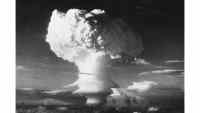
Vladimir Putin clearly wants us to worry that he is crazy enough to use a tactical nuclear weapon in Ukraine. This fear was intensified this week when images surfaced that some – possibly in error – believed showed a train operated by the secretive nuclear security forces moving towards Ukraine. Despite this, many believe the likelihood of a nuclear attack remains extremely low. Yet it is a plausible enough threat for the West to be considering how it should respond if Putin were to unleash one. Russia has an estimated 1,900 non-strategic nuclear weapons (NSNWs), from artillery shells to warheads for missiles; their yields range from a mere 0.5 to 100 kilotons, more than twice the power of the bomb that devastated Nagasaki.

Who has the most nuclear weapons?

Out of office Could Liz Truss end up being Britain’s shortest-serving prime minister? She would have to remain in office until 2 January to outlast George Canning, who was PM from 12 April 1827 until his death on 8 August of that year. Like Truss, Canning had served as foreign secretary, where he was credited with boosting trading opportunities for British merchants. However, he became leader of a divided Tory party, which split between his supporters and those of Sir Robert Peel and the Duke of Wellington. Tax returns Some countries by the top rate of income tax: Japan 56% Denmark 55.9% Sweden 52.9% Belgium, Israel 50% Netherlands 49.

I feel sorry for Kwasi Kwarteng

In Singapore last week, I was asked: do ministers just come in, reach for the dumbest available policy and go ahead without asking anyone what the consequences will be? I explained the mindset. They do not ask because they do not want to hear the reply. In their minds, they are up against old thinking that just wants to keep Britain on the same declinist path – or ‘cycle of stagnation’ as Kwasi Kwarteng described the record of his Tory predecessors – and if you want to break new ground, don’t ask the people who will always say no. This is what Labour’s far-left Bennite wing think. Labour ministers didn’t try proper socialism because they were cowed by a combination of ‘experts’, the civil service and the City establishment.

Portrait of the week: Tory party conference, gas supply warning and Denmark’s royals stripped of titles

Home Liz Truss, the Prime Minister, came up with a message for the Conservative party conference: ‘Whenever there is change, there is disruption… Everyone will benefit from the result.’ Her words followed a decision not to abolish, after all, the 45p rate of tax, paid by people who earn more than £150,000 a year. Backbench Conservative MPs had let it be known they would not vote for it. ‘The difference this makes really is trivial,’ said Paul Johnson, director of the Institute for Fiscal Studies thinktank. But the pound rose and the government was able to borrow a little more cheaply. Kwasi Kwarteng, the Chancellor of the Exchequer, told the conference: ‘I know the plan put forward only ten days ago has caused a little turbulence. I get it.