Politics

Read about the latest political news, views and analysis

Why are MPs able to claim Christmas parties on expenses?

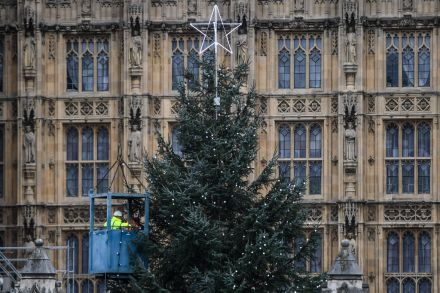
What was Ipsa thinking? That's the question MPs are asking today after it emerged that the parliamentary spending regulator has decided MPs can claim for their office Christmas parties on expenses. There’s never a good time to make that kind of decision, but particularly not when their constituents aren't even turning their heating on or using their ovens.Ipsa issued the guidance in one of its regular bulletins, telling members that they could claim for food, decorations and non-alcoholic drinks for an 'office festive event' but that it needed to 'represent value for money, especially in the current climate'.
Will the UK’s economy shrink next year?

The OECD has marked Britain down as the only G7 country (and the only major country bar Russia) expected to suffer a shrinking economy next year. But how accurate are its predictions? A year ago, it predicted that inflation in the UK would peak at 4.9 per cent in the first half of this year before falling back to 2 per cent by the end of next year. The economy was going to grow by 4.7 per cent this year followed by a further 2.1 per cent in 2023. The government would bite off any hand that offered that now. It can be excused for failing to predict the Russian invasion of Ukraine. But this is hardly the first time economic forecasting by the OECD and everyone else has proved somewhat wide of the mark.

What is Keir Starmer’s plan for growth?

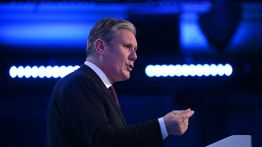
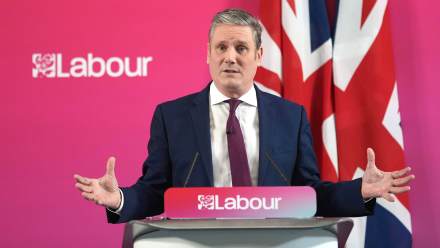
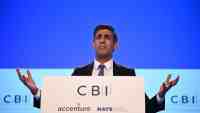
A few vague promises about upgrading skills. And something or other about promoting innovation and raising productivity. Sir Keir Starmer did not exactly set the world alight in his speech to the CBI today. Given that he is twenty points ahead in the opinion polls, and sometimes more depending on the latest Tory implosion, perhaps he felt he didn’t need to. Instead the Labour leader seemed content to confirm a point that was already obvious to anyone: the Prime Minister doesn’t have a plan for growth. And the prime-minister-in-waiting doesn’t have one either.  Rishi Sunak’s talk to the CBI yesterday was not exactly a hard act to follow. Over 40 minutes, the PM waffled his way through some guff about balancing the books.

Scotland is getting sicker

For Scotland to stay at its current levels of health in 20 years’ time it would have to entirely eradicate cancer. That’s according to the Burden of Disease study published this morning by Public Health Scotland.   The report found that although the country’s population is projected to fall in the next two decades, its annual ‘disease burden’ – the impact of morbidity and mortality on population health – is forecast to increase by some 21 per cent. ‘In order to achieve a similar level of disease burden as 2019’, they say it would need to be reduced by 17 per cent by 2043 – ‘which is equivalent to eradicating the entire disease burden of cancer in 2019.

Starmer tries to talk tough on immigration

When Keir Starmer went on the offensive at Prime Minister’s Questions earlier this month over the issue of small boat crossings, it was taken as a statement of intent: the Labour leader was willing to go on the offensive over topics on which his party had traditionally been vulnerable in the eyes of the electorate. This morning, Starmer laid out his vision for immigration more generally. Speaking at the CBI conference in Birmingham, the Labour leader has warned that the days of ‘cheap labour’ and ‘immigration dependency’ must end: ‘Our common goal must be to help the British economy off its immigration dependency. To start investing more in training up workers who are already here.

What trans activists can learn from Chelsea Manning

Chelsea Manning, who leaked hundreds of thousands of military and diplomatic records about the wars in Iraq and Afghanistan to Wikileaks, is revered by some. ‘The biggest hero that ever lived,’ says Vivienne Westwood. To others, like Donald Trump, Manning is an ‘ungrateful traitor’ who should still be in jail.  To Trump’s fury, one of Barack Obama’s final acts as president was to release Manning. The former US army intelligence analyst is using that freedom to tour the world on a speaking circuit – but there’s something the former US soldier is not so eager to talk about: sex and gender. A day after Manning was sentenced back in 2013, Bradley became Chelsea. ‘I am a female,’ Manning said of the transition.

Emmanuel Macron shies away from confronting the migrant crisis

On the Sunday that Britain honoured its war dead, France remembered its fallen from the terrible evening of 13 November, 2015. One hundred and thirty Parisians were massacred at various venues across the capital. A subsequent investigation revealed that two of the Islamist terror cell had entered Europe from the Middle East by blending in among migrants. A year after the Paris atrocity, Monika Hohlmeier MEP, the European Parliament's chief negotiator on a new European terrorism law, outlined the EU’s determination to keep its citizens safe from future attacks. Hohlmeier placed particular emphasis on tightening the 'great deficiencies that became visible at the EU's external borders over the last months'.

Indyref2 supporters embarrass themselves (again)

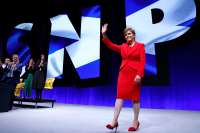
Oh dear. The nationalists are at it again. In the past 48 hours, two examples have shown how –despite being Scotland's main governing party for the past 15 years – old habits die hard in the SNP, where protest and grievance are the de facto response to any minor irritation. First, consider the BBC News story that NHS Scotland chiefs had discussed abandoning the founding principles of the health service by having the wealthy pay for treatment. The basis for the story could not have been stronger: mention of a 'two-tier' health service had appeared in draft minutes of a meeting of the country's NHS leaders in September. Yet that did not stop furious pro-independence supporters from enacting a pile-on against the BBC for having the audacity to publish an accurate and truthful story.

Flashback: Hunt’s deputy PM promise

What a year it's been for Jeremy Hunt. Just four months ago, he was running to be Tory leader on a platform of lower taxes. Back then he was urging his party to cancel Rishi Sunak’s planned rise in corporation tax and instead reduce the rate from 19 per cent to 15 per cent. Now of course it is Sunak in No. 10, with Hunt next door hiking the tax up to 25 per cent next April. Such tax rises have, unsurprisingly, alienated much of the Tory right, including Hunt's erstwhile ally Esther McVey. As Christopher Montgomery of the Critic notes, back in July Hunt wanted to make the Brexiteer his deputy PM as the pair would 'be a formidable campaigning team.

Rishi Sunak’s real Brexit problem

Are we heading for a return to Brexit wars? It's been the theme of the week so far after the Sunday Times splashed on a report that senior government figures plan to put Britain on the path towards a Swiss-style relationship with the European Union. A backlash quickly ensued, with Tory MPs privately sounding the alarm. Former leader of the Brexit Party Nigel Farage threatened a political comeback if it proved true. Little wonder then that since the weekend, there has been a concerted effort in No. 10 to pour cold water on the reports. As one minister puts it: 'We need to do a much better job of promoting the benefits of Brexit.

Hunt faces the wrath of Tory donors

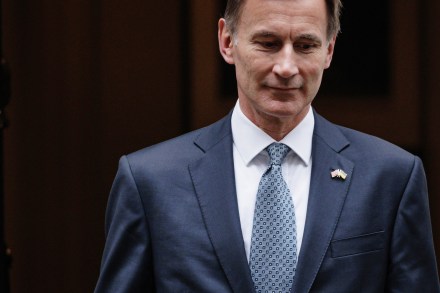
The Autumn Statement was truly awful: no rabbits, no silver linings and no growth. But amid the many groups suffering this Christmas, spare a thought for high-earners — those much-despised but ever-necessary wealth creators. The 45p top rate of tax now applies to anyone earning over £125,140, with fiscal drag pulling many more in. The energy profits levy will increase total oil and gas tax from 65 per cent to 75 per cent in January (initially 40 per cent) with corporation tax to go up from 19 per cent to 25 per cent. Soaking the rich might be good politics, but Steerpike understands that hiking taxes hasn’t been pain-free so far for Jeremy Hunt.

How do the Tories solve a problem like the NHS?

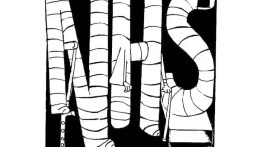
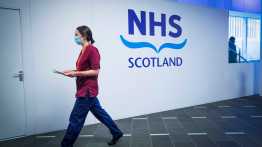
The past few days have seen some welcome candour about the NHS in England and Scotland. English Health Secretary Steve Barclay has been preparing the English public for long waits that will still be a major issue at the next election. NHS Scotland, meanwhile, has been discussing the possibility that a ‘two-tier NHS’ might end up being the norm. Barclay is also keen to scrap as many targets as possible in the health service, which is in part an admission that many of the most high profile ones haven’t been met for years. It is also a sign of an important shift in the treatment of the health service by the top brass.  Barclay did his pitch-rolling on waiting lists and targets in the Sunday morning broadcast round.

Is the NHS in Scotland about to ‘fall over’?

Will NHS Scotland withstand the winter? According to draft minutes of a meeting of CEOs from each health board in September, there is growing concern the health service will not be able to operate normally over the winter months. It ‘is not possible to continue to run the range of programmes’ it reads, before stating that ‘unscheduled care is going to fall over in the near term before planned care falls over’. The warning fits a pattern.

Is the government trying to soften Brexit?

13 min listen

Over the weekend, government briefings that they will be looking towards a Swiss-style arrangement with the EU reignited the Brexit rows. Dormant Brexiteers like Nigel Farage and the European Research Group resurfaced, making it clear that they would not accept a so-called 'Chequers 2.0'. On the record, the government has been keen to reject this briefing. So what really happened? Katy Balls speaks to Fraser Nelson and James Forsyth. Produced by Cindy Yu.

Why does Rishi Sunak sound so desperate?

A year ago Boris Johnson lost his place in his speech to the CBI annual conference. He started blathering on about Peppa Pig World, after having treated young Wilfred to a day out there the day before. It was excruciating, but at least it was fun. It is hard to say the same about Rishi Sunak’s address to the CBI this morning.  The CBI ought to be a natural habitat for Sunak, yet he didn’t seem entirely comfortable. His voice seemed a tone higher than normal, so his usual enthusiasm sounded something more like a desperate appeal. He wanted us to know that innovation is a good thing which improves productivity and creates wealth. But doesn’t everyone think that (except perhaps the Green party)?

Will beefy Botham get bowled out?

Much was made of Ian 'beefy' Botham's ennoblement in 2020. The hero of Headingley was the headline announcement of the 36 new peers created in Boris Johnson's dissolution honours' list; a year later he received another bauble as a UK trade ambassador to Australia. The then Trade Secretary Liz Truss claimed he would 'bat for business down under', with the cricketer subsequently undertaking a nationwide tour Down Under in June this year. Botham's Brexit-backing credentials have earned him fans in government but that enthusiasm isn't shared by all in the Upper House. Given his many sporting and philanthropic commitments, it's perhaps no surprise that the cricketing icon hasn't turned out much in the chamber.

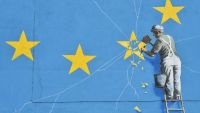
The Swiss-style Brexit delusion

Rotation is the clearest sign of intellectual muddle. When Britain left the EU, some leave supporters thought they could negotiate a bespoke agreement that would give them all the benefits of membership but none of the obligations. Then it was the Swiss model. Remember Chequers? It was the beginning of the end of Theresa May. The deal she finally negotiated would have kept the UK in the single market and the customs union for several years. The deal that was finally adopted comes under the moniker of Canada: a classic free trade deal. Now the government is contemplating a rotation back to the Swiss model. After a predictable outcry following the reports in the Sunday Times, this has now been denied.

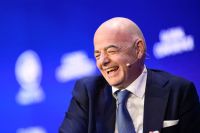
Fifa’s president has exposed the trouble with ‘decoloniality’

I laughed aloud when I heard Gianni Infantino, president of Fifa, identifying himself sanctimoniously with a whole list of disadvantaged people because he too was a victim: he was teased at school for having ginger hair.  I had teenage spots, so can I claim unique insight into the sufferings of the Uighurs?  That some of those he listed owed their disadvantage to Qatar and its Fifa partner – exploited migrant workers, notably, and gay fans – seemed not to disturb his tranquil assumption of the moral high ground. In its rambling incoherence, shameless narcissism and bare-faced hypocrisy, his speech put its finger on some of the key absurdities of what passes for progressive ethics in 2022.