Politics

Read about the latest political news, views and analysis

What does the Supreme Court ruling mean for the SNP?

14 min listen

Starmer and Sunak have today come up against each other at PMQs for the first time since the Autumn Statement. It was an occasion dominated by questions from the Scottish Nationalists on the decision handed down by the Supreme Court ruling against a new independence referendum.  James Forsyth and Isabel Hardman discuss.  Produced by Oscar Edmondson.
The Tory planning row is becoming increasingly bitter

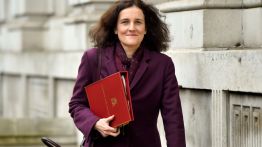
The Tories are really wheeling out all the greatest hits for party rows at the moment. Not content with a fight over the weekend about Brexit, they’re now having an increasingly bitter scrap about planning reform. Last night, ministers delayed a crunch vote on top-down housing targets after it became obvious they were going to have a serious revolt on their hands. The second day of the report stage of the Levelling Up and Regeneration Bill has been put off from Monday to a date in the near future – government sources tell me they are still expecting a vote before Christmas – after Theresa Villiers gained the support of 46 Tory MPs for her amendment which would make housing targets advisory.

Sturgeon’s referendum plan could ruin the independence dream

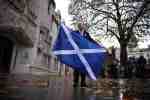
So much for Plan B. Supporters of Scottish independence are putting a brave face on the emphatic ruling by the Supreme Court that – surprise, surprise – the Scottish parliament does not have the power to call a referendum on independence. Lord Reed cast aside the sophistry that ballot would be ‘merely advisory’ — so are all referendums under the UK constitution. And of course a referendum on Scottish independence would ‘relate to' the constitution which is reserved to Westminster. Sturgeon will now be unable to proceed with her referendum scheduled for October next year – not that anyone serious thought it likely to happen. Why anyone believed that the Supreme Court of the UK would facilitate the break up of the UK is a mystery.

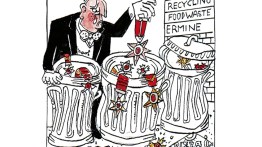
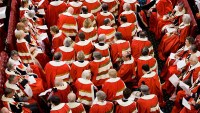
MPs won’t ditch the House of Lords

The Supreme Court decided rightly on Wednesday, rejecting the Scottish government’s claim that a second referendum on independence was not a ‘reserved matter’. But since it was obvious from the beginning that this was the case, why did Nicola Sturgeon insist on bringing an unwinnable action? Presumably to lay blame, as usual, on UK authorities. The Supreme Court is presented as the enemy of the people, Ms Sturgeon conveniently forgetting that the people, when last asked, voted against independence and may not wish to be asked again in the hope that they will give the ‘right’ answer. The SNP will now claim that the next Scottish parliament election will be amount to the referendum ‘London’ has forbidden. Will this help the SNP?

Why Starmer’s going after the Lords

It’s not just the government that’s now beholden to forecasts from the Office for Budget Responsibility. Keir Starmer told the BBC that Labour doesn’t ‘quarrel with the number that the OBR put out as a target or trying to get the debt down’. So Starmer accepts that the government needs to find around £50 billion through spending cuts or tax rises to get debt falling as a percentage of GDP in the medium term. This applies not only to the current government, but to any government he may run in the future. Of course, Labour stress that they would make ‘different choices’ to the Tories in how they close a fiscal gap of more than £50 billion.

Sunak and Starmer risk getting too comfortable at PMQs

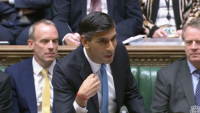
Keir Starmer and Rishi Sunak seem to be settling into a comfortable but largely unremarkable slanging match at each Prime Minister's Questions. Today the pair traded one-liners about each other while failing to land any blows or indeed move the political debate along at all. The Labour leader opened by condemning Fifa and the behaviour of the Qatari regime during the men's football World Cup, before performing a handbrake turn to talking about the economy. Sunak had been leafing through his briefing notes to find the section on Qatar, but found himself instead responding to a question about why Britain faces the lowest growth of any OECD country over the next two years.

It could soon be game over for Nicola Sturgeon

The idea that a referendum on Scottish independence could be held without it having any bearing on the constitution of the United Kingdom was – though Lord Reed did not quite put it like this – utterly preposterous. This was what the Scottish government argued, however: Holyrood could legislate for a referendum because such a plebiscite would be of no consequence. As a matter of common sense this was evidently specious nonsense; as a matter of law, it is an argument which has been rejected by the Supreme Court today.  Sturgeon’s response was risible. Lord Reed’s judgement that Scotland is neither a colony nor an oppressed nation actually demonstrates that it is.

What the media is doing to our politics

An American academic told me that during the 2016 presidential election nobody in academia believed there was the faintest chance Donald Trump would win. Except for the primatologists, that is. It was that silverback gorilla, alpha male thing – and Trump played the role freakishly well. One election tweet showed him enthroned in his private jet eating a KFC meal, gravy and all. This said ‘I have a Boeing 757 with monogrammed headrests, but I eat the same food as you.’ That’s anthropological gold, right there. No one could imagine Hillary Clinton eating KFC – she’d be hospitalised by a trip to Nando’s. No one could imagine Hillary Clinton eating KFC – she’d be hospitalised by a trip to Nando’s It’s an old marketing ploy.

Nicola Sturgeon is running out of road

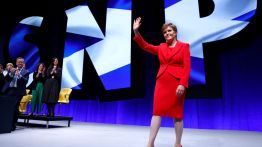
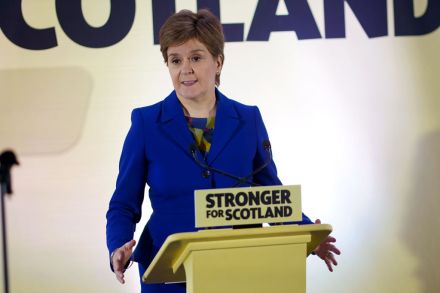
Nicola Sturgeon gave a predictable response to the Supreme Court's ruling that the Scottish government does not have the power to legislate for a referendum on Scottish independence. The First Minister dialled up the grievance factor by claiming the decision ‘exposes as myth any notion of the UK as a voluntary partnership’. If only there was a vote in the past eight years which disproves her point.  The court's ruling, delivered in the clipped tones of the Edinburgh-educated Lord Reed, was a fitting coup de grace in response to the grandstanding of the Scottish government and Scottish National Party. Rallies and protests are reportedly being scheduled the length and breadth of Scotland by the faithful of the nationalist movement in response.

Boris takes a pop at Macron

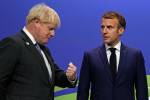
He's back! Denied power at home, Boris Johnson grabs headlines abroad. The Etonian elephant is currently marauding around Europe, firing off quotes with the force of a Maxim gun. Speaking to CNN Portugal on Monday, Johnson discussed a veritably smorgasbord of issues: Partygate, the mini-Budget and his abortive brief-lived comeback. But it was his reflections on Ukraine that will grab most of the headlines, given Kyiv's ongoing struggle. Now liberated from the restraints of office, Johnson told the broadcaster that France and President Macron were 'in denial' about the prospect of a Russian invasion of Ukraine, saying 'Be in no doubt that the French were in denial right up until the last moment.

Scottish independence was never a matter for the courts

It is testament to the SNP’s tactics that today’s Supreme Court judgment on a Scottish referendum happened at all. Of course, the Scottish parliament doesn’t have the power to call referendums: this was an explicit condition of its creation. Schedule 5, part 1 of the Scotland Act spells out the things Holyrood is not allowed to legislate on: among other things, ‘the Union of the Kingdoms of Scotland and England’ and ‘the parliament of the United Kingdom’. So this was never in question, never a matter for the courts. But Nicola Sturgeon pretended otherwise – the better to rally her troops, who always want to believe that battle lies just around the corner. Now that the Court has restated the law – that she cannot call any such referendum – her job is made harder.

What the Tory planning row means for Rishi Sunak

Rishi Sunak is facing his first Tory Commons rebellion since entering 10 Downing Street. After 47 Tory MPs threatened to back an amendment on planning reform which would oppose compulsory housebuilding targets, the government has pulled the vote until further notice. The rebels were led by former cabinet minister Theresa Villiers and largely consist of MPs with 'blue wall' seats who worry that constituent concerns over new developments could cost them their seats.

Why Ukraine raided a Kyiv monastery

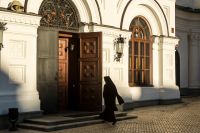
Perhaps it should not have been a surprise to see the camouflaged special forces of the SBU, the Ukrainian Security Service, fanning out over the usually serene grounds of Kyiv’s Holy Dormition Kyiv-Pechersk Lavra monastery on Tuesday. After all, Vladimir Putin’s political alliance with the Russian Orthodox Church has ensured that his war with Ukraine is also a holy one. And until this year the monastery was under the jurisdiction of the Russian church. But the raid is also a reminder of the dangerous potential for civic strife and the politics of revenge tearing at Ukraine’s unity. Putin, himself a member of the faith, has developed close ties with Kirill, the Patriarch of Moscow and All Russia since 2009.

Can Rishi weather his first Tory rebellion?

14 min listen

Rishi Sunak is facing his first Tory Commons rebellion on the issue of UK house building targets. Could this be game over?  Also on the podcast, after Chloe Smith announced that she will be leaving politics at the next election, could more follow her out of parliament? Katy Balls speaks to James Forsyth and Isabel Hardman.  Produced by Oscar Edmondson.
Might other MPs follow Chloe Smith out of parliament?

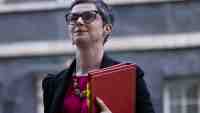
Chloe Smith is just 40 years old, an age at which people normally start to think about entering the Commons. But today, with five election victories in her Norwich North seat under her belt, she announced she’s leaving. The former work and pensions secretary said in a statement: ‘I hope I’ve been able to make a difference, locally and nationally. In 2024, after fifteen years of service, it will be the right time to step back, for me and my young family.’It’s been quite a stint for Smith, who mentioned ‘tough personal times’ in her announcement: she was diagnosed with breast cancer in 2020 and got the all-clear last year. Mind you, it’s been a busy few years for all MPs, which is one of the reasons so many of them call it a day much earlier than their predecessors.

Can Scottish nationalists tolerate media scrutiny?

BBC Scotland’s news department has issued what must be one of the strangest clarifications in the Corporation’s history. It’s not a correction of a factual error or a retraction of an inaccurate or misleading item. It’s a statement justifying their journalists’ decision to report a major news story to the public, accurately and with all relevant parties given a right of reply. The statement reads: https://twitter.com/bbcscotnewspr/status/1594666616163536902?s=20&t=mw66p8sMol82W1NFWvRtvw That is, BBC Scotland felt the need to explain itself for doing journalism.  The story was about a sensitive document BBC journalists had got their hands on. These were the draft minutes of a meeting of Scotland’s top NHS executives in September.

Owen Paterson sues the government

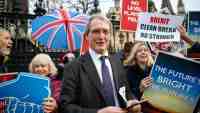
Owen Paterson – there's a name Mr S hasn't heard in a while. It was just over a year ago that the former Environment Secretary became embroiled in the infamous lobbying scandal which led to his resignation, the North Shropshire by-election and the beginning of the end of Boris Johnson. But now, after a year in political obscurity, Paterson is back and with a vengeance. The former Tory MP has now launched a case against, er, Rishi Sunak's government at the European Court of Human Rights, complaining about the House of Commons process which found against him. Paterson argues that his right to privacy under the European Convention of Human Rights was infringed as the public finding that he had breached the Code of Conduct 'damaged his good reputation'.