Politics

Read about the latest political news, views and analysis

Will the Tories give Andy Burnham the power to level up?

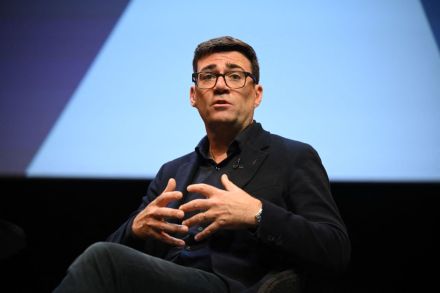
Are the Conservatives planning to inject Andy Burnham with political steroids? That could be the result of one of the plans being mulled by Chancellor Jeremy Hunt, who has been trying to work out how to make levelling up something that works and lasts. Greater Manchester Tories will spit tacks about the mayoral position created by their own party As I reported in the Observer yesterday, Hunt wants to change the current model of areas bidding endlessly for small pots of money here and there to one where the power is decentralised from Whitehall to local elected representatives. The ideal people to do this, of course, would be elected mayors, given that the whole point of setting up these new layers of government was to empower local areas to take their own decisions.
The Wellcome Collection’s war on itself

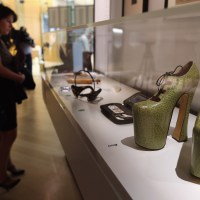
If you, like me, have an unhealthy taste for depressing news, then you’ll have already heard about the Wellcome Collection’s decision to close its Medicine Man exhibition last weekend. The display, which featured an extraordinary range of unusual medical artefacts collected by the entrepreneur Henry Wellcome (1853-1936), has been permanently shut on the grounds that it ‘perpetuated’ sexist, racist and ableist myths, and failed to tell the stories of the historically marginalised. The decision has been cheered on by precisely nobody – both left and right, from what I can see, believe the decision will do nothing to make the world a better place. All it represents is yet another lost opportunity to learn (for free!) about our collective past – including, indeed, its many evils.

Can Sunak get a grip on his party?

14 min listen

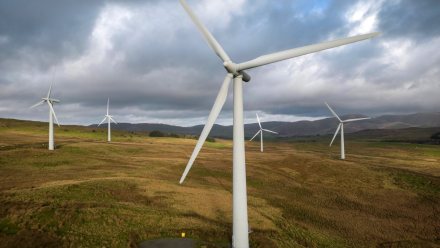
As MPs mull over whether they would like to stand in the next general election, the cracks in the party widen. Notable MPs like Chloe Smith and Dehenna Davison have already declared they will not stand but there are likely to be more over the coming days. Meanwhile, the Prime Minister has two rebellions to take on this week. One is led by Theresa Villiers over mandatory housing targets; the other by Simon Clarke railing against the ban on offshore wind farms. On the podcast, Katy, James and Fraser discuss what kind of uphill struggle this week might bring. Can the cracks in the party be patched over ahead of the general election?  Produced by Natasha Feroze.

Matt Hancock showed how Conservatives can win

It’s somehow appropriate that Matt Hancock finished third in the 2022 series of I’m A Celebrity … Get Me Out Of Here! Third is a word that fits him neatly. Third choice. Third wheel. Third rate. Third is the ‘and you did great, too!’ of victories. The day before, Hancock had donned the brass hot pants of ‘the Bronze Bronco’ for the annual Cyclone challenge, as if bottom rung on the podium already belonged to him.  His continued presence in the jungle – as straightforward, likeable contestants such as Charlene White and Mike Tindall, and less affable ‘characters’ like Boy George and Chris Moyles fell by the wayside – had started to rattle some of the commentariat. To be fair, these people are already fairly rattled on a good day.

Lying-in-State leaves its mark on parliament

The Lying-in-State of Her Majesty the Queen was widely hailed in September as a triumph. The organisation was slick, the tributes were moving, the crowds respectful and the queue deftly managed. But it seems that the otherwise flawless ceremony had one misstep: the impact of all those thousands of visitors on the floor of Westminster Hall, the oldest remaining part of the original Palace of Westminster. Steerpike hears whispers of discontent among the House authorities about the management of the 180 year-old Yorkstone floor during the recent Lying-in-State. To allow for an estimated 250,000 mourners, a carpet was glued down onto Westminster Hall's floor to lessen the impact of all that continuous footfall. And now some fear it has left permanent damage in the ancient structure.

Can Sunak get a grip on his party?

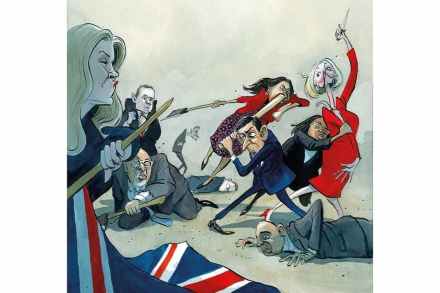
As Tory MPs ponder whether to stand down at the next election in the face of grim polling, the Prime Minister is facing an uphill task to show he has a grip on his party. Ahead of a difficult winter with the NHS and public sector strikes, Rishi Sunak is facing a two pronged rebellion on the levelling up bill. Theresa Villiers is leading blue wall rebels against mandatory housing targets and Simon Clarke is railing against the ban on new onshore wind farms. Meanwhile, there are concerns in government that more MPs could announce this week that they plan not to seek-re-election, with the deadline to tell CCHQ 5th December.

Matt Hancock comes third on I’m A Celeb

All of Westminster was glued to their screens on Sunday tonight to watch the final of I'm A Celebrity. For three weeks, SW1's finest have watched Matt Hancock – the Casanova of the Commons – battle heroically against endless jungle-based challenges. The onetime Health Secretary has been covered in creepy-crawlies and subject to public opprobrium but against all odds, he had heroically made it to the last episode of this year's series. Unfortunately, all good things must come to an end and Sunday night saw the end of the Hancock dream. Much like his ill-fated 2019 leadership bid, Hancock promised much, but failed to deliver, with his luck running out in the celebrity jungle, just as it did in its Westminster equivalent.

Justin Trudeau’s strange defence of his protest crackdown 

On Friday, Justin Trudeau made his much-anticipated appearance before the Canadian Public Order Emergency Commission, where he gave testimony about his unprecedented decision to use the Emergencies Act last February to suspend civil liberties and suppress the trucker protests against vaccine mandates. Using the Act allowed Trudeau to freeze the personal and business accounts of the protestors without a court order, clear protestors in certain areas and force businesses (such as tow-trucks) to provide services against their will.

Sunday shows round-up: no inflation-linked pay increase for public sector workers

Mark Harper – Inflation matching pay rises are ‘unaffordable’ The Transport Secretary Mark Harper joined Sophy Ridge this morning, at a time when public sector strikes are high on the agenda. Though rail unions claim to have found Harper far more satisfactory to work with than his predecessor Grant Shapps, Harper cautioned that nobody should be expecting too much when it came to their pay packets: https://www.youtube.com/watch?v=eMv4kzf3Pfg Government will try to strike ‘balance’ on Online Harms Bill Ridge bought up the government’s Online Harms Bill, which will soon be back before the House of Commons.

Would Solzhenitsyn have supported Putin’s war?

A Day in the Life of Ivan Denisovich, Aleksandr Solzhenitsyn's first novel, appeared 60 years ago this month. Vividly portraying a normal day in the life of a Gulag prisoner, it was followed by Solzhenitsyn's two great anti-Stalinist novels, The First Circle and Cancer Ward (both 1968), which helped establish the Soviet dissident-in-excelsis as a modern-day Tolstoy and a darling of the Cold War West. Soon after that, in 1975, came the third and final part of The Gulag Archipelago, his mighty takedown of the Soviet system. In the words of French philosopher Bernard Henri-Levy, it caused ‘a worldwide earthquake’, dissolving the ‘Communist dream...in the furnace of a book.’ Solzhenitsyn's reputation as one of the most famous writers in the world was confirmed.

The conspiracy against grammar schools

I love a good hard debate, especially at a university. I can’t recall how many such clashes I have had, on God, free speech, marijuana, and Russia. But on the subject I really want to talk about, the destruction of the grammar schools, I find it harder and harder to get anyone to debate against me. Your guess is as good as mine about why the comprehensive school enthusiasts won’t argue with me anymore (they used to). It is certainly not that nobody cares about this ancient controversy. They do. A few years ago one university society tried for months to find me an opponent, and couldn’t – yet hundreds still turned up to the one-sided meeting we eventually decided to hold.

What the experts got wrong about migration

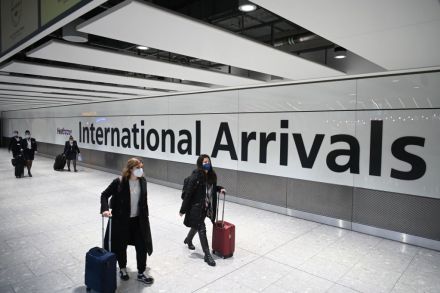
On New Year’s Day, 2014, during those sunny, innocent times of Cameron, Clegg and Miliband, Labour MP Keith Vaz headed down to Luton Airport to greet new arrivals coming off the planes. There he met a rather bemused young Romanian man, Victor Spirescu, who had no idea he was going to become the face of migration on the day that citizens of Romania and Bulgaria were allowed free movement within the EU. It was a sort of mini-publicity stunt by Vaz, but all for a good cause: a response to fear mongering by the Right-wing press who warned that we’d be ‘flooded’ by Romanians, and predictions by MigrationWatch that’d we have 50,000 new arrivals a year from the A2 countries (as Romania and Bulgaria were called).

James Heale, Lionel Shriver and Tanjil Rashid

23 min listen

This week: James Heale reads his interview with former Secretary of State for Environment, Food and Rural Affairs George Eustice (00:50), Lionel Shriver asks what's the price of fairness (05:38), and Tanjil Rashid reflects on the BBC at 100 (14:01). Produced and presented by Oscar Edmondson.

Why Britain can’t build infrastructure

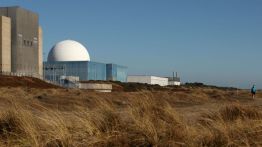
The Office for Budget Responsibility estimates that the government will spend (read: borrow) £43 billion this year to keep the average household’s energy bill at £2,500. Without the Energy Price Guarantee, bills would have hit an eye-watering £4,279 in January. It is certainly true that the blame for this bleak state of affairs should fall squarely at the feet of Vladimir Putin. Yet, it is also true that our energy bills would be much more manageable if Britain had built the necessary energy infrastructure over the past decades. So why haven’t we? First, some context. Since 2008, England and Wales have used a separate planning system for major infrastructure projects.

Keir Starmer is playing politics on easy mode

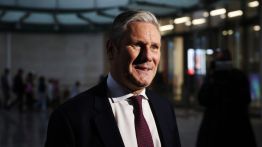
It must be great fun being Keir Starmer at the moment. Eighteen months ago he was asking aides ‘why does everybody hate us?’ in the wake of Labour’s disastrous defeat at the Hartlepool by-election. Now scoring points off the Tories is like shooting fish in the proverbial barrel. The Conservatives have ceded so much political territory that the Labour leader doesn’t even properly have to upset his base among soft-left progressives in order to woo back traditionalist Red Wall voters or even to resonate with diehard Tories. Hence was he able to exploit for his own political ends the tax-raising, growth-killing Budget delivered by Jeremy Hunt last week when he appeared on a special edition of Chopper’s Politics, the podcast run by the Telegraph’s Christopher Hope.

Will any Tories be left at the next election?

How many more Tories will announce they’re stepping down at the next election? They need to tell the party in the next two weeks whether they want to do it or not, though there is no obligation for them to share their decision more widely. I understand that Rishi Sunak and his team have been working extremely hard to convince a lot of wavering MPs who wonder what the point is. Most of them expect their party to go into the misery of opposition at the next election, and don’t want to be stuck in those doldrums. Many are worried that they will be among those who lose their seats in that defeat, and can’t face the exhaustion of the campaign followed by the indignity of losing their job in public.

Dehenna Davison becomes the latest Tory MP to quit

Will the last Conservative MP please turn out the lights? In recent days both Will Wragg, 34, and Chloe Smith, 40, have announced they will be quitting the Commons at the next election. And now Dehenna Davison – the Red Wall poster girl of the 2019 election – has become the eighth (and youngest) Tory to declare they're standing down, at the age of just 29. Davison has cited personal reasons for quitting, saying in a statement that: For my whole adult life, I’ve dedicated the vast majority of my time to politics, and to help make people’s lives better. But, to be frank, it has meant I haven’t had anything like a normal life for a twenty-something. Her move will, however, be read as yet another sign that the Tories have given up on winning the next election.

Sadiq Khan’s Ulez expansion punishes the poorest

Imagine if Jeremy Hunt announced a new 60p income tax band that was payable only by people who earn less than £20,000 a year. Or if he reversed council tax so that Band A homes paid three times as much tax as Band G homes, rather than the other way round. There would be more than outrage, perhaps riots. Why, then, do things work so differently with green taxes?  Today, Sadiq Khan has announced that London’s ultra-low emissions zone (Ulez) will be extended to cover the entire city, rather than just the area inside the north and south circular roads as at present. It will mean drivers of non-compliant vehicles having to pay a daily charge of £12.50 to use the roads. Yet where is the opposition?