Politics

Read about the latest political news, views and analysis

Coping with financial worries

30 min listen

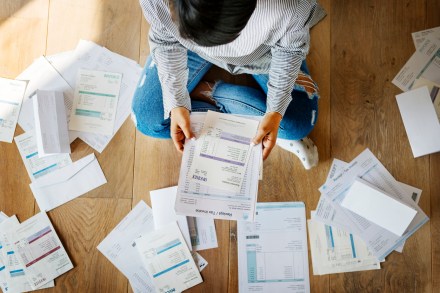
Many are already feeling the pinch of the cost-of-living crisis. Choices between ‘heating and eating’ have become routine for some households, as bills and food costs rise. With money at the forefront of everyone’s minds, feelings of stress, shame, and embarrassment are causing a decline in mental health. Research has shown that the cost-of-living crisis is having a significant impact on people’s mental health, disproportionately affecting women and those from low-income households. Combatting mental health can come from peer support, professional help and public policy, but is the issue ever taken seriously enough? What can be done to address the shame and guilt linked to money worries?
Putin’s hawks are turning on each other

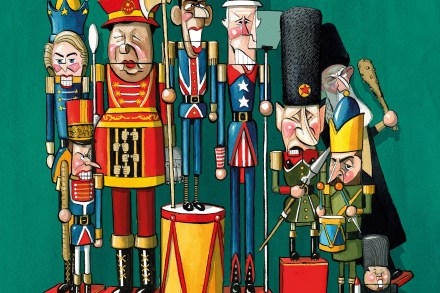
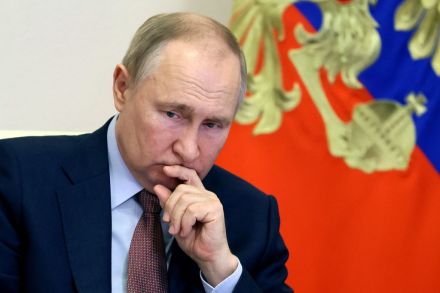
Feathers are flying and divisions are widening among Russia’s hawks as the degree to which the invasion of Ukraine was a mistake becomes more evident. It is a powerful reminder that the main threat to Vladimir Putin these days comes not from liberals – largely imprisoned or forced into exile – but from increasingly disgruntled nationalists. Some of these nationalists opposed the war from the beginning, but most welcomed what they saw as a necessary counter to Nato expansion and Ukraine’s ‘betrayal’ in turning away from Moscow. However, many of them became quickly appalled and angered by what they regarded, with good reason, as the amateurishness, incompetence and corruption which so grievously undermined the invasion.

Christmas Special

65 min listen

Welcome to the special Christmas episode of The Edition! Up first: What a year in politics it has been. 2022 has seen five education secretaries, four chancellors, three prime ministers and two monarchs. But there is only one political team that can make sense of it all. The Spectator's editor Fraser Nelson, deputy political editor Katy Balls and assistant editor Isabel Hardman discuss what has surely been one of the most dramatic years in British political history (01:13). Then: Christmas is a time to spare a thought for our neighbours. While in the UK we have our own hardships, families in Ukraine are facing a Christmas under siege.

The EU is letting itself be blackmailed by Hungary

For Hungarian prime minister Viktor Orbán, there is only one lesson to be learned from the compromise reached with the EU this week: blackmail works. With the deal, Hungary has managed to partly unblock EU pay-outs in exchange for lifting its veto on an EU aid package to Ukraine and a minimum global corporate tax rate. After the EU threatened to suspend €7.5 billion in funds for Hungary, Budapest vetoed the €18 billion aid package that the EU had prepared for Ukraine to keep its economy afloat during the war. Now, thanks to the compromise, the suspended amount of Hungary’s funds will be lower – only € 6.3 billion, or 18 per cent of the total amount that Hungary is set to receive. This is not a complete victory for Orbán.

Could Britain pull out of Europe’s human rights treaty?

Just as Brexit began with a few harmless-looking chips at what looked like an impregnable concrete wall, something similar may be happening with Britain’s attachment to the European Convention on Human Rights.  The latest episode was yesterday’s ten-minute rule bill from the Tory MP for Stoke-on-Trent North, Jonathan Gullis. His Asylum Seekers (Removal to Safe Countries) Bill was nothing if not direct. Put bluntly, his plan would seek to avoid a repeat of the Rwanda debacle earlier this year by allowing asylum seekers to be flown to Africa, despite any orders from Strasbourg to the contrary. Like nearly all other ten-minute rule bills, everyone accepted this one was entirely quixotic.

Hooligans aren’t alone in exploiting Morocco’s World Cup run

'Let's all get behind Les Bleus for victory!' tweeted Emmanuel Macron shortly before France and Morocco met last night in Qatar in the semi-final of the World Cup. 'Without ever forgetting that sport brings us together above all in the respect and friendship between our two nations.' A worthy sentiment from the president but not everyone listened: certainly not some of the Moroccan fans in the Al Bayt Stadium, who greeted the playing of the La Marseillaise with a cacophony of whistling.   As for the match itself, the French did to Morocco what they had done to England in the quarter-final, punishing the profligacy of their opponents with two clinical strikes in a pulsating contest.

Latvia’s Russian media crackdown will delight Putin

When Russia was preparing to annex Crimea in the late winter of 2014, the newly-appointed head of the Russian agency that published our newspaper, the Moscow News, laid down some new rules. The age of disinterested, objective reporting was over. Our job, this Kremlin-picked patriotic zealot told staff, was to love the Motherland. We all resigned. As a journalist, striving for disinterested objectivity was literally my job description – the values instilled in me when I trained in New York. Praising your Motherland for money can be called all sorts of things, just not love. Instead, I went on to report on the start of Russia’s incursion into Ukraine for Western publications, and watched in dismay as the Kremlin began its crackdown on independent media.

Is Starmer blaming Rishi Sunak’s wife for the nurses’ strike?

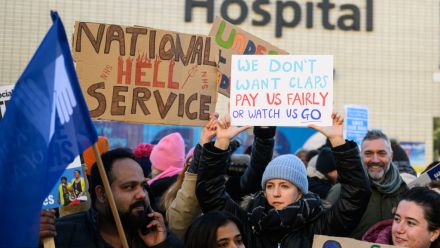
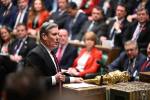
What’s causing the nurses’ strike? At PMQs we found out. First, came a tale of anguish. Sir Keir raised the distressing case of 11-year-old Alex who needs a gallbladder operation. Surgical dates have been cancelled. Vital weeks at school have been missed. ‘Alex’s mum is worried sick,’ said Sir Keir, his voice trembling with outrage. ‘She wants [the PM] to explain what he is going to do to resolve the nursing strike.’ Then he upped the stakes. ‘Alex’s mum is listening,’ he said. ‘She’s tuned in now.’ This sounded ominous. Was she being detained in a panelled office near parliament, surrounded by Labour strongmen cracking their knuckles?

Keir Starmer had a weak PMQs

Keir Starmer had an unusually weak Prime Minister’s Questions today. He chose to attack Rishi Sunak on the nurses’ strikes, insisting that the Prime Minister could avert the walkouts, which begin tomorrow, by having a meeting with the nurses. ‘All the Prime Minister needs to do to stop that is to open the door and discuss pay with them,’ he claimed. He also described the first nationwide strike by nursing staff as a ‘badge of shame’ for the government.

Have the Tories passed the point of no return?

If an election were held tomorrow, not only would Labour win, they would bury the Tories with a landslide majority of 314 seats, leaving the Conservatives with a forlorn rump of just 69. That's the verdict of an opinion poll from Savanta. Even for an embattled Tory party, the verdict is notably grim. According to the poll, not only would former prime minister Boris Johnson lose his Uxbridge seat – there would be no Tory MPs left in London at all. Rishi Sunak would also get the boot from his hitherto rock solid safe rural seat of Richmond in Yorkshire. Every single one of the famous Red Wall of former Labour seats in the north would fall and revert to their former allegiance, and there would be no Tories left north of Lincolnshire.

Sohrab Ahmari: Hunter Biden’s laptop and the Twitter files

49 min listen

Winston speaks Sohrab Ahmari, author of The New Philistines, From Fire By Water and The Unbroken Thread, a co-founder of Compact magazine and former editor at the New York Post. Sohrab was an editor at the Post when they dropped the Hunter Biden laptop story and explains its significance and what the Twitter files reveal. They also discuss the future of free speech in America.

There’s worse to come in Scotland than the Hate Crime Bill

The Scottish Government has courted controversy with its social policy agenda: sweeping hate crime legislation, and gender recognition changes that undermine women's rights. But what’s coming down the tracks at Holyrood looks even more troubling. In fact, the next item on the agenda could be one of the most controversial seen since devolution. Following activists’ demands, politicians’ promises and the rowing back on parallel plans by the UK government, the Scottish government is moving towards a ban on so-called ‘conversion practices’.  Some readers might take umbrage with this suggestion.

Will Rishi’s immigration plan work?

15 min listen

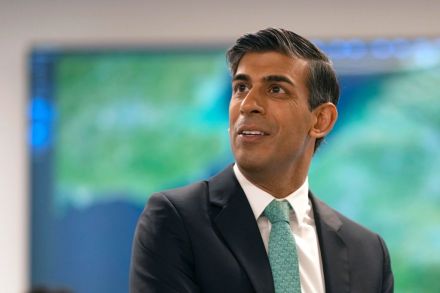
Rishi Sunak today revealed a plan he says will tackle illegal immigration. 'Enough is enough', he said. The asylum backlog of 150,000 will be cleared by the end of next year, and the government will do a deal with Albania to return people from the country. Will it work? Max Jeffery speaks to Fraser Nelson and Katy Balls.

Brexit’s critics are strangely quiet about the European parliament scandal

The corruption scandal embroiling the European parliament and the European Union’s institutions at the highest level is shaping up to be its biggest to date. Belgian police have arrested Eva Kaili, a vice-president of the parliament, and three others in an investigation into alleged bribes involving spectacular sums in cash, allegedly from Qatar, to influence EU officials and parliamentary voting. ‘The shockwave of 'Qatargate' is Le Monde’s take on a story it says threatens to 'destabilise Europe’s institutions’. This isn't an exaggeration: the probe ripples out to the whole progressive ecosystem surrounding the parliament. Among the suspects, according to the BBC, is former MEP Pier Antonio Panzeri, who now manages the human rights group Fight Impunity.

Rishi Sunak’s immigration plan could be a game changer

Rishi Sunak today gave a potentially game-changing statement in the Commons, finally committing the Conservatives to effective action when it comes to combating illegal immigration. The five-point plan unveiled by Sunak for addressing the issue of the Channel boats in the short-term will garner most of the headlines, but it is small beer compared to his most significant announcement. Electoral salvation for the Tories won’t come via a new ‘unified small boats operational command’, a doubling of immigration enforcement raids, 10,000 new non-hotel accommodation places, faster processing of claims or even a fancy new deal with Albania. These are all incremental measures that will, at best, help at the margins.

Rishi Sunak will regret his Channel crossings crackdown

Rishi Sunak’s latest promises on asylum and immigration suggest the PM has learned very little from his Tory forebears. Ken Clarke used to compare eurosceptic right-wing Tories to crocodiles circling the prime ministerial boat. Most Tory leaders chose to feed the crocodiles buns to keep them happy. But what happens when you run out of buns? David Cameron knows the answer to that one. Sunak is also offering buns. But when the buns run out – or simply don’t appear – his problems will only grow. The PM is vowing to crack down on illegal Channel crossings. He promises to clear the backlog of asylum cases. He promises to reject more claims from Albanians.

Jacinda Ardern caught on camera name-calling rival

Jacinda Ardern's political philosophy is simple. When the New Zealand PM was asked to explain the qualities that led to her success, she said she valued: 'Kindness, and not being afraid to be kind, or to focus on, or be really driven by empathy'. But does Ardern practise what she preaches? Not so if a clash between her and a fellow party leader in the New Zealand parliament is anything to go on. Ardern was caught calling rival politician David Seymour an 'arrogant p***k' during a fiery debate last night. https://www.youtube.com/watch?v=3flQJzhTvrQ Seymour's crime was to ask Ardern: 'Can the prime minister give an example of her making a mistake, apologising for it properly and fixing it?