Andrew Liddle

Andrew Liddle is a political writer and former adviser to Scottish Labour. He is author of Cheers, Mr Churchill! and Ruth Davidson and the Resurgence of the Scottish Tories.

It’s a mistake for Scottish Labour to stand by SNP policies

From our UK edition

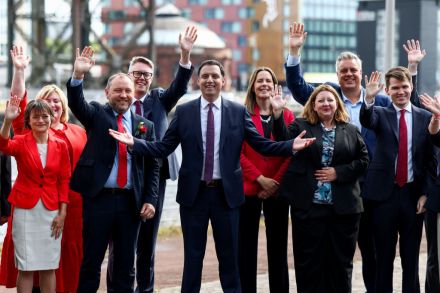
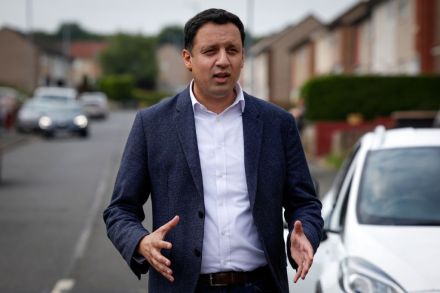
With just 15 months to go until crucial devolved elections in Scotland, 2025 will be a momentous year in Scottish politics. Few leaders understand this better than Scottish Labour leader Anas Sarwar, who hopes he will be the man to end two decades of SNP dominance come May 2026.  Yet Scottish Labour has fallen down in the polls in recent months and Sarwar needs to figure out how to make his party stand out. It was therefore little surprise that he began 2025 by pledging to use the year to set out how he and his party would chart a 'new direction' for Scotland.

The dilemma facing Scottish Labour MPs

From our UK edition

For Scottish Labour’s significant crop of new MPs, the heady summer of electoral triumph is already a distant memory. In the days following the general election – where Anas Sarwar’s party swept the Central Belt, gaining a whopping 36 seats – it seemed Scottish Labour’s recovery was not only inevitable but already underway. In the months since that has all changed, with Scottish Labour’s popularity declining as much – if not more – than its UK counterpart. A Norstat poll in December, for instance, had Scottish Labour at its lowest ebb in three years and the SNP, remarkably, on course to once again form the Scottish Government following devolved elections in May 2026.

What was Labour’s role in stopping Scottish independence?

From our UK edition

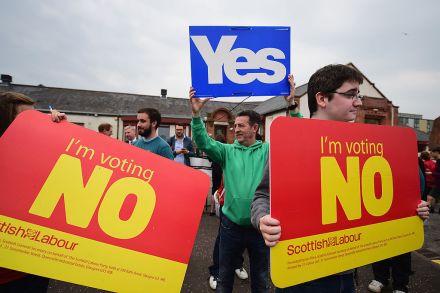
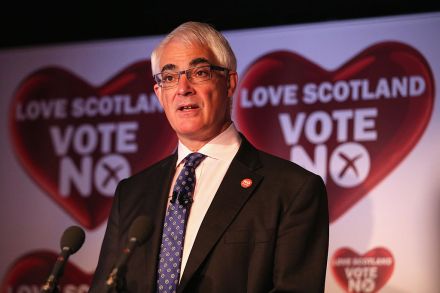
Scottish independence became such a difficult issue for Labour that it is easy to forget the party was once the UK’s staunchest defender. As voters prepared to go to the polls a decade ago, it was Gordon Brown who delivered the barnstorming call to arms that the Unionist cause so desperately needed. In doing so, he made what must rank as one of the most powerful speeches by a British politician in this century.  Addressing supporters of Better Together, the cross-party pro-UK campaign group on the eve of the referendum, Brown made not just an economic but also a moral and emotional case against nationalism.

The SNP still has no ‘plan B’ for Scotland’s economy

From our UK edition

Scottish independence has always been economic lunacy, but rarely has that reality been exposed as well as by Alistair Darling. Ten years ago this week, the Better Together chief faced off against the then SNP leader Alex Salmond, quizzing the former first minister about what he would do if the UK government refused to let Scotland use the pound post-secession. A decade on, it is striking how the SNP has failed to learn from that ruthless exchange – and still has no 'Plan B' for Scotland's economy. Extraordinarily, the SNP’s position on currency has not evolved in any meaningful way since Darling challenged Salmond over it ten years prior.

The newfound power of Anas Sarwar

From our UK edition

On Sunday, Sir Keir Starmer made Scotland the first stop on his inaugural tour of the UK since becoming Prime Minister. The trip was nominally about delivering a 'reset' in relations between the UK and Scottish governments, which had grown particularly strained in the latter years of the Conservative administration. Starmer’s visit was also about reassuring the Scottish electorate, which heavily backed the Labour party once again, that he would continue to value them now the votes have been counted.  But the visit also reflected the changing dynamic between the Scottish and UK Labour parties, and the growing importance of the Scottish leader Anas Sarwar, who is now the most powerful Labour figure outside the cabinet.

Is the SNP serious about decriminalising drugs?

From our UK edition

It is hard to criticise the SNP government’s recent legislative record in Scotland, if only because there isn’t one. Almost every single flagship measure the party has brought forward since the 2021 Scottish parliament election has either been altered, scrapped, blocked, or faces a lengthy legal challenge. More often than not, it has been one or more of these things. Plans to restrict alcohol advertising have gone 'back to the drawing board' following an industry outcry. The Deposit Return Scheme – a recycling scheme for glass and plastic bottles – has been delayed for at least two years, and the company that had been set up to administer it has been rendered insolvent.

The SNP shouldn’t celebrate being tied with Labour

From our UK edition

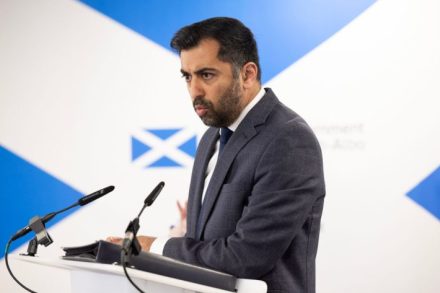
It is a measure of the extent of the SNP’s decline that nationalist activists have seized on a new Ipsos poll that shows the party is now neck and neck with Scottish Labour. After all, it was only 18 months ago that the same company suggested the SNP enjoyed the support of more than half of people in Scotland, with Anas Sarwar’s party languishing on 25 per cent. Two resignations, a campervan and several unpopular policies later, however, and the SNP is now regularly recorded as being behind Scottish Labour, in one recent poll by as much as 10 points. Hence the excitement in otherwise weary nationalist circles that they may now be, at least, back to level pegging.  But despite the encouraging overall headline in this latest poll for the SNP, the devil is in the detail.

Does Scottish Labour really want an election?

From our UK edition

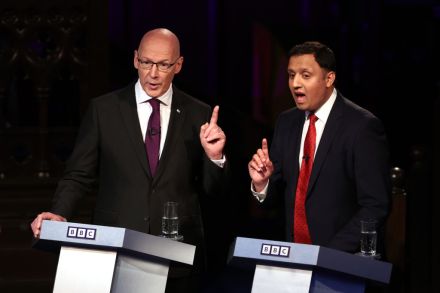
Given the SNP’s abject disarray, it is no surprise to see Scottish Labour demanding a snap Holyrood election. After all, for the first time in more than a decade it is Anas Sarwar’s party – and not the Scottish Nationalists – who are most likely to gain by the ballot box. Sarwar himself summed up the bullish mood in the party succinctly, telling reporters: ‘I do not fear an election, I relish an election.’ And this is not idle talk; Scottish Labour has lodged a motion of no confidence in the Scottish government that would, in the unlikely event it is approved by MSPs on Wednesday, force the entire SNP administration to resign and in all likelihood precipitate a Scottish election.

There is still hope for the Scottish Tories

From our UK edition

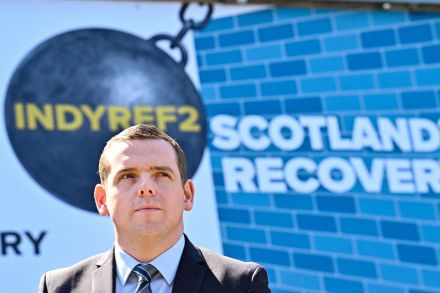
As Douglas Ross and his colleagues gather for the annual Scottish Tory conference in Aberdeen this weekend, there are good reasons for the Scottish Conservatives to feel more upbeat than their counterparts elsewhere. In 1997, Scotland proved particularly emblematic of New Labour’s landmark victory. Where the Conservative Party had held 11 seats, they now held none. Their share of the popular vote fell to just over 17 per cent. Three serving cabinet ministers – Foreign Secretary Malcolm Rifkind, Scottish Secretary Michael Forsyth and President of the Board of Trade Ian Lang – were among the more high-profile casualties. As defeats go, it was comprehensive, and reflected a UK-wide disaffection after nearly two decades of Conservative government.

In praise of Labour’s Dame Jackie Baillie

From our UK edition

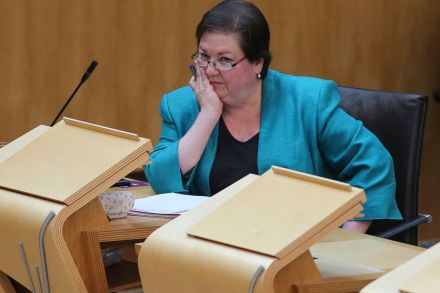
In an age of nepotistic knighthoods, dodgy peerages and now even returned CBEs, it is easy to understand the general cynicism around the honours system. Too often it is used to reward politicians for failure rather than success, loyalty rather than achievement, and party rather than principle. None of that, however, applies to Jackie Baillie, who will today officially become the first sitting MSP to be invested as a Dame at a ceremony at Holyrood Palace.  The Scottish Labour member bestrides the devolution era like a colossus. Elected for her constituency of Dumbarton at the first Scottish parliament election in 1999, Dame Jackie has held it – much to the SNP’s chagrin – at every election since.

Why Anas Sarwar is succeeding

From our UK edition

Few politicians had a better 2023 than Anas Sarwar. The Scottish Labour leader began last year with his party still in the doldrums, languishing behind a seemingly impregnable SNP led by a seemingly indefatigable Nicola Sturgeon. A resignation, a camper van, and an incompetent successor later, and that has all changed. Scottish Labour is now in the ascendency and looking towards the coming general election in not with its normal trepidation, but with newfound relish. That much, at least, was clear from Sarwar’s speech – notionally kickstarting the party’s general election campaign – earlier this week (MON).  This desire for change is Sarwar’s strongest suit As in the rest of the UK, Scottish Labour is not awash with substance or inundated with ideas.

Keir Starmer’s popularity is declining in Scotland

From our UK edition

Once upon a time, Sir Keir Starmer was Scottish Labour’s greatest asset. In the dark days following the party’s 2019 general election drubbing, the party in Scotland remained an unlikely redoubt of Corbynism, languishing in the polls under the uninspiring leadership of trade unionist Richard Leonard. In such a context, Starmer’s election as Labour leader in March 2020 was a boon to the Scottish party, which many considered was in terminal decline.  As well as manoeuvring the ineffectual Leonard out of office and replacing him with the modernising Anas Sarwar, Starmer himself also proved an immediate hit with Scottish voters.

How Alistair Darling rescued Scotland

From our UK edition

Few modern politicians can claim to have changed their country, and fewer still can claim to have saved it. One who can is the late Alistair Darling. This is not a reference to his role as Chancellor of the Exchequer during the 2008/09 global financial crisis, but rather his role as the political leader of the Better Together campaign during the 2014 Scottish independence referendum. With a relentless focus on the economic risks of independence, it was Darling, perhaps more than anyone else, who shaped the arguments that would, ultimately, keep the United Kingdom together.  Of course, Darling’s opposition to Scottish independence was multifaceted.

Scottish Labour’s ceasefire dilemma

From our UK edition

Matters of war and peace are not devolved, but they have nevertheless become the most powerful weapon in the SNP’s armoury as it seeks to fight back against a resurgent Scottish Labour party. Of course, given the nationalists’ record of misjudgement and appeasement in foreign policy, it is perhaps little surprise to see its motion to the Scottish parliament on Tuesday supporting an immediate, condition-free ceasefire. By supporting an immediate ceasefire, the SNP has put Scottish Labour – bullish after its victory in the Rutherglen and Hamilton West by-election – and particularly its leader, in a difficult spot. There is no doubt the motion is also good domestic politics for the nationalists, even if the SNP’s present folly follows a long line of former follies.

How serious is Keir Starmer about devolution?

From our UK edition

With a general election – and the prospect of forming a government – now firmly on the horizon, the Labour party has no shortage of long-standing policies that it is quickly seeking to recast, review or revoke entirely.  Sir Keir Starmer’s earlier pledges to abolish tuition fees, increase taxes on higher earners and scrap the two-child benefit cap have all been unceremoniously dumped. Other commitments, such as a £28 billion per annum 'Green Prosperity Plan', have been significantly watered-down, while proposals for a tax raid on US tech giants have shifted to a wider review of business rates.

Why Scottish Labour shouldn’t fear an SNP resurgence

From our UK edition

It is a testament to the extraordinary changes underway in Scottish politics that the latest YouGov poll showing the Labour party winning 11 seats north of the border is viewed as a setback. Even six months ago, such findings would have been welcomed with jubilation at the party’s Glasgow headquarters as evidence that voters were, finally, coming back to Labour from the SNP.  Even if voters are not necessarily coming back to Labour in the numbers some might have dared hope, people in Scotland have few reasons to turn out for the SNP either. As it is, other recent polls have been far more positive for Sir Keir Starmer’s party, suggesting they could win as many as 22 seats in Scotland, up from one currently, and potentially even overtake the SNP as the largest party.

Scottish politicians have neglected serious economic policy for too long

From our UK edition

Economic growth is a taboo subject in Scottish politics. Throughout a succession of administrations, of all shades and stripes, the focus of government in Scotland has been almost wholly on social policy. To the extent economic policy has been widely considered, it is in the context of how yet more money can be squeezed from an increasingly compressed and constricted tax base.   The consequences of this inertia are now evident in abundance. Scotland’s GDP growth rate has lagged significantly behind the rest of the UK over the last decade – a not inconsiderable achievement given recent circumstances – while productivity remains stubbornly low, below the national average.

Why Labour needs a clear victory in this Scottish by-election

From our UK edition

The Labour party could hardly ask for better than the Rutherglen and Hamilton West by-election as a means to judge the strength of their resurgence in Scotland. Sitting on the cusp of Greater Glasgow, it is situated in the party's former central belt heartlands — an area once so Labour it was joked that votes for the party were weighed, not counted. The seat was lost in the nationalist landslide of 2015 before Labour quickly won it back in 2017. Though the party lost it again to the nationalists in 2019, it now has an eminently beatable SNP majority of 5,230. Perhaps most importantly, the by-election is taking place because Margaret Ferrier, The SNP victor in both 2015 and 2019, was suspended from the House of Commons after breaking Covid rules.

Will Labour’s green energy strategy convince Scottish voters?

From our UK edition

The launch of the Labour party’s new green energy mission did not go to plan. The party had promised to ferry journalists to the venue in a hydrogen-powered bus, only for this to be quickly replaced with a diesel alternative on the day. To make matters worse, the bus driver then got lost on route, twisting and turning his way through the narrow streets of Leith. Only after several U-turns, and some helpful directions from a generous journalist, did the bus eventually chug its way – much delayed – to the location of Starmer’s great launch. As a metaphor for the Labour party’s energy policy, you would be hard pressed to find something more apt.

Ed Miliband’s green policies could cost Labour the next election

From our UK edition

Almost a decade on from Scottish Labour’s 2015 general election wipe out, a spectre is once again haunting the party in Scotland – the spectre of Ed Miliband. Apparently not content with his role in leading the party to near oblivion in Scotland eight years ago, the shadow secretary of state for climate change and net zero is now determined to stifle its recovery as well. Miliband’s latest manoeuvres began more than a week ago, when he engineered an announcement that a future Labour government would not grant any new licences for oil and gas production in the North Sea. The announcement caused consternation not just from the industry itself, but also the Scottish Labour party, which was infuriated with its timing and largely blindsided by the policy shift.