Politics

Read about the latest political news, views and analysis

The problem with Kneecap – and the arts blob

When I was about 14 or 15, someone sent me a birthday card with the words: ‘Teenagers – tired of being harassed by your stupid parents? Act now! Move out, get a job, pay your own bills, while you still know everything.’ I don’t think it was personal, not least because I was fairly strait-laced, and I enjoyed the joke. I have never had much time for the idea of the teenager as heroic nonconformist, engaged in idealistic rebellion against the stultifying bourgeois conformity of suburbia. Even when I was in my teens – an alarmingly long time ago now – I found it all a bit self-aggrandising. That birthday

Why the Tory party is breaking apart

I don’t, I freely admit, remember all that much about my chemistry lessons at school. Covalent bonding delighted me not, no, nor moles neither. But I do recall being absolutely thrilled the first time I saw paper chromatography. The idea was – I expect I’m getting this slightly wrong, but don’t write in – that you’d take some murky liquid that was a solution of all sorts of this that and the other, and you’d dab it on a bit of blotting paper, which would then be stood in a basin of some solvent…   All this splitting, all this factional baring-of-the-differences, seems to me the sign of a party

The battle for Rafah could turn into a bloodbath

Prime Minister Benjamin Netanyahu views the conflict in Gaza as a zero-sum game – with Israel either destroying Hamas or losing the war. Given that is his strategy, the assault on the city of Rafah in the southernmost part of Gaza, where the Israeli Defence Forces (IDF) believe up to four battalions of Hamas terrorists are holed-up, makes perfect sense, at least to him. On Saturday, in the face of growing international concern about the forthcoming operation, Netanyahu announced: ‘Those who say that under no circumstances should we enter Rafah are basically saying lose the war, keep Hamas there.’ During the night, Israel began a missile bombardment of the city.

Sunday shows round-up: Gove defends government’s housing record

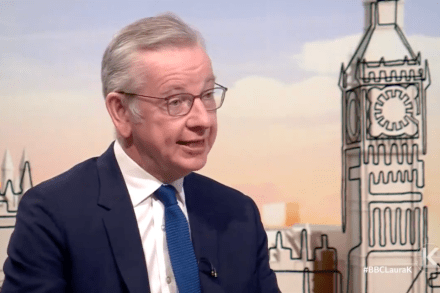
In an interview with the Times this week, Levelling Up Secretary Michael Gove suggested that the country’s broken housing market could cause young people to lose faith in democracy. This morning, Laura Kuenssberg showed Gove a variety of statistics emphasising the worsening of the problem since the Conservatives came to power, and asked him who was responsible. Gove suggested there were ‘a variety of factors that have driven the challenges we face’. He claimed the government was taking action, and promised that Section 21, which allows tenants to be evicted without reason, would be scrapped by the next election.  Gove backs PM’s refusal to apologise over trans jibe Rishi Sunak

The renewables bubble has burst

It wasn’t so long ago that Orsted was being held up as an example of how oil and gas companies should handle the transition to clean energy. In 2009 the then-DONG (Danish Oil and Natural Gas) announced that it was going to turn around it business so that instead of earning 85 per cent of its money from oil and gas it was going to earn 85 per cent of it from renewables. It was an early mover in offshore wind – and, at least for some years, shareholders were richly rewarded. The share price marched upwards from around £19 in 2014 to a peak at £100 in early 2021. Increasing your money

Is diversity actually good for business?

It is a sacred mantra of the business circuit that diverse boards improve company performance. It has apparently been proven in multiple studies by the world’s leading companies such as McKinsey and BlackRock, as well as regulators like the Financial Reporting Council (FRC). The evidence is so irrefutable that one FTSE 350 chair raged that ‘There have been enough reports… statistics and… evidence-based research to stop talking about it and get on with it.’ Another viewed the evidence that diversity trumps any other attribute as so ironclad that he tells executive search firms, ‘I don’t want to see any men. I don’t care if they’re Jesus Christ. I don’t want

Why is President Biden scared of Iran?

The Biden administration often appears more afraid of Iran than Iran is of the Biden administration. That is a very dangerous dynamic for the United States. While the military action President Joe Biden has ordered this week to counter the Islamic Revolutionary Guard Corps (IRGC) and its axis of resistance is degrading Iran’s capacity, it is not deterring its will. President Biden often appears uncomfortable speaking about Iran. Throughout his presidency, he has never delivered substantive, formal remarks outlining his Iran policy. This is unusual for a regime that poses a significant threat to American interests and values. On January 30, when the president was asked about his response to Iran’s axis

Why Donald Cameron should be in the Lords

Finally, Rishi Sunak has put a half-decent Cameron in the House of Lords. In raising Donald Cameron to the peerage and appointing him parliamentary under-secretary of state for Scotland, the Prime Minister has poached one of the sharpest minds in the Scottish Parliament. Cameron has been an MSP for Highlands and Islands for the past eight years and distinguished himself with forensic speeches dissecting SNP government legislation, drawing on his experience as an advocate (a Scottish barrister). Even opponents struggle for a bad word to say about him, an uncommon state of affairs in the bitter and tribal world of Scottish politics. Cameron’s style is patrician and so are his

How bad is the border crisis?

33 min listen

Freddy is joined by Todd Bensman, fellow at the Centre for Immigration Studies and author of Overrun: how Joe Biden unleashed the greatest border crisis in US history. They discuss how to solve what is perhaps the issue of our time, why meaningful reform doesn’t seem to happen on immigration, and the extent of Biden’s physical and mental frailty after a week of public gaffes. 

Sunak ennobles his business adviser

Happy new peerages’ day! These auspicious occasions seem to roll around quicker now. Rishi Sunak has clearly learned something from the rows over resignation honours for his two predecessors: stagger the names, slip out a list in recess and then hope that no-one notices. Thirteen new peers have been ennobled in the latest drive to boost ermine sales, with eight to the Tories, four to Labour and one to Plaid Cymru.  So who are this baker’s dozen of lifelong legislators? Well perhaps the most intriguing name is the Welsh nationalists’ sole nominee. At just 27, Carmen Smith will become the youngest ever life peer, smashing the record of Charlotte Owen

(photo: Getty)

Svitlana Morenets, Paul Mason, Robbie Mallett and Lloyd Evans

26 min listen

This week: Svitlana Morenets takes us inside Ukraine’s new plan for mass conscription (01:01); Paul Mason says that Labour is right to ditch its £28 billion green pledge (10:49); Robbie Mallett tells us about life as a scientist working in Antarctica (15:48); and Lloyd Evans reads his Life column (21:24).  Produced and presented by Oscar Edmondson. 

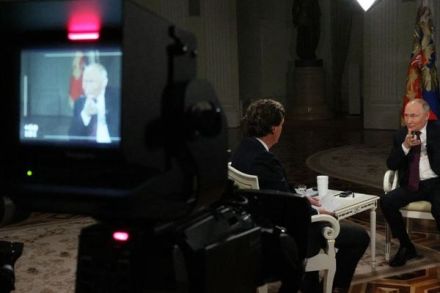
‘Mm, uh huh, yeah’: Tucker Carlson and journalism’s therapeutic turn

Could the subject of the Sudetenland have been resolved more satisfactorily if Adolf Hitler had been given a more open platform? Somewhere he could really air his views? No messing, no clipping. Four hours on Joe Rogan, perhaps?         It’s a historical what-if stirred up again this week by Tucker Carlson’s interview with Russian leader Vladimir Putin. The rangy two-hour session at the Kremlin, trailed for days, became available on Tucker’s website yesterday. It makes for uneven listening. Early expectations were of a blockbuster that could have become the most-viewed video in the history of Twitter/X. They have been wide of the mark.   For all his newsmaker status, the President begins with a 20-minute

How the Chinese markets lost faith in the CCP

Ahead of the Chinese new year holiday, Beijing has been intervening to prop up the country’s stock markets. Regulators have tightened market trading conditions, and this week the head of the China Securities Regulatory Commission, Yi Huiman, was fired abruptly, presumably as the fall-guy for the relentless decline in the markets, which have lost about $6 trillion in value since the end of 2021. There is a palpable concern about financial instability in China that travels all the way up to Xi Jinping Chinese equity prices have touched their lowest levels since 2018, and are not far from the lows reached in the 2015-16 financial crisis. Mr Yi’s two predecessors were also fired

The left can’t stand France’s new culture minister

France’s new minister of culture has promised to put an end to the creeping cancel culture that is threatening the country. ‘Today wokeism has become a policy of censorship,’ said Rachida Dati, who was appointed to her post last month. ‘I am in favour of the freedom of art, the freedom of creation, and I am not in favour of censorship’. She explained that she will launch her campaign next week, summoning the great and the good of the cultural world to ‘ensure that we support creative freedom and do not support these new censors.’ Dati might have had in mind the 1,200 poets, editors, publishers, booksellers and actors, who

Can the SNP claw back support in Scotland?

On Thursday, health secretary Michael Matheson resigned and Humza Yousaf undertook a ‘mini-reshuffle’ of his cabinet. The scandal of the £11,000 iPad bill was only ever going to end this way. That it was allowed to rumble on eroding public trust for months is symptomatic of the SNP’s wider fortunes, which began to rapidly deteriorate almost a year ago to this day. Fifty-one weeks ago a press conference was hastily arranged in the Drawing Room at Bute House. Nicola Sturgeon stood before Alexander Nasmyth’s pastoral portrait of Robert Burns, announced her resignation as first minister and set in motion a remarkable chain of events. The signs of the decline were

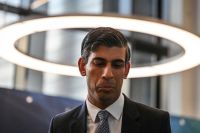
Rishi Sunak’s week of howlers has exposed his big weakness

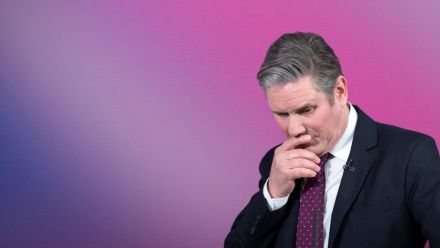
It is quite some achievement to launch an attack on Keir Starmer’s contortions over trans rights versus women’s rights and come off worse. Yet that is what has happened to Rishi Sunak this week thanks to an increasingly visible flaw in his make-up: Sunak simply lacks political nous. While he may have been a fluent public performer when serving as chancellor during the covid pandemic, it has become obvious that this was because he was in his comfort zone as a financial geek. But exposed to the much wider demands that the post of Prime Minister entails, Sunak is all at sea. He cannot spot an ambush to save his

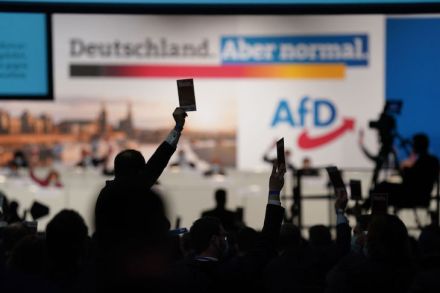
Germany’s rustbelt is reviving – but voters are still flocking to the AfD

West Germany’s first chancellor, Konrad Adenauer, hated eastern Germany and said – possibly apocryphally – that Asia begins at the east bank of the Elbe River. When people visit my forest in what’s long been Brandenburg’s rustbelt, I caution that Asiatic Germany isn’t Adenauer’s bucolic Rhineland, let alone Munich or Hamburg. Yet the ‘rustbelt’ moniker no longer suits a region that, while down and out for decades, is rebounding, powered by new industry and proximity to booming Berlin, the capital’s new airport and a Tesla factory. Even low-tech forestry is making money after having been on life-support five years ago. But there are also levels of anger I have never

Boris Johnson accused of sabotaging Ukraine peace talks

10 min listen

Tucker Carlson released his highly anticipated interview with Russia’s leader Vladimir Putin last night. The two-hour long discussion was dominated by Putin who gave history lessons, blamed the Nord Stream 2 explosion on the CIA, and accused Boris Johnson of sabotaging the peace talks 18 months ago. Natasha Feroze speaks to James Heale and Freddy Gray about the highlights of the interview, and whether Boris Johnson’s role in the talks was as influential as Putin suggests.