Politics

Read about the latest political news, views and analysis

Why the EU is raiding Chinese companies

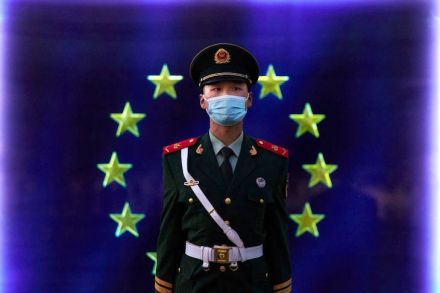
The target of Wednesday’s dawn raid has been on the radar of western security services for some time. There has been growing concern that Nuctech, which manufactures airport baggage scanners for European airports and ports, poses a potentially serious risk to national security. But the European Union officials who raided the Warsaw and Rotterdam offices of the Chinese company this week were far more interested in the company’s spreadsheets, as they searched for evidence of unfair trade practices. It’s easy to see a touch of the Al Capone in Wednesday’s raid, which was by competition officials Nuctech is part-owned by the Chinese government and was once run by the son
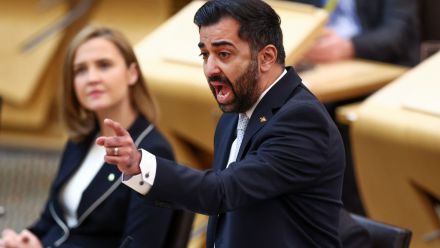
Is this the beginning of the end for Humza Yousaf?

15 min listen

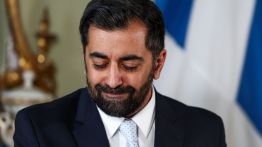
After two and a half years in government together, Humza Yousaf has terminated the SNP’s governing pact with the Scottish Greens. The decision was rubber stamped at a hastily arranged meeting of the Scottish cabinet on Thursday morning. It preempts a vote by rank-and-file Green members on whether to walk away from Yousaf’s government after he ditched a key climate target. In response, The Scottish Conservatives have tabled a vote of no confidence vote. And the Yousaf might very well lose it, now the Greens are out of the government. What will this mean for the first minister? Katy Balls speaks to Lucy Dunn, Iain Macwhirter and Fraser Nelson.  Produced by Oscar

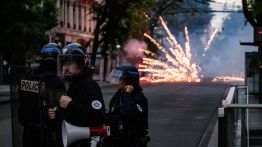
Will under-13 curfews really make France safer?

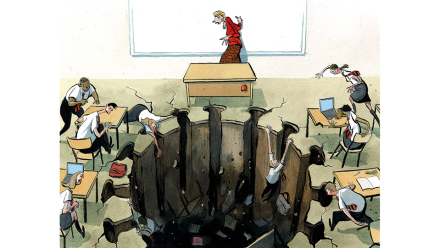
Rebecca, a British friend who taught theatre studies at a celebrated English public school before she was brutally sacked during the pandemic, moved to France and looked for a job. After putting out feelers, she got a phone call from the director of a lycée (high school) in a socially challenging neighbourhood of Béziers, a city in the Occitanie region of southern France. Would she be willing to teach English, replacing a prof who’d signed off sick with stress? Game for most things, she agreed, and quickly regretted it. Her class of 40 included, she estimated, roughly 4 students who had any interest whatsoever in learning anything. The rest, when they bothered to show

Is this the beginning of the end for Humza Yousaf?

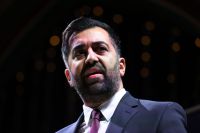
Scottish politics may be about to enter the abyss following the disintegration of the Green-SNP coalition. The Scottish Conservatives have tabled a vote of no confidence in First Minister Humza Yousaf and he might very well lose it, now the Greens are out of the government. They only have 63 MSPs since the former community safety minister Ash Regan defected to Alba. Labour and the Liberal Democrats say they are eager for an early election. So Yousaf may have brought the temple down around his ears. But let’s not get ahead of ourselves. It has been a day of high drama and high emotion. When Nicola Sturgeon signed the Bute

When will the BBC apologise to Toby Young?

More bad times at the BBC. The Corporation is in hot water yet again following last week’s episode of Sunday with Laura Kuenssberg. During a discussion on whether extreme weather events are caused by carbon emissions, TV eco-warrior Chris Packham launched into one of his patented rants when asked by businessman Luke Johnson to provide some evidence. Packham sneered: It doesn’t come from Toby Young’s Daily Septic [sic], which is basically put together by a bunch of professionals with close affiliations to the fossil fuel industry. It comes from actually something called science. But in his haste to put down Johnson, Packham appears to have blundered. For Young, a longtime

Why didn’t the Tories nationalise the railways?

The Conservatives can crow all they like about the benefits of privatisation – and make whatever claims they like about tickets being more expensive, and services worse, were the railways to be brought back under public ownership. But there is little getting away from the fact that Labour’s policy of progressive renationalisation of train services by taking over franchises as they expire is hugely popular with voters. If the Conservatives were really that wedded to capitalism they wouldn’t have bunged the rail industry £12 billion in subsidies last year YouGov has been asking the public whether they support this policy in a monthly poll going back several years. In the latest

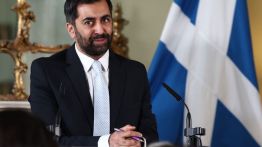
Humza Yousaf ends SNP pact with Greens

After two and a half years in government together, Humza Yousaf has terminated the SNP’s governing pact with the Scottish Greens. The decision was rubber stamped at a hastily arranged meeting of the Scottish cabinet on Thursday morning. It preempts a vote by rank-and-file Green members on whether to walk away from Yousaf’s government after he ditched a key climate target. It means their party’s co-leaders, Patrick Harvie and Lorna Slater, will lose their ministerial posts and the SNP will lose its overall majority in the Scottish parliament. The Bute House Agreement, which the Greens originally signed with Nicola Sturgeon, has been a source of consternation inside the SNP right

SNP ditch Greens as Bute House Agreement breaks down

If Humza Yousaf last week suffered his ‘worst week’ in office, then the same can be said this week for Patrick Harvie, the co-leader of the Scottish Greens. On Monday, it looked like his party had the upper hand on the future of the Scottish government. But today, just before an emergency 8.30 a.m Cabinet meeting, the First Minister made their decision for them and turfed the Greens out of government – marking the end of the three-year-long Bute House Agreement. The Scottish Greens faced an almighty backlash from their grassroots membership It’s a move that will delight a number of senior SNP figures, and possibly even some parts of

Why Portugal’s coup worked

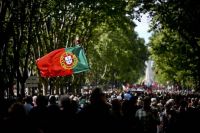
Fifty years ago today, on 25 April 1974, Europe was stunned by an almost bloodless military coup that removed the continent’s most durable dictatorship: Portugal’s authoritarian ‘New State’ that had held the country in an iron grip since 1926. Military coups have an evil reputation in Europe. We associate them with ham-fisted juntas, arbitrary arrests, torture, and reactionary politics: the sort of regimes that ruled Chile and Argentina in the 1970s, and left those countries drenched in blood. Since those turbulent times, Portugal has joined the rest of democratic Europe Though military coups were a fairly common way of changing governments in Latin America, Africa and Asia, in the 20th

Why the Cass report won’t change a thing

The Liberal Democrat candidate in the Middlesbrough South and East Cleveland constituency recently released a video clip of herself sitting in a car and saying just the following: ‘As a Liberal Democrat, I believe that women can have a penis.’ When I’m feeling depressed or under the weather, I play this clip to myself over and over and it never fails to put me in a better frame of mind. It is less the bovine stupidity of the message that amuses than the fact that Jemma Joy – yes, yes, I know – felt the need to recite it, as if there were people out there determined to believe that

Hyper-history: why did politics go crazy?

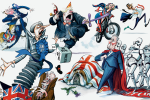
On the day Theresa May signed her Brexit withdrawal agreement with Brussels, Dominic Raab, the Brexit secretary, resigned. She tried to dragoon Michael Gove, a leader of the Brexit campaign, into taking the job. Dominic Cummings, the erstwhile campaign director of Vote Leave, persuaded Gove to resign rather than take the job. It was mayhem. That day Cummings texted a friend in Westminster to say: ‘Sometimes nothing happens for years. Sometimes years happen in days.’ The phrase was originally Lenin’s, though he referred to ‘decades’ rather than years – but it was apt for the almost revolutionary cascade of events unleashed by the EU referendum of 2016, which we are

Kemi and Gove’s Cabinet clash on Rwanda

When the Rwanda Bill had its second reading in the House of Commons just before Christmas, there was a revolt on the right of the Tory party. A group of legal experts, with the self-appointed ‘Star Chamber’ title, were convened by Eurosceptic MPs. They declared that Rishi Sunak’s plan was not ‘sufficiently watertight’ to allow deportations to take place, with too many legal loopholes vulnerable to exploitation. They said they would vote against the bill unless changes were made. In the end, Sunak faced down the rebels; only a small number came out against him. Soon after the vote, the cabinet met. Michael Gove was quick to congratulate the Prime

The Xi files: how China spies

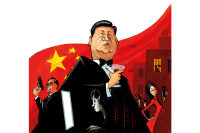
Most states spy. In principle there’s nothing to stop them. But China’s demand for intelligence on the rest of the world goes far beyond anything western intelligence agencies would typically gather. It encompasses masses of commercial data and intellectual property and has been described by Keith Alexander, a former head of America’s National Security Agency, as ‘the greatest transfer of wealth in history’. As well as collecting data from government websites, parliamentarians, universities, thinktanks and human rights organisations, China also targets diaspora groups and individuals. Chinese cyber intrusions have targeted British MPs and stolen population-level data from the UK Electoral Commission database. In the US, meanwhile, Congress has just cracked

Has Angela Rayner redeemed herself?

10 min listen

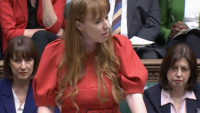
With Rishi Sunak and Keir Starmer away, Oliver Dowden and Angela Rayner stepped in for PMQs today. Questions quickly turned to the long running row about Rayner’s tax affairs. Did she redeem herself?    Also, the prime minister has announced further UK military spending, confirming it will rise to 2.5% of national income by 2030. Does the move cause problems for Keir Starmer?  Katy Balls speaks to James Heale and Isabel Hardman.  Produced by Megan McElroy.

Tommy Robinson and the truth about two-tier policing

Tommy Robinson, a self-invented English ‘patriot’, was free to attend yesterday’s St George’s Day event in central London which descended into ugly clashes between participants and police. Earlier in the day, he had been released from court after successfully arguing that a police dispersal order that resulted in his arrest and charge in November last year was unlawfully applied to him due to a paperwork blunder. He says he will now sue the Metropolitan police. Robinson has nearly half a million followers on social media. They have, by now, fully absorbed the narrative that when it comes to protest, Britain has a two-tier system of policing. This is a dangerous accusation

Angela Rayner’s staggering admission at PMQs

Angela Rayner stood in for Sir Keir Starmer at PMQs, and she opened with fireworks. ‘They’re desperate to talk about my living arrangements,’ she said, referring to her property woes, ‘but the public wants to know what this government is going to do about theirs.’ Brighton resident, Natalie, contacted Rayner about ‘no-fault evictions’. This isn’t much of an issue. When your tenancy ends, you rent a new flat. Big deal. But Labour loves a victim. And they use emotive language to turn the chore of ‘moving house’ into a Dickensian tragedy. ‘Ban this cruel practice,’ cried Rayner. She hasn’t considered that if renters enjoy the same rights as freeholders, the rent

Who will pay the price for the boost in defence spending?

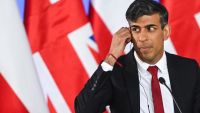
Rishi Sunak’s announcement that the government will increase defence spending to 2.5 per cent of GDP has been warmly welcomed, but how much is it really going to transform the UK’s military? Former armed services minister James Heappey was quick to scotch expectations this morning when he said it wouldn’t necessarily be enough to reverse falls in the size of the Army, Navy or Royal Air Force – the money could quite easily disappear simply in upgrading equipment. Nor is there anything particularly novel about the Prime Minister’s announcement: Boris Johnson made the same promise – to raise defence spending to 2.5 per cent of GDP by by 2030 – at the