Politics

Read about the latest political news, views and analysis

How Israel should fight back against the ICC’s lawfare

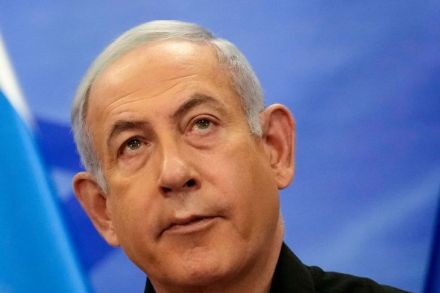
The application for arrest warrants against Israeli prime minister Benjamin Netanyahu and defence minister Yoav Gallant is an act of lawfare. In seeking the detention of Israel’s political and military leadership during its war against Hamas, Karim Ahmad Khan, the prosecutor of the International Criminal Court (ICC), is inviting that body to intervene in the conflict. Granting these warrants would require ICC signatory countries such as the UK to arrest the men if they set foot in their territory and hand them over. The likely effect of their arrest would be to cripple Israel’s war effort and throw the country into political chaos. Khan is proposing, in effect, that the ICC
Is there finally good news for the government?

11 min listen

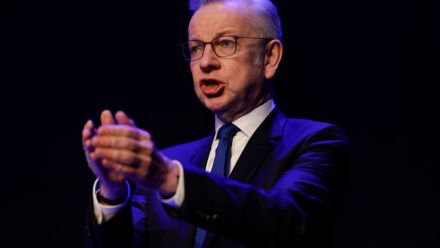
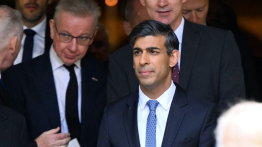
The IMF has upgraded the 2024 economic forecast for the UK. What does this mean for the Government and could more good news follow this week? And, with speeches on tax, benefit crackdowns and tackling anti-semitism, what should we make of all this political activity? Will we see the return of ‘the hot lectern guy’? Kate Andrews and James Heale join Katy Balls to discuss. Produced by Patrick Gibbons

Taxpayer-funded porn project causes uproar in Scotland

Scottish government-backed quango Creative Scotland is back in the limelight over its porn project controversy. As Mr S wrote in March, the director of a hardcore pornographic performance, ‘Rein’, managed to secure £85,000 of taxpayers’ cash for her rather, um, explicit work. Now it can be revealed that, despite officials denying full knowledge of the show’s contents before this point, Creative Scotland was in fact aware of the show’s plans to include ‘non-simulated sex acts’ a year before signing off on the hefty sum. Just when you think events in Scotland can’t get any madder… Even the progressive SNP government is rather agog at the whole thing While quango bosses

UK growth is creeping up – but tough decisions still lie ahead

Today the International Monetary Fund has upgraded its growth forecasts for the UK: from 0.5 per cent this year to 0.7 per cent, followed by a 1.5 per cent rise in 2025 (unchanged from its previous update). These forecasts still sit slightly below the Office for Budget Responsibility’s most recent predictions – but only just. The IMF’s latest forecasts come less than two weeks after the UK economy defied predictions and grew by 0.6 per cent in the first quarter of the year, exceeding practically all expectations and confirming that recession ended back in 2023. As I noted earlier in the month, when the provisional GDP figures were announced, the

The far right isn’t the only threat ahead of the European elections

In France, Holland, Italy, Belgium, Poland, Hungary and Austria parties described by their foes as ‘far-right’ are on course for significant gains at next month’s European elections. To the chagrin of progressive politicians, Giorgia Meloni, Marine Le Pen and Geert Wilders are popular with many voters. But centrist groups in the European Parliament are determined to do everything to stop them. Europe does indeed feel like it might be returning to ‘the darkest pages of our history’ ‘We are facing a crucial moment in the history of our European project, where once more the far right is attempting to bring back the darkest pages of our history,’ said a communique

Europe’s leaders hail Rwanda scheme

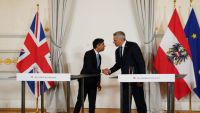
Well, well, well. Rishi Sunak’s immigration plans have been met with a fairly underwhelming response in Britain – only a quarter of people believe the Rwanda scheme will work, while the PM has faced some rather public dissent from within his own ranks over his record on small boats. But the Rwanda policy does in fact have some political admirers – in the form of leaders from across the Continent. Finally a piece of good news for the PM… Austria’s Chancellor Karl Nehammer is the latest European politician to heap praise on Rishi’s Rwanda plan. At a press conference in Vienna this morning, Nehammer hailed Britain as a ‘pioneer’ on

How did the EU get Raisi’s death so wrong?

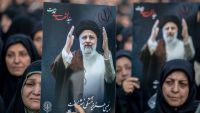
Most of the world will not mourn the president of Iran, Ebrahim Raisi, who died in a helicopter crash near Varzaqan in Iran, this week. Dubbed the ‘Butcher of Tehran’, Raisi was responsible for the deaths of thousands in a purge of political dissent in the 1980s. Since becoming president he has overseen the brutal crackdown on Iranians protesting against the regime’s punitive morality police. And he has led a country which is a key supplier of drones and weapons to Vladimir Putin, causing countless civilian deaths. Why was it obvious to democratic countries that commemorating Raisi would be morally contemptuous, but not to the bureaucrats in Brussels? Accordingly, most

A crackdown on foreign students isn’t the only reason universities will struggle

Reducing the number of overseas students able to come to Britain would be a needless attack on one of our most successful export industries. But should we really believe David Cameron’s warnings to Rishi Sunak that universities are in danger of going bust if the graduate visa scheme is removed, or reformed (graduate visas give graduates the chance to stay on and work in Britain for up to two years)? The government would be foolish to choke off foreign students Data from the Higher Education Statistics Agency (HESA) does not appear to show any desperate crisis in university finances. On the contrary, their income has shown a steady and healthy,

Will Ken Clarke lose his peerage?

In the aftermath of the tainted blood scandal, there is no shortage of blame to go around – but some are more culpable than others. As a junior health minister from 1982 to 1985, Ken Clarke was at the heart of Whitehall as reports of the risks from blood transfusion began to be published. According to Sir Brian Langstaff’s inquiry, by 1982 there was evidence that infections were occurring through imported blood products. The Department of Health even admitted it was ‘likely’ that HIV/Aids was transmitted through blood products. Yet still in 1983 Lord Clarke continued to say that there was ‘no conclusive proof’ of infection via this route. Sir Brian

Ebrahim Raisi’s death won’t change the course of history

The Middle East never fails to surprise. Sunday was no exception. Iranian president Ebrahim Raisi, foreign minister Hossein Amir-Abdollahian, and several other senior Iranian politicians were killed in a helicopter crash in East Azerbaijan. One cannot help but wonder at the extraordinary misfortune not only of crashing, but of doing so in a foggy, rainy, muddy area that took rescue workers 15 hours to reach. Despite the profile of the accident’s victims, however, this is probably not an accident that changes the course of history. The Iranian presidency has become increasingly irrelevant in an increasingly-Soviet system. That trend is set to continue.  The president is something of an afterthought To

The sad truth about ‘saint’ Nicola Sturgeon

The Independent Press Standards Organisation found that Gareth Roberts’s article breached Clause 12 (i) of the Editors’ Code of Practice. A link to the adjudication is here. The Spectator’s response to the ruling can be found here. Nicola Sturgeon has finally come clean: ‘I was part of the problem,’ Scotland’s former first minister has admitted, referring to the ‘trans rows’ that dogged the late stages of her time as First Minister. What’s this? Is this, at last, a frank admission of fallibility and regret from Sturgeon? A reflection on her own flaws? No, of course it isn’t. The sainted Sturgeon stepped down, by her own account, because politics in Scotland is

Why MPs love to hate the register of interests

The register of members’ interests for the House of Commons turns 50 today. Few MPs will be celebrating. Politicians have long shuddered over a document that provides fertile ground for journalists from which to dig out stories. The register – and the declarations within it – have cost more than a few MPs their careers. Plenty of other MPs and even PMs have come a cropper as a result of what is, and isn’t, in the register: Rishi Sunak is just one of the more high-profile figures to end up in hot water after being accused of failing to fill the register out fully. While politicians dislike the register, its

Sunak apologises during ‘day of shame’

Rishi Sunak’s Commons apology for the contaminated blood scandal was reasonably comprehensive. The statement opened with him saying he wanted to speak directly to the victims and their families, and ‘make a wholehearted and unequivocal apology for this terrible injustice’. The Prime Minister listed what the government was apologising for: the failure in blood policy and blood products, the repeated failure of the state and medical professionals to recognise the harm caused; for the institutional response to the failings, including denying and attempting to cover them up. He said: ‘This is an apology from the state to every single person impacted by this scandal. It did not have to be

Sturgeon takes aim at young people in politics

Back to Scotland, where Nicola Sturgeon is once again stealing the spotlight. This time the former first minister decided the Charleston literary festival held in Sussex this weekend would be the perfect place from which to ruffle feathers in her own party. The SNP’s Dear Leader bemoaned the number of young people entering politics ‘for all the wrong reasons’, telling her audience that: ‘I think politics, including in my own party now, is probably too full of young people who have just come through the political ranks’. Ouch. It’s a kick in the teeth to senior SNP figures like net zero secretary Màiri McAllan who spent time as, er, Sturgeon’s

Infected blood scandal was ‘no accident’, says report

17 min listen

The Infected Blood Inquiry has finally concluded after a five-year investigation. This lunchtime, the inquiry’s chair Sir Brian Langstaff said thousands of deaths could have been prevented and the ‘worst ever’ NHS scandal, which saw thousands of Britons between 1970 and 1998 become infected by contaminated blood, could ‘largely, though not entirely, have been avoided’. Will the NHS change after change after this latest scandal?  James Heale speaks to Katy Balls and Isabel Hardman. 

The infected blood scandal should make us think twice about revering the NHS

Blood is central to the myths British people tell themselves. One of the many consequences of the contaminated blood scandal is that it may blow those myths apart. For if this scandal can make us face the reality of how badly we are governed, and indeed how selfishly we govern ourselves, then some good may come from so much needless suffering. The scandal began in the 1970s. At the start of that decade, Richard Titmuss, the great social democratic theorist, placed blood at the centre of the justification for the British welfare state with an argument that complacent we Brits could not help but feel reflected rather well on us.

Javier Milei won’t stop insulting Pedro Sanchez’s wife

The Spanish ambassador in Buenos Aires was recalled to Madrid yesterday after Argentina’s president Javier Milei described the wife of Spain’s prime minister as ‘corrupt’. Today Spain’s foreign ministry summoned Argentina’s ambassador in Madrid to demand an apology.  Albares declared that unless Milei apologised, Spain’s government would ‘take any measures deemed necessary to defend our sovereignty’  Milei, who was speaking at a rally in Madrid, also mocked Spain’s prime minister Pedro Sánchez for taking a five-day break last month in order to decide if he wanted to continue as prime minister. Even so, it seems something of an exaggeration for Spain’s foreign minister, José Manuel Albares, to describe Milei’s words