Politics

Read about the latest political news, views and analysis

‘Livid’ ex-Labour candidate resigns from party

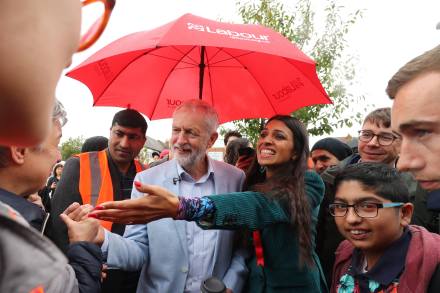
Another day, another drama. Labour has been thrown back into the spotlight after deselected candidate Faiza Shaheen today announced her resignation from Sir Keir’s party in a rather scathing — and detailed — Twitter post. Shaheen was originally the selected for the Chingford and Woodford Green seat — but just last week, the left-wing candidate was ditched by party apparatchiks after reportedly liking social media posts that downplayed accusations of antisemitism. Hauled to a meeting with the party’s NEC, Shaheen was quizzed over her social media conduct before being dropped by Starmer’s army. The ex-candidate has certainly not kept quiet about her disappointment, lambasting Labour on BBC Newsnight last week:
The humbling of Narendra Modi

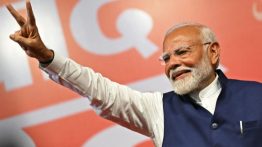
There was never really any serious doubt that India’s prime minister, Narendra Modi, would win a historic third term in power. The bigger question in the Indian election was how big his victory would be. There were widespread predictions that Modi would win by a landslide, with the prime minister himself setting an ambitious goal of winning 400 of the total 543 seats up for grabs. It hasn’t quite turned out that way. Modi’s ruling Bharatiya Janata party (BJP) is on course to be the largest party, but is falling well short of the 272 required for an absolute majority. This means the BJP will be reliant on other parties

What would it take for Sunak to have a breakthrough?

13 min listen

Some Conservatives have put their hopes on tonight’s TV debate as a breakthrough moment for the lacklustre and disorganised Tory campaign, but will it really be a gamechanger? James Heale talks to Isabel Hardman about why she’s sceptical, and to the pollster Chris Hopkins at Savanta about why the Tories just aren’t closing that poll gap. Produced by Megan McElroy and Cindy Yu.

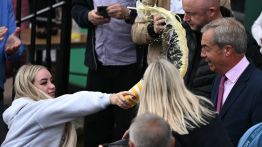
Farage doused in drink during Clacton trip

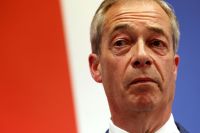
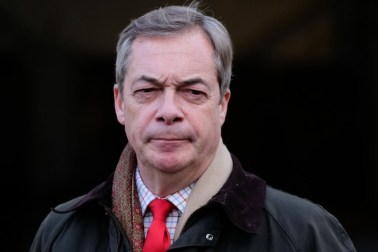
Reform’s new leader Nigel Farage has been busy wooing crowds in Clacton as he launched his election campaign in the Essex seaside constituency this lunchtime. But the visit didn’t go off without a hitch for poor Nige, whose trip was rather rudely ruined by a bystander who threw a drink at the politician as he left a local pub. The former Ukip leader was leaving Clacton’s Wetherspoons, the Moon & Starfish, when one decidedly disgruntled member of the public chose to make their feelings towards Reform’s newest candidate known. In what appears to be an attempted repeat of 2019’s milkshake attack — in which Farage was doused in the sugary

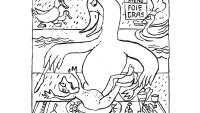
The logic behind Labour’s foie gras ban

It was never very impressed by the opportunity to strike trade deals across the fast-growing Pacific. It didn’t much like the idea of deregulating the tech industry. Nor did it think much of diverging on financial standards to re-boot the City. The Labour party may have accepted our departure from the European Union, but it never found any ‘Brexit freedoms’ it actually liked. Until today that is. The party has just worked out we can be kinder to geese – and, slightly surprisingly, in doing so, it may have just closed the door on the UK ever rejoining the EU.  As it prepares for government, the Labour leader Sir Keir

Cracking down on the ECHR won’t save Sunak

Rishi Sunak’s unequivocal statement this week about sex and the Equality Act was a clever piece of electioneering. Subsequent reports suggesting that the Tories planned to harden their stance on the European Convention on Human Rights (ECHR), by contrast, had the air of a measure taken in sheer panic. Regrettably, this will be obvious to many potential voters already mulling the idea of quietly jumping ship to Reform UK. The Prime Minister has failed badly in the presentation stakes. This matters. One of the chief attractions of Reform is that, for all their faults, they have never made any bones about their commitment to give notice to exit the ECHR

Why are the Tories playing Farage’s game?

How should Rishi Sunak respond to the unwelcome insertion of Nigel Farage into the election campaign? The Prime Minister called the election for 4 July in part because he hoped it would wrong-foot Reform, but that hasn’t worked, with Farage electrifying the challenger party and near-electrocuting many Tory MPs who were already terrified of losing their seats.  The response from the centre has been to move even further into Reform’s territory. Home Secretary James Cleverly was out and about this morning talking about immigration, and dropping hints that the Conservatives could make leaving the European Convention on Human Rights a manifesto commitment. Asked about it, Cleverly said: ‘The point that

Clacton goes wild for Nigel Farage

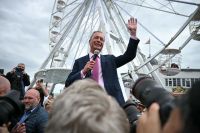
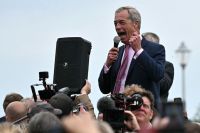
Farage-mania has come to Clacton-on-Sea this lunchtime. Hundreds of locals gathered around the Essex seaside town’s pier to hear Nigel Farage speak after his shock announcement that he would stand for election after all. The Reform leader was introduced by Richard Tice – the former leader, who stepped aside on Monday to make way for his boss’s return. Much of Tice’s warm-up act was interrupted by shouts of ‘We love you Nigel’ from the crowd. ‘Send me to Parliament to be a bloody nuisance,’ Farage told the crowd When it was Farage’s turn to address voters, he spoke of his hope to be elected come 5 July as the MP

BBC in bother as pundit accused of antisemitism

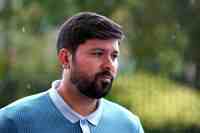
Back to the blundering BBC, whose latest mishap involves one of the broadcaster’s cricket pundits. Qasim Sheikh, formerly a Scotland international cricketer and a new addition to the Beeb’s sports commentator team, has been accused of antisemitism after sharing some rather controversial social media posts — including an image of Prime Minister Rishi Sunak with an Adolf Hilter moustache. So much for impartiality… The picture showed Sunak with other world leaders — including German chancellor Olaf Scholz, president Biden and Israeli prime minister Benjamin Netanyahu — with flags on their foreheads and moustaches on their upper lips. The post branded the group the ‘Kids Killers Union’, while statements made alongside

Keegan’s campaign launch confusion

Another day, another Conservative campaign gaffe. This time it involves Education Secretary Gillian Keegan who has enthusiastically thrown her support behind the Tory candidate for Winchester, Flick Drummond. And so excited was Keegan about Drummond’s prospects she turned up to the launch event, um, several hours early. Talk about getting ahead of yourself… Drummond’s launch event was actually scheduled for 2.30pm on Tuesday afternoon, leaving a rather confused Secretary of State with some unanticipated free time on her hands this morning. Recovering quickly from her false start, Keegan decided to spend her morning talking up Drummond anyway — who was most recently the Tory MP for Meon Valley, split up

The problem with Sunak’s migrant cap

It is perhaps no accident that Rishi Sunak has rushed out his proposal for a cap on migrant workers and their dependants the day after Nigel Farage announced that he was taking over as leader of Reform UK. But you wonder how many votes there really are in a migration cap when Farage is already out there promising to reduce net migration to zero – a new interpretation of net zero, if you like. If you don’t like migration at all, Reform UK would seem to be your obvious choice. If, on the other hand, you are offended by illegal migration while accepting the argument that employers need the right

The Tories aren’t serious about protecting biological sex

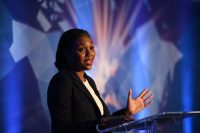
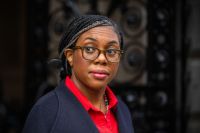
Kemi Badenoch has announced that sex is biological – yes, and rain is wet, and the election is soon. So what? Are we seriously expected to celebrate this statement of obvious fact? A woman is an adult human female. She is not a piece of paper, she’s not an idea in a man’s head and she does not have a penis. Everybody with half a brain, male or female, can see the Tories’ move for exactly what it is: opportunistic grandstanding. Many of them will also know that all the fine talk from Kemi about biological sex and common sense is worthless without full repeal of the 2004 Gender Recognition

What will Tory leadership hopefuls do about Farage?

What comes next? That is what many Tories are asking as they stare down the barrel of defeat. Even before Nigel Farage’s re-entry into the election campaign, most had privately conceded that the election was lost. An MRP/YouGov poll out yesterday suggested that the Tories are on course to win just 140 seats – the worst result in the party’s history. Penny Mordaunt, Grant Shapps and Jeremy Hunt are among those set to lose. If such a result came to pass, which of the survivors would be best placed to succeed Rishi Sunak and start the slow, painful process of building from such a meagre base? ‘Nigel Farage is still

Farage’s return is Rishi Sunak’s worst nightmare

From the moment the Conservatives called this summer election they seemed doomed: Sunak had failed to deliver on his five promises, much of the electorate had given up on him, and Starmer looked set for power. But there still seemed like the possibility of a hung parliament, or perhaps Labour only getting a small majority, rather than a landslide.  Last week, my polling firm J.L. Partners did a poll for the Rest is Politics podcast, which showed the Tories pushing Labour down to a 12-point lead. That was nothing to get excited about, but with Reform UK still on 12 per cent, it looked like there might be a way

The glorious downfall of Lloyd Russell-Moyle

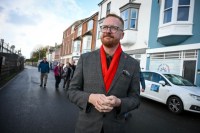
It’s always handy for parents to have someone they can use to put their children off any particular profession. ‘Don’t be a comedian, son – you’ll end up like that Eddie Izzard!’ ‘Don’t be a journalist, my girl – you’ll end up like that Julie Burchill!’ Quite a few politicians have vied for this inverted ‘top spot’ – that Jeffrey Archer, that Matt Hancock and that Jeremy Thorpe come quickly to mind. But on balance, I believe that Lloyd Russell-Moyle may come to top parents’ precautionary playlist. For those who believe in women’s rights, Christmas has come early, no matter who wins the election What a ghastly creature he is. Some people

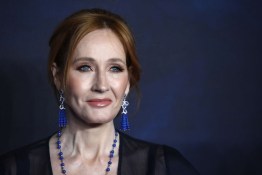
The significance of J.K. Rowling’s defence of Kemi Badenoch

The opinion polls might be projecting a massive Labour majority, but there is a dynamic to this election that could yet derail Keir Starmer’s plans for government. Yesterday, J.K. Rowling spoke for many women when she fired off a volley of tweets on sex and gender. Her frustration was palpable, but also notable was her defence of Kemi Badenoch. While pointing out that ‘Kemi Badenoch and I might not agree on a lot’, Rowling chose to support the Tory minister for women and equalities, who was in turn under fire from Ian Dunt and Alistair Campbell. It felt personal as Rowling added: ‘And what’s the issue with her [Badenoch’s] manner, Ian? Did she fail

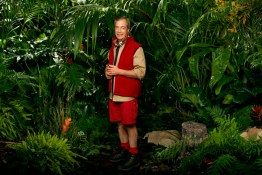
What Farage gets about politics and entertainment

Towards the end of last year, Nigel Farage set tongues wagging as he entered the jungle for I’m a Celebrity… Get Me Out of Here! Yesterday he announced his return to electoral politics – and the national conversation about him now is curiously similar to what it was then. Will the masses actually vote for him? Will people find his rhetoric refreshing – or racist? And is this good or bad for GB News?  We’re used to talking in a slightly superior English way about Donald Trump, the former host of The Apprentice, as the reality TV president across the pond. But Britain is not so different. Our politics is not just downstream from

The Scottish leaders debate won’t have changed voters’ minds

When Alex Salmond was leader of the SNP he used to complain bitterly to the broadcasters that it was unfair to stage TV debates with three unionist party leaders – Labour, Conservatives and the Lib Dems – against the one nationalist. In last night’s Scottish leaders debate though, the unionist imbalance hardly figured. That is because independence hardly figured.  Anas Sarwar arguably won by sheer persistence, though his robotic delivery might have alienated some voters. The Tory leader, Douglas Ross got in his customary line about the SNP’s ‘obsession’ with separatism and the SNP leader, John Swinney, agreed that independence remained ‘line one, page one’ of the SNP manifesto, but